Eel Fish Sustainability: What Global Buyers Should Know
An importer in Rotterdam once told me his container got held at customs for eleven days because his supplier couldn't produce a CITES permit. That delay cost him a retail contract. This is the reality of sourcing eel fish today — the market has tightened, paperwork matters as much as product quality, and buyers who skip due diligence pay for it later. If you're importing frozen unagi kabayaki, eel sauce, or freshwater eels, sustainability isn't a marketing buzzword anymore. It's a purchasing requirement.
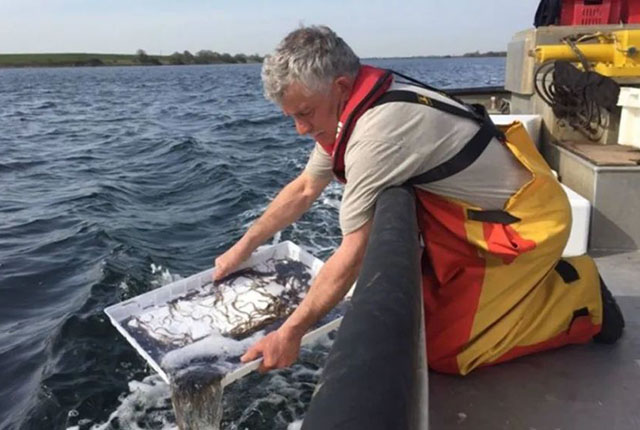
Global eel populations, particularly the Japanese eel (Anguilla japonica) and European eel (Anguilla anguilla), have declined sharply over the past three decades. Wild glass eel catches — the juvenile eels used to stock aquaculture farms — have dropped enough that the IUCN lists several eel species as endangered or critically endangered. That single fact reshapes how buyers should evaluate every supplier quote they receive.
Why Eel Fish Sourcing Has Become a Compliance Issue, Not Just a Procurement One
Ten years ago, buyers negotiated on price and delivery time. Now, a third variable dominates the conversation: can the supplier prove where the eel came from? Traceability has become the deciding factor in whether a shipment clears customs at all.
- Glass eel scarcity — wild-caught juveniles are limited by quota in many regions, driving up farm input costs.
- CITES Appendix II listing — European eel is regulated under the Convention on International Trade in Endangered Species, meaning cross-border shipments need permits.
- Retailer-level scrutiny — major supermarket chains in the EU and US now require supplier sustainability declarations before listing eel products on shelves.
- Consumer awareness — food media coverage of eel population decline has made restaurant buyers ask harder questions than they did five years ago.
Buyers who ignore these shifts risk stranded inventory. A supplier that can't answer traceability questions in writing is a red flag, no matter how competitive their pricing looks.
How Responsible Eel Sourcing Actually Works — A Practical Breakdown
This is the section every importer should read twice. Responsible sourcing isn't one certificate — it's a chain of documented steps from hatchery to cold storage.
| Stage | What to Verify | Why It Matters |
|---|---|---|
| Glass eel intake | Origin records, quota compliance | Confirms eels weren't sourced from illegal or unregulated catches |
| Aquaculture farming | Farm registration, water quality logs, stocking density records | Poor farming conditions affect meat quality and long-term supply stability |
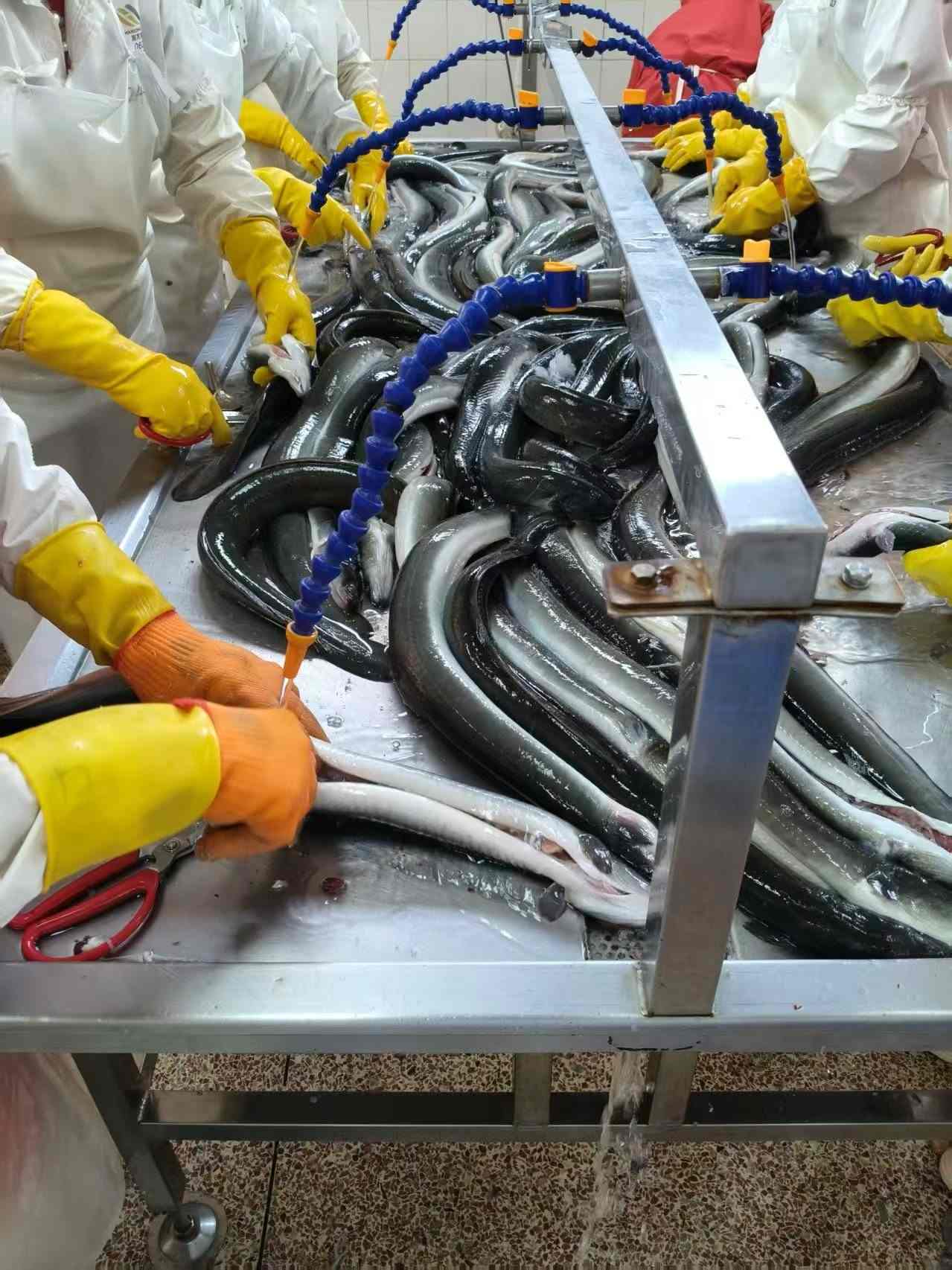
| Processing | Facility hygiene standards, batch tracking numbers | Enables recall and traceability if quality issues surface downstream |
| Export documentation | CITES permits (where applicable), health certificates, customs declarations | Prevents shipment seizure at destination port |
| Cold chain logistics | Temperature logs from freezer to container to warehouse | Protects product integrity and prevents spoilage claims |
At our own eel farm operation, every batch is tracked from stocking through harvest, and paired with lab testing before it moves to processing. Buyers touring or auditing a facility should ask to see this chain documented, not just described verbally.
Eel Fish Regulations Buyers Must Know Before Signing a Contract
Regulations differ by species and destination market, and this is where many first-time importers get caught off guard.
- CITES permits are required for European eel shipments crossing international borders — no permit means no customs clearance.
- Import health certificates from the exporting country's food safety authority are standard for frozen seafood entering the EU, US, and most of Southeast Asia.
- HACCP-aligned processing is increasingly expected by buyers in Japan, Korea, and the EU, even where not legally mandatory.
- Species labeling accuracy — mislabeling farmed eel as a different species is a legal violation in several import markets and has led to product recalls.
- Country-specific quota rules — some source countries cap annual glass eel catch volumes, which directly affects supplier lead times.
A buyer's checklist before signing any purchase order should include: confirmed species identification, valid export permits, cold chain temperature records, and a factory audit report less than 12 months old. Skipping any one of these has caused real shipment rejections at ports in the Netherlands and the US in recent years.
Common Mistakes Buyers Make When Evaluating Eel Suppliers
- Trusting verbal claims over paperwork — always request the actual permit or certificate, not a description of it.
- Ignoring farm-level conditions — a clean processing facility doesn't guarantee sustainable upstream sourcing.
- Overlooking seasonal supply gaps — glass eel catch seasons are short; suppliers promising year-round low prices may be blending in unverified stock.
- Skipping sample testing — texture and flavor consistency in unagi kabayaki varies noticeably between farms; always request samples before large orders.
- Not asking about the sauce separately — eel sauce quality is a separate supply chain from the eel itself, and inconsistent tare can undercut an otherwise good product.
Sustainable Eel Fish Aquaculture — What's Actually Changing on the Farm Side
Farm-raised eel now accounts for the overwhelming majority of global supply, since wild adult eel harvesting is heavily restricted. But "farmed" doesn't automatically mean "sustainable." The distinguishing factors buyers should look for:
| Farming Practice | Lower Sustainability Risk | Higher Sustainability Risk |
|---|---|---|
| Water management | Recirculating systems with monitored discharge | Open systems with untreated wastewater |
| Stocking density | Regulated, documented density limits | Overcrowded ponds with no records |
| Feed sourcing | Traceable feed inputs | Unverified feed suppliers |
| Glass eel origin | Quota-compliant, documented catch | Undocumented or mixed-origin stock |
Our eel lab testing process checks incoming stock against these criteria before it enters production, which is part of why repeat buyers keep coming back for the next order cycle instead of shopping around every quarter.
Frequently Asked Questions From Importers and Distributors
How is eel fish sourced sustainably?
Sustainable sourcing starts with quota-compliant glass eel intake, moves through monitored aquaculture farming with documented water and feed management, and ends with traceable processing records. Each stage needs paperwork a buyer can actually request and verify — not just a supplier's assurance.
What regulations affect eel fish exports?
The biggest one is CITES Appendix II listing for European eel, which requires export permits for cross-border trade. Beyond that, import health certificates, HACCP-aligned processing standards, and destination-market labeling rules all apply, and requirements shift depending on whether the shipment is headed to the EU, US, or Asia-Pacific markets.
How can buyers verify responsible eel sourcing?
Request the paper trail directly: glass eel origin records, farm registration documents, lab test reports, export permits, and cold chain temperature logs. A legitimate supplier will produce these without hesitation. If a supplier stalls or offers vague answers, treat that as a warning sign before placing a large order.
Building a Reliable Eel Fish Supply Chain for Long-Term Buyers
Buyers who treat sustainability as a checkbox exercise often get burned on the second or third order, once seasonal supply tightens or a customs audit flags missing documentation. The buyers who do well long-term build relationships with suppliers who can show — not just tell — how their eel fish supply chain works from hatchery to cold storage.
If you're sourcing frozen unagi kabayaki or eel sauce for retail or foodservice distribution, ask your supplier for a facility walkthrough, recent lab results, and export documentation samples before your first purchase order. Curious how kabayaki sauce quality connects to overall product consistency? Our team breaks that down in this article on kabayaki sauce quality, and if you're exploring menu applications, our eel noodle soup recipe guide is a good next read for foodservice buyers building out product lines.
Responsible sourcing isn't about finding the cheapest eel fish quote in your inbox. It's about finding a supplier whose paperwork matches their claims, whose farm practices hold up under audit, and whose supply chain won't leave your shipment stuck at customs. That's the standard worth holding every supplier to, ours included.