


Eel Sauce Taste Depends on Four Factors Every Food Buyer Should Taste For
You open a new drum of eel sauce. It smells right. But on the line, three cooks pour three different amounts — because the eel sauce taste shifts from batch to batch. Too sweet one week. Watery the next. For a sushi counter or a noodle kitchen running volume, that inconsistency is not a minor detail. It's a flavor problem your customers notice on the first bite, and a cost problem your kitchen manager cannot ignore.
This guide breaks down what actually drives eel sauce flavor profile — sweetness, saltiness, umami, viscosity, aftertaste — and what each parameter means for your menu, your plating cost, and your repeat orders.
What Actually Shapes the Taste of Eel Sauce (And What Happens When You Get It Wrong)
Most buyers taste eel sauce once, off a spoon, and move on. That tells you almost nothing about how the sauce performs on hot kabayaki, cold sushi rice, or a bowl of noodle soup three hours after service starts. Each sensory parameter affects a different part of your kitchen operation — and a wrong call on any one of them shows up as waste, complaints, or inconsistent plates.
| Parameter | What it actually affects | If you get it wrong |
|---|---|---|
| Sweetness | How the sauce reads against rice vinegar, nori, and seared fat; can mask or expose low-grade eel | Oversweet sauce hides inferior raw material; undersweet sauce tastes flat on rice bowls |
| Saltiness | Balance against soy-based sides, shelf stability of the plated dish | Too salty overwhelms delicate kabayaki fillets; too low raises spoilage risk after reheating |
| Umami depth | The "savoriness" that keeps diners ordering a second plate | Weak umami tastes thin no matter how thick the sauce looks — more soy sauce alone won't fix it |
| Viscosity | Coating performance on hot vs. cold eel, plate presentation, portion cost per serving | Thin sauce runs off kabayaki and wastes product; overly thick sauce clumps and scorches under the broiler |
| Aftertaste | Repeat-order psychology, the lingering note that signals "authentic" unagi | A bitter or burnt aftertaste from over-reduced soy points to poor process control upstream |
Each of these sits on a spectrum, and the right position depends on your menu, not on a universal "best" score. A sauce built for sushi nigiri rarely performs the same way on a donburi rice bowl.
Why Sweetness and Umami Need to Balance, Not Compete
The core of any unagi sauce flavor comes from reducing soy sauce, mirin, and sugar together until the liquid thickens into a glaze. The tricky part is that sweetness and umami pull against each other during reduction. Push sugar too hard and the sauce tastes like teriyaki syrup with no backbone. Pull back too far and the sauce reads salty-flat, with no roundness on the palate.
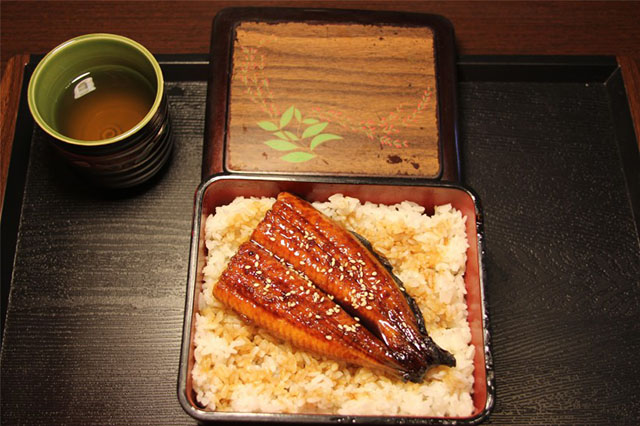
Our four-layer soy-sauce coating process exists specifically to manage this balance. Each layer is brushed and set at a controlled temperature before the next layer goes on, building eel sauce sweetness gradually instead of dumping it in one reduction pass. This is also why patented low-fat roasting matters for flavor, not just for nutrition labels — excess surface fat on the eel interferes with how the sauce layers bond, and can leave a greasy aftertaste that masks the umami underneath. You can see how this coating sequence is applied on actual product in our frozen unagi kabayaki line.
Matching Eel Sauce Flavor Profile to Menu Application
A sauce that wins a tasting panel isn't automatically the right sauce for your kitchen. Viscosity and sweetness need to match how the dish is served, held, and reheated.
| Menu use | Recommended sweetness | Recommended viscosity | Why |
|---|---|---|---|
| Nigiri / sushi rolls | Moderate | Thin-to-medium, pours evenly | Must not overpower raw vinegar rice or nori |
| Donburi rice bowls | Higher | Medium-thick, clings to rice | Sauce is the dominant flavor carrier on the dish |
| Noodle soups / broths | Lower | Thin, disperses into liquid | Too thick a sauce clouds broth and skews salinity |
| Grilled skewers / teriyaki style | Moderate-high | Thick, holds through reheating | Needs to survive a second heat pass without burning |
If you're building a donburi program, it's worth reviewing how toppings interact with sauce thickness — our eel sauce product page outlines viscosity options by format. For kitchens developing noodle dishes, the eel recipes section shows how sauce dilution behaves in broth-based preparations.
Common Mistakes Buyers Make When Evaluating Eel Sauce Samples
- Tasting cold, straight from the fridge. Sweetness and salt perception both shift with temperature — always taste at the serving temperature you'll actually use.
- Judging viscosity on a spoon, not on the protein. Sauce behaves differently coating hot grilled eel than it does sitting in a cup.
- Ignoring aftertaste at the 30-second mark. A clean sauce and a burnt-sugar sauce can taste nearly identical on first contact; the difference shows up after swallowing.
- Skipping the reheat test. If your menu involves ready-to-heat packaging, test the sauce after a full freeze-thaw-reheat cycle, not just fresh out of the sample jar.
- Assuming one batch represents the whole order. Ask the supplier how flavor consistency is controlled across production runs before committing volume.
That last point is where a lot of import decisions go wrong. A supplier might have an excellent flavor, but without traceability back through its soy-sauce coating process and raw material sourcing, batch-to-batch drift is common. For a deeper look at how coating errors happen, the article on fixing flavor mistakes breaks down the usual culprits.
A Buyer's Tasting Checklist Before You Place an RFQ
- Request at least two production batches, not one — compare them side by side.
- Taste the sauce on three substrates: plain rice, grilled eel, and cold sushi rice.
- Check viscosity at both refrigerator and room temperature.
- Run a reheat cycle if your service model uses frozen or ready-to-heat formats.
- Ask for the sauce's salt and sugar ratio range, even if exact formulas stay proprietary.
- Confirm whether the supplier's facility is certified under food safety systems such as ISO 22000 or HACCP — this affects consistency, not just safety.
- Ask how raw eel is sourced and whether farming origin is traceable to specific registered bases.
This last point matters more than most buyers expect. Eel sauce flavor profile starts with the fish itself — fat content, freshness, and feeding conditions all carry through into how the sauce caramelizes and coats. Our traceability runs through roughly 20 customs-registered farming bases covering 2,150 mu, with raw material records checked before processing begins. You can see how that process is documented on our eel farm page.
How Flavor Consistency Is Actually Controlled Batch to Batch
A worked example: an importer sourcing for 15 restaurant locations tested three sauce samples from different production weeks. Sweetness varied noticeably — one batch read almost syrupy, another thin and salty. The cause wasn't the recipe; it was inconsistent temperature control during the soy-sauce reduction step across different production runs.
This is why consistency depends on more than a fixed formula. It requires:
- Temperature-controlled reduction at each of the four coating layers, not just a single boil-down step.
- In-house lab testing on finished sauce batches before packing, checked through our eel lab facility.
- Metal detection at critical control points, standard across our SC-licensed production lines.
- Stable cold storage — our 1,000-ton cold storage facility holds finished sauce and roasted eel at controlled temperatures, which prevents the viscosity drift that happens when product cycles through uneven freezing and thawing before shipment.
None of this guarantees every spoonful tastes identical — natural variation in soy sauce and mirin batches means some drift is normal. But it narrows the range buyers have to account for when writing specs into a purchase contract.
Where Eel Sauce Fits Into Broader Frozen Seafood Sourcing
Buyers rarely source eel sauce in isolation — it usually ships alongside frozen kabayaki, cut pieces, or other frozen seafood items on the same purchase order. When you're evaluating flavor, it's worth checking whether the sauce and the roasted eel come from the same production line. Sauce and protein developed together tend to match in sweetness and salt level; sauce sourced separately from a third party often needs extra adjustment on the kitchen line to balance properly.
For foodservice operators building a new unagi program, the flavor decision usually comes down to matching sauce behavior to your specific dish, not chasing the single "best-tasting" sample on a spoon. Test it where it will actually be served — hot, cold, reheated — and ask for documented flavor and production consistency before scaling to full volume.
If you'd like to taste the difference yourself, request a sample of our eel sauce alongside a spec sheet detailing sweetness, viscosity, and production batch controls — our team can match the formulation to your specific menu application.