

The eel in japanese name helps you read Japanese menus with confidence
You are looking at a Japanese menu. You see 鰻, うなぎ, and ウナギ. Are they three different seafood items, or the same eel written in different ways? This is the common question behind an eel in japanese name search, and the answer can save diners, home cooks, and food buyers from ordering the wrong product.
In most food contexts, these terms point to unagi: freshwater eel prepared in Japanese cuisine. The writing changes, but the ingredient usually does not. Still, the form chosen on a menu, package, or supplier specification can signal how formal, casual, or product-focused the message is.
Use the right Japanese word before you order or source eel
The practical answer for an eel in japanese name lookup is unagi, written as うなぎ or 鰻. It generally means freshwater eel in Japanese food culture. Choose this term when you mean grilled eel over rice, kabayaki eel, sushi eel, or frozen prepared freshwater eel.
That distinction matters because “eel” is broad in English. A menu may use another Japanese name for a different animal or preparation. For example, anago commonly refers to conger eel, which is often associated with saltwater species and has a different culinary identity. A buyer who requests “eel” without the Japanese product term may receive an unclear quotation or a specification that does not match the menu plan.
| Japanese term | English meaning | Best use | What can go wrong |
|---|---|---|---|
| Unagi | Freshwater eel | Use for kabayaki, grilled eel rice bowls, sushi, and frozen prepared eel | A vague “eel” request may not identify the intended species or prepared format |
| Anago | Conger eel | Use when a menu specifically calls for conger eel | Do not treat it as an automatic substitute for unagi in flavor, texture, or menu wording |
| Kabayaki | Sauce-grilled eel preparation | Use when the eel is split, grilled, and coated with a sweet-savory sauce | “Grilled eel” alone does not confirm whether sauce, cut style, or ready-to-heat format is included |
For diners, the conclusion is simple: order unagi when you want the familiar Japanese grilled freshwater eel experience. For a restaurant buyer, add the cooking format to the request, such as frozen unagi kabayaki, rather than relying on the eel in japanese name alone. This approach fits menu development and supplier communication; it does not replace product specifications for weight, cuts, sauce level, packaging, or import documents.
Understand why ウナギ うなぎ and 鰻 all mean eel
The three main forms in an eel in japanese name search are ウナギ, うなぎ, and 鰻. They represent the same spoken word, “unagi,” but they use different parts of the Japanese writing system. Learning when each appears makes labels and menus much easier to interpret.
| Writing form | Script type | What it represents | Where buyers and diners may see it |
|---|---|---|---|
| ウナギ | Katakana | The sound “unagi” written in katakana | Packaging, product labels, retail promotions, menus with a clean modern style, and emphasis text |
| うなぎ | Hiragana | The sound “unagi” written in hiragana | Casual menus, children’s food materials, easy-to-read signs, and text designed to feel soft or approachable |
| 鰻 | Kanji | The established kanji character for eel | Traditional restaurant signs, formal menu headings, premium presentations, and food writing |
For an eel in japanese name translation, none of these three forms automatically means a different recipe, grade, or species. The conclusion is that script is primarily a writing choice. The reason is linguistic: katakana, hiragana, and kanji can all express the same spoken food name.
Use 鰻 when reading a traditional restaurant menu or a formal Japanese food description. Use うなぎ when the text is intended to be easy to read. Expect ウナギ on retail-facing packaging or product-focused materials. This guidance fits ordinary Japanese food communication. It does not mean every restaurant, importer, or brand follows one fixed rule.
A useful menu-reading example
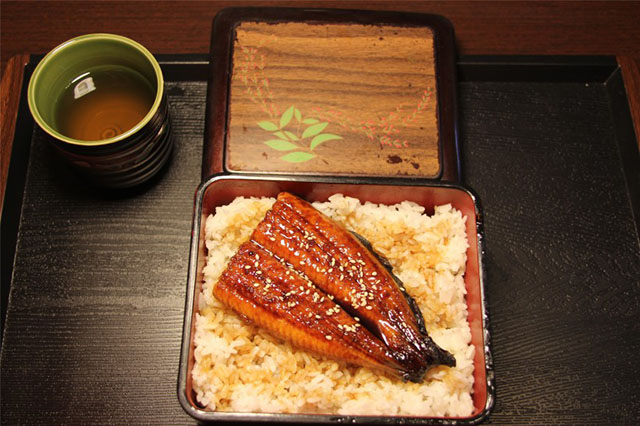
If a menu lists 鰻重, it refers to an unagi dish served in a lacquer-style box, often with rice. If it lists うな丼, it usually points to unagi over rice in a bowl. The product can still be kabayaki-style eel in both cases. The serving vessel and menu naming differ.
That is why an eel in japanese name translation should be read together with the characters around it. Looking only at 鰻 tells you the ingredient. Looking at the full dish name tells you whether it is likely a rice bowl, boxed meal, sushi item, or another preparation.
Read kabayaki terminology without confusing the ingredient and the sauce
Many people searching for an eel in japanese name also encounter “unagi kabayaki.” This phrase describes prepared eel rather than merely the raw animal. Kabayaki is associated with eel that is grilled and coated with sauce in layers, creating the glossy finish familiar in unagi rice dishes.
For diners, “unagi kabayaki” is a strong clue that the dish is prepared, sauced, and intended to be reheated or served with rice. For food buyers, it signals that the RFQ should specify a ready-to-heat roasted eel product rather than live, fresh, or plain-cut eel.
Eelpro produces frozen unagi kabayaki using a four-layer soy-sauce coating process with controlled roasting steps. Our process includes standards for white-roasted color and for the first through fourth soy-sauce coating colors. This can help foodservice customers request a product format that matches the finished appearance expected for a kabayaki menu item. See the available unagi kabayaki product details when comparing prepared eel options.
Do not confuse kabayaki with the sauce by itself. “Tare” commonly refers to the sauce used for grilling or glazing. If you need sauce separately for a kitchen, retail pack, or recipe trial, review our eel sauce product page. This recommendation fits kitchens that control their own finishing sauce. It does not apply when the frozen eel already includes the desired sauce profile.
Use this buyer checklist when an eel label is in Japanese
A label can contain the correct eel in japanese name but still leave important purchasing questions unanswered. The conclusion for food buyers is clear: treat the Japanese name as the starting point, not the full specification.
- Confirm the ingredient term. Ask whether the product is unagi or another eel category. This prevents a menu-description mismatch.
- Confirm the preparation. Look for kabayaki if you need grilled, sauce-coated eel. Ask for white-roasted eel when the kitchen plans to apply its own sauce.
- Confirm the cut. Eelpro can provide shredding, dicing, strip-cutting, chunk-cutting, three-section cuts, and sushi slices. The right cut reduces back-of-house handling; it does not remove the need to agree on the final pack format.
- Confirm whether bones are removed. Boneless or deboned eel can reduce preparation work for foodservice operations. Check the agreed product description rather than assuming every eel product is deboned.
- Confirm storage and logistics needs. Frozen product needs a suitable cold-chain plan after shipment. Eelpro has a 1,000-ton cold storage facility, but destination storage and handling remain the buyer’s responsibility.
- Confirm compliance documents for the destination. Import rules vary by market. Eelpro products meet Japan, United States, and European Union food inspection standards for veterinary drug residues and microbiological indicators, but importers should still verify their own market requirements.
For a distributor in Germany or Poland, this checklist fits an import discussion where labels, residue controls, and cold-chain handling need to be aligned before ordering. Eelpro has supplied eel products to German importers and distributors and to Polish importers and foodservice channels. Those examples show relevant market activity, not a guarantee that every product format or order condition is identical.
Avoid the common mistakes in Japanese eel translation
The fastest way to misuse an eel in japanese name is to treat one word as a complete product specification. Small wording gaps can become menu errors, purchasing delays, or an unexpected finished dish.
- Mistake: assuming 鰻 always means kabayaki. 鰻 identifies eel. It does not always confirm grilling, sauce, or a ready-to-eat format. Read the rest of the menu name or product label.
- Mistake: reading katakana as a foreign product. ウナギ is still unagi. Katakana does not make it a different species.
- Mistake: ordering “unagi” without naming the intended cut. A sushi counter, meal-prep factory, and rice-bowl chain may require different formats. State the intended use before requesting pricing.
- Mistake: using eel sauce as a universal substitute for kabayaki sauce. Sauce flavor and use can vary. A kitchen developing its own glaze should test the full dish, not the sauce alone. Our guide to kabayaki sauce explains its role in the finished flavor.
- Mistake: overlooking the full dish name. A Japanese menu can tell you more through surrounding words than through the eel term itself. Look for rice, sushi, grilled, or soup references.
Here is a useful food fact: the same unagi can appear as 鰻, うなぎ, or ウナギ even in nearby shops selling similar dishes. The writing style may change the mood of the menu more than the seafood itself. For an eel in japanese name search, that is reassuring. Learn the spoken word first, then use the script form as a reading clue.
Match the Japanese name to the meal you plan to serve
The right eel in japanese name depends on what you are trying to communicate. A home cook reading a recipe may only need to recognize unagi. A restaurant operator needs the dish name and preparation. An importer needs the Japanese term plus a complete commercial specification.
| Your situation | Best wording to recognize or request | Why it works | Limit |
|---|---|---|---|
| Reading a restaurant menu | 鰻, うなぎ, or ウナギ | All can identify unagi | Check the complete dish name for serving style |
| Planning an eel rice bowl | Unagi kabayaki | It identifies the prepared grilled eel style commonly paired with rice | It does not state portion size or packaging |
| Developing sushi items | Unagi plus sushi-slice specification | It links the ingredient with the intended kitchen application | Confirm cut and product details with the supplier |
| Buying sauce separately | Unagi tare or eel sauce | It makes the sauce requirement clear | Test the flavor with the finished eel and rice combination |
If you want serving ideas after learning the eel in japanese name, our eel rice bowl toppings guide can help turn a menu term into a practical meal. For buyers, Eelpro supports frozen roasted eel and deep-processed aquatic products through two production lines with an annual finished-product capacity of 4,000 tons. Regular order delivery is approximately 30 days from order confirmation to shipment, subject to specification and quantity.
Request product selection advice or a specification sheet for your intended unagi application.