





Here are the top facts about the gulper eel
As a quality specialist in the seafood industry, I’ve dedicated my career to the standards and safety of commercial eel species like Anguilla japonica. However, the sheer diversity of the eel order, Anguilliformes, is astounding. One of the most unusual members is the gulper eel (Eurypharynx pelecanoides), a creature of the deep sea that looks more like a science-fiction alien than a fish. Many people are curious about its enormous mouth, but one of its most intriguing features is its long, whip-like tail, which ends in a glowing tip. This article explores the key facts about the gulper eel, separating scientific observations from educated theories, particularly regarding its mysterious tail.
While this deep-sea oddity is not a commercial species, understanding its unique biology highlights the importance of distinguishing between different types of eels. For food importers and distributors, knowing the precise species, its origin, and its processing is fundamental to quality and safety.
Distinguishing the Deep-Sea Gulper from Commercial Freshwater Eel
Before we examine the gulper's unique traits, it's essential for any seafood professional to understand the vast differences between this deep-sea species and the high-quality freshwater eels used in foodservice and retail. Misidentification or misunderstanding of species can lead to significant supply chain issues. The gulper eel is a biological marvel, but it has no place in the food industry. In contrast, species like Anguilla japonica are prized for their flavor and texture, backed by controlled aquaculture and processing.
Here is a clear comparison for B2B buyers:
| Feature | Gulper Eel (Eurypharynx pelecanoides) | Commercial Freshwater Eel (Anguilla japonica) |
|---|---|---|
| Habitat | Deep sea (bathypelagic zone), 500 to 3,000 meters deep. Lives in total darkness and high pressure. | Freshwater rivers and estuaries. Sourced from certified aquaculture farms with controlled water quality. |
| Anatomy | Disproportionately large, hinged mouth. Flabby, scaleless body. Lacks pelvic fins, ribs, and a swim bladder. | Streamlined, muscular body with small scales. Well-defined fins. A firm texture ideal for processing. |
| Diet | Primarily small crustaceans, copepods, and other tiny invertebrates scooped up in its large mouth. | Fish, crustaceans, and insects. In aquaculture, a scientifically formulated, nutrient-rich feed. |
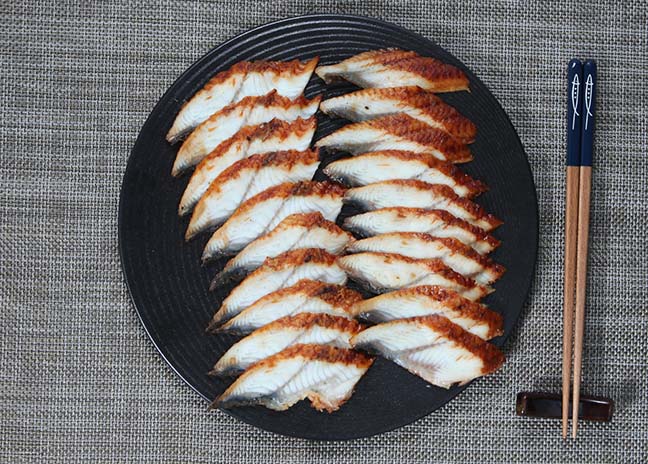
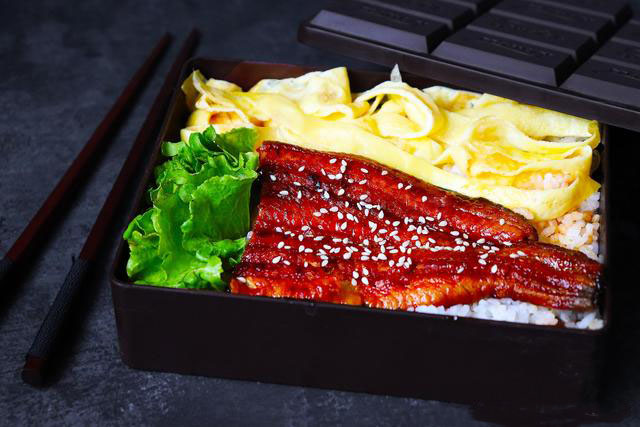
| Commercial Viability | None. Inedible due to its gelatinous flesh and deep-sea habitat. Not targeted by fisheries. | High. Prized for products like unagi kabayaki. Its rich, fatty meat is perfect for grilling and roasting. |
| Traceability | Almost impossible. Lives in the wild, deep ocean, with no tracking or quality control. | Fully traceable. Eelpro manages a supply chain from ~20 customs-registered eel farms to our ISO 22000 certified facility. |
The Glowing Tail Tip: Fact, Theory, and Function
One of the most debated facts about the gulper eel is the purpose of its bioluminescent tail. The end of its long tail contains a complex organ called a photophore, which can produce light. However, observing this creature in its natural, pitch-black environment thousands of meters below the surface is extremely difficult. This has led to a separation between what we know for certain and what remains scientific theory.
Here’s a breakdown of what is observed versus what is hypothesized about its glowing tail tip.
-
Observed Fact: It Possesses a Light-Producing Organ.
Dissections and limited live observations confirm the presence of a photophore at the caudal (tail) fin. This organ can produce a pink or reddish glow. The light is created through a chemical reaction, a phenomenon known as bioluminescence, common in deep-sea organisms. -
Proposed Theory: A Lure for Prey.
This is the most popular hypothesis. The eel may dangle its glowing tail tip near its head, using it as a lure to attract curious small fish and crustaceans directly toward its massive mouth. This "deep-sea angling" strategy would conserve energy, a critical advantage in the food-scarce bathypelagic zone. However, this specific behavior has not been definitively filmed or documented in its natural habitat. -
Observed Fact: The Tail is Long and Mobile.
The gulper's body is mostly tail. It can move this tail with considerable flexibility, allowing it to potentially position the glowing lure effectively if that is its purpose. -
Proposed Theory: A Decoy or Distraction.
An alternative idea is that the light serves a defensive purpose. When threatened by a predator, the eel could flash its tail light to draw the attack toward its less-vital tail, allowing its head and main body to escape. This is a common strategy among other marine animals, but again, it's unconfirmed for the gulper eel. -
Proposed Theory: Mating Signal.
In the absolute darkness of the deep sea, finding a mate is a major challenge. The light could function as a signal to attract other gulper eels for reproduction. The pattern or color of the light might communicate species, sex, or readiness to mate. This is a plausible function, but there is currently no direct evidence to support it.
The primary challenge is that gulper eels are extremely fragile. When brought to the surface, the drastic change in pressure often damages or kills them, making it nearly impossible to study their natural behavior in a lab. Research relies on brief encounters with remotely operated vehicles (ROVs) in the deep ocean.
Anatomy and Feeding: More Than Just a Giant Mouth
The gulper eel's most famous feature is its mouth, which is much larger than its body. The lower jaw is hinged in a way that allows it to open wide enough to swallow prey larger than itself. However, a common misconception is that it regularly consumes large fish. In reality, its diet consists mainly of small crustaceans. Its mouth likely functions more like a large net, allowing it to scoop up mouthfuls of water and filter out any small organisms it contains.
To accommodate this feeding style, its body has several unique adaptations:
- Distensible Stomach: Like a pelican's pouch (hence its other name, the pelican eel), its stomach can stretch significantly to hold a large volume of water and food.
- Lack of Ribs: The absence of a rigid rib cage allows its body to expand without injury when it takes in a large mouthful.
- Tiny Teeth: Its teeth are small and hooked, suitable for gripping small, soft-bodied prey, not for tearing apart large fish.
This anatomy is a world away from the firm, muscular build of the freshwater eels we process. Our patented low-fat roasting and deodorizing technology is designed specifically for the higher fat content of Anguilla japonica, creating a clean flavor and perfect texture for unagi kabayaki eel. This specialized processing would be entirely unsuited for the gelatinous body of a gulper.
Why Full-Chain Traceability Matters for the Eels You Can Source
The mystery surrounding the gulper eel in its remote, wild habitat underscores a critical point for B2B buyers: the immense value of a controlled and transparent supply chain. While the gulper's life is largely unknown, every step of our commercial eel production is monitored, certified, and documented.
As a frozen eel supplier for global markets, we eliminate the risks associated with wild-caught, untraceable products. Our B2B clients in Japan, the US, and the EU rely on our commitment to food safety, which is built on a foundation of complete traceability.
This is how we ensure quality and compliance:
- Certified Farming Bases: We source raw materials from over 19 certified and cooperative farming bases. This gives us control over feed, water quality, and animal health from the very beginning.
- In-House Laboratory Testing: Our professional eel lab conducts rigorous testing for veterinary drug residues and microbiological indicators, ensuring our products meet strict Japan, US, and EU import standards.
- ISO 22000 & HACCP Systems: Our production facility is certified under the ISO 22000:2018 Food Safety Management System and HACCP. We have metal detectors at critical control points and 25 dedicated quality-control specialists overseeing our two modern production lines.
- Stable Cold Chain: With a 1,000-ton cold storage facility, we maintain the integrity of our frozen seafood from production to shipment, guaranteeing product quality upon arrival.
The fascinating biology of the gulper eel is a reminder of nature's diversity. But for your business, consistency, safety, and reliability are what matter. That comes not from the mysteries of the deep sea, but from a meticulously managed supply chain on the surface.
If you require a stable supply of high-quality, fully traceable frozen roasted eel products that meet international food safety standards, our team is ready to assist. Contact us to discuss your specific product and packaging needs.

 WhatsApp
 sales@chinaeels.com
 +8619937922411