

How Big Are Gulper Eels Really? A Guide to Deep-Sea Species
If you're trying to determine how big gulper eels are, you'll quickly find conflicting information. Some sources claim they reach under a meter, while others suggest lengths of several meters. This discrepancy isn't due to poor research; it's a result of biological diversity, inconsistent terminology, and the challenges of studying deep-sea creatures. Understanding these factors is key to separating fact from fiction.
While these fascinating deep-sea animals capture the imagination, they are worlds apart from the freshwater eels used in global cuisine. As a leading processor and exporter of high-quality unagi, we believe in providing clear, accurate information on all types of eels to help our partners in the food industry make informed decisions. This guide clarifies the size of true gulper eels and contrasts them with the commercial species essential for foodservice and retail.

Why Reported Gulper Eel Sizes Conflict: A Breakdown
The confusion around gulper eel size stems from several distinct factors. The term "gulper eel" is often used as a catch-all for several related but different species in the order Saccopharyngiformes. Their extreme deep-water habitat also means that specimens are rarely retrieved intact, further complicating accurate measurement. Here’s a breakdown of the primary reasons for size discrepancies.
This table clarifies the main points of confusion for anyone researching these unique creatures:
| Factor | Explanation | Impact on Reported Size |
|---|---|---|
| Species Variation | The common name "gulper eel" can refer to the Pelican Eel (Eurypharynx pelecanoides) or members of the Saccopharynx genus (swallowers). These are different animals with different maximum sizes. | Eurypharynx typically reaches about 0.75 meters (2.5 feet). Some Saccopharynx species are reported to grow much larger, potentially up to 2 meters (6.5 feet). |
| Measurement Method | Scientists may use "Total Length" (TL) including the long, whip-like tail, or "Standard Length" (SL) which excludes the tail fin. The tail filament can be extremely long and fragile. | A measurement including a full, undamaged tail filament will be significantly longer than one that excludes it or is based on a specimen with a broken tail. |
| Specimen Condition | These eels live at depths of 500 to 3,000 meters. The extreme pressure change when bringing them to the surface often damages their delicate bodies, especially the tail. | Most size estimates are based on incomplete or damaged specimens, leading to conservative or extrapolated figures that may not reflect their true maximum length in their natural habitat. |
| Common Name Ambiguity | "Gulper eel," "pelican eel," and "swallower eel" are often used interchangeably in non-scientific articles, lumping distinct species together and merging their different size characteristics. | An article might use a picture of a Pelican Eel but cite the larger potential size of a Saccopharynx swallower, creating significant confusion about how big gulper eels are. |
Gulper Eels vs. Commercial Freshwater Eels: Key Differences for Importers
While scientifically interesting, gulper eels have no commercial or culinary value. For food importers, distributors, and restaurant chains, the critical distinction is between these deep-sea oddities and the high-value freshwater eels of the genus Anguilla. Understanding these differences is fundamental to sourcing safe, high-quality products for the global market.
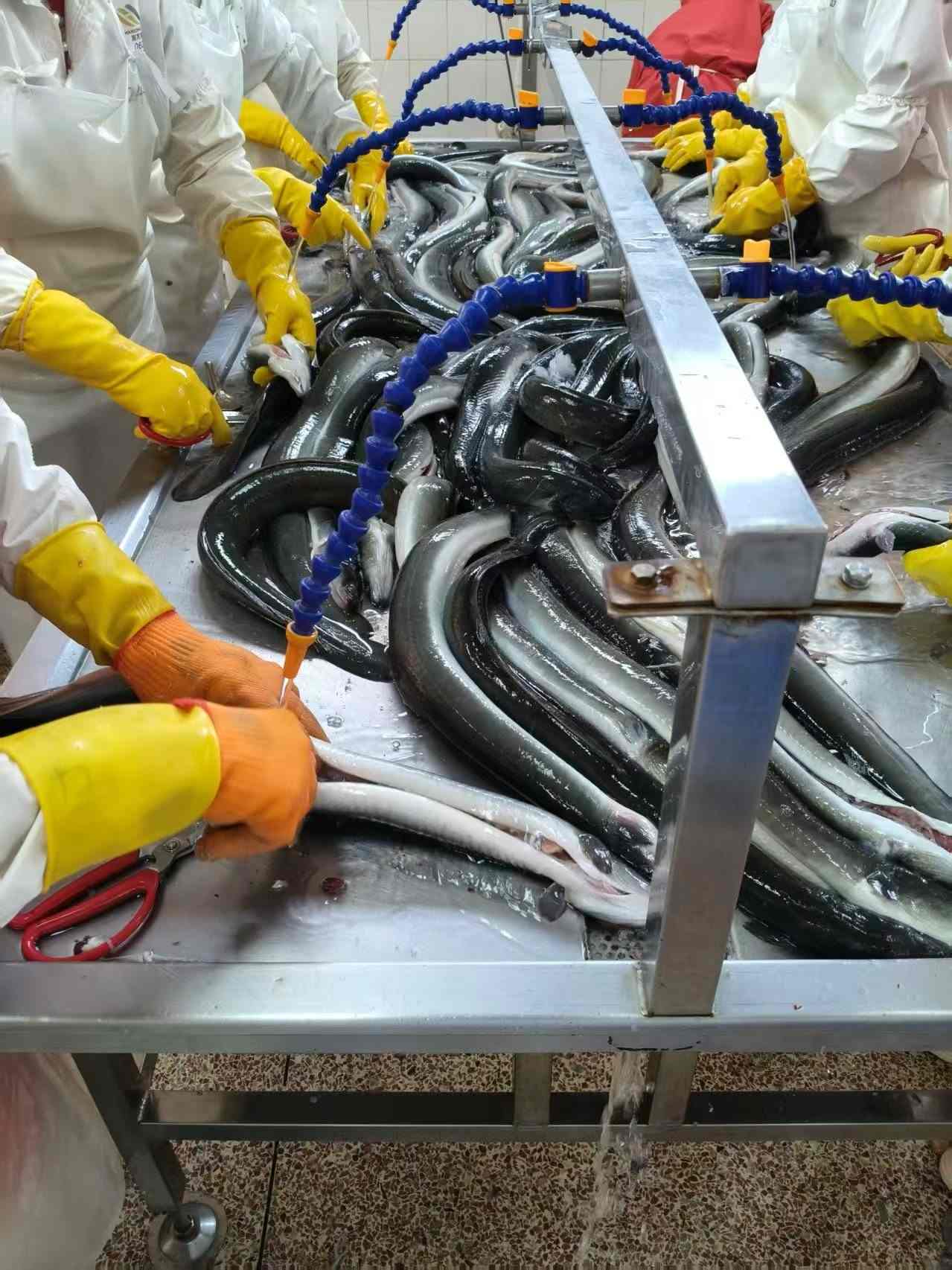
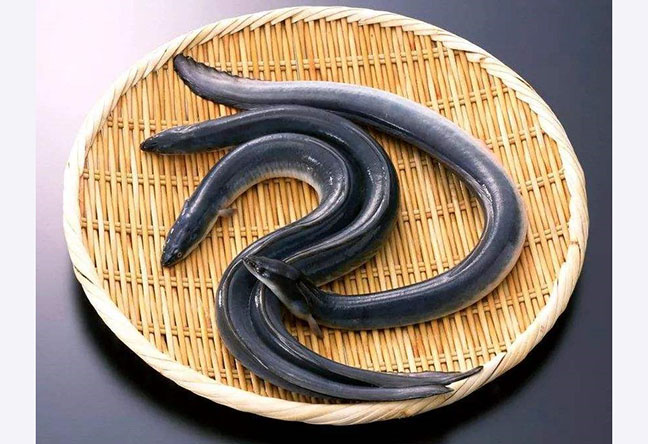
The most important species for cuisine, particularly for unagi kabayaki eel, is Anguilla japonica. These are the eels we raise and process at Eelpro Co., LTD. They are prized for their rich flavor, firm texture, and high fat content, which makes them ideal for grilling.
Key Distinctions for Your Business
- Habitat & Sourcing: Gulper eels are solitary deep-sea creatures, impossible to farm. Commercial freshwater eels are cultivated in controlled, land-based aquaculture systems. Our ~20 customs-registered unagi eel farms provide a stable, traceable, and high-quality raw material supply chain.
- Anatomy & Culinary Use: The gulper's body is mostly a giant mouth and stomach, with minimal muscle mass. In contrast, freshwater eels have a dense, muscular body composition perfect for processing into fillets, slices, and other cuts for foodservice.
- Food Safety & Regulation: There are no food safety standards for gulper eels. Conversely, our freshwater eel products are produced under globally recognized certifications, including ISO 22000:2018, HACCP, and HALAL. We ensure full compliance with Japan, US, and EU standards for veterinary drug residues and microbiological indicators.
- Market & Application: Gulper eels are a biological curiosity. Freshwater eels are a premium ingredient in Japanese, European, and North American cuisine. They are the foundation of dishes like unadon and are a key component in sushi restaurants, often served with a savory eel sauce product.
Sourcing High-Quality Freshwater Eel: A Checklist for B2B Buyers
When sourcing frozen eel for your market, focusing on the right criteria is essential to avoid trade risks and ensure customer satisfaction. Vetting a potential supplier goes beyond price; it involves verifying their entire production chain, from farm to final shipment. Here is a practical checklist for procurement managers and food importers.
-
☑ Verify Certifications: Does the supplier hold current, internationally recognized food safety certifications?
Our credentials include ISO 22000:2018, HACCP, and HALAL, along with an Export Food Producer Registration Certificate. These are non-negotiable for ensuring process integrity. -
☑ Confirm Traceability: Can the supplier trace the product back to the specific farming base?
We operate a full-chain traceability system across our 19 self-operated and cooperative certified farming bases, which total over 2,150 mu. -
☑ Assess Production Capacity: Can the facility handle your volume requirements consistently?
With two modern production lines and an annual capacity of 4,000 tons, we reliably supply large-scale catering chains and wholesale clients in Japan, the US, and the EU. -
☑ Inquire About Quality Control Infrastructure: What in-house testing and inspection capabilities do they have?
We employ 25 dedicated technical and quality-control specialists and operate our own professional eel lab for quality assurance. We also utilize metal detectors at critical control points. -
☑ Review Processing Technology: Do they have specialized technology for superior product quality?
Our patented low-fat roasting and deodorizing equipment, combined with a precise 4-layer soy-sauce coating process, delivers a product with exceptional flavor and texture. -
☑ Check Cold Chain Management: How do they ensure product integrity during storage and logistics?
Our 1,000-ton on-site cold storage facility maintains a stable cold chain from production to shipment, safeguarding product quality.
Eelpro's Commitment to Verifiable Quality and Scale
For over a decade, my work in seafood export quality assurance has focused on one goal: building trust through verifiable processes. At Eelpro, this philosophy is at the core of our operations. We provide our B2B partners not just with a product, but with a transparent and reliable supply chain. Our clients, from Japanese restaurant chains to German food importers, depend on us for consistency and compliance.
Our infrastructure is built to support international trade. With over 160 employees and a modern 8,497 m² production workshop, we manage the entire process. Our sourcing from over 5,000 tons of high-quality raw eel material annually ensures we can meet demand, while our flexible MOQ policies cater to different business models, including export traders and wholesale clients. This combination of scale and quality control helps our partners avoid trade risks and reduce their back-of-house processing costs with ready-to-heat, boneless products.
Whether you need custom cuts like sushi slices or standardized fillets for foodservice, our systems are designed for precision and safety. We apply the same rigorous export standards to all our products, ensuring every shipment meets the high expectations of our clients worldwide.
If you are looking for a reliable unagi kabayaki manufacturer and frozen eel supplier with certified processes and a proven track record in major international markets, we can help.
For detailed specifications on our frozen eel products or to discuss your import requirements, please contact our export team.