


How Big Are Gulper Eels and How Their Jaws Define Their Size
When people ask how big are gulper eels, the simple answer is often misleading. While their slender, whip-like bodies typically reach lengths of 0.75 to 1 meter (about 2.5 to 3.3 feet), their body length is arguably their least impressive feature. The defining characteristic of the gulper eel (Eurypharynx pelecanoides), also known as the pelican eel, is its enormous, pouch-like mouth that is disproportionately massive compared to its body. This unique adaptation for survival in the food-scarce deep sea makes it one of the most bizarre-looking creatures in the ocean, and it stands in stark contrast to the commercially important freshwater eels prized in global cuisine.
As a quality specialist in the seafood export industry, I've seen how anatomical details directly impact product quality and processing efficiency. While we at Eelpro focus on premium farmed freshwater eels for the foodservice market, understanding the incredible diversity of the eel world, including extreme examples like the gulper, highlights why specific biological traits matter—whether for deep-sea survival or for creating a perfect plate of unagi kabayaki.

Gulper Eel Size and Anatomy: A Deep-Sea Anomaly
The gulper eel is a true deep-sea specialist, living in the bathyal and abyssal zones at depths of 500 to 3,000 meters (1,600 to 9,800 feet). Life in this dark, high-pressure environment requires extreme adaptations, which are clearly reflected in its anatomy. Its size and form are entirely shaped by the need to capitalize on any potential meal, no matter how large or infrequent.
- Body Length and Shape: The majority of its 1-meter length is composed of a long, thin, whip-like tail. The body itself is small and elongated. This structure is not built for powerful, sustained swimming but likely for energy conservation and maneuverability in the dark.
- The Jaw and Stomach: The lower jaw is loosely hinged and can open wide enough to swallow prey much larger than the eel itself. The jaw connects to a large, expandable pharynx and stomach that can stretch to accommodate a substantial meal. This is a critical survival mechanism in an environment where the next meal is never guaranteed.
- Bioluminescent Lure: The tip of the gulper's tail features a photophore, a light-producing organ. It is thought that the eel uses this glowing lure to attract small crustaceans and fish in the total darkness of the deep sea, dangling it near its massive mouth.
- Sensory Organs: Unlike many eels that rely on a keen sense of smell, the gulper has very small eyes and underdeveloped olfactory organs. Its primary method for detecting prey is likely through sensing vibrations and using its bioluminescent lure.
These features make the gulper eel a fascinating subject of marine biology but entirely unsuitable for human consumption or commercial fishing. Its gelatinous, low-muscle-mass body offers poor texture and yield, a direct opposite of the firm, flavorful flesh found in species like the Japanese eel (*Anguilla japonica*).
The Jaw-to-Body Ratio: A Technical Breakdown
The most dramatic difference between a deep-sea predator like the gulper eel and a commercially farmed species is the functional anatomy of the head and jaw. This isn't just a trivial biological detail; it dictates the animal's entire life strategy and, from a commercial perspective, its suitability for processing and culinary use. A large, bony head with minimal meat is a major source of yield loss in seafood processing.
Here’s a direct comparison of how the jaw and body proportions serve vastly different purposes.
| Anatomical Feature | Gulper Eel (Eurypharynx pelecanoides) | Japanese Eel (Anguilla japonica) |
|---|---|---|
| Jaw-to-Body Proportion | Extremely high. The jaw structure can make up nearly a quarter of the animal's total length and is its most dominant feature. | Very low. The head and jaw are small, streamlined, and proportional to the body, maximizing the percentage of usable meat. |
| Primary Jaw Function | To act as a large, passive net to engulf prey of various sizes. It is not designed for chewing or powerful biting. | To actively hunt and consume smaller prey like crustaceans, insects, and small fish with precise, strong bites. |
| Expandable Capacity | Massively expandable pharynx and stomach allow it to consume prey larger than itself, a key adaptation for a food-scarce habitat. | Stomach is not designed for extreme expansion. Feeds more frequently on smaller items, leading to consistent body composition. |
| Implication for Commercial Viability | Zero. The body is mostly jaw, skin, and bone with very little muscle. The gelatinous flesh has no culinary value. | High. The high meat-to-bone ratio, rich fat content, and firm texture make it ideal for processing into products like unagi kabayaki eel. |
This comparison shows why, for food importers and restaurant chains, the anatomy of an eel is directly tied to profitability. A species like the Japanese eel, sourced from our 19 certified farming bases, is cultivated specifically for its superior meat yield and consistent quality—attributes that are the polar opposite of the gulper eel's survival-focused anatomy.
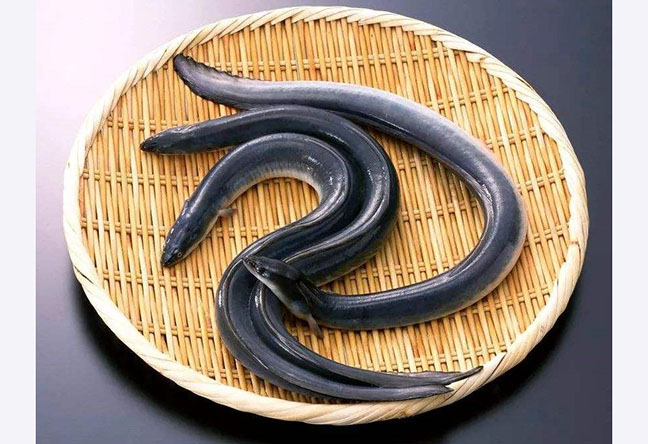
From Deep-Sea Curiosities to Culinary Staples: Sourcing Commercial Eel
While the gulper eel captures the imagination, the real business of the global eel market revolves around species like *Anguilla japonica*. For buyers in Japan, the United States, and the European Union, sourcing high-quality eel is a matter of strict standards, traceability, and supply chain reliability. The wild, unpredictable nature of deep-sea creatures is incompatible with the demands of the modern food industry.
At Eelpro, our entire operation is designed to remove that unpredictability. With an annual production capacity of 4,000 tons and a 1,000-ton cold storage facility, we provide a stable supply chain for our clients. The journey from a farmed eel to a ready-to-heat foodservice product involves meticulous control at every stage, a process overseen by our team of 25 quality and technical specialists.
For any B2B buyer, sourcing frozen eel requires a detailed verification process. Here is a checklist of common mistakes to avoid.
Common Mistakes in Sourcing Frozen Eel Products
- Ignoring Farm-Level Traceability: Failing to verify the supplier's control over its raw material sources. A supplier should provide documentation from their customs-registered farming bases. Our full-chain control from over 2,150 mu of farms ensures raw material quality.
- Overlooking Certifications: Assuming all suppliers meet international standards. Insist on seeing current ISO 22000:2018, HACCP, and HALAL certifications. These are not just paperwork; they represent a functional food safety management system.
- Accepting Vague Processing Standards: Not clarifying the specifics of the roasting and saucing process. Our patented low-fat roasting technology and 4-layer eel sauce coating process create a consistent product that competitors struggle to match.
- Neglecting Cold Chain Verification: Focusing only on the product and not the logistics. An unreliable cold chain can ruin a perfect product. Our 1,000-ton cold storage facility ensures product integrity from our factory to the port.
Meeting Global Export Standards at Eelpro
Bringing a product like frozen roasted eel to international markets in Germany, Poland, or Australia requires more than just good farming. It demands a scientific approach to food safety and compliance. Every batch of our eel is subject to rigorous testing in our in-house professional laboratory to ensure it meets the strict standards for veterinary drug residues and microbiological indicators required by Japan, the US, and the EU.
This commitment to quality is why we've become a long-term supplier to Japanese restaurant chains and a trusted partner for food importers across the globe. Our standardized, boneless cuts and ready-to-heat packaging reduce labor costs in commercial kitchens, providing a reliable and profitable product for foodservice channels.
The fascinating biology of the gulper eel reminds us of the incredible diversity of life in the ocean. However, for the dinner plate, consistency, safety, and quality are paramount. That is where a dedicated, certified producer makes all the difference.
To learn more about our custom cutting specifications, packaging options, and MOQ for export orders, please submit an RFQ to our team.