


Understanding the Eel in Japanese Name Helps You Order the Right Unagi or Anago Every Time
You see "unagi" on one invoice and "anago" on another. Same English translation: eel. Different fish, different fat content, different cooking method entirely. Order the wrong one and your kitchen gets a bony, lean sea eel instead of the rich, roasted freshwater eel your menu promised. Getting the eel in Japanese name right, before the purchase order is signed, saves you a costly correction mid-shipment.
Japanese doesn't collapse every long, snake-shaped swimmer into one word the way English does with "eel." The language splits them by species and habitat. That distinction isn't trivia — it decides which cutting spec, which sauce process, and which cold-chain handling a buyer needs to ask for.
Unagi, Anago, and the Other Japanese Eel Terms You'll See on Spec Sheets
Below is a direct mapping of the terms most likely to appear on a Japanese menu, a customs declaration, or a supplier's product sheet. Each one points to a genuinely different animal.
| Term | Kana | Kanji | Pronunciation | Species | Habitat | Typical Use |
|---|---|---|---|---|---|---|
| Unagi | うなぎ | 鰻 | oo-NAH-ghee | Anguilla japonica (Japanese freshwater eel) | Rivers, estuaries, farmed ponds | Kabayaki, unadon, unajuu |
| Anago | あなご | 穴子 | ah-NAH-go | Conger myriaster (whitespotted conger) | Coastal seawater, burrows in sand | Sushi nigiri, simmered anago-don |
| Hamo | はも | 鱧 | HAH-mo | Muraenesox cinereus (pike conger) | Seawater, Seto Inland Sea region | Summer hamo-nabe, deep-fried |
| Dojou | どじょう | 泥鰌 | doh-JOH | Misgurnus anguillicaudatus (pond loach) | Freshwater mud, rice paddies | Dojou-nabe (not a true eel, often confused) |
Cold fact: dojou isn't biologically an eel at all — it's a loach — but English listings lump it under "eel" constantly. If a supplier's catalog says simply "eel," ask which kanji or Latin name sits behind it. That one question avoids three kinds of trouble later.
Why Unagi and Anago Diverge in Fat Content and Roasting Process
This is the part buyers usually skip, and it's the part that affects cost and plate quality the most.
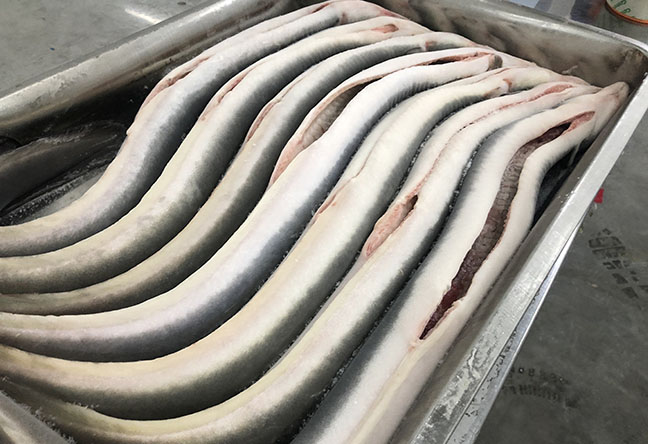
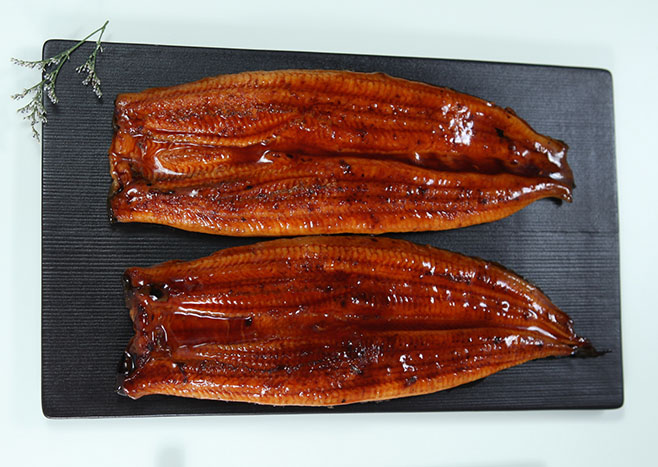
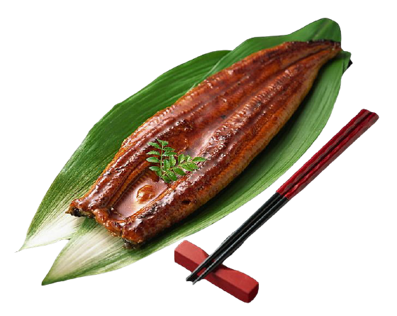
Unagi carries noticeably more fat, especially farmed Anguilla japonica raised on a controlled feed. That fat is what lets kabayaki hold up under repeated grilling and soy-sauce basting without drying out. Our own roasting line applies four precise layers of soy sauce with temperature-controlled steps between each pass — a process that only works because the fat content supports it. Try the same four-layer approach on lean anago and the result scorches before the sauce caramelizes properly.
Anago, by contrast, is simmered or lightly steamed, almost never grilled kabayaki-style with heavy tare. Its skin and flesh structure can't take the repeated basting cycle the way unagi can.
Bone structure matters too. Anago has finer pin bones that require a different deboning pass. Unagi used for export kabayaki is typically filleted and boneless before it ever reaches the roasting stage, which is why frozen unagi kabayaki products are marketed as ready-to-heat with minimal back-of-house prep.
If a buyer asks a factory to apply unagi-style processing to anago raw material, expect three outcomes: inconsistent char, sauce that won't bind, and a yield loss the quote never accounted for. This isn't a rare mix-up — it happens whenever a sourcing team treats "eel" as one SKU instead of two distinct raw materials.
Common Mistakes When Sourcing "Eel" Without Confirming the Japanese Name
- Accepting "eel" on a packing list without a Latin name. Anguilla japonica, Anguilla anguilla, and Conger myriaster all ship under generic English labeling in some markets.
- Assuming kabayaki always means unagi. Some regional menus apply "kabayaki style" sauce to other fish; the term describes a glazing method, not a guaranteed species.
- Ignoring fat-grade differences when comparing supplier quotes. A lower price per kilo on "eel" may reflect leaner stock unsuited to grilling.
- Overlooking bone-removal specs. Deboned unagi and semi-boned anago require different QC checkpoints; mixing them up creates complaint risk at the restaurant level.
- Skipping species verification on import paperwork. Veterinary drug residue limits and inspection standards differ by species and origin country — a detail that matters for shipments headed to Japan, the US, or the EU.
A Buyer's Checklist Before You Place an RFQ for Frozen Unagi Kabayaki
- Confirm the species name in writing: Anguilla japonica or another Anguilla species.
- Specify the cut: whole fillet, shredding, dicing, strip-cutting, chunk-cutting, 3-section cut, or sushi slices.
- Ask how many soy-sauce coating layers the roasting process applies, and whether "white-roasted" versus fully glazed finish is available.
- Check packaging format needed — skin-packaging for foodservice portions or gift-box format for retail.
- Verify certification: ISO 22000:2018, HACCP, HALAL, and export food producer registration should all be documented, not just mentioned verbally.
- Confirm cold-chain capacity at the supplier's end — a 1,000-ton cold storage facility supports steadier shipment scheduling than small-batch cold rooms.
- Request traceability back to the farming base, not just the processing plant.
Worked Example — Matching a Donburi Menu Item to the Correct Product Spec
A US importer wants to add "Unagi Don" to a Japanese-fusion menu. Here's the sourcing sequence that avoids a mismatch:
- Confirm the dish calls for unagi, not anago — donburi recipes built around rich, glazed eel almost always specify Anguilla japonica.
- Request boneless fillets, pre-cut to portion size, so kitchen staff aren't deboning on-site.
- Ask for the four-layer soy-sauce kabayaki process rather than a single-glaze shortcut — it affects both color consistency and how the sauce performs when reheated.
- Pair the finished eel with a matching eel sauce rather than an improvised glaze, since tare viscosity is calibrated to the roasting method.
- Verify the supplier's eel farming bases are customs-registered, and that lab testing — ideally through an in-house laboratory with metal-detector checkpoints — covers the batch.
Skip any of these steps and the finished dish can still look like unagi on the plate while missing the texture and flavor that built the dish's reputation in the first place. This checklist doesn't apply if you're sourcing anago for sushi nigiri or sea-eel donburi — that's a separate raw material chain entirely, with its own supplier questions around freshness and fillet size.
Readers building out a wider seafood program may also want to compare frozen seafood options alongside eel, or review how kabayaki sauce is formulated before locking in a private-label recipe.
This article was reviewed by Nancy Chen, a food safety and quality specialist with over 12 years in seafood export QA, who oversees ISO 22000 and HACCP compliance for eel processing lines supplying restaurant chains and importers across Japan, the US, and the EU.
Still unsure which species fits your menu or private-label spec? Send us your target cut and packaging format, and we'll confirm the right kabayaki or anago-style spec before you submit an RFQ.
 WhatsApp
 sales@chinaeels.com
 +8619937922411