

How Is Unagi Defined Beyond Just a Freshwater Eel?
When an import specification sheet lists "unagi," what does it actually mean? For many buyers, this term is simply a synonym for Japanese freshwater eel. This assumption can lead to costly sourcing mistakes in product form, flavor profile, and preparation. To truly unagi define for your business means understanding it across three contexts: biology, cuisine, and most importantly, as a B2B product specification. Getting this wrong can result in receiving a product that doesn't meet your restaurant's or retailer's needs, impacting everything from kitchen efficiency to customer satisfaction.
As a quality assurance specialist who has guided dozens of overseas clients through import compliance, I've seen firsthand how a clear unagi definition prevents trade risks. It ensures the product you order aligns perfectly with the product you receive, meeting rigorous standards for markets in Japan, the US, and the EU. Let's break down these distinctions to make your sourcing process more precise and reliable.
Unagi: Distinguishing Species from Dish for Accurate Sourcing
The term "unagi" is used interchangeably in conversation, but for a food importer, distributor, or large-scale catering business, the difference is critical. Misinterpreting the term can lead to ordering the wrong species, an unprepared product, or an item that doesn't fit your menu application. A precise unagi definition is your first line of defense against supply chain errors.
The key is to recognize that "unagi" can refer to the live animal, the culinary preparation, or a specific stock-keeping unit (SKU). Each has different implications for your purchase order.
| Context | Definition & Focus | What It Means for Your Business |
|---|---|---|
| Biological | Refers to freshwater eels, most notably Anguilla japonica. The focus is on species, origin, and aquaculture practices. This is the raw material. | Specifying the species is essential for consistent taste, texture, and fat content. Our 19 self-operated and cooperative farming bases supply over 5,000 tons of high-quality Anguilla japonica annually, ensuring a stable source of premium raw material. |
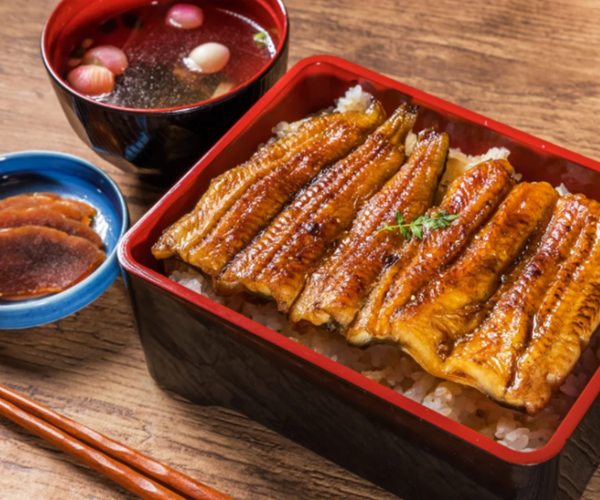
| Culinary | Refers to the prepared dish, typically grilled and glazed. The most common form is kabayaki (grilled with a sweet soy-based sauce). The unagi food meaning is centered on this specific cooking method. | This is what your end customer recognizes. Your order must specify the preparation style (e.g., kabayaki vs. shirayaki/white-roasted) and the flavor profile of the glaze, as this defines the final product experience. |
| Product Specification | Refers to a processed, ready-to-use food item with defined parameters: cut (fillet, slice, dice), weight, glaze percentage, packaging (skin-pack, gift box, bulk), and certifications. | This is the most critical level for B2B procurement. An order for "frozen unagi kabayaki" should detail everything from the deboning standard to the exact dimensions of sushi slices to minimize back-of-house labor and ensure consistency. |
Failing to differentiate these contexts is a common pitfall. A request for "10 tons of unagi" is too ambiguous. A precise request would be: "10 tons of frozen unagi kabayaki, from Anguilla japonica, 200g boneless fillets, 25% glaze, individually skin-packed, for the EU market." This level of detail ensures you receive a product ready for your specific application, from fine dining to large-scale food service.
From Farm to Freezer: What Defines Export-Grade Unagi Kabayaki?
A reliable unagi definition for an international business must include a guarantee of safety and compliance. The name on the box means little if the product is rejected at customs. At Eelpro, we've built our entire operation around a verifiable, full-chain control system that gives our B2B clients confidence in every shipment.
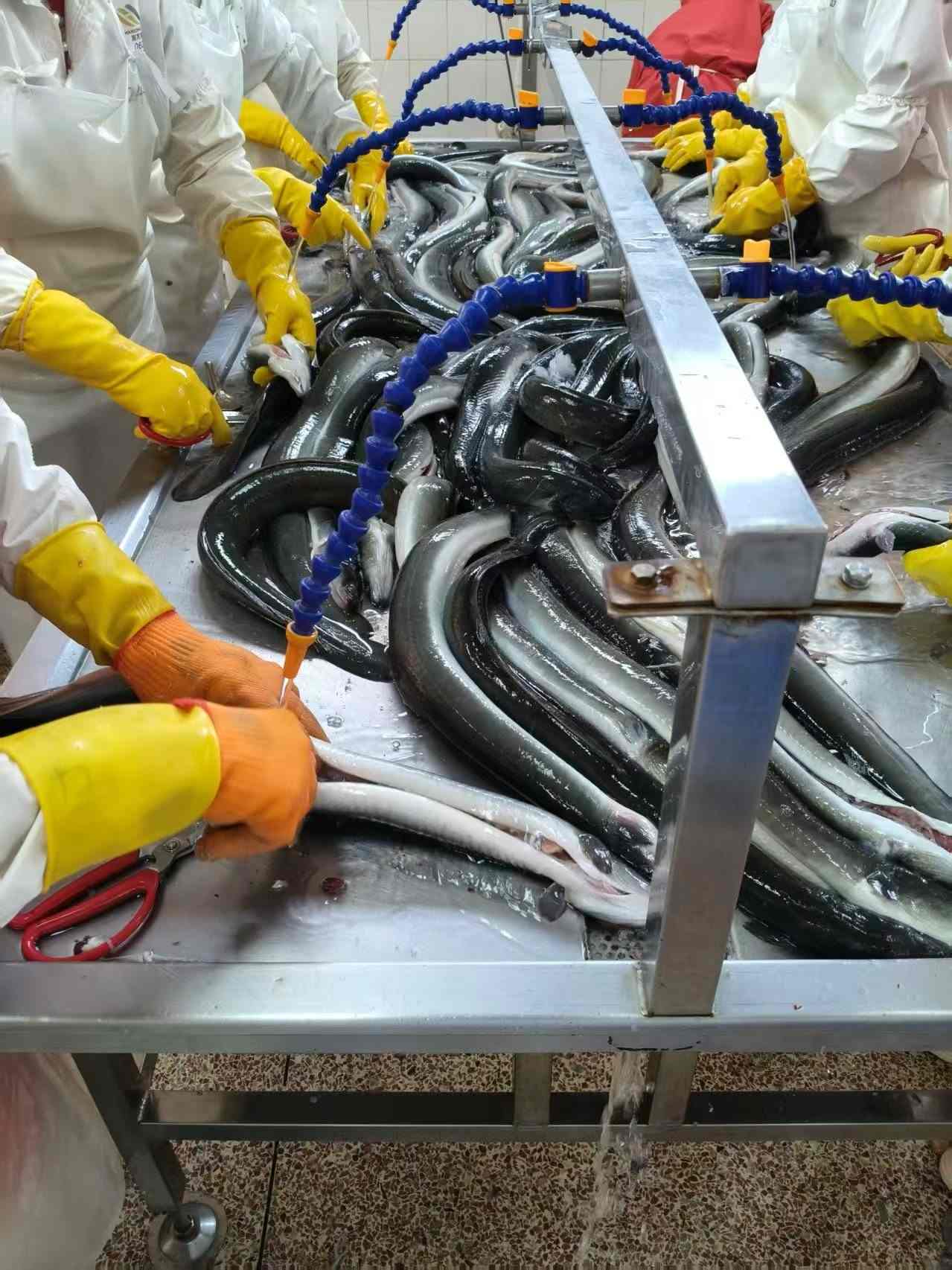
This system begins long before the eel reaches our 8,497 m² production workshop. It starts at our network of over 20 customs-registered unagi eel farms, covering more than 2,150 mu. Here’s how we ensure quality at every step:
- Traceability from the Source: Each batch of eel is tracked from its registered farm. We conduct process verification and targeted sampling for veterinary drug residues and other contaminants before the raw material is even accepted at our facility.
- Certified Processing Standards: Our facility operates under globally recognized food safety systems, including ISO 22000:2018 and HACCP. These aren't just certificates on a wall; they are active management systems that dictate our daily operations, from raw material handling to final packaging. Our SC Food Production License (No. SC11135062401122) further validates our adherence to strict national standards.
- In-House Laboratory Control: We don't rely solely on third-party testing. Our own professional eel lab performs regular checks for microbiological indicators, while metal detectors are placed at critical control points on our two modern production lines. This internal diligence is key to meeting the stringent food inspection standards of Japan, the US, and the EU.
- Cold-Chain Integrity: The quality of frozen unagi is only as good as its storage and logistics. Our 1,000-ton cold storage facility ensures that the product is maintained at the optimal temperature from the moment it’s packed until it’s loaded for shipment, preserving its texture and flavor.
When you source from Eelpro, the unagi definition inherently includes this commitment to safety and compliance. You are not just buying a piece of fish; you are buying a product backed by a certified, traceable, and meticulously controlled supply chain designed to eliminate trade risks.
How Our Roasting and Cutting Processes Refine the Unagi Definition
Beyond safety, the commercial value of unagi is defined by its preparation. The taste, texture, and appearance of the final product are determined by highly technical processing steps. This is where our patented technologies and standardized procedures create a consistent, premium product that foodservice providers can rely on.
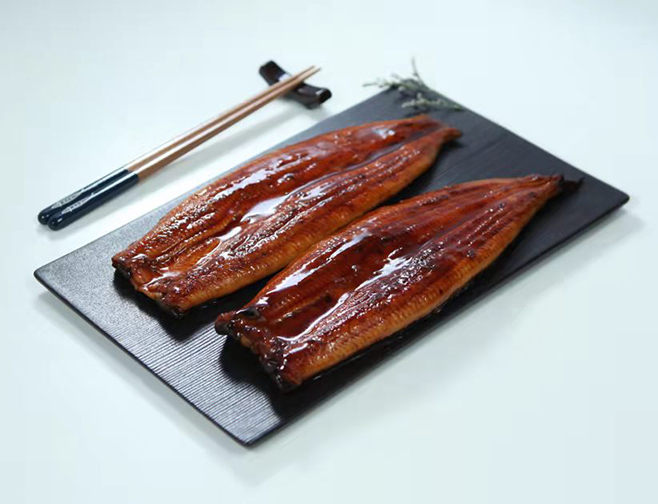
Our export-grade roasting process for frozen unagi kabayaki is a perfect example. It’s not simply grilling; it’s a science. We apply four precise layers of soy sauce, each at a different, temperature-controlled stage of cooking. This method builds a deep, complex flavor that a single-coat process cannot replicate. We have even established internal color standards for "white-roasted color" (for un-sauced eel) and the "1st-through-4th soy-sauce coating color" to ensure absolute consistency across every batch.
Our technical capabilities also include:
- Patented Deodorizing Equipment: Freshwater eels can sometimes have an earthy taste. Our patented equipment effectively removes any undesirable odors, resulting in a clean, pure flavor that allows the richness of the eel and the sauce to shine.
- Low-Fat Processing Technology: This patented process helps manage the final product's fat content, producing a succulent yet not overly oily mouthfeel, which is highly preferred in many culinary applications.
- Precision Custom Cutting: Standard fillets don't work for every menu. We offer a wide range of custom cutting specifications to reduce your kitchen's prep time and food waste. Our capabilities include:
- Shredding for toppings and fillings
- Dicing for mixed rice bowls
- Strip-cutting for appetizers
- Chunk-cutting for skewers
- 3-section cuts for bento boxes
- Standardized sushi slices for rolls and nigiri
This attention to detail in processing means that when we define unagi, we define it by its readiness for professional kitchens. It is boneless, perfectly cooked, consistently flavored, and cut to the exact specifications needed for immediate use, significantly lowering back-of-house operational costs for our clients.
Buyer's Checklist: 4 Common Mistakes to Avoid When Sourcing Unagi
To put this all into practice, here are four common but costly mistakes buyers make when placing orders for unagi. Use this as a checklist to ensure your next RFQ is clear, precise, and gets you the exact product you need.
- Specifying "Eel" Instead of Species.
- The Mistake: Using the generic term "eel" can result in receiving different species with varying textures and fat content, leading to an inconsistent final dish.
- The Fix: Always specify Anguilla japonica for the classic, rich flavor profile associated with high-quality unagi kabayaki.
- Ignoring the Sauce (Tare) Specifications.
- The Mistake: Not defining the desired sweetness, saltiness, or viscosity of the eel sauce. One supplier's "kabayaki" can taste completely different from another's.
- The Fix: Request a sample to approve the flavor profile. Ask about the sauce application process, like our four-layer method, which indicates a more developed flavor.
- Using Vague Sizing and Cut Descriptions.
- The Mistake: Ordering "fillets" without weight ranges (e.g., 8oz, 9oz) or "slices" without thickness and length. This creates inconsistency and forces your kitchen staff to spend time re-portioning.
- The Fix: Provide exact measurements or weight ranges per piece. Specify if the product needs to be boneless/deboned. Leverage a supplier's custom cutting capabilities to get a product that is ready to heat and serve.
- Overlooking Certifications and Export Compliance.
- The Mistake: Assuming a supplier can meet your country's import standards without verification. This can lead to customs holds, rejections, or even legal issues.
- The Fix: Ask for copies of relevant certifications upfront (ISO 22000, HACCP, HALAL). Confirm that the supplier has a proven track record of exporting to your specific region (e.g., Japan, US, EU) and understands its unique requirements for veterinary drug residues and microbiological limits.
Avoiding these mistakes transforms your sourcing from a gamble into a strategic decision. A well-defined order, backed by a capable and certified supplier, is the foundation of a stable and profitable supply chain.
For detailed specifications on our unagi kabayaki products or to discuss your custom cutting and packaging requirements, please send us your inquiry.