


How Japanese Eel Sushi Is Assembled for Nigiri
Why does one piece of japanese eel sushi feel balanced and luxurious, while another tastes overly sweet, loose, or heavy? The difference is rarely just the eel. A proper nigiri assembly depends on four parts working together: rice, glazed kabayaki, nori, and serving condition.
Japanese eel sushi is often called unagi nigiri, but it is not simply grilled eel placed on rice. The rice must support the topping without becoming dense. The kabayaki must be glossy without flooding the rice. The nori band must secure the eel without hiding its surface. Even the serving temperature changes how the glaze, fat, and rice texture are perceived.
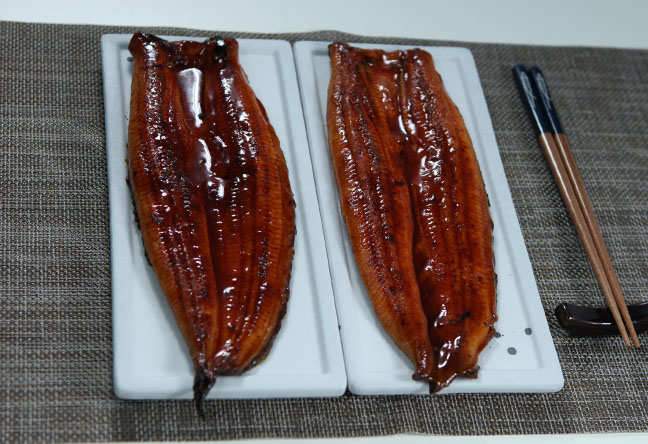
Start With the Right Kabayaki Format for Nigiri Service
For foodservice operators, the first decision is not the nori band. It is the kabayaki format. Japanese eel sushi needs a topping that can be portioned consistently, reheated without breaking apart, and placed neatly over a compact rice base.
Choose standardized slices or controlled cut pieces when speed and visual consistency matter. This suits sushi counters, takeaway operations, and catering teams that need repeatable portions across multiple staff members. A whole fillet may suit a chef-led restaurant that cuts each topping to order, but it adds more trimming work and can create uneven portions if knife skills vary.
Eelpro offers custom cutting options including sushi slices, strips, chunks, diced eel, shredded eel, and three-section cuts. For nigiri programs, buyers should request a cut format that matches their rice shape and intended presentation. The best choice depends on the menu, not on a single universal cut.
| Buyer Situation | Recommended Kabayaki Format | Why It Fits | When It May Not Fit |
|---|---|---|---|
| High-volume sushi counter | Standardized sushi slices | Helps staff plate similar pieces with less trimming | May offer less freedom for oversized chef-style nigiri |
| Restaurant with table service | Portion-controlled cut pieces | Supports consistent plating while allowing menu-specific portions | Requires clear portion specifications during purchasing |
| Chef-led omakase service | Fillet or larger sections | Allows hand-cut presentation and flexible topping shapes | Creates more back-of-house cutting work |
| Prepared sushi retail | Stable, uniform slices | Improves pack appearance and helps control topping placement | Needs validation for the retailer’s holding and display process |
Japanese eel sushi also depends on surface appearance. Kabayaki should show a clean glaze, not a thick pool of sauce. Eelpro’s roasting process uses four precise soy-sauce coating layers, with standards for white-roasted color and each coating stage. That process is relevant to buyers because glaze color and coverage affect how the topping looks once it reaches the sushi counter.
For a closer look at available formats, review the unagi kabayaki product page before setting a slicing or packaging request.
A component-by-component breakdown of nigiri assembly
A well-built piece of japanese eel sushi is a small structure. Each part has a job. If one part is wrong, the eater notices it immediately, even if the kabayaki itself is good.
| Component | What It Does in Practice | What Happens if It Is Wrong | Buyer or Kitchen Check |
|---|---|---|---|
| Sushi rice | Forms the base, gives light pressure under the eel, and provides contrast to the sweet-savory glaze | Rice packed too tightly feels heavy and can overpower the eel; rice that is too loose can collapse during pickup | Confirm staff can shape a compact piece that still separates gently when eaten |
| Glazed kabayaki | Provides the main aroma, soft texture, roasted flavor, and visual focus of japanese eel sushi | Too much glaze can soak the rice and make the piece overly sweet; too little can leave the topping dry-looking | Check whether the supplied coating level suits direct nigiri use or needs a light finishing brush |
| Nori band | Holds the eel against the rice and adds a light seaweed aroma | A loose band allows the topping to slide; an overly wide band covers the kabayaki and makes the bite chewy | Use a narrow, neat strip that secures the topping without dominating the presentation |
| Serving temperature | Controls how the eel fat, glaze aroma, and rice texture are experienced together | Cold eel can taste firm and muted; overheated eel may soften excessively and weaken the rice structure | Serve the topping warm after reheating according to the validated product instructions, while keeping the rice at its intended sushi-service condition |
The key lesson is simple: japanese eel sushi is not improved by adding more sauce or squeezing the rice harder. Balance is the goal. The eel should rest on the rice, not sink into it. The nori should act as a restraint, not a wrapper.
Why sushi rice matters more than many buyers expect
Rice is the quiet half of unagi nigiri. Its mild acidity and soft grain structure give kabayaki a place to land. When the rice is overly wet, the underside of the eel can become soggy. When the rice is dry or compressed, the eater may focus on the starch rather than the fish.
Use a rice portion sized to support the eel rather than match it exactly. This is especially useful when using broad kabayaki slices. A slightly narrower rice base lets the topping remain visible from the side, which improves the appearance of japanese eel sushi on a plate or retail tray. It does not apply when a menu intentionally uses oversized, rice-forward nigiri; in that case, the product specification should be adjusted to match.
Why the nori band is functional, not decorative
The nori band is often treated as an optional visual detail. It is more than that. Kabayaki has a smooth glazed surface, and it can shift when guests pick up nigiri with chopsticks or fingers. The band keeps the topping aligned with the rice.
Use nori only when the topping shape needs support. If a slice is short, stable, and neatly placed, a nori band may not be necessary. If the topping is long or curves slightly after reheating, the band becomes useful. This small decision can reduce plate waste and improve consistency during busy service.
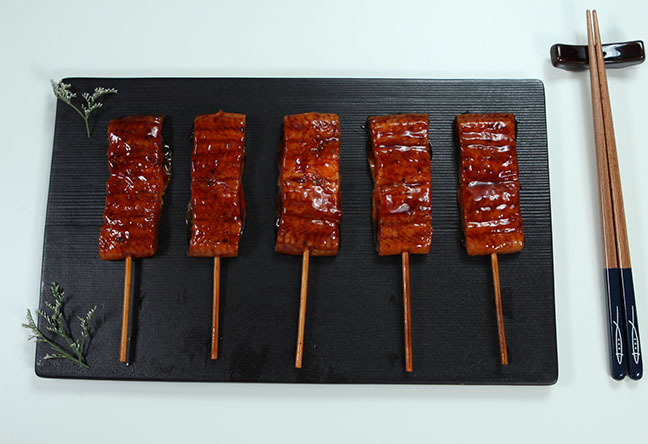
Follow a practical assembly sequence at the sushi counter
Japanese eel sushi is easiest to produce consistently when the kitchen follows the same order each time. The sequence below suits restaurants and foodservice teams using frozen unagi kabayaki. It is not a substitute for each product’s handling instructions or a site-specific food safety plan.
- Confirm the kabayaki cut. Select a slice that covers the rice base without excessive overhang. Separate portions carefully so the glazed surface stays intact.
- Reheat the eel as specified for the product. The goal is a soft, aromatic topping. Avoid improvised overheating, which can make the eel fragile and difficult to place.
- Prepare rice for immediate shaping. Shape it lightly so it holds together during service but does not become a compact block.
- Place the kabayaki over the rice. Position the cleanest glazed side upward. Let the eel sit naturally rather than pressing it deeply into the rice.
- Add a nori band only when needed. Wrap it around the center area to hold the topping in place. Keep the band straight and narrow.
- Assess the glaze before serving. Add only a light finishing touch when the product and menu require it. Do not use sauce to hide uneven cutting or damaged topping surfaces.
- Serve promptly. Japanese eel sushi is at its best when the rice still has its intended texture and the eel remains warm and aromatic.
A useful kitchen test is to lift one finished piece with chopsticks. If the eel slides, the rice breaks, or sauce drips onto the plate, adjust one element at a time. Do not immediately change the eel supplier or add more nori. Often, the issue is rice pressure or an unsuitable cut shape.
Teams that want to compare glaze styles can review the eel sauce product page and the kabayaki sauce article when planning a house finishing method.
Avoid the common mistakes that make unagi nigiri disappointing
Japanese eel sushi can look easy to assemble, which is why a few repeat mistakes appear in both home kitchens and commercial operations. These issues affect texture, plate appearance, and portion control.
- Using cold kabayaki directly on rice: Cold eel can feel firm and dull the aroma. Reheat according to the product instructions before assembly. This does not mean holding eel hot for extended periods; follow your validated operating process.
- Applying too much extra tare: More sauce is not always better. Excess sauce can mask roasted flavor, make the rice wet, and create a messy takeaway pack.
- Cutting after heavy glazing: A blade can drag glaze across the surface and damage the finish. Plan cutting and handling steps around the selected product format.
- Making the rice base too large: Large rice portions can make the eel seem thin or overly sweet by comparison. Match the rice shape to the topping length and width.
- Using a wide nori strip: Too much nori changes the bite and hides the kabayaki. The strip should secure the topping, not become the dominant flavor.
- Ignoring package format: Skin-packaging and gift-box formats can suit different channels, but the final sushi program needs its own checks for portion handling, counter workflow, and presentation.
Cold fact: the nori band often solves a mechanical problem rather than a flavor problem. Its main job is to keep glazed eel from moving on the rice. If the topping stays in place without it, the band may be unnecessary for that specific presentation.
Set sourcing standards before adding eel nigiri to a menu
For buyers, japanese eel sushi begins with a sourcing discussion, not at the sushi counter. The most useful specifications cover product cut, glaze profile, packaging, traceability, and compliance requirements for the destination market.
Select an export-ready supplier when your business imports, distributes, or serves international customers. This is particularly relevant for buyers supplying Japan, the United States, Germany, Poland, Australia, Indonesia, or other Southeast Asian markets. It may be less relevant for a very small local menu using domestic purchasing only, although traceability and food safety controls still matter.
| Purchase Criterion | What to Ask For | Why It Affects Nigiri Service |
|---|---|---|
| Cut specification | Sushi slice, strip, chunk, or custom cut request | Determines assembly speed, topping coverage, and portion consistency |
| Glaze profile | Confirm whether the kabayaki is ready for direct use or intended for additional tare | Prevents overly sweet, wet, or uneven nigiri |
| Packaging format | Discuss skin-packaging, gift boxes, or another agreed format | Influences handling efficiency, presentation, and channel suitability |
| Traceability | Ask how raw materials are tracked from farming base through shipment | Supports import documentation and buyer confidence |
| Quality controls | Confirm laboratory testing, metal detection, and relevant certification documents | Helps buyers assess supplier controls before placing repeat orders |
Eelpro operates with ISO 22000:2018, HACCP, HALAL certification, export food producer registration, and an SC Food Production License. Its Seafood HACCP approach is supported by an in-house laboratory and metal detectors at critical control points. The company also works with approximately 20 customs-registered eel farming bases covering 2,150 mu, supporting full-chain traceability from farm registration to shipment.
For japanese eel sushi buyers, that traceability matters when a restaurant group, importer, or distributor needs to verify product origin and process controls. Eelpro has supplied kabayaki eel to Japanese restaurant chains and has exported unagi kabayaki and eel sauce to United States importers. It also supplies eel products to German and Polish importers, Australian Asian foodservice and retail channels, Indonesian importers, and Southeast Asian catering chains. These references show established supply activity, not a promise that every product format or market requirement is identical.
Buyers can also review Eelpro’s eel laboratory information when evaluating quality-control procedures for a japanese eel sushi program.
Match the nigiri style to the service channel
Japanese eel sushi should be assembled differently for a live sushi bar, a supermarket tray, and a catered buffet. The kabayaki may be the same category of product, but the service situation changes the best assembly choice.
- Live sushi bar: Prioritize warm eel, light rice shaping, and made-to-order placement. This suits immediate service but needs trained staff.
- Takeaway sushi: Prioritize stable topping placement and controlled sauce application. This suits transport but requires testing to ensure rice and nori remain appealing in the intended pack.
- Catering: Prioritize consistent portions and practical assembly flow. This suits larger orders but may not suit a menu that depends on immediate warm service.
- Retail display: Prioritize visual consistency, slice alignment, and packaging compatibility. This supports shelf presentation but needs channel-specific validation.
The best japanese eel sushi program is the one that matches the available staff, product format, and service timing. Start with a controlled kabayaki specification, test the rice-to-eel balance, and adjust the nori only when it improves stability.
Request a product specification or sample discussion from Eelpro for your unagi nigiri menu.