

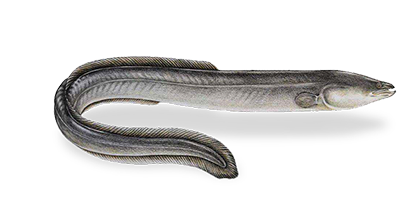
How Long a Gulper Eel Actually Is
One of the most common questions about deep-sea life is, "how long is a gulper eel?" The answer is often surprising, not because of a huge number, but because of its strange body proportions. Unlike the familiar freshwater eels prized in global cuisine, the gulper eel (Eurypharynx pelecanoides) is a creature of the deep ocean with a unique anatomy where its tail makes up the vast majority of its length. Understanding its true size requires looking beyond a single measurement and considering its unique biology.
This article clarifies the gulper eel's typical and maximum lengths, explains why reported sizes can be inconsistent, and contrasts this deep-sea specimen with the high-quality freshwater eels sourced by food importers worldwide. As a food safety specialist, I often help clients distinguish between various aquatic species to ensure they are sourcing the correct, commercially viable products that meet stringent international standards.

Gulper Eel Size: Typical vs. Maximum Recorded Lengths
The gulper eel's length is deceptive. While it can reach a respectable size, most of that length is a thin, whip-like tail, with a much smaller body and a disproportionately massive mouth. This anatomical structure is a direct adaptation to its life in the dark, food-scarce depths of the ocean.
Measurements for this species almost always refer to its total length from the tip of its jaw to the end of its tail. Here’s a direct comparison of the generally accepted sizes for a mature adult.
| Metric | Typical Adult Length | Maximum Recorded Length |
|---|---|---|
| Meters (m) | Approximately 0.75 meters | Up to 1 meter |
| Feet (ft) | Approximately 2.5 feet | Up to 3.3 feet |
| Key Anatomical Feature | A greatly distensible jaw and pouch-like mouth | An extremely long, slender, whip-like tail |
Why Do Reported Gulper Eel Sizes Vary?
You may find different lengths cited in various sources, and this variation stems from several challenges inherent to studying deep-sea life. The discrepancies are not usually errors but reflections of the difficulties in collecting and measuring these animals.
- Specimen Damage: Gulper eels live at depths of 500 to 3,000 meters (about 1,600 to 9,800 feet). When brought to the surface, the extreme pressure change can cause significant damage to their delicate, gelatinous bodies, potentially stretching or breaking them and making precise measurement difficult.
- Dominant Tail Structure: The eel's tail can constitute over 75% of its total length. Some historical or informal measurements might focus more on the "body" of the fish, leading to much smaller reported sizes. Conversely, a specimen with a perfectly intact tail will appear exceptionally long.
- Growth and Maturity: Like many fish, gulper eels grow throughout their lives. A "typical" size refers to an average mature adult. However, exceptionally old individuals may exceed this average, contributing to the higher "maximum" recorded lengths.
- Sexual Dimorphism: There are notable differences between males and females. Upon reaching maturity, males undergo significant changes, including the degeneration of their jaws and digestive systems, as their sole remaining purpose is to find a female and reproduce. They are typically smaller than females.
Distinguishing Gulper Eels from Commercial Eel Species
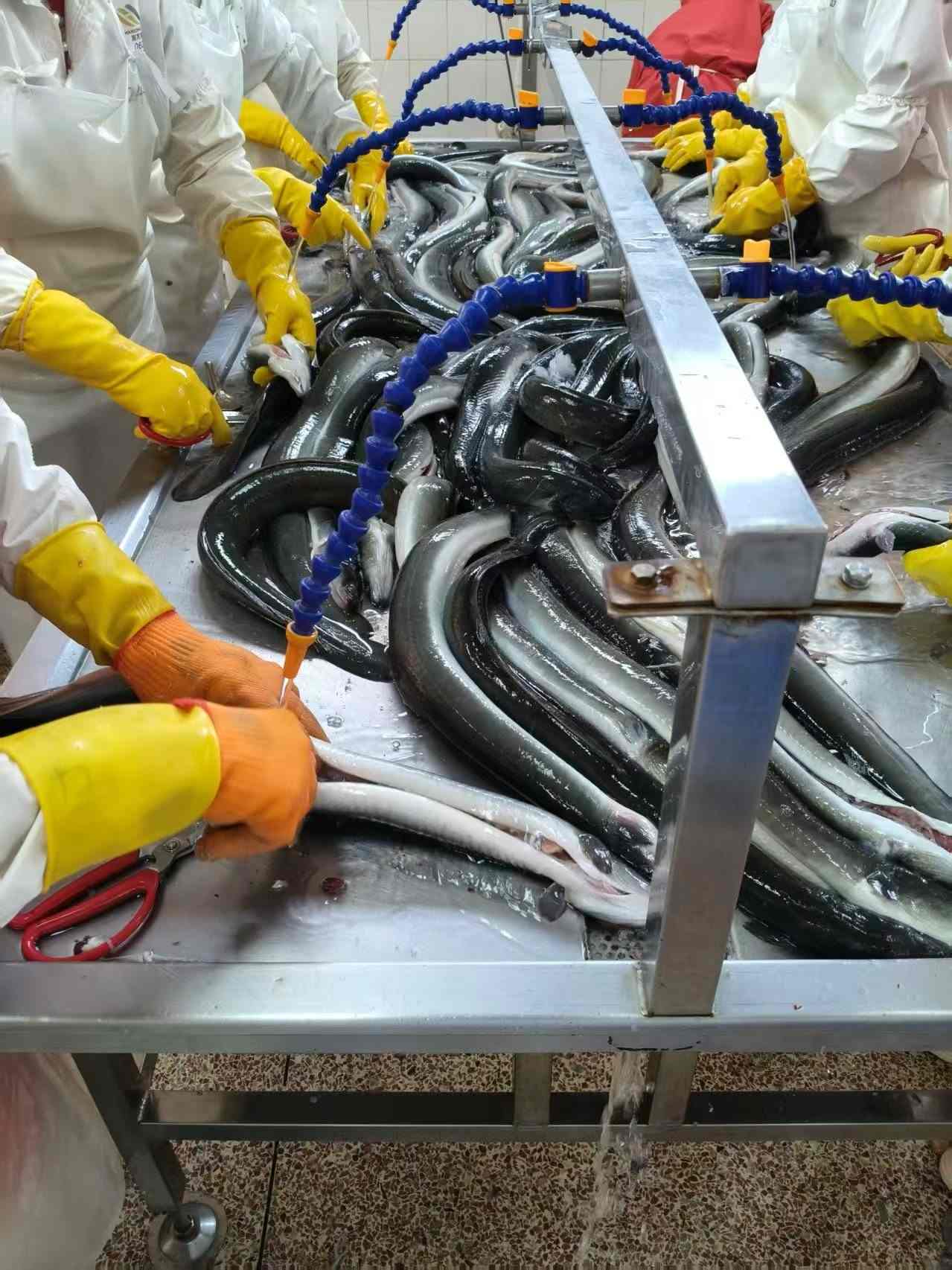
For B2B food importers, distributors, and restaurant chains, the distinction between a biological curiosity like the gulper eel and a commercially valuable food product is critical. The eels used in popular dishes such as unagi donburi are freshwater eels of the genus Anguilla. They bear no relation to the gulper eel and have entirely different characteristics relevant to the food industry.
Gulper eels are not consumed by humans. Their bodies are flabby and lack the dense, flavorful muscle tissue found in freshwater eels. At Eelpro, we specialize in the processing of high-quality freshwater eels, primarily Anguilla japonica, sourced from our network of approximately 20 customs-registered unagi eel farms. These eels are cultivated for their rich flavor, firm texture, and high nutritional value.
Here is a clear breakdown of the differences:
| Feature | Gulper Eel (Eurypharynx pelecanoides) | Commercial Freshwater Eel (Anguilla japonica) |
|---|---|---|
| Habitat | Deep sea (aphotic zone), 500-3,000m | Freshwater rivers and estuaries; migrates to the ocean to breed |
| Anatomy | Gigantic mouth, tiny eyes, gelatinous body, long whip-like tail | Sleek, muscular, snake-like body with well-developed fins |
| Texture & Flavor | Flabby, watery flesh, not suitable for consumption | Firm, oily, rich flavor, prized in cuisine |
| Commercial Use | None; scientific interest only | Highly valued for products like frozen unagi kabayaki and smoked eel |
| Supply Chain | Incidentally caught in deep-sea trawls | Sustainably farmed and wild-caught under strict regulations |
Quality and Safety Protocols for Food-Grade Eel Products
When sourcing eel for international markets—whether in Japan, the United States, or the European Union—buyers must prioritize suppliers with verifiable quality control systems. The supply chain for a reliable eel product is complex and requires expertise at every stage, from farming to final shipment. This is where a deep-sea creature and a food-grade product diverge completely.
At Eelpro, our entire operation is built around ensuring product safety, consistency, and compliance. As the Senior Food Safety & Quality Specialist, I oversee the systems that give our clients confidence.
A Buyer's Checklist for Vetting Eel Suppliers
- Verify Certifications: Does the supplier hold internationally recognized certifications? We are certified under ISO 22000:2018 for food safety management and have a fully implemented HACCP system. We also hold HALAL certification and an Export Food Producer Registration Certificate. These are not just logos; they represent audited, verifiable processes.
- Confirm Traceability: Can the supplier trace the product back to its origin? Our full-chain traceability system connects every shipment back to one of our ~20 registered farming bases, covering over 2,150 mu. This is essential for managing food safety risks and meeting import requirements.
- Inspect Processing Technology: What methods are used to ensure product quality? Our facility features two modern production lines with an annual capacity of 4,000 tons. We utilize patented low-fat roasting and deodorizing technologies, along with a precise 4-layer eel sauce coating process that creates a consistent, high-quality finish.
- Inquire About In-House Testing: Does the facility have its own laboratory for quality control? Our professional eel lab and metal detectors at critical control points ensure that our products meet the strict standards for veterinary drug residues and microbiological indicators required by Japan, the US, and EU markets.
- Review Logistics and Storage: How is product integrity maintained during storage and transit? Our 1,000-ton cold storage facility ensures stable cold-chain logistics, preserving the quality of our frozen seafood from our factory to your port.
While the gulper eel is a fascinating example of adaptation in the deep sea, the world of commercial eel production operates on principles of precision, safety, and reliability. The two could not be more different.
For B2B importers seeking a reliable supply of certified, traceable, and expertly processed freshwater eel products, contact Eelpro to discuss your specifications and request a quote.