


How Long Is a Gulper Eel by Life Stage and Source
One website says a gulper eel reaches 75 cm. Another says 180 cm. Which figure is right? The short answer is that both may describe the same animal in different contexts. If you are asking how long is a gulper eel, the source, life stage, and measurement method matter as much as the number itself.
The gulper eel, scientifically identified as Eurypharynx pelecanoides, is a deep-sea fish known for its oversized mouth, narrow body, and long tail. It is not the same species as freshwater unagi used for kabayaki. That distinction prevents a common error: using deep-sea gulper eel measurements to estimate the portion size, farming potential, or foodservice yield of freshwater eel.
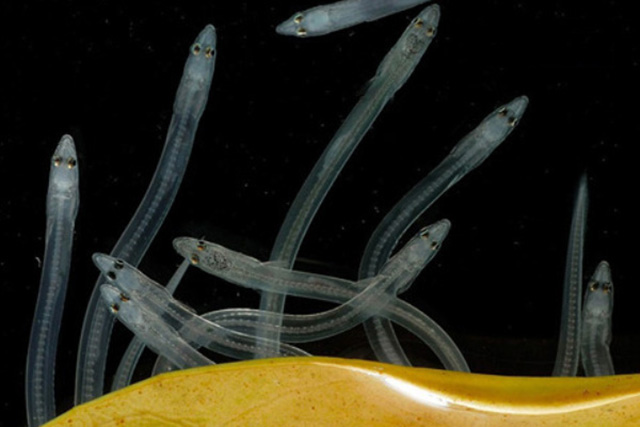
Why Gulper Eel Length Figures Often Conflict Online
When readers search how long is a gulper eel, they often find a short adult figure in one article and a much larger maximum figure in another. The apparent conflict usually comes from mixing an approximate adult reference length with an exceptional recorded maximum.
A field guide may use a rounded adult length because it helps readers picture the fish. A scientific database may list the largest documented total length ever associated with the species. A juvenile observation may show a much smaller animal, while an unreferenced social-media post may show an enlarged image with no scale at all.
| Source Type | Typical Length Statement | What It Usually Means | Best Use | Buyer or Reader Risk |
|---|---|---|---|---|
| General reference article | About 75 cm | An approximate adult-size description | Basic education and visual context | Treating it as a maximum limit |
| Species database | Up to 180 cm total length | A reported maximum-size record | Understanding possible upper range | Assuming every adult reaches this size |
| Juvenile observation | Smaller individual measurement | An immature specimen or incomplete growth stage | Life-stage studies | Calling juvenile size “adult size” |
| Uncited web post | “Giant” or “huge” without a record | May be visual exaggeration or a mixed species claim | Only as a lead for further checking | Repeating an unsupported maximum as fact |
The practical conclusion is simple: a source stating around 75 cm may be describing a common adult reference, while a source listing 180 cm may be recording an upper total-length value. Neither number should be copied into a report without its label.
For anyone comparing how long is a gulper eel across websites, record the wording next to the figure: “average,” “approximately,” “maximum,” “total length,” or “juvenile.” Those labels explain more than a bare number ever can.
Verified Adult Measurements, Juvenile Observations, and Unverified Maximum-Size Claims
The boundary between verified adult measurements, juvenile observations, and unverified maximum-size claims is where most size confusion begins. A useful comparison does not ask only “what number was published?” It asks what specimen was measured, whether maturity was confirmed, and whether the number refers to total length.
| Measurement Category | What Supports It | What It Actually Tells You | When It Fits | When It Does Not Fit |
|---|---|---|---|---|
| Verified adult measurement | Species identification, documented specimen, stated measuring method | A confirmed adult individual’s measured size | Research notes, museum records, technical references | Predicting the largest possible specimen |
| Adult reference length | Established guide or educational source using an approximate figure | A practical picture of usual mature size | General learning and comparison | Setting a scientific maximum |
| Juvenile observation | Measured young specimen with source details | Size at one immature stage | Growth and life-stage discussions | Describing mature body length |
| Verified maximum record | Traceable species record and stated total length | The upper end reported by that source | Range discussions and scientific comparison | Estimating ordinary encounter size |
| Unverified maximum claim | No specimen details, no source, no measuring method | Very little until checked | Prompting further research only | Schoolwork, purchasing documents, or species guides |
Here is what happens when the categories are mixed. If a reader treats a juvenile observation as an adult figure, the animal appears unusually small. If a reader treats a maximum record as ordinary size, the animal appears much larger than a normal description suggests. When someone asks how long is a gulper eel, the correct response is therefore a range with context, not one isolated number.
A useful cold fact about gulper eel length
The gulper eel’s long, thread-like tail can make total length feel misleading at first glance. Much of the animal’s visual drama comes from the mouth and tail rather than from a thick, food-fish-shaped body. That is why a total-length figure should never be used to guess usable meat yield, fillet dimensions, or restaurant portioning.
This point matters especially for seafood buyers. Gulper eels are deep-sea animals and should not be used as a benchmark for freshwater eel products such as unagi kabayaki products. A kabayaki specification should instead identify the freshwater eel product form, cut style, glazing or sauce requirements, packaging format, and target finished portion.
How to Check a Gulper Eel Length Claim Before Repeating It
The best approach is to check the claim in a fixed order. This works for students, aquarium visitors, seafood writers, and buyers who need to separate species facts from product specifications.
- Confirm the species name. Look for Eurypharynx pelecanoides, not simply “eel.” The word “eel” covers many unrelated fish. This step fits every search. It does not confirm length by itself.
- Find the life-stage label. Check whether the specimen was identified as juvenile, adult, or unspecified. A smaller number without a maturity label should not become an adult benchmark.
- Check whether the figure is total length. A long tail changes the impression of size. Use the exact measurement term given by the source. Do not convert a total-length claim into body length without supporting data.
- Separate approximate size from maximum size. A figure such as 75 cm may be presented as a general adult description, while 180 cm may be a reported maximum. Both need distinct labels.
- Look for a traceable source. A species record from a scientific database, museum, or established reference is stronger than an image caption. The FishBase species record is a useful starting point for checking listed maximum length data.
- State the limit in your own wording. For example: “Sources commonly give an adult reference near 75 cm, while some databases list a much larger maximum total length.” This wording is accurate because it preserves the source context.
Use this process whenever someone asks how long is a gulper eel for a presentation, article, menu discussion, or product comparison. It does not replace formal taxonomic research, but it prevents the most frequent online mistakes.
Five Mistakes That Make Gulper Eel Size Facts Unreliable
- Using a photo as a ruler. Deep-sea photographs rarely provide dependable scale. The conclusion is to use documented measurements, not visual guesses. This is useful for online research, but it cannot replace a specimen record.
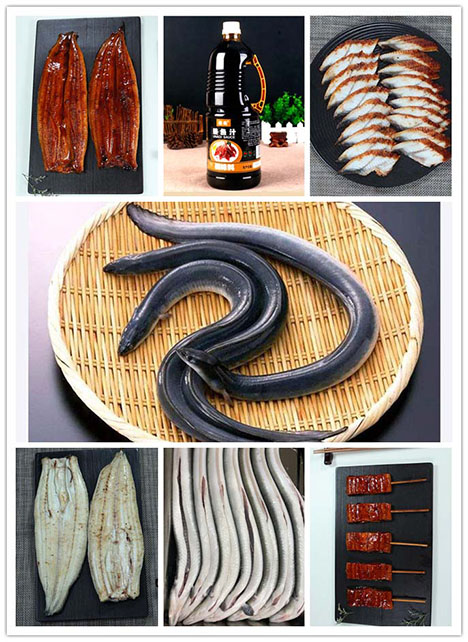
- Mixing gulper eel with freshwater unagi. The conclusion is to identify the species before comparing length. This fits restaurant and seafood content, but it does not mean all freshwater eel species share one market size.
- Repeating “up to” as “normally grows to.” Maximum records describe an upper boundary, not the everyday adult. Use maximum figures only when discussing range limits.
- Ignoring the measuring method. Total length includes the tail. If the source does not define the method, report the figure cautiously rather than adding your own interpretation.
- Turning biology into a purchasing specification. A wild animal’s possible length is not a frozen-product specification. For foodservice purchasing, ask for cut form, packaging, product weight range, and preparation format instead.
These mistakes explain why the question how long is a gulper eel can produce so many incompatible answers. The numbers may not be wrong; the labels are often missing.
What Gulper Eel Facts Mean for Food Lovers and Seafood Buyers
For home cooks and Japanese-food fans, gulper eel size facts are fascinating, but they should stay in the wildlife category. Kabayaki, unagi sauce, and ready-to-heat freshwater eel are separate food topics. A long-tailed deep-sea gulper eel is not the eel behind a grilled unagi rice bowl.
If your interest is culinary, focus on the product rather than the deep-sea animal’s reported maximum. For example, compare sauce style, cut format, and heating method when choosing eel for a meal. Eelpro offers an eel sauce product page for buyers looking at unagi tare, while its eel farming information explains the controlled sourcing side of freshwater eel supply.
For foodservice buyers, the conclusion is even more direct: do not place “gulper eel length” in a procurement sheet for kabayaki. Request a commercial specification built around the finished product. That fits restaurant chains, importers, and distributors. It does not apply to biological research, where life-stage and specimen records remain the priority.
| If Your Goal Is | Use This Length Information | Do Not Use |
|---|---|---|
| School or museum research | Adult reference and maximum record, clearly labeled | Uncited image captions |
| Wildlife writing | Life stage, source type, and total-length wording | One number presented as universal |
| Japanese cooking inspiration | Freshwater unagi recipe and product details | Gulper eel size as a portion guide |
| Seafood sourcing | Species, cut, packaging, quality documents, and delivery terms | Wild maximum-length claims |
A Quick Checklist for Reporting the Size Correctly
Before publishing or sharing an answer to how long is a gulper eel, run through this checklist:
- Is the fish identified as Eurypharynx pelecanoides?
- Does the source say adult, juvenile, or unspecified?
- Is the number an approximate reference length or a maximum record?
- Does the source specify total length?
- Can you name the source rather than saying “the internet says”?
- Have you avoided using gulper eel data for freshwater unagi purchasing?
The clearest answer to how long is a gulper eel is not a dramatic single figure. It is a careful statement: adult references are often around 75 cm, while larger maximum total-length records may also appear in scientific databases. The figure only makes sense when the source and life stage stay attached to it.
If you are comparing eel species for a menu or supply plan, request a product specification or explore our freshwater eel selection advice.