





Shirayaki Eel Grilling Skips the Sauce to Protect Texture and Natural Flavor
Menu planners searching for shirayaki often ask one direct question: how do chefs grill eel to a golden finish without a single drop of sauce? The answer sits in temperature control, fat rendering, and timing — not in glaze layers. Shirayaki, literally "white grilling" in Japanese, relies on the eel's own oil and a controlled heat curve to produce crisp skin and tender flesh. For buyers sourcing frozen eel, understanding this process matters, because raw material quality decides whether sauce-free grilling actually works once it hits the grill.
What Makes Shirayaki Different From Kabayaki
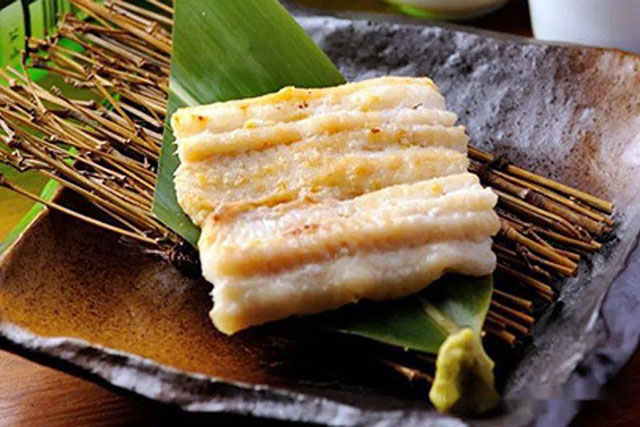
Shirayaki is the plain-grilled version of unagi — no tare, no sugar glaze, nothing brushed on during cooking. Chefs season it lightly with salt, sometimes finish it with a squeeze of citrus, and serve wasabi or soy on the side rather than baked into the fish. Kabayaki, by contrast, goes through repeated basting in a sweet soy glaze, building color and sheen with every pass. Our own production line follows a 4-layer soy-sauce coating standard for kabayaki, tracking color from the first coat through the fourth — a process shirayaki skips entirely.
Because shirayaki carries no glaze, the eel itself has nowhere to hide. Skin texture, fat distribution, and the natural umami of the flesh show up directly on the plate. That's why chefs treat shirayaki almost like a quality check — if eel grills well without sauce, it usually performs well as unagi kabayaki eel too. For background on how the glaze itself gets built layer by layer, see our note on kabayaki sauce production.
Direct-Grilling Steps Compared With Kabayaki Glazing
The clearest way to see why shirayaki tastes different is to line up the two grilling sequences side by side. Direct grilling for shirayaki uses fewer steps, but each one demands closer attention to time and heat, since there's no sauce to mask uneven color or dryness.
| Step | Shirayaki (Direct Grilling) | Kabayaki (Glazed Grilling) |
|---|---|---|
| Prep | Butterflied, deboned, lightly salted | Butterflied, deboned, skewered |
| First grill pass | High heat, skin side down, ~2-3 min to set skin | High heat, skin side down, same initial set |
| Steaming (mushiyaki) | Optional, softens flesh before final grill | Standard step, tenderizes before glazing |
| Basting | None | 3-4 sauce passes, each dried before the next |
| Final grill | Medium heat, both sides, until fat renders and skin crisps | Medium heat, alternating with basting until color builds |
| Finish | Salt, citrus, dipping sauce on the side | Glossy soy glaze baked into the surface |
| Flavor result | Clean, lightly smoky, natural eel oil comes through | Sweet, caramelized, sauce dominates the first bite |
The sauce-free method protects texture two ways. First, skipping repeated basting means the skin never re-absorbs moisture between passes, so it stays crisp instead of turning tacky. Second, without sugar caramelizing on the surface, the natural fat renders more evenly, giving shirayaki its clean finish rather than a heavy glaze coating. This is also why shirayaki-grade eel needs consistent fat content going in — uneven marbling shows up immediately once there's no sauce to smooth it over.
Grilling Parameters That Actually Decide Shirayaki Quality
Three variables decide whether shirayaki turns out right: temperature, timing, and fat content. Get one wrong and there's no sauce to cover the mistake.
Temperature: Skin-side grilling needs high heat, roughly 200-220°C, for the first 2-3 minutes to seal the skin fast and start the Maillard reaction that builds surface flavor. Drop below that range and the skin turns rubbery instead of crisp. Push past it and the surface chars before the inside cooks through.
Timing per side: After the initial sear, flesh-side grilling at medium heat for 4-5 minutes lets fat render slowly. Rush this step and the center stays underdone; the skin looks ready long before the flesh is.
Fat content of the raw eel: Shirayaki depends on eel with enough intramuscular fat to self-baste during grilling. Eel that's too lean dries out fast with no sauce to add moisture back. This is one reason processors invest in fat-rendering technology — our patented low-fat roasting equipment, originally built for kabayaki lines, also helps standardize fat distribution across batches, which keeps shirayaki results consistent from one order to the next.
Common Shirayaki Grilling Mistakes
- Skipping the skin sear — starting on the flesh side traps steam under the skin, leaving it soft instead of crackling.
- Grilling straight from frozen — uneven thawing causes patchy cooking; eel needs a full thaw under refrigeration before grilling.
- Using poorly deboned eel — fine pin bones go unnoticed under kabayaki glaze but stand out immediately in plain-grilled shirayaki.
- Over-salting before grilling — salt draws out moisture early, working against the self-basting effect the sauce-free method depends on.
Choosing Shirayaki-Grade Frozen Eel for Menu Planning
Sourcing eel for shirayaki service isn't quite the same as sourcing for kabayaki. A few checkpoints matter more once the sauce is gone.
- Fat marbling grade — ask suppliers for fat percentage data, not just size grading. Shirayaki needs enough fat to render without added liquid.
- Boneless, deboned cuts — request fully deboned fillets; pin bones unnoticed under kabayaki glaze become a service complaint in plain-grilled dishes.
- Traceability documentation — for buyers supplying Japan, US, or EU markets, veterinary drug residue records and farm-to-shipment tracking matter for import clearance, regardless of which grilling method the eel ends up in.
- Cold-chain condition on arrival — eel stored and shipped at stable frozen temperature holds texture better through thawing, which shows up immediately in shirayaki's simpler presentation.
We've supplied kabayaki eel to Japanese restaurant chains on a long-term basis, and the sourcing checklist above applies whether the kitchen finishes the fillet as shirayaki or full kabayaki — the raw material requirements don't change with the sauce. Cooks planning either dish can also review our cleaning, skinning and deboning guide before service.
How Eelpro's Production Standards Support Shirayaki and Kabayaki Menus
Whether a buyer plans a shirayaki program or a full kabayaki line, the upstream standards look the same. Our facility runs under ISO 22000:2018 and HACCP certification, holds HALAL certification, and operates under SC Food Production License No. SC11135062401122, covering quick-frozen prepared foods. Two production lines — one for frozen roasted eel, one for deep-processed aquatic products — give us 4,000 tons of annual finished-goods capacity, backed by a 1,000-ton cold storage facility for stable cold-chain handling.
Raw material comes from roughly 20 customs-registered eel farming bases covering over 2,150 mu, with full-chain traceability from farm registration through process verification and sampling. An in-house quality lab and metal detectors sit at critical control points, checked by a team of 25 quality-control specialists among our 160+ staff. Custom cutting specs — shredding, dicing, strip-cutting, chunk-cutting, 3-section cut, sushi slices — mean the same batch can be finished for shirayaki plating or packed for kabayaki skewers, depending on what the order needs.
Buyers building either menu style can review our frozen eel supplier profile, or compare cuts on the eel sauce and frozen seafood product pages before placing a sample order.
If you're developing a shirayaki or kabayaki menu and need spec sheets, fat-grade options, or a sample box for trial grilling, send us your target market and portion size — we'll match it to the right cut and confirm lead time.
 WhatsApp
 sales@chinaeels.com
 +8619937922411