





Frozen Eels for Sale Often Cost More Than the Quoted Price Suggests
A buyer gets a quote for $4.20 per kilo, does the math against their menu price, and signs off. Three weeks later the invoice lands with duty, insulated freight, and a case-pack surcharge nobody mentioned. That gap between quoted price and delivered cost is where margins quietly disappear — and it's the single biggest regret procurement teams report after their first order of frozen eels for sale from an overseas supplier.
Reviewed by Nancy Chen, Senior Food Safety & Quality Specialist, ISO 22000 and HACCP-certified auditor.
Why the Quoted Unit Price Is Never the Real Price
Ex-works or FOB quotes cover product only. They almost never include the costs that actually decide whether an order hits your target margin. For frozen unagi kabayaki and other frozen seafood categories, four variables move the real cost the most:
- Product weight loss — glazing, ice coating, and moisture content affect billable weight versus usable weight.
- Case pack size — a 10kg master carton priced differently than a 5kg retail-ready case, even at the same per-kilo rate.
- MOQ tier — smaller orders often carry a per-unit premium to cover fixed handling costs.
- Cold-chain freight — insulated containers, dry ice, or gel packs add cost that scales with transit time, not just weight.
Skipping any one of these turns a "good deal" quote into a losing order once it clears customs.
The Landed-Cost Model: Confirmed, Estimated, and Unknown Costs
Not every cost is knowable at RFQ stage. A working landed-cost model separates what you can confirm in writing, what you can only estimate from past shipments, and what stays genuinely unknown until booking. Treating an estimate as a confirmed number is the fastest way to blow a margin projection.
| Cost Component | Status | Why |
|---|---|---|
| Ex-works/FOB unit price | Confirmed | Fixed in the supplier's written quote |
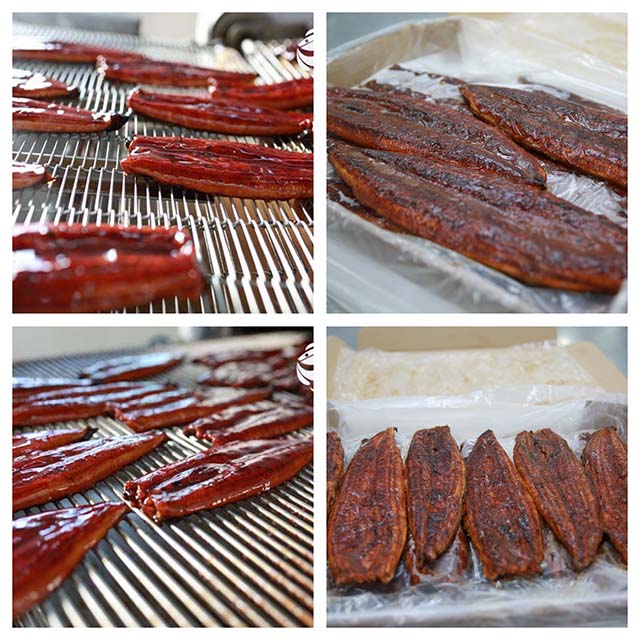
| Product weight & case pack (e.g. white-roasted skewers, kabayaki cuts) | Confirmed | Stated on the packing spec sheet |
| MOQ tier pricing | Confirmed | Negotiated per spec and packaging format (skin-pack, gift box) |
| Insulated ocean/air freight | Estimated | Rates fluctuate with fuel surcharge and season |
| Dry ice / gel pack top-up | Estimated | Depends on transit days and carrier handling |
| Customs duty & inspection fees | Estimated | Varies by HS code and destination market |
| Thaw-loss on arrival | Unknown until receiving | Depends on cold-chain break points in transit |
| Demurrage / storage delay | Unknown until booking | Port congestion is not predictable at quote stage |
A good rule: never build your margin model on the "estimated" or "unknown" rows alone. Pad estimated costs by 8–12% and treat unknowns as a risk line, not a zero.
Worked Example: Comparing Two Quotes Side by Side
Say a US importer receives two quotes for the same volume of frozen kabayaki eel, 5,000 kg, 10kg master cartons.
| Line Item | Supplier A | Supplier B |
|---|---|---|
| FOB price/kg | $4.10 | $4.40 |
| MOQ tier | 3,000 kg minimum | 1,000 kg minimum |
| Insulated freight (est.) | $0.55/kg | $0.38/kg |
| Dry ice/gel pack (est.) | $0.12/kg | $0.09/kg |
| Thaw-loss risk (unknown, historical range) | 3–6% | 1–2% |
| Landed cost/kg (mid-range estimate) | ~$4.95 | ~$5.00 |
Supplier A looks cheaper on paper. But a wider thaw-loss range on longer transit routes can erase that gap entirely once you factor in usable yield. This is exactly why a landed-cost worksheet — not a single unit price — should decide the award, not the initial quote line.
Common Mistakes That Distort a Landed-Cost Calculation
- Confusing FOB and CIF — freight and insurance are sometimes already baked into a CIF quote; adding them again double-counts cost.
- Ignoring case-pack mismatch — a 5kg case may not match your foodservice portioning needs, raising labor cost downstream.
- Treating dry ice cost as fixed — top-up requirements change with route length and customs delay.
- Skipping certification verification cost — importers in the EU and Japan may require documentation checks that add lead time, not just fees.
- Assuming MOQ price holds at reorder — MOQ-based pricing for catering chains, wholesale, and export traders differs by volume tier and packaging format.
Buyer's Decision Checklist Before Sending an RFQ
- Confirm product spec: white-roasted skewers, kabayaki eel, or cut pieces — pricing and packaging differ by format.
- Request the packing list weight, not just the quoted per-kilo price.
- Ask whether the quote is FOB, CIF, or DDP — and get it in writing.
- Verify certifications directly: ISO 22000:2018, HACCP, and HALAL status, plus export food producer registration.
- Ask for the standard delivery window — most regular orders confirm at roughly 30 days from order confirmation to shipment, negotiable by spec and quantity.
- Check cold storage capacity at origin — a 1,000-ton facility supports more stable shipping schedules than spot-sourced product.
- Request traceability documentation back to the farming base, not just a certificate of origin.
Certifications and Traceability Reduce Risk-Adjusted Cost
Landed cost isn't only freight math — it includes the cost of a rejected shipment. Buyers exporting into Japan, the US, and the cold chain-sensitive EU market face veterinary drug residue and microbiological testing at the border. A supplier that already meets those inspection standards, with an in-house laboratory and metal detectors at critical control points, lowers the probability of a costly hold or return.
Eelpro's HACCP and ISO 22000:2018 system, backed by roughly 20 customs-registered eel farming bases covering over 2,150 mu, gives full-chain traceability from farm registration through process verification to shipment. That traceability is what supports long-term supply relationships with Japanese restaurant chains and US food importers — the kind of track record that reduces the "unknown" cost column in your model over repeat orders.
Applying This to Sauce and Deep-Processed Orders
The same model applies to eel sauce (unagi tare) and other deep-processed aquatic products, though thaw-loss risk is lower for shelf-stable sauce than for frozen fillets. If you're sourcing both kabayaki and sauce in one container, ask for a combined landed-cost sheet rather than two separate quotes — mixed pallets change dry ice requirements and case-pack math. For background on how the sauce itself is made, see this breakdown of kabayaki sauce production, and for menu planning once product lands, this guide to frozen eel supplier selection covers cutting specs like sushi slices and 3-section cuts that affect back-of-house labor cost.
A landed-cost sheet takes maybe 20 minutes to build once you have the supplier's real packing spec. That's a small time cost against the alternative — discovering the true price after the container has already left port.
Request a Landed-Cost Breakdown
If you're comparing suppliers for frozen unagi kabayaki, eel sauce, or freshwater eels, ask for a quote that separates FOB price, packaging format, and estimated freight so you can run your own landed-cost model before committing to volume. Request a sample and spec sheet from Eelpro to start the comparison.
 WhatsApp
 sales@chinaeels.com
 +8619937922411