





How to Choose Frozen Eels for Sale for Bait or Foodservice
A frozen eel may look like a simple purchase until it arrives in the wrong form, wrong pack, or wrong condition. Before requesting quotes for frozen eels for sale, buyers need to decide one thing first: is the product intended for bait or for human foodservice?
That distinction changes the supplier, specification, handling standard, documentation, packaging, and commercial risk. A bait shop looking for whole American eel has different needs from a restaurant distributor purchasing roasted unagi portions. Mixing the two can create rejected deliveries, unusable inventory, and food safety exposure.
For seafood distributors, bait retailers, importers, and restaurant supply buyers, the best RFQ is not the longest one. It is the one that clearly identifies product use, species, processing form, pack format, and cold-chain expectations. When comparing frozen eels for sale, start with the final customer rather than the lowest quoted price.
Start With the End Use Before Comparing Suppliers
The first sourcing decision is simple: bait buyers need a product that suits fishing use, while foodservice buyers need an eel product that meets edible-product specifications and import requirements. These are not interchangeable categories.
For bait applications, the buyer may prioritize whole bodies, natural appearance, practical pack sizes, and a form that can be cut or used as fishing bait. For restaurants and prepared-food distributors, the focus shifts to edible species declaration, roasting style, bones, sauce, portion shape, labels, and food safety controls.
The conclusion is clear: do not send the same inquiry for both categories. A supplier cannot quote accurately without knowing whether the frozen eel will be sold through a bait counter, a seafood distribution channel, or a restaurant menu.
- Choose bait specifications when the product is intended only for fishing use and will not enter the human food chain. This fits tackle shops, fishing wholesalers, and bait distributors. It does not apply to restaurants, retailers, or food importers.
- Choose foodservice specifications when the eel will be consumed by people, served in restaurants, or distributed as a food product. This fits importers, Japanese restaurants, Asian supermarkets, catering chains, and seafood distributors. It does not apply to bait-only transactions.
- Ask for separate quotations if your company sells to both markets. Separate product records reduce the risk of mixing foodservice stock with bait-grade inventory.
Foodservice buyers considering frozen eels for sale should also specify whether they need raw freshwater eel, white-roasted skewers, glazed kabayaki, cut pieces, sushi slices, strips, diced eel, or ready-to-heat portions. Each format affects labor, menu consistency, and packaging requirements.
A Buyer-Specification Checklist for Bait-Grade American Eel and Foodservice Eel
The table below separates bait-grade American eel from foodservice eel by the points that matter most during supplier qualification. The purpose is not to assume that every supplier carries both categories. It is to prevent a buyer from accepting an unclear quotation for frozen eels for sale.
| Check Item | Bait-Grade American Eel | Foodservice Eel | Why the Check Matters |
|---|---|---|---|
| Species | Request a clear declaration of American eel if that is the required bait species. | Request the declared edible eel species used in the finished product. | Species affects product identity, buyer acceptance, labeling, and import documentation. Never assume “eel” means the same species in every quote. |
| Size range | State the bait size range required by your fishing customers, including whether whole bodies must be uniform. | State the portion-size range, cut specification, or serving format required for the menu. | An unspecified size range can leave bait retailers with unsuitable pieces or restaurants with inconsistent plate presentation. |
| Processing form | Typically specify whole, frozen, and suitable for bait use. Confirm whether cutting is required before shipment. | Specify raw, white-roasted, kabayaki, boneless or deboned, strips, chunks, diced pieces, or sushi slices. | Processing changes preparation labor. A restaurant cannot treat whole bait stock as an edible ready-to-heat product. |
| Packaging | Ask for practical bulk packaging suitable for bait distribution and resale requirements. | Request food-contact packaging, retail packs, skin packaging, gift boxes, or foodservice bulk packs as needed. | Packaging affects storage efficiency, resale presentation, labeling, and protection against freezer damage. |
| Cold-chain requirement | Confirm frozen transport and receiving procedures appropriate for bait inventory. | Confirm frozen storage, shipment records, product labeling, and receiving checks suitable for edible products. | Cold-chain failure can reduce product quality in either market. For foodservice, it also creates a safety and compliance concern. |
| Documentation | Request product identity, packing list, and any documents required for the intended bait market. | Request food safety, traceability, label, and market-entry documentation required by the destination country. | Documents should match the declared use. A food importer needs more than a basic commodity description. |
The practical rule is this: if a quotation does not state species, intended use, form, pack format, and frozen handling expectations, it is incomplete. This applies whether you are purchasing a small trial order or evaluating regular frozen eels for sale for distribution.
Buyer warning: do not use “frozen eel” as the full specification. That phrase is too broad. Add the words “bait use only” or “for human foodservice” directly in the RFQ and purchase order.
Choose the Right Foodservice Form for Your Sales Channel
For foodservice buyers, prepared eel often provides a more workable route than whole raw fish. The right choice depends on who will prepare the product after delivery.
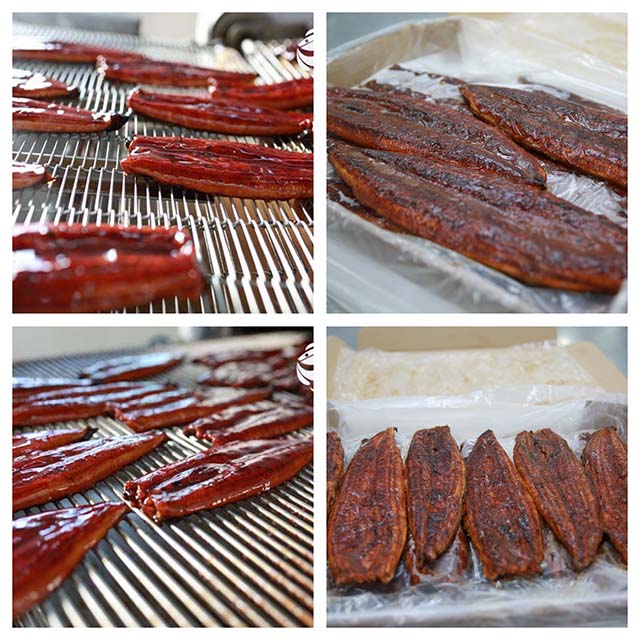
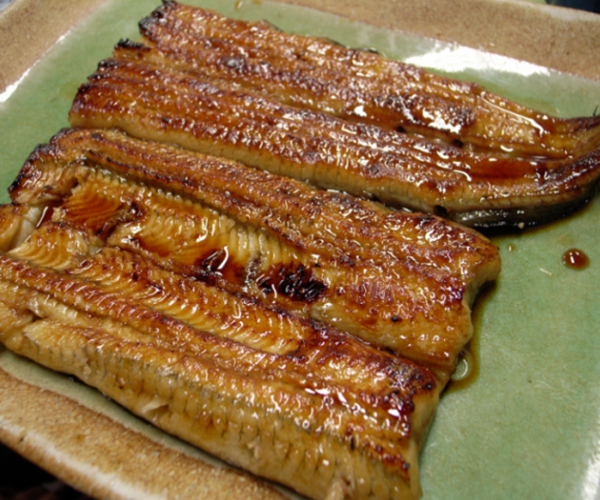
unagi kabayaki is usually a better fit for restaurant groups, Asian food distributors, and retailers that want a recognizable grilled eel product with reduced kitchen preparation. Eelpro uses a four-layer soy-sauce coating process with controlled roasting stages and established color standards from white roasting through the first, second, third, and fourth sauce coatings.
That format suits a business that wants repeatable presentation. It may not suit a buyer looking for unseasoned raw eel for local processing, smoking, or a custom recipe.
| Foodservice Format | Best-Fit Buyer | Why It Can Work | When It May Not Fit |
|---|---|---|---|
| Frozen unagi kabayaki | Japanese restaurants, Asian retailers, menu distributors | Ready-to-heat positioning can reduce back-of-house processing. | Not ideal for buyers wanting to control every seasoning step. |
| White-roasted eel skewers | Food manufacturers and operators with their own sauce program | Allows the buyer to finish flavor and presentation. | Requires more preparation capability than a finished glazed product. |
| Cut pieces, strips, or diced eel | Rice bowl, sushi, noodle, prepared-meal, and topping programs | Reduces cutting labor and supports portion planning. | May not fit a premium menu that requires a full fillet appearance. |
| Boneless or deboned eel | High-volume restaurant kitchens and foodservice chains | Can reduce handling time and support a more consistent guest experience. | Buyers should still confirm the exact deboning and cut expectation in writing. |
When reviewing frozen eels for sale, ask whether the supplier can produce the cut that matches your serving method. Eelpro can provide shredding, dicing, strip-cutting, chunk-cutting, three-section cuts, and sushi slices. The useful choice is the one that removes a step from your customer’s kitchen without limiting their menu flexibility.
For example, a rice-bowl operator may need diced or strip-cut eel for faster assembly, while a sushi restaurant may need controlled slices. A buyer selling sauce separately should also review the available eel sauce product rather than assuming that every kabayaki pack includes the same sauce profile.
Verify Food Safety Controls Before You Compare Price
Price matters. It is not the first filter for edible eel. Foodservice buyers should first confirm whether the supplier has the systems and records needed for the destination market and the intended product category.
Eelpro holds ISO 22000:2018, HACCP, and HALAL certifications, along with an Export Food Producer Registration Certificate and SC Food Production License No. SC11135062401122 for quick-frozen prepared foods, including cooked products and seasoned aquatic products.
For a distributor importing frozen eels for sale into Japan, the United States, Germany, Poland, other European Union markets, Australia, Indonesia, or Southeast Asia, the practical question is whether the product documentation, inspection requirements, and product specification align with the destination. Eelpro states that its products meet Japan, US, and EU food inspection standards for veterinary drug residues and microbiological indicators.
That supports supplier qualification. It does not remove the buyer’s responsibility to confirm its own destination-country import rules, label requirements, and customs procedures before placing an order.
- Ask for traceability information. Eelpro is supported by about 20 customs-registered eel farming bases covering more than 2,150 mu, with tracking from farm registration through process verification and targeted sampling. This fits importers that need supplier records. It does not replace local importer recordkeeping.
- Ask how critical control points are checked. The facility has an in-house laboratory and metal detectors at critical control points. This fits buyers assessing process controls. It does not mean a buyer should skip incoming-goods inspection.
- Confirm production timing early. Regular delivery is approximately 30 days from order confirmation to shipment, subject to specification and quantity. This fits planned replenishment. It may not fit emergency stock-outs or last-minute promotions.
- Confirm cold storage capacity. Eelpro operates a 1,000-ton cold storage facility. This supports product storage and cold-chain logistics planning, but the buyer should still agree on shipment timing and receiving arrangements.
Buyers can review Eelpro’s unagi eel farm information and eel lab details when building an early supplier-qualification file.
Use This RFQ Procedure to Avoid Unusable Quotes
A useful RFQ turns supplier comparisons into a like-for-like decision. Follow these steps before asking for pricing on frozen eels for sale.
- State the use. Write “bait use only” or “human foodservice use” at the beginning of the inquiry. This prevents the supplier from quoting the wrong product class.
- Declare the requested species. For bait, state whether American eel is required. For foodservice, request the edible species declaration and ensure it matches your labeling plan.
- Define the form. Specify whole, raw, white-roasted, kabayaki, deboned, sliced, diced, strips, chunks, or another required format.
- Set the size requirement. Provide your acceptable size range or portion requirement. Do not leave this as “standard size.”
- Specify the pack. State whether you need bulk cartons, retail packs, skin packaging, or gift boxes. MOQ can vary by product specification and packaging format.
- Request compliance documents. Foodservice importers should identify the documents needed for the destination market before confirming the order.
- Confirm lead time and shipping conditions. Use the approximate 30-day production-to-shipment timing as a planning reference, then confirm the order-specific schedule.
- Request a sample or specification sheet. A sample is especially useful when appearance, glaze level, cut style, or sauce profile will affect your customer’s acceptance.
A real sourcing scenario shows why this matters. A seafood distributor serving Japanese restaurants may initially ask for “grilled frozen eel.” That request can result in different offers: whole kabayaki fillets, sliced sushi portions, sauced skewers, or cut pieces. The better request would state the customer channel, the desired portion format, packaging preference, destination market, and whether sauce is included. That makes supplier responses easier to compare.
Common Mistakes When Buying Frozen Eel for Bait or Menus
- Choosing on price before product use. A low-priced bait product is not a foodservice substitute. Use price only after confirming the category and required controls.
- Failing to state species. This creates a product identity risk, especially for buyers seeking bait-grade American eel or buyers preparing regulated food labels.
- Accepting an undefined “medium” size. “Medium” has no useful meaning without a buyer-approved size range or portion standard.
- Ignoring packaging until after the quote. Packaging affects MOQ, warehouse handling, retail presentation, and freezer space. Confirm it before approving the order.
- Assuming all grilled eel is identical. Roasting, sauce application, cut format, and bone handling can differ. For menu planning, compare actual samples and written specifications.
- Leaving cold-chain responsibilities vague. Confirm who manages frozen handling at shipment, during transport, and at receiving. Foodservice quality depends on the full route, not only factory production.
A useful cold fact: “frozen” is a condition, not a full quality specification. Two products may both be sold as frozen eel while having completely different intended uses, packaging standards, and preparation needs. That is why experienced buyers separate bait-grade requests from foodservice requests before evaluating frozen eels for sale.
Match Eelpro’s Supply Strengths to Your Buying Requirement
Eelpro operates two modern production lines for frozen roasted eel and deep-processed aquatic products, with annual finished-product capacity of 4,000 tons. The company has more than 160 employees, including 25 technical and quality-control personnel. These resources are relevant for buyers seeking a qualified frozen eel supplier for planned distribution programs.
For foodservice, the strongest fit is typically frozen unagi kabayaki, prepared eel cuts, and related sauce supply. Eelpro has supplied kabayaki eel to Japanese restaurant chains and exports unagi kabayaki and eel sauce to US food importers. The company also supplies eel products to German and Polish importers, Australian Asian foodservice and retail channels, Indonesian importers and foodservice channels, and regional catering chains in Southeast Asia.
Those examples show established export activity in the stated markets. They should not be treated as a guarantee that every product specification, label, or shipment route will be approved automatically. Buyers should still submit their own requested specification for review.
If your requirement is edible prepared eel, review Eelpro’s unagi kabayaki manufacturer page before comparing frozen eels for sale across suppliers. If your sales plan includes menu education, the eel rice bowl toppings guide can also help buyers consider practical serving applications.
Request a quote or sample specification from Eelpro with your intended use, species requirement, processing form, packaging format, and destination market.

 WhatsApp
 sales@chinaeels.com
 +8619937922411