





How to Source Frozen Fresh Eels for Foodservice Without Getting Burned on the First Container
Here's the regret we hear most often from importers: they signed an eel contract based on a nice photo and a low price, then found bone fragments, uneven glazing, or a certificate that didn't match the shipment. By the time the container clears customs, it's too late to renegotiate. Sourcing frozen fresh eels for a restaurant chain or distribution warehouse isn't like buying shrimp off a price sheet — the species, the roasting process, and the paperwork all decide whether your kitchen team loves the product or sends it back.
What "Frozen Fresh Eels" Actually Means on a Spec Sheet
The term gets used loosely. A supplier might call a product "fresh frozen" even if it sat in an unregulated cold room for weeks before blast freezing. What buyers actually need to know is the processing format, because that determines how the kitchen handles it, how long it holds quality, and how it prices out per portion.
| Product Type | Best For | Kitchen Handling | Typical Buyer |
|---|---|---|---|
| White-roasted skewers | Menus needing custom sauce control | Thaw, glaze, grill in-house | Restaurant chains, izakaya |
| Kabayaki (soy-glazed) | Ready-to-heat donburi, bento | Steam or microwave reheat | QSR, catering, retail |
| Cut pieces (dice, strip, sushi slice) | Sushi bars, prepped dishes | Portion directly, minimal prep | Sushi restaurants, meal-prep kitchens |
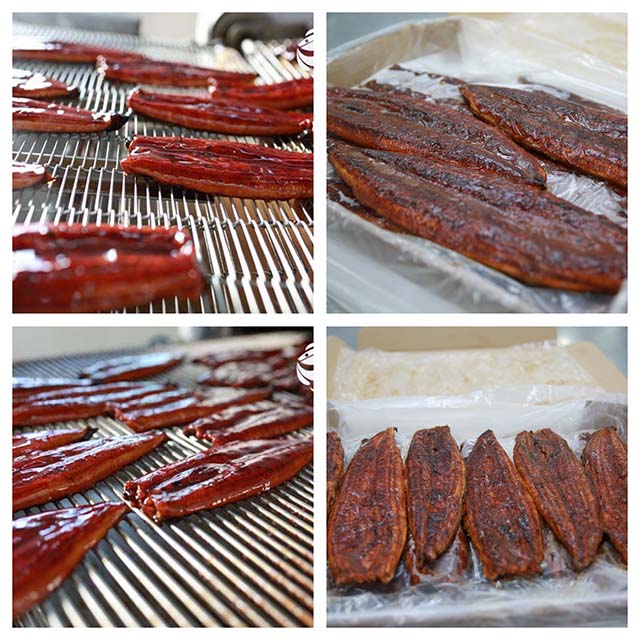
Our own frozen unagi kabayaki goes through a 4-layer soy-sauce coating with temperature-controlled steps, which is why the color grading — from white-roasted through the 4th soy-sauce coat — is documented rather than eyeballed. That level of process control matters more than most buyers realize until they compare two shipments side by side and see one turn gray after reheating.
The Supplier-Verification Checklist Before You Send an RFQ
Before any pricing conversation, run the supplier through this checklist. Each item exists because we've seen the specific failure it prevents.
| Check Item | Why It Matters | Risk If Skipped |
|---|---|---|
| Species confirmation | Anguilla japonica and Anguilla anguilla differ in fat content, texture, and price — mislabeling is a known industry issue | Menu inconsistency, possible customs rejection for species mismatch |
| Processing format match | Kabayaki, white-roasted, or cut pieces need different back-of-house workflows | Wrong format forces extra labor or equipment your kitchen doesn't have |
| Glazing ratio | Excess ice glaze inflates weight — you pay water price for eel product | Net weight shortfall after thaw, disputed invoices |
| Cold-chain records | Temperature breaks during transit degrade texture and shorten shelf life | Product arrives soft, discolored, or with off-odors |
| Export documents | Health certificates, veterinary drug residue reports, and HALAL or other required certifications confirm the batch actually cleared testing | Customs hold, rejected shipment, or a compliance flag on your import license |
Ask for the residue testing report tied to the actual production batch — not a generic company certificate from a prior year. A supplier holding in-house laboratory testing and metal detection at critical control points should be able to produce this without delay.
Why Traceability Isn't Optional Anymore
Japan, the US, and the EU each run their own residue-monitoring programs, and enforcement has tightened over the past several years. A supplier working from certified farming bases registered with customs authorities can trace a batch back to the specific pond it came from. That traceability chain — farm registration, process verification, targeted sampling, shipment tracking — is what lets a buyer answer an auditor's question in minutes instead of days.
Common Mistakes Buyers Make When Comparing Quotes
- Comparing price per kilogram without checking glaze percentage. A $6.20/kg quote with 20% glaze can cost more per usable kilogram than a $6.80/kg quote with 10% glaze.
- Skipping the sample stage to save two weeks. A cooked sample reveals bone content, texture, and sauce adhesion that spec sheets can't show.
- Assuming domestic and export quality are the same product line. Ask directly whether export quality standards apply to the batch you're buying, not just to a flagship line.
- Not confirming lead time against your inventory cycle. A regular order typically takes about 30 days from confirmation to shipment — plan reorders around that, not around wishful thinking.
- Ignoring MOQ structure by channel. Wholesale, catering-chain, and export-trader MOQs differ; asking for a retail-size trial order from a bulk-focused supplier wastes both sides' time.
A Worked Example — Comparing Two Supplier Quotes
Say you're sourcing 5 tons of kabayaki eel for a restaurant chain rollout. Supplier A quotes $6.40/kg, 15% glaze, 45-day lead time, no residue report attached. Supplier B quotes $6.75/kg, 8% glaze, 30-day lead time, batch-specific lab report included. On paper, Supplier A looks cheaper. After adjusting for glaze, Supplier A's real cost per usable kilogram is closer to $7.53, while Supplier B lands near $7.34 — and you're not gambling on a missing compliance document holding up your container at the port. This is the kind of math that should happen before you sign, not after the invoice arrives.
Cold-Chain and Documentation Requirements by Market
Cold storage capacity tells you whether a supplier can actually hold volume without quality drift between production runs. A facility with sizable cold storage — in our case a 1,000-ton facility — supports consistent logistics rather than shipment-by-shipment freezing that varies with demand.
- Japan: Strict residue and microbiological thresholds; buyers should request batch-level test data, not annual summaries.
- United States: FDA import screening applies; a registered export food producer status speeds clearance.
- EU / Germany / Poland: Veterinary drug residue limits are enforced under EU food safety rules, and documentation gaps are a common cause of border delays.
- Australia, Indonesia, Southeast Asia: Requirements vary by country, but HALAL certification and clear cold-chain logs smooth customs review for many importers in these regions.
These aren't universal guarantees — a supplier meeting Japan's standard doesn't automatically clear every EU requirement — so confirm which certifications apply to your specific destination before finalizing terms.
Building the Product Mix Around Your Menu
Beyond the eel itself, sauce consistency shapes repeat orders. If your menu depends on a specific glaze flavor, ask whether the eel sauce is produced in-house or sourced separately — this affects both cost and flavor stability across batches. For teams building donburi or ramen programs, it's worth reviewing how sauce viscosity and salt content affect kabayaki sauce performance on the grill versus in a steam-reheat line. Buyers expanding beyond eel alone often source additional frozen seafood lines from the same supplier to consolidate cold-chain logistics into one shipment.
A Quick Cold-Storage Fact Worth Remembering
Ice glaze isn't a defect by itself — a thin glaze actually protects the eel surface from freezer burn during transit. The mistake is buying glaze percentage without knowing it, not the glaze itself. Always ask for net weight after thaw, in writing, before the container ships.
Certifications back all of this up rather than replace it. Hazard Analysis and Critical Control Points (HACCP) systems, ISO 22000:2018 management standards, and HALAL certification each cover a different layer of risk — process control, food safety management, and dietary compliance respectively. None of them substitute for checking the batch-specific documents listed above.
If you're shortlisting suppliers this quarter, ask for a spec sheet and a batch sample before committing to volume — it's the fastest way to confirm whether the glaze, cutting spec, and paperwork match what your kitchen actually needs.
 WhatsApp
 sales@chinaeels.com
 +8619937922411