


How to Control Costs with Commercial Eel Unagi Sauce
An extra five grams of sauce on a plate of unagi seems insignificant. But for a restaurant chain, distributor, or food importer, that small over-pour, repeated thousands of times, translates directly into eroded margins and inconsistent flavor profiles. The key to profitability in high-volume foodservice isn't just the price of your ingredients; it's the precision with which you manage them. A high-quality eel unagi sauce is a critical component, but without proper controls, it can become a hidden cost center.
As a quality assurance specialist who has helped dozens of overseas clients in Japan, the US, and the EU manage their import supply chains, I've seen firsthand how seemingly minor details in sauce specification and handling can impact a business. It's not just about taste. It's about yield, labor efficiency, and food safety. Getting your sourcing and portioning strategy right from the start is essential.
Decoding Bulk Eel Sauce Specifications for Profitability
When you're sourcing eel sauce in bulk, the product data sheet contains more than just nutritional information—it holds the keys to your operational costs. Many buyers focus only on the price per liter, but a cheaper sauce can easily become more expensive if its properties lead to waste or require extra labor. Understanding these technical parameters allows you to make a smarter purchasing decision for your restaurant or distribution network.
Here is a breakdown of key specifications and what they actually mean for your kitchen's bottom line.
| Specification | What It Means | Impact on Cost & Operations |
|---|---|---|
| Viscosity / Brix Level | Measures the sugar content and thickness of the sauce. A higher Brix level generally means a thicker, more concentrated glaze. | Higher Viscosity: Coats ingredients better with less volume, improving yield. It adheres to frozen unagi kabayaki without running off, reducing waste. However, it may be harder to pump or pour from bulk containers. Lower Viscosity: Easier to handle and spread, but you may need to apply more to achieve the same flavor intensity and visual appeal, increasing cost-per-serving. |
| Packaging Format | The container the sauce is supplied in, such as squeeze bottles, large jugs, or bag-in-box systems. | Squeeze Bottles (e.g., 200g, 500g): Ideal for direct use at finishing stations. Minimizes cross-contamination and allows for precise unagi sauce portion control. Higher packaging cost per liter. Bulk Jugs / Pails (e.g., 1.8L, 20kg): Lower cost per liter but requires decanting into smaller bottles, adding labor and increasing spill risk. Good for high-volume kitchens with dedicated prep staff. Bag-in-Box: Offers a good balance. The collapsible bag minimizes oxygen exposure and product waste, with a dispenser tap for easy portioning. |
| Ingredient Formulation | The specific recipe, including the type of soy sauce, sugar, and other flavorings. Can include variations like lower sodium or gluten-free. | A well-balanced sauce designed for commercial use will hold its consistency and flavor under heat lamps without breaking or becoming overly salty. Lower-quality formulations might require you to add other ingredients in-house to adjust the flavor, adding cost and inconsistency. |
| Food Safety Certifications | Verification that the manufacturer adheres to recognized standards like ISO 22000 and HACCP. | Non-negotiable for importers. Certified suppliers, like Eelpro, help you avoid customs delays, product recalls, and brand damage. Our ISO 22000:2018 and HALAL certifications ensure the product meets global standards, a critical factor for clients we supply in Germany, Poland, and across the European Union. |
Common Portion Control Mistakes and How to Avoid Them
Even with the right product, poor kitchen practices can undo all your careful sourcing work. Standardizing application is just as important as standardizing the sauce itself. Here are some of the most frequent mistakes we see in foodservice operations and the simple fixes that protect your margins.
- Mistake 1: Using Ladles or Spoons for Glazing. This is the number one cause of inconsistency. The amount of sauce applied can vary by 50% or more between different chefs or even from plate to plate. It's imprecise and messy.
- Solution: Implement squeeze bottles with standardized nozzle sizes. This provides a consistent flow rate and allows for repeatable patterns, ensuring every dish gets the same amount of commercial unagi glaze. Weigh the bottle before and after a shift to track usage against sales data.
- Mistake 2: Inefficient Application Technique. Brushing or drizzling sauce haphazardly over the eel results in uneven coverage and excessive runoff onto the plate, which is pure waste.
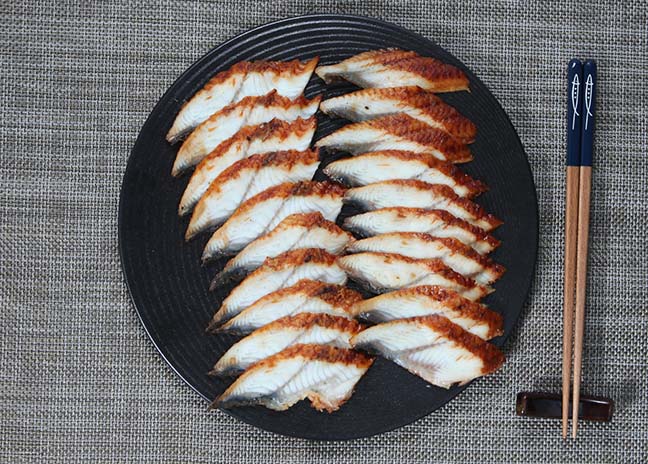
- Solution: Train kitchen staff on a standardized "three-pass" or "cross-hatch" pattern. This ensures the entire surface of the unagi filet is coated evenly with the minimum amount of sauce required for flavor and a glossy appearance. Our process for unagi kabayaki eel involves four precise layers of sauce application during roasting, a principle that can be adapted for finishing in the kitchen.
- Mistake 3: Improper Storage of Bulk Containers. Once a large pail or jug of sauce is opened, it's exposed to air and potential contaminants. If not sealed and stored correctly, it can lead to spoilage or a change in flavor profile, forcing you to discard product.
- Solution: Decant only what is needed for a single shift into smaller, sealed containers or squeeze bottles. Store the main bulk container in a cool, dark place as per manufacturer instructions, and always use a "First-In, First-Out" (FIFO) system. Our 1,000-ton cold storage facility is built to maintain product integrity, a standard that should be mirrored in your own kitchen storage.
A Buyer's Checklist for Sourcing Bulk Eel Sauce
Sourcing a new supplier for a core ingredient like unagi sauce requires diligence. As a food importer or a large restaurant chain, your reputation depends on the safety and consistency of your supply chain. Before committing to a large order, use this checklist to evaluate potential manufacturing partners.
This is the same mental checklist I run through when auditing a new facility or advising a client on supplier qualification.
- Verify Essential Certifications: Don't just take their word for it. Request copies of current certifications. For export, this must include ISO 22000:2018 (Food Safety Management), HACCP, and any market-specific requirements like HALAL. We proudly provide our SC Food Production License (No. SC11135062401122) and Export Food Producer Registration to all potential partners.
- Assess Production Capacity and Lead Times: Can the supplier handle your volume? Ask about their annual capacity and typical order fulfillment time. With our two modern production lines, Eelpro has an annual capacity of 4,000 tons. Our standard lead time is approximately 30 days from confirmation to shipment, but this is always negotiable based on order specifics.
- Inquire About Traceability: A reliable supplier must be able to trace ingredients back to the source. This is vital for food safety and quality control. We manage this through a network of ~20 customs-registered eel farming bases, ensuring full-chain traceability from farm to final shipment.
- Request Samples for Sensory and Application Testing: A spec sheet is one thing; real-world performance is another. Test the sauce in your own kitchen. Does it hold up under your heat lamps? Does the viscosity work with your portioning tools? Does the flavor profile complement your specific eel recipes?
- Discuss Packaging and MOQ Flexibility: A good partner works with you. We offer differentiated MOQ policies for different client types, from wholesale distributors to catering chains. We can discuss specific needs for packaging formats to optimize your workflow, whether it's bulk pails for central kitchens or smaller bottles for individual restaurant locations.
- Confirm Quality Control Infrastructure: What systems are in place to guarantee safety? Ask about their laboratory capabilities, critical control points, and inspection processes. At Eelpro, our 25-person quality control team is supported by an in-house professional laboratory and metal detectors at key points in the production line, ensuring products meet the strict veterinary drug residue and microbiological standards of Japan, the US, and the EU.
By systematically working through these points, you move from simply buying a commodity to building a resilient and predictable supply chain. This is the approach our long-term partners in Australia and Southeast Asia appreciate, as it de-risks their operations and ensures the consistent quality their customers expect.
Ultimately, managing your unagi sauce for restaurants is a game of precision. By selecting a supplier with proven quality systems and implementing strict portioning controls in your kitchen, you can transform a potential cost leak into a source of consistent flavor and predictable profit.
To discuss your specific volume and packaging needs for commercial unagi glaze, contact our export team for a consultation and spec sheet.