

How to Source Unagi Hand Rolls for a Sushi Menu
Here's what nobody tells you before your first eel order: the wrong glaze ratio or a cut size that's 3mm too thick can wreck a hand-roll program before it launches. You'll find out at 6pm on a Friday, mid-rush, when the eel won't fold into the nori without tearing. Sourcing an unagi hand roll component sounds simple — buy frozen kabayaki, thaw, serve. It isn't. The spec sheet matters more than the price sheet.
This guide walks through what a restaurant or sushi counter operator should check before signing off on a supplier, with the reasoning behind each check — not just a checklist to skim.
Why Unagi Sourcing Mistakes Are Expensive
Unagi is one of the costlier proteins on a sushi menu. A bad batch doesn't just mean wasted product — it means inconsistent hand rolls across shifts, customer complaints about "soggy" or "fishy" eel, and staff time spent troubleshooting instead of rolling. Three failure points show up again and again:
- Inconsistent glaze thickness — leads to uneven caramelization when reheated, and sticky nori that won't crisp.
- Wrong cut dimensions — a fillet cut for donburi bowls doesn't fold cleanly into a hand roll cone.
- Cold-chain gaps in transit — even a few hours above -18°C can degrade texture and shorten shelf life, and you won't see it until the product is on the line.
None of these show up on a basic spec sheet unless you ask. That's the point of the section below.
A Purchasing-Spec Action Guide for Hand-Roll Unagi
Before requesting a quote, run your target supplier through these five checkpoints. Each one maps to a real service problem if ignored.
| Spec Item | What to Ask For | Why It Matters |
|---|---|---|
| Cut size | Strip-cut or 3-section cut, roughly 8-10cm length for hand-roll folding | Fillet-length pieces tear the nori or overhang the cone; hand rolls need shorter, uniform strips that fold in one motion |
| Glaze level | Confirm whether it's 2nd or 3rd soy-sauce coating vs. full 4th-layer kabayaki glaze | Heavier glaze caramelizes better under a torch but can oversweeten a hand roll; lighter glaze suits raw-adjacent presentation but needs a stronger tare drizzle at service |
| Nori format | Half-sheet, pre-scored, or full sheet depending on roll size | Mismatched nori size forces staff to cut on the line, slowing service and creating waste during rush hours |
| Cold-chain requirement | Ask for temperature logs during transit, not just a claim of "frozen shipping" | A single thaw-refreeze cycle changes the eel's texture from tender to mushy — you can't fix that at the counter |
| Portion consistency | Request weight tolerance per piece (e.g., ±3g) across a sample case | Inconsistent portions mean inconsistent food cost per roll, which throws off your menu pricing math over a month of service |
If a supplier can't answer these five questions with specifics, that's a signal to keep looking. A good unagi hand roll supplier should have this data on hand, not need to "check with the factory."
Where to Buy Unagi for Hand Rolls — Direct vs. Distributor
There are two common paths: buying from a regional seafood distributor who carries eel as one SKU among hundreds, or sourcing direct from a processor that specializes in eel. Each has a place.
- Distributor route fits smaller operators who need low order volume and fast local delivery, but glaze consistency and cut specs are often generic — you get what's in stock, not what you specified.
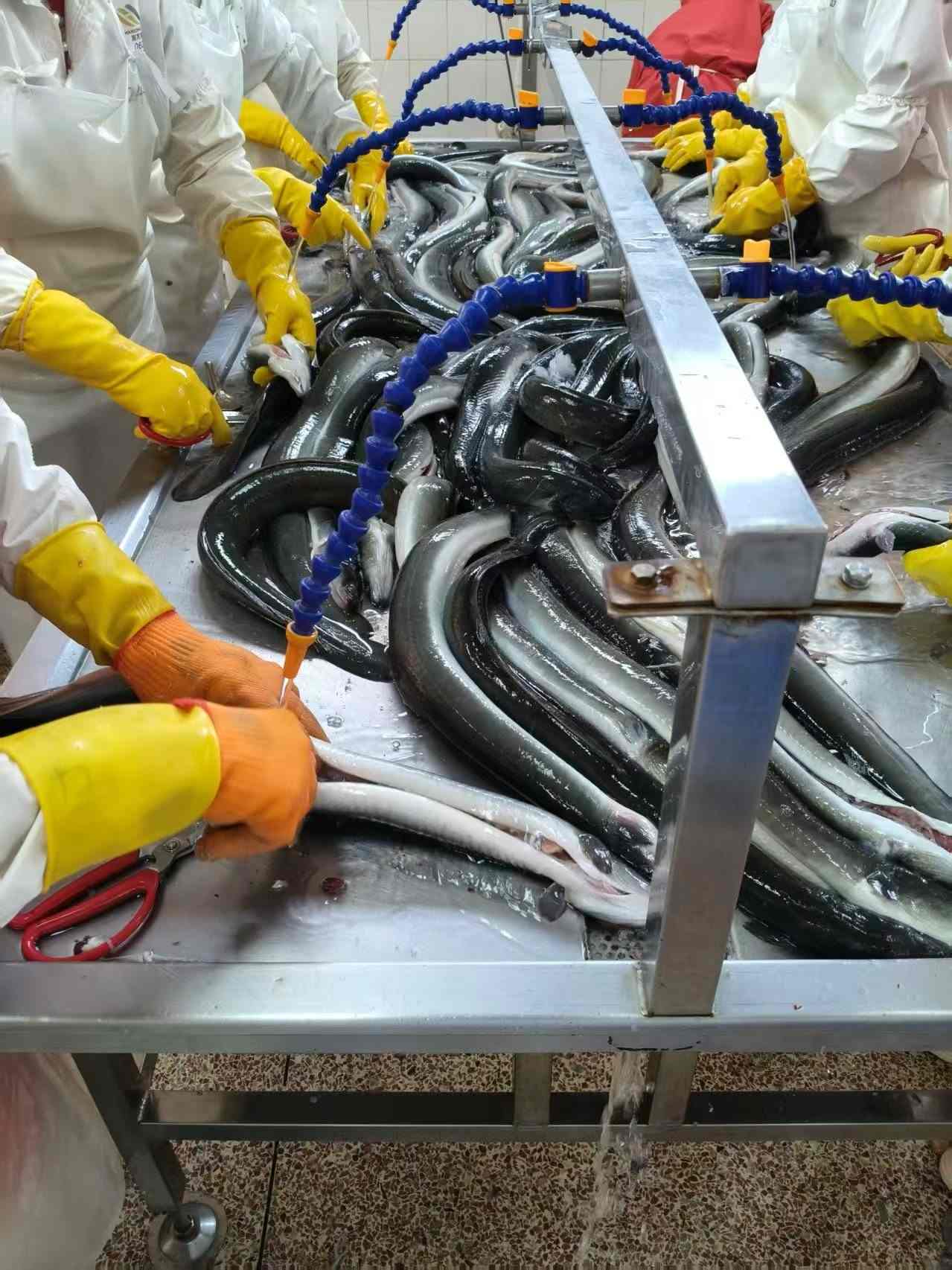
- Direct-from-processor route fits multi-location chains or operators building a dedicated unagi program, where custom cutting (strip, dice, sushi slice) and documented cold-chain handling justify a longer lead time.
Eelpro, for example, runs two production lines dedicated to frozen roasted eel and deep-processed aquatic products, with 4,000 tons annual finished-goods capacity and a 1,000-ton cold storage facility for staging shipments. Regular order lead time runs about 30 days from confirmation to shipment — worth planning around if you're launching a seasonal menu item rather than expecting next-week delivery.
How to Source Eel for a Sushi Menu — Step by Step
- Define your format first. Decide whether you need whole kabayaki fillets, pre-cut strips, or diced pieces before requesting quotes — this determines MOQ and price per kg.
- Request a sample case. Test glaze color against the "1st through 4th soy-sauce coating" reference most exporters use, and check texture after your standard reheat method.
- Confirm compliance documentation. For import, ask whether the product has been tested against destination-market standards — veterinary drug residues and microbiological indicators are the two categories that cause customs holds most often.
- Check traceability. Ask which farming base the eel came from and whether there's a lab report tied to that batch. Suppliers with their own in-house testing lab can usually turn this around faster.
- Negotiate MOQ against your format. Skin-packaging for wholesale differs from gift-box packaging for retail — MOQ terms shift with packaging choice, not just volume.
- Lock delivery timing. Confirm the 30-day-style production window against your menu launch date, with buffer for customs clearance if importing.
What Unagi Specs Should Restaurants Actually Buy
For a straight hand-roll program, most sushi counters land on strip-cut or 3-section cut kabayaki with mid-level glaze (2nd–3rd coating) — heavy enough to read as "unagi" on the plate, light enough not to overpower the rice and nori. Sushi-slice format works better for nigiri or a hand roll variant served open-faced. If your menu also runs eel donburi or noodle bowls, ask whether the same base cut can serve dual purposes — it reduces SKU count and simplifies inventory.
Restaurants sourcing for export-standard quality should also confirm that unagi kabayaki product lines meet the inspection standards of the destination market, since Japan, US, and EU each apply different thresholds for residue testing. A supplier producing to the strictest of these as a baseline gives you more room, not less.

Common Mistakes Buyers Make When Sourcing Unagi
- Ordering by price per kg alone — ignoring cut yield means you may pay less per kilo but get less usable product per case.
- Skipping the sample stage — a photo on a supplier's site is not the same as a thawed, plated sample under your own kitchen lights.
- Not asking about the tare — many operators buy the eel and improvise the sauce. A mismatched eel sauce can undercut an otherwise good cut of unagi; sauce viscosity and sweetness should match your rice seasoning.
- Ignoring reorder lead time — building a menu around a product with a 30-day production cycle, then expecting weekly restocks, sets up a stockout before the first season ends.
- Overlooking portion drift — without a stated weight tolerance, your food cost percentage can swing month to month without an obvious cause.
Cost Considerations for Wholesale Unagi Eel
Pricing for wholesale unagi eel generally breaks down across a few line items worth separating on your quote request:
- Raw material and processing cost — tied to farming supply; Eelpro sources from 19 self-operated and cooperative certified farming bases producing over 5,000 tons of raw eel annually, which stabilizes price swings compared to spot-market buying.
- Cutting and packaging cost — custom cuts (dicing, shredding, sushi slice) cost more per kg than standard fillet, but reduce your own back-of-house prep labor.
- Cold-chain and freight cost — varies by destination and whether you need express or standard frozen freight; factor this into landed cost, not just factory price.
- MOQ-driven discounts — export traders, wholesale clients, and catering chains each sit on different MOQ tiers; ask which tier your order volume falls into before assuming a quoted price applies.
Sourcing Checklist Before You Submit an RFQ
- Have you specified cut type and target dimensions for hand-roll folding?
- Have you confirmed glaze level against a reference sample?
- Have you requested temperature logs, not just a "frozen" claim?
- Have you asked about weight tolerance per portion?
- Have you checked which inspection standards the product has passed?
- Have you matched your MOQ expectation to your buyer category — catering, wholesale, or export trader?
If you're building out a broader menu, it's worth reviewing eel sushi roll preparation techniques alongside your sourcing decisions — cut specs and prep method are connected more than most buyers assume, and a supplier who understands both tends to give more useful spec advice upfront.
For food-safety benchmarks referenced in export sourcing, the Food and Agriculture Organization publishes general guidance on seafood handling and cold-chain standards worth cross-checking against any supplier's claims.
Ready to Request Samples or a Spec Sheet
If you're evaluating unagi for a new hand-roll program, request a sample case and a written spec sheet before committing to volume — glaze level, cut size, and cold-chain documentation are worth confirming on paper, not just in a sales call.