

What Does Unagi Mean in Food and Pop Culture
If you've ever asked, "what does unagi mean?" you've likely encountered two very different answers. One involves a delicious, savory grilled dish central to Japanese cuisine. The other involves a state of "total awareness" famously, and incorrectly, claimed by Ross Geller on the TV show Friends. Let's be clear: unagi is the Japanese word for freshwater eel. It is a prized ingredient, not a martial arts concept. This distinction is vital, especially for restaurant owners, food importers, and distributors who stake their reputation on authentic, high-quality ingredients.
As a quality assurance specialist in the seafood export industry, I've seen firsthand how product knowledge impacts business success. Understanding the cultural and culinary significance of unagi is the first step to sourcing a product that meets customer expectations for taste, texture, and safety. This article will clarify the true meaning of unagi, debunk the pop-culture myth, and provide a framework for evaluating suppliers of this exceptional product.
Unagi in Japanese Cuisine: It's All About the Eel
In Japanese, the term unagi (うなぎ) specifically refers to freshwater eel, primarily the species Anguilla japonica. It is distinct from anago (saltwater conger eel), which has a different texture and flavor profile. Unagi is a cornerstone of Japanese food culture, especially during the hot summer months, when it's traditionally eaten to build stamina.
The most famous preparation is unagi kabayaki, where the eel is deboned, butterflied, skewered, and grilled over charcoal. During grilling, it is basted multiple times with a sweet and savory soy-sauce-based glaze called tare. This process creates a dish that is crispy on the outside, tender and flaky on the inside, with a rich, umami-packed flavor. Our own process at Eelpro involves four precise layers of soy sauce application, each at a controlled temperature, to achieve the perfect glaze and color standard for our unagi kabayaki product.
For foodservice buyers, understanding the different types of Japanese eel is essential for menu planning and sourcing. Here’s a quick comparison:
| Feature | Unagi (Freshwater Eel) | Anago (Saltwater Conger Eel) | Dojo (Loach) |
|---|---|---|---|
| Flavor Profile | Rich, bold, fatty, and savory-sweet when grilled with tare. | Lighter, softer, less oily, with a delicate and sweet flavor. | Earthy, sometimes slightly muddy flavor. Often served in soups. |
| Texture | Firm yet tender and flaky. Skin becomes slightly crispy when grilled. | Very soft, delicate, and can almost melt in your mouth. | Small and soft-boned; often eaten whole after simmering. |
| Common Preparation | Kabayaki (grilled with glaze), Shirayaki (grilled with salt), Unadon (rice bowl). | Simmered (ni-anago) or fried as tempura. Often used in sushi. | Yanagawa nabe (hot pot with burdock root and egg), Dojo-jiru (soup). |
| Sourcing Considerations | Higher price point. Quality depends on fat content, farming practices, and processing. | Generally less expensive than unagi. Texture is paramount. | A more niche, traditional ingredient. Not widely available for export. |
The Unagi Karate Myth: Deconstructing the Friends Gag
The widespread confusion about unagi comes almost entirely from a single episode of the sitcom Friends. In the show, Ross Geller claims "unagi" is a state of total awareness in karate, allowing him to anticipate any danger. He ambushes his friends to prove his point, only to be easily overpowered. This is a classic case of pop culture creating a fiction that has lingered for decades. The unagi Friends meaning is a complete fabrication for comedic effect.
So, does unagi mean awareness in Japanese? No. Is unagi a martial arts term? Absolutely not. The writers likely conflated the sound of the word with real martial arts concepts that do relate to awareness and mental state. For anyone involved in martial arts or Japanese culture, the joke is immediately obvious. For the rest of the world, it created a lasting myth.
To provide clarity, let's compare the fictional "unagi" with two authentic Japanese martial arts concepts that genuinely relate to the idea of awareness and reaction.
Unagi vs. Real Martial Arts Concepts
-
Unagi (うなぎ):
- Literal Meaning: Freshwater eel.
- Context: Culinary. It is a food item.
- Concept: It represents a delicious, high-value protein used in dishes like unadon and sushi. It has zero connection to martial arts, self-defense, or mental states.
-
Zanshin (残心):
- Literal Meaning: "Lingering mind" or "remaining spirit."
- Context: Martial arts (e.g., Kendo, Kyudo, Karate).
- Concept: This is the state of relaxed awareness maintained after executing a technique. The zanshin meaning is about follow-through—staying mentally connected to the situation and aware of your surroundings even after an attack is complete. This is likely the real concept the Friends writers were trying to reference.
-
Ura Nage (裏投):
- Literal Meaning: "Rear throw."
- Context: Martial arts (specifically Judo).
- Concept: This is a specific throwing technique where you lift an opponent from behind and throw them backward over your shoulder or hip. It has no connection to mental awareness but is an actual martial arts term, unlike unagi.
The unagi karate myth serves as a good reminder to seek authentic sources, whether you're learning a new skill or sourcing ingredients for your business. Relying on pop culture for technical knowledge can lead to embarrassing and costly mistakes.
From Farm to Table: What Quality Unagi Means for Your Business
Now that we've established what unagi truly is, let's focus on what matters to a B2B buyer: quality, safety, and reliability. Sourcing high-quality unagi is not just about taste; it's about ensuring food safety, supply chain stability, and cost-efficiency for your operations.
At Eelpro, we manage the entire chain of custody. This begins at our 19 self-operated and cooperative certified farming bases, which supply over 5,000 tons of raw eels annually. This full-chain control is critical for export compliance. As the head of our quality department, I personally oversee the systems that ensure our products meet the stringent food inspection standards of Japan, the US, and the EU. This includes monitoring for veterinary drug residues and microbiological indicators, which helps our clients avoid trade risks and import rejections.
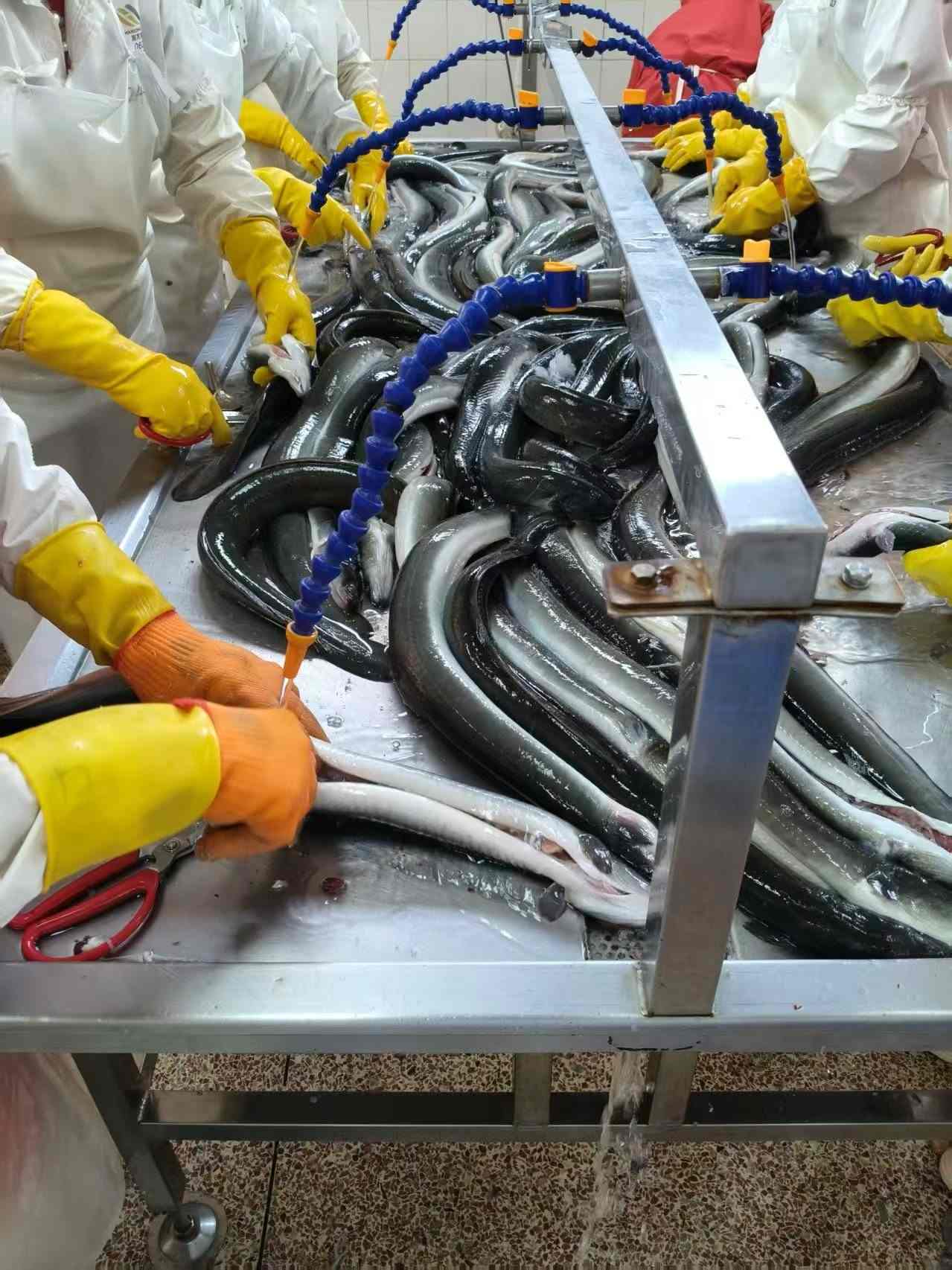
Our processing facility, covering 8,497 m², is where we translate quality raw materials into value-added products. We operate two modern production lines with an annual capacity of 4,000 tons of finished goods. Key quality markers include:
- Standardized Roasting: Our patented low-fat roasting process and four-layer soy sauce application create a consistent product every time. We've even established internal color standards for "white-roasted" and each of the four soy-sauce coatings. This consistency is something your chefs and customers can rely on. More details on this can be found in our article on why our kabayaki sauce is a secret weapon.
- Foodservice Efficiency: Our products are designed for the back-of-house. The eel is boneless and perfectly deboned, and we offer custom cutting specifications—shredding, dicing, sushi slices, and more. This ready-to-heat format significantly reduces labor costs and prep time in commercial kitchens.
- Traceability and Safety: We are ISO 22000:2018 and HACCP certified. Our professional laboratory and metal detectors at critical control points are not just for show; they are integral to our safety management system. We maintain complete traceability from the specific, customs-registered unagi eel farm to the final packaged product.
Sourcing Export-Grade Unagi: A Buyer's Checklist
When evaluating a potential supplier for frozen unagi, it's easy to get lost in conversations about price alone. A lower price often comes with hidden risks in safety, consistency, or compliance. Use this checklist to make a more informed decision.
-
Verify Core Certifications:
- Does the supplier hold internationally recognized food safety certifications like ISO 22000:2018 and a functional HACCP system?
- Do they possess an Export Food Producer Registration Certificate and other relevant licenses (e.g., HALAL, SC Food Production License)? These are non-negotiable for legitimate exporters.
-
Inquire About Traceability:
- Can the supplier trace the product back to the specific farming base? Ask about their farm registration and management system.
- How do they manage raw material quality? Do they have their own labs for testing or rely solely on third parties?
-
Assess Production Capabilities and Technology:
- What is their annual production capacity? A capacity of 4,000 tons, like ours, indicates they can handle large, consistent orders.
- Do they use proprietary technology? Our patented low-fat processing and deodorizing equipment are key differentiators that impact the final product's quality.
-
Discuss Customization and Logistics:
- Can they accommodate custom cutting specifications (e.g., slices for sushi, chunks for rice bowls)?
- What are their MOQ policies for different client types (traders, wholesalers, chains)? We offer negotiable MOQs based on product and packaging.
- What is their typical order lead time? Our standard is approximately 30 days, but this is negotiable. Do they have adequate cold storage (we have a 1,000-ton facility) to ensure product integrity?
-
Confirm Export Market Experience:
- Has the supplier successfully exported to your target market (e.g., Japan, US, EU)? Ask for evidence of their compliance with those specific markets' standards.
- My own experience guiding dozens of clients through this process confirms that a supplier's familiarity with import regulations is as important as the product itself.
By using this checklist, you can move beyond a simple price comparison and evaluate a supplier's ability to be a reliable, long-term partner who can deliver a safe, consistent, and profitable product for your business.
So, what does unagi mean? For diners, it means a delicious meal. For us, it means a commitment to quality from the farm to your facility. And for Ross Geller, it remains a punchline.
To receive a detailed product specification sheet for our frozen unagi kabayaki or to discuss your specific import needs, please send us your inquiry.