

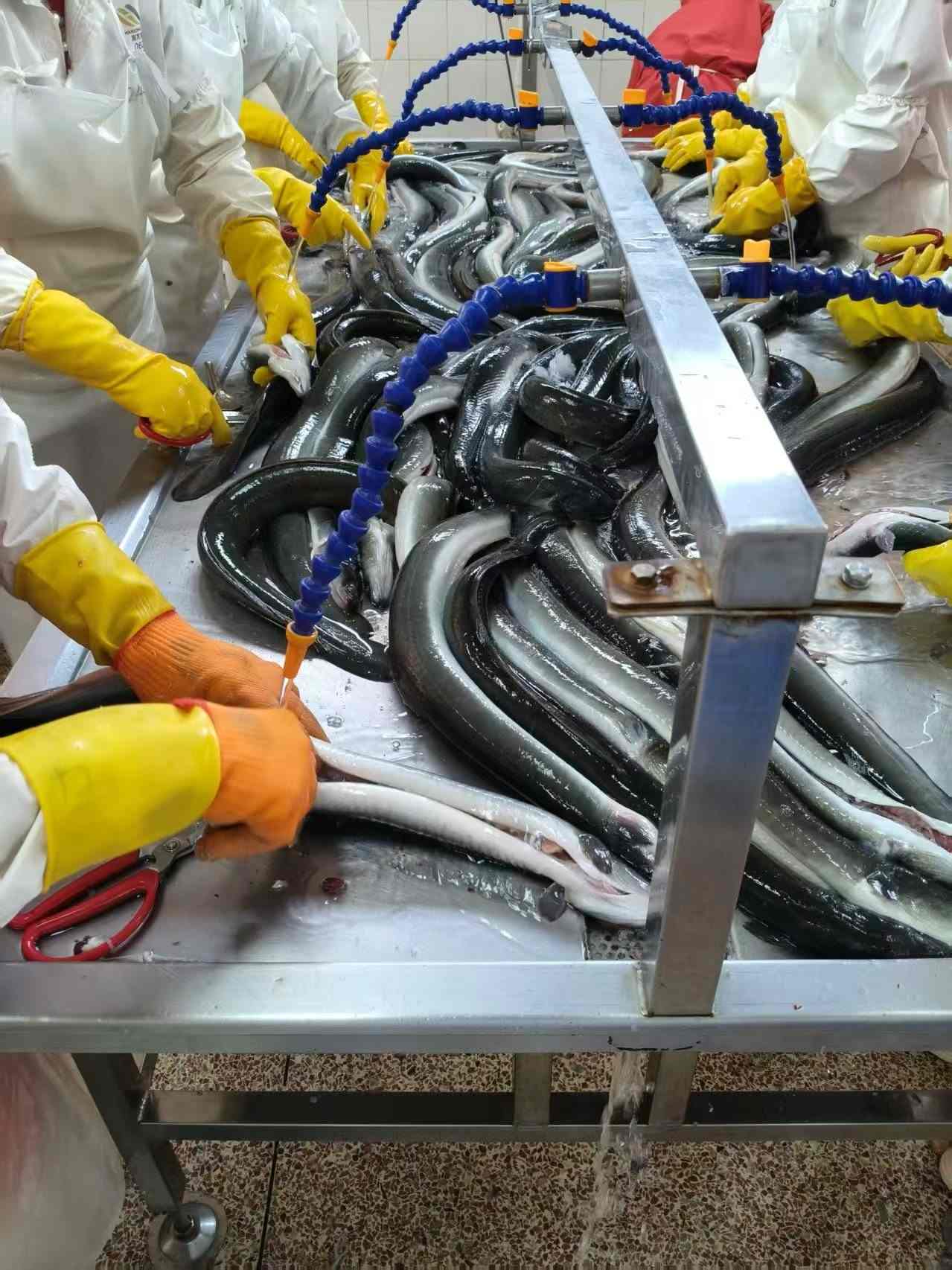
Identify Eel Fish Habitats From Rivers to Reefs
Ever seen "eel" on a menu and wondered which animal it actually was? A river dweller? A reef predator? Something else entirely? Every eel fish has a home range, and that home tells you its species group. Here is how to read the clues.
Why habitat decides which eel you are buying
Most readers picture one animal: a long, snake-like fish that swims upriver. That picture is only partly right.
The order Anguilliformes contains 800+ species. Only a small share are the freshwater eels in the genus Anguilla. The rest live in estuaries, on sandy shelves, in rock crevices and on coral reefs.
Why does a menu planner or importer care? Because habitat links to three practical things:
- Species identity. Where an eel lives narrows down what it can be.
- Flavor and fat. Grilled-eel traditions such as kabayaki grew up around freshwater eels, not reef fish.
- Food safety questions. Reef-dwelling fish raise different risk questions from farmed freshwater fish.
Which eel groups live in freshwater, coastal waters and coral reefs
Not every eel is a migratory river fish. The table below separates the main groups by where they spend their lives.
| Group | Typical habitat | Life-cycle pattern | What it means for buyers |
|---|---|---|---|
| Freshwater eels (Anguilla) | Rivers, lakes, streams and estuaries | Catadromous: born at sea, grow in freshwater, return to sea to spawn | The group behind kabayaki and unagi products |
| Conger eels (Congridae) | Coastal and shelf waters, rocky and sandy bottoms | Marine for the whole life | Different species, texture and flavor; sold under other names such as anago in Japan |
| Moray eels (Muraenidae) | Coral reefs and rocky crevices in warm seas | Marine, reef-resident | Not the standard frozen-trade eel; reef predators need extra safety scrutiny |
| Garden and snake eels | Sandy seabeds, burrows, often in colonies | Marine | Mostly of ecological interest, not a mainstream foodservice item |
| Swamp eels (Synbranchidae) | Rice paddies, ponds, wetlands | Freshwater; not true eels | Sometimes sold as "eel" in local markets, but a different order |
| Electric eel | Freshwater in South America | Freshwater; actually a knifefish | Not an eel at all |
Cold fact: the electric eel is not a true eel. It is closer to a catfish than to an unagi.
The catadromous pattern, in plain words
A catadromous fish does the reverse of a salmon. It grows up in freshwater and spawns in the sea. The European and American eels are linked to spawning in the Sargasso Sea, while the Japanese eel is linked to spawning waters west of the Mariana Islands.
This pattern applies to the Anguilla group. It does not describe congers, morays or garden eels. Those never need a river.
What this evidence covers, and where it stops
A fair warning: this is an evergreen biological overview, not a market report. We are not claiming any dated change in eel supply or demand.
- Observed: eel groups occupy distinct habitats, and only Anguilla follows the river-to-sea cycle.
- Interpretation: if a product is described as a river-grown eel, its species should be in that freshwater group.
- Not established here: which species dominates any given market, or how regulations might shift.
Target markets in a supplier's profile show where it ships. They do not prove demand for any eel group. We keep that boundary on purpose.
Why the names get mixed up
The confusion has several plausible drivers. We separate what is documented from what is only likely.
- Documented: common names are loose. "Eel" is applied to true eels, swamp eels and even the electric knifefish.
- Likely: most search results talk about one famous migratory species, so readers assume all eels share its cycle.
- Possible: menu translations flatten local names (anago, unagi, hamo) into one English word.
Common mistakes to avoid
- Assuming "eel" means river eel. Check the Latin name on the spec sheet.
- Treating all eels as migratory. Reef and shelf eels never leave the sea.
- Swapping species in a recipe without testing. Fat and texture differ, so grilling time and sauce balance change.
- Trusting the common name alone. Ask for species, origin and farming or catch method in writing.
Five questions to ask before you buy or menu an eel
Here is a checklist you can use today. Each question affects a specific decision.
| Question | Decision it affects |
|---|---|
| What is the Latin species name? | Whether the product matches your menu or label claim |
| Is it farmed or wild-caught, and where? | Traceability, documentation and consistency |
| Which format: whole, kabayaki, cut pieces? | Kitchen labor and portioning |
| Which import standards apply (Japan, US, EU)? | Residue and microbiological test requirements |
| Is the sauce included or sold separately? | Flavor control and cost per portion |
A worked example. Imagine a menu planner comparing two spec sheets. One says "eel, grilled" with no species. The other names a freshwater species, farm registration and the inspection standards applied. The second sheet lets the planner check the habitat group, the traceability chain and the compliance fit. The first leaves all three open.
How a freshwater supply chain answers these questions
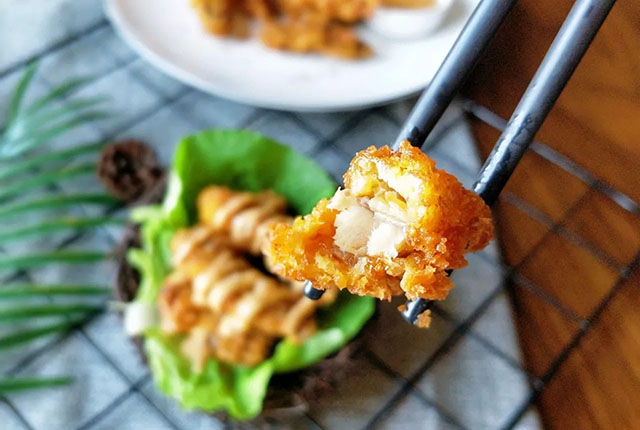
This section is about one supplier's scope, not an industry-wide pattern. Eelpro Co., LTD works with freshwater eels. Our unagi eel farm for Eelpro Co., Ltd network covers about 20 customs-registered farming bases over 2,150 mu, with traceability from farming registration through process verification to shipment.
Quality checks run through our eel lab of Eelpro Co., Ltd, with metal detectors at critical control points. The facility holds ISO 22000:2018, HACCP and HALAL certification, plus an export food producer registration. Products are built to meet Japan, US and EU inspection standards on veterinary drug residues and microbiological indicators.
Scoped examples: we have supplied kabayaki to Japanese restaurant chains, and exported unagi kabayaki and eel sauce to US food importers. We have also supplied eel products to German and Polish importers. These show where our products have gone. They do not prove a market trend.
If you want to see a finished format, start with our unagi kabayaki product page. Species details should be confirmed on the spec sheet for your order.
Signals that would change this picture
Here is what remains uncertain, and what would change our advice.
- Unclear species labeling on a competing offer. If the Latin name cannot be supplied, treat the habitat group as unconfirmed.
- New import rules. A change in residue or documentation requirements could shift which formats suit a given market. Check current rules for your destination.
- A reef or congers-based menu concept. This needs different sourcing and safety checks than a freshwater kabayaki line.
Now try it yourself. Look at the last eel dish you ate. Do you know which habitat it came from? Share your guess in the comments.
Want to go deeper into the kitchen side? Read our how to cook eel: cleaning guide. If you are comparing formats, tell us your target market and cut preference, and we will send a matching spec sheet and quote.