

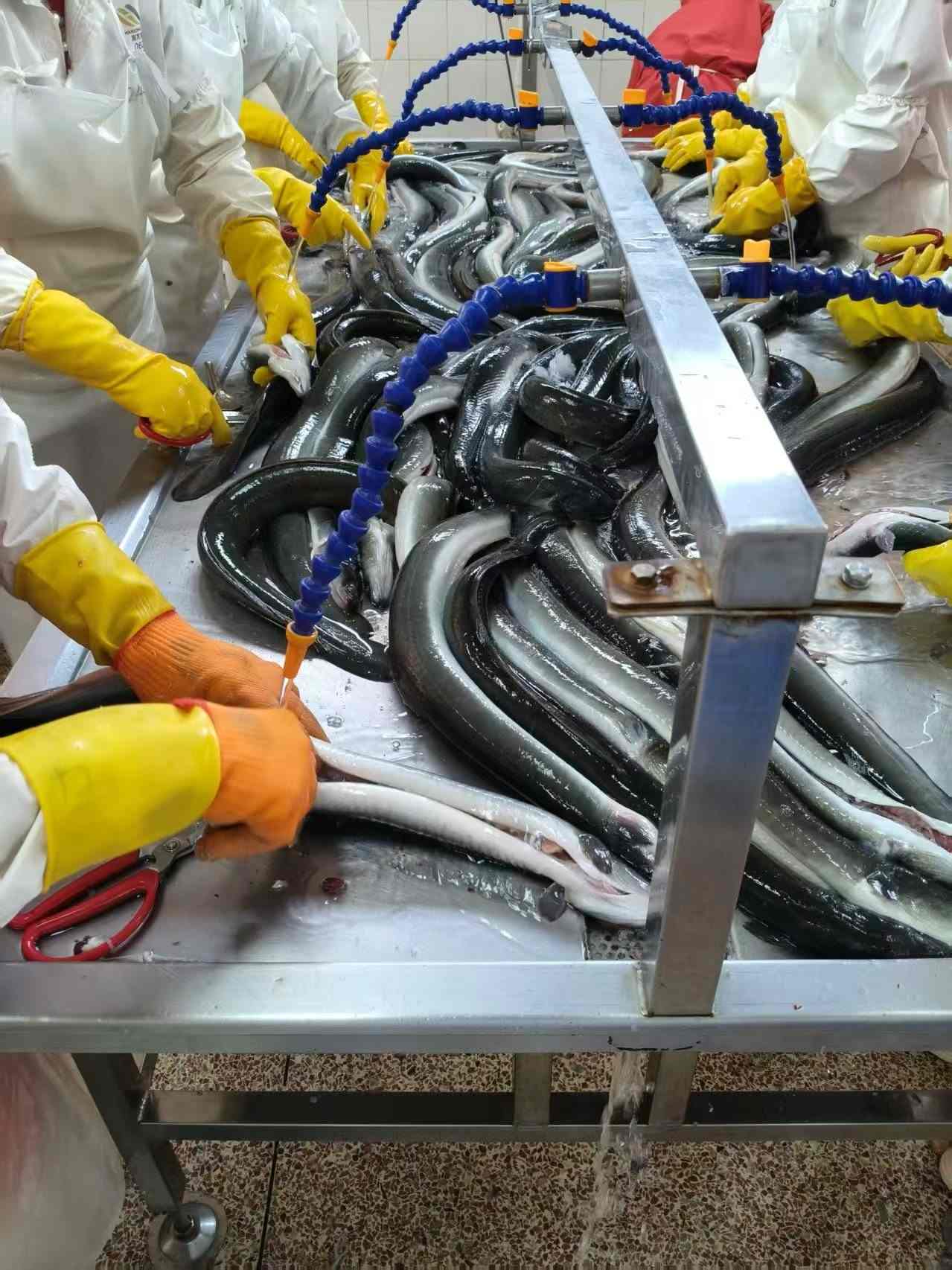
Choose Frozen Unagi by Glaze, Cut and Pack Format
The sample looked fine. Then the container landed, and the eel was too dark for sushi, too thin for rice bowls, and packed for the wrong channel. That is the real sourcing risk with frozen unagi: a vague spec sheet. Lock down glaze, cut, piece weight and pack format before the RFQ goes out.
Where vague specs cost importers money
Most disputes come from the spec, not the eel. Buyers say "kabayaki, sauce-on, vacuum-packed" and assume everyone means the same thing. They do not.
- Glaze described only as "light" or "dark." Without a color reference, two lots can differ visibly. Ask for a numbered coating standard.
- Cut left unspecified. A whole fillet, a 3-section cut and sushi slices serve different kitchens. Back-of-house labor changes with each.
- Price compared per kilo only. A heavier glaze or a different piece weight shifts the real cost per portion.
- One pack format for every channel. A pack that suits a restaurant kitchen rarely suits a retail shelf.
Pitfall guide: never accept a quote that does not state glaze level, cut and pack format in writing. If any of the three is missing, the price is not comparable.
Buyer spec matrix for sushi, rice-bowl and retail use
The table below is a shortlisting tool. Glaze numbers refer to the 1st-through-4th soy-sauce coating color standards that Eelpro uses, alongside a white-roasted standard. Piece weight is not fixed here, because it depends on your portion plan and must be written into the spec sheet in grams. Treat the glaze suggestions as starting points, then confirm them against a sample.
| Use | Glaze level to request | Fillet cut | Piece weight | Pack format |
|---|---|---|---|---|
| Sushi and rolls | Lighter coating (1st or 2nd level), so the kitchen controls final sweetness | Sushi slices, strip-cutting or 3-section cut; boneless | Set by roll or nigiri portion; state grams per slice | Ready-to-heat food-service packs; confirm count per pack |
| Rice bowl (donburi) | Deeper coating (3rd or 4th level), so color holds visually over rice | 3-section cut or chunk-cutting; boneless | Set by bowl portion; state grams per piece and pieces per bowl | Ready-to-heat packs sized to one service batch |
| Retail and gift | Match your shelf look; request a color reference photo | Whole kabayaki fillet or a consistent cut | Uniform weight per pack matters more than per piece | Skin-packaging or gift boxes |
| Prep-heavy kitchens | Any level, matched to the finished dish | Shredding, dicing or chunk-cutting for fillings and toppings | Defined by recipe yield | Bulk food-service packs |
Glaze: decide by the finished plate
Glaze sets color, sweetness and how the eel looks after reheating. Our roasting process builds the coating in 4 precise layers of soy sauce with temperature-controlled steps, and each coating level has its own color standard. A numbered standard gives you something to check incoming lots against. The limit: color is only one signal. Taste and salt balance still need a sample check against your own sauce and rice.
Cut: pay for labor once, not twice
Custom cuts available include shredding, dicing, strip-cutting, chunk-cutting, 3-section cut and sushi slices. Buying a pre-cut, boneless format reduces trimming and portioning in your kitchen. That helps most for chains with high daily volume. It helps less for a small operation that already cuts to order and wants maximum flexibility.
Piece weight and pack format: fix them together
Piece weight drives portion cost, and pack format drives handling. Define both in the same line of the spec. Skin-packaging and gift boxes suit retail presentation. Ready-to-heat packaging suits kitchens that want fast service with less prep. For menu ideas that shape these choices, see eel rice bowl toppings: 7 better donburi ideas and eel sushi roll recipe: make unagi rolls.
Capabilities that make a spec enforceable
A good spec only helps if the supplier can repeat it. These are the facts from Eelpro's brief that bear on that question, and the buyer concern each one answers.
- Two production lines, 4,000 tons a year. The lines cover frozen roasted eel and deep-processed aquatic products. This answers the concern of whether a custom cut or pack can be scheduled without disrupting the rest of production.
- Full-chain traceability. About 20 customs-registered eel farming bases cover over 2,150 mu, with controls from farming registration through process verification and targeted sampling to traceability tracking. This matters for veterinary drug residue questions.
- Quality systems. The facility holds ISO 22000:2018 and HACCP certification, plus HALAL certification, an Export Food Producer Registration Certificate and an SC production license. Metal detectors sit at critical control points.
- Own laboratory. Quality checks are backed by an in-house lab, supported by 25 technical and quality-control personnel. You can read more about the eel lab of eelpro co. / ltd.
- Cold storage. A 1,000-ton cold storage facility supports storage and cold-chain logistics before shipment.
- Patented processing. Low-fat roasted eel processing and deodorizing equipment are patented, which bears on flavor consistency.
For raw material questions, the unagi eeel farm for eelpro co. / ltd page explains the sourcing side. Our products are built to meet Japan, US and EU food inspection standards on veterinary drug residues and microbiological indicators. Ask for the specific test documents for your destination market. We do not treat a general statement as a substitute for paperwork.
Where this supply has been used
Eelpro has supplied kabayaki eel over the long term to Japanese restaurant chains. It has exported unagi kabayaki and eel sauce to US food importers, and supplied eel products to importers and distributors in Germany and Poland. Other destinations include Australian Asian foodservice and retail channels, Indonesian importers and foodservice channels, and regional catering chains in Southeast Asia. Seafood exports to the EU have been shipped under EU food safety and veterinary drug residue standards.
These cases show markets served. They do not prove that any specific import approval, local stock or timeline applies to your order. Verify those points per shipment.
A step-by-step way to shortlist and request a quote
- Name the use. Sushi, rice bowl, retail or prep ingredient. One product per use.
- Pick the glaze level. Reference the white-roasted color or a 1st-through-4th coating standard, not adjectives.
- Pick the cut. Whole fillet, 3-section, strips, chunks, dice, shreds or sushi slices.
- Write the piece weight in grams and the pieces or net weight per pack.
- State the pack format. Skin-packaging, gift box or ready-to-heat food-service pack.
- List destination documents. Name the market (Japan, US, EU or another) so test and registration paperwork can be matched.
- Request a sample against that exact sheet, then compare color, texture and sauce balance with your reference.
If sauce is part of your program, the eel sauce product page lists the unagi tare range. The kabayaki sauce article explains how sauce shapes the final flavor.
Cooperation terms and what still needs agreement
MOQ policy differs for domestic catering chains, wholesale clients and export traders. The exact MOQ is negotiated according to product specification (white-roasted skewers, kabayaki eel or cut pieces) and packaging format (skin-packaging or gift boxes). Regular delivery time is about 30 days from order confirmation to shipment, and it can be adjusted by spec and quantity. A very custom cut or pack may change that figure.
Agree these points in writing before you place a first order:
- Glaze reference and acceptable color range
- Cut, piece weight and net weight per pack
- Pack format and labeling requirements for your market
- Required inspection and residue documents
- Acceptance criteria and how after-sales issues are handled. Support follows contract terms.
We have no fixed sample-to-bulk sequence to promise here. Scope depends on the spec you send.
Buyer checklist before you shortlist a frozen eel supplier
- Can the supplier give a numbered glaze standard, not just a description?
- Is the cut available boneless and in your required format?
- Are piece weight and pack weight stated in grams?
- Do certifications and test documents cover your destination market?
- Is there traceability from farm to shipment?
- Are MOQ and lead time tied to your specific spec?
Planning a broader menu? Review our unagi kabayaki manufacturer page and the unagi kabayaki product listing, then send us your use case, preferred glaze level, cut, piece weight, pack format and destination market. We will respond with a matching quote or sample proposal.