

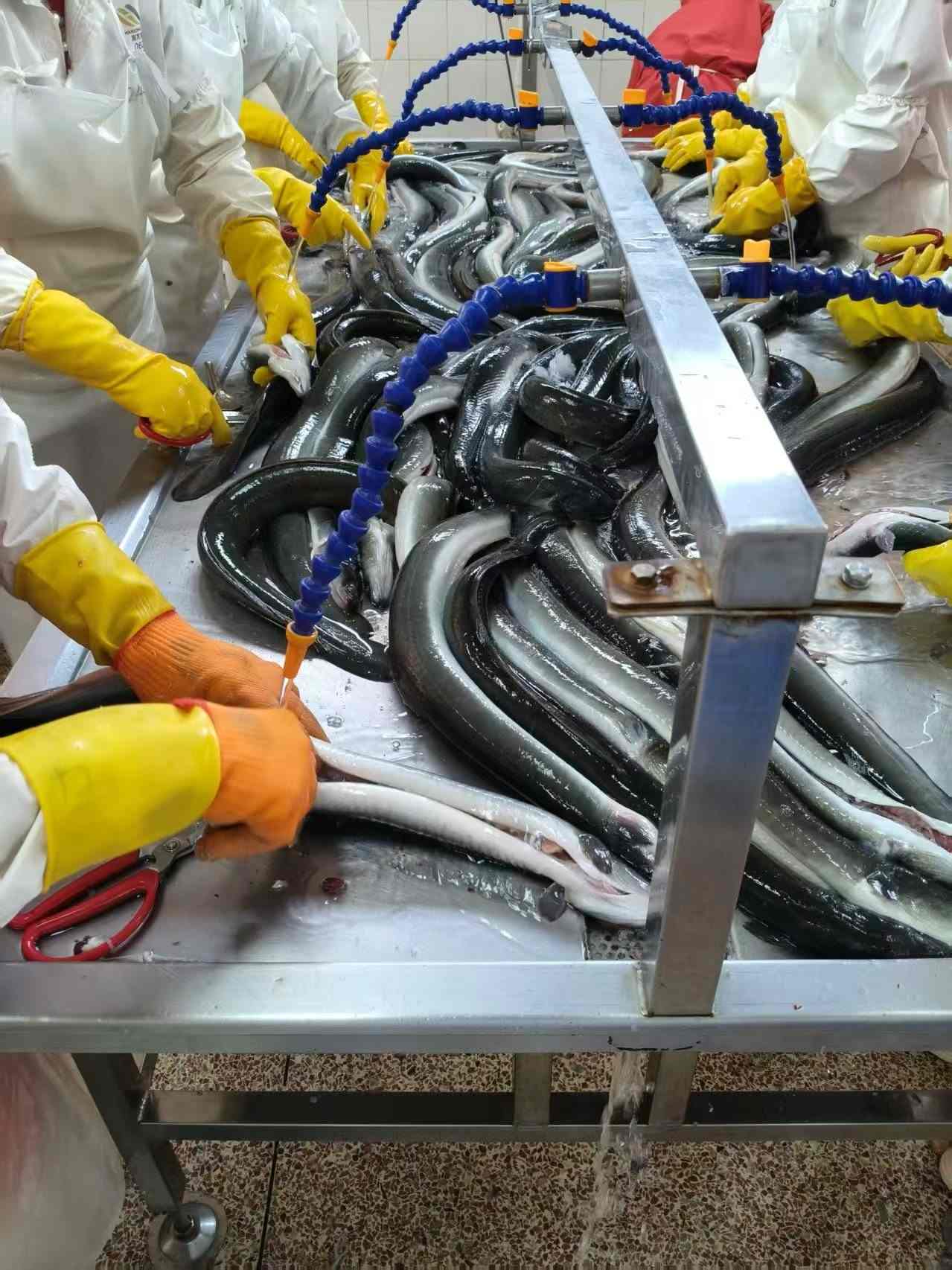
Is an Eel Fish? Fins, Gills and Classification
It slithers. It's long. It looks like a snake in a wet suit. So is an eel fish, or something else entirely?
Yes, it is a fish. True eels are ray-finned fish with gills, fins and scales. The snake look is just an elongated body plan. Below, we sort out the anatomy, the classification, and the "eels" that aren't eels at all.
The short answer: eels are bony fish, not reptiles
Eels belong to the order Anguilliformes, a group of ray-finned bony fish. The order covers more than 800 species, from freshwater eels to moray and conger eels in the sea.
Three traits settle the question:
- Gills pull oxygen from water. Eels have them, snakes don't.
- Fins with fin rays run along the back and belly. Snakes have no fins.
- A fish life cycle. Freshwater eels of the genus Anguilla are catadromous. They grow in rivers and ponds, then migrate to the sea to spawn. Their larvae drift in the ocean before turning into glass eels.
That last point matters for anyone sourcing eel. Wild breeding is hard to control, so farms rely on young eels that are caught or collected and then grown out. It shapes how farms are registered and traced.
Eel fish vs snake: a side-by-side anatomy table
The body shape fools the eye. The inside tells the truth. Here is a quick comparison you can use when training kitchen staff or checking a supplier's product description.
| Feature | Freshwater eel (fish) | Snake (reptile) | What it means in practice |
|---|---|---|---|
| Breathing | Gills, plus some oxygen uptake through skin | Lungs only | An eel out of water survives longer than most fish because of its moist skin, but it is still a gill breather. |
| Fins | Dorsal and anal fins fused with the tail fin into one continuous ribbon; small pectoral fins in Anguilla | None | The fin ribbon is the fastest way to tell them apart in a photo. |
| Scales | Tiny, embedded in the skin and hidden under mucus | Overlapping scales on the surface, with wide belly scutes | Eel skin feels smooth and slick. Snake skin feels dry and ridged. |
| Gill openings | Small slits behind the head | None | Look for the slit near the pectoral fin base. |
| Classification | Class Actinopterygii, order Anguilliformes | Class Reptilia, suborder Serpentes | Different branches of the vertebrate family tree. |
| Skeleton | Bony fish with many small ribs and vertebrae | Also many vertebrae, but no fin rays | Fine bones are why boneless eel products need careful processing. |
One exception to keep in mind: sea snakes have paddle-shaped tails, which look fin-like. They still breathe air at the surface and have no gills. The test is always the same: gills and fin rays mean fish.
How fins, gills and scales shape what ends up on the plate
Biology isn't trivia here. Each trait has a practical effect in the kitchen, and a trade-off.
Elongated body: more length, less fillet width
An eel's long, round body gives a narrow fillet. That's why eel is usually split open along the back and sold flat, or cut into pieces. The trade-off is that cutting style changes portion yield and cooking time. A strip cut and a chunk cut behave differently on the grill. If you are comparing offers, ask for the cutting spec, not just the weight. Eelpro offers custom cuts such as strips, chunks, a 3-section cut and sushi slices.
Mucus-covered skin: cleaning matters
The slime that protects an eel in water makes raw eel slippery and strongly scented. Processors handle this through deodorizing steps. Home cooks can follow a step-by-step how to cook eel: cleaning guide. The limit: cleaning can't fix poor raw material. Freshness and farming conditions set the ceiling.
Tiny embedded scales: edible skin
Because the scales are so small and buried, eel skin is cooked and eaten, which is why kabayaki keeps the skin on. The glossy skin also takes sauce well. For Eelpro's roasted eel, the process uses 4 layers of soy sauce with temperature-controlled steps, and the colour is graded against a white-roast and 1st-through-4th coating colour standard. The trade-off is that a heavily coated surface hides the skin, so inspect the cut face as well as the surface colour.
Fat content: flavour versus heaviness
Eel is naturally rich. Rich means tender and aromatic, but also heavy for some menus. This is why low-fat roasting technology exists. Eelpro holds patents for low-fat roasted eel processing and for deodorizing equipment. A lighter eel suits salads and rice bowls. A fuller one suits traditional unagi service. Neither is "better".
Cold facts: animals called "eels" that aren't true eels
Here is the misunderstanding that trips up buyers and menu writers most.
Cold fact: the electric eel is not an eel. It is a South American knifefish, and it's closer to catfish and carp than to a true eel. The name is a nickname, not a taxonomy.
| Animal | True eel (Anguilliformes)? | Quick tell |
|---|---|---|
| Freshwater eel (Anguilla) | Yes | Pectoral fins, continuous fin ribbon, small embedded scales |
| Conger eel | Yes | Marine, large pectoral fins, scaleless skin |
| Moray eel | Yes | Marine, no pectoral fins, rarely eaten commercially |
| Electric eel | No (knifefish) | Freshwater, generates electricity, different body structure |
| Swamp eel | No (different order) | Can breathe air, no pectoral fins |
| Lamprey | No (jawless fish) | Sucker mouth with no jaws |
The lesson for sourcing: a common name is not a specification. "Eel" on a label can mean very different animals, flavours and fat levels. Ask for the Latin name.
What to verify before you buy eel products
If you are a restaurant buyer or importer, here is a short checklist drawn from the biology above.
- Species and Latin name on the spec sheet.
- Form: whole, boneless, split, or cut. Specify strips, chunks or slices if you need them.
- Process stage: raw, white-roasted, or kabayaki with sauce coating.
- Farm registration and traceability from farm to shipment.
- Target-market compliance: Japan, US and EU inspections look at veterinary drug residues and microbiological indicators.
- Packaging format: skin-packaging or gift boxes, depending on your channel.
Common mistakes to avoid:
- Buying on photo alone. Coating colour can hide size and cut differences.
- Assuming every "eel" product is the same species.
- Comparing prices without matching the cutting spec and packaging.
Where our supply chain fits
As a frozen eel supplier, we handle this chain from farm to freezer. Eelpro works with about 20 customs-registered eel farming bases covering over 2,150 mu, and checks are backed by an in-house laboratory and metal detectors at critical control points. You can see more about our unagi eeel farm for eelpro co. and the eel lab of eelpro co. on their own pages. The facility holds ISO 22000:2018, HACCP and HALAL certification, and our eel products are exported to markets including Japan, the United States and Germany. Typical order delivery is about 30 days from confirmation, negotiable by spec and quantity.
If your menu is built around grilled eel, start with the unagi kabayaki product page for formats and cuts.
Where to go from here
Got a menu idea, or an "is this really eel?" story from a market stall? Share it in the comments. We like hearing what readers find on their plates.
To keep exploring, try our eel recipes for cooking ideas. If you're sourcing for a restaurant or import business, send us your target species, cut and packaging format, and we'll recommend a spec and quote a sample.