

Is Eel Healthy to Eat When Fat and Mercury Matter
One glossy kabayaki fillet can look like a simple dinner choice, yet it raises a bigger question: is eel healthy to eat when the fish is naturally oily and the glaze can add sugar and sodium? The answer depends less on the word “eel” and more on the species, portion, sauce level, preparation format, and sourcing records behind it.
For restaurant buyers, retail teams, and home cooks, the practical issue is not whether eel is “good” or “bad.” It is how to retain its protein and natural fats while managing the parts that can become excessive in a glazed, ready-to-heat dish. Is eel healthy to eat for a menu? Usually, it can fit well when purchasing and serving decisions are made with care.

Start with the real question behind eel nutrition
When people ask is eel healthy to eat, they often combine several separate concerns into one. They may mean fat intake, mercury exposure, calories from sauce, sodium levels, food safety, or how frequently they plan to serve eel. These factors should be assessed separately because they affect the buyer in different ways.
Eel is a naturally rich fish. Its flesh contains protein and naturally occurring fat, including unsaturated fatty acids commonly associated with oily fish. That richness gives unagi its soft texture and satisfying flavor after grilling. It also means that a buyer seeking a very lean seafood item should not treat eel like white fish.
The conclusion is straightforward: choose eel when you want a rich, premium seafood protein with a distinctive texture, but control the recipe around it. This fits Japanese restaurants, Asian foodservice operators, meal-prep brands, and retail products that can state serving directions clearly. It does not fit a menu position built around very low-fat seafood or a product brief requiring no added sodium.
Mercury is a separate question. Mercury exposure can vary by fish species, size, growing environment, and consumption pattern. It should not be judged from appearance, fat content, or glaze color. A dark, glossy kabayaki surface does not indicate mercury level, and a leaner-looking cut does not prove lower exposure.
For buyers asking is eel healthy to eat for frequent service, the practical response is to request product-origin information, lot traceability records, and relevant compliance documentation from the supplier. This is especially relevant for importers with their own residue-monitoring plans. It does not mean that every purchase requires a new testing program; the level of verification should match the market, buyer policy, and intended consumer group.
Nutrient-versus-risk breakdown for naturally oily eel and glazed kabayaki
The most useful distinction is between what comes from the eel itself and what comes from the preparation. Natural eel fat creates much of the dish’s flavor and mouthfeel. Added glaze can change sugar and sodium intake far more than the fish alone. This is why is eel healthy to eat cannot be answered accurately without identifying the product format.
| Parameter | Where it comes from | What it affects in practice | Buyer action | When this action does not apply |
|---|---|---|---|---|
| Natural fat | Eel flesh | Creates a rich texture, contributes to satiety, and makes eel different from lean white fish. | Use eel in portions and menu pairings designed for a richer seafood item. Serve with vegetables, rice, or lighter side dishes. | Do not market it as a very low-fat seafood choice. |
| Protein | Eel flesh | Supports the product’s value as a substantial seafood entrée, sushi topping, rice-bowl component, or prepared meal ingredient. | Keep the eel portion visible in the finished dish rather than burying it under heavy toppings. | This does not replace a full nutrition analysis for a retail nutrition panel. |
| Added sugar | Kabayaki sauce or glaze, when included | Changes sweetness, browning, and the overall nutrition profile of the finished serving. | Ask whether the product is supplied sauce-coated, lightly glazed, or with sauce packed separately. | Do not assume every roasted eel item has the same sugar level. |
| Sodium | Mainly soy-sauce-based glaze, seasoning, and added sauce | Can become the main concern for consumers limiting salty foods, especially when served with soup, pickles, or additional sauce. | Control finishing sauce and provide a clear serving suggestion to foodservice staff. | This is less relevant for plain white-roasted eel with no sauce added at service. |
| Mercury | Environmental exposure, species, and farming or harvesting conditions | Requires sourcing and compliance review; it cannot be managed by trimming fat or reducing glaze. | Request traceability and market-appropriate documentation from the supplier. | Do not treat a nutrition label as a substitute for origin and compliance records. |
For a buyer comparing two frozen products, a plain or lightly seasoned eel format gives the kitchen more control over added sauce. A fully glazed kabayaki product offers faster preparation and a consistent sweet-savory profile, but the sauce becomes part of the nutrition decision. Is eel healthy to eat in both forms? It can be, but they are not nutritionally interchangeable.
Eelpro offers frozen roasted eel formats, including kabayaki and custom cuts, supported by a four-layer soy-sauce coating process. Buyers that want to assess sauce use before purchase can review the eel sauce product information and discuss packaging or application preferences before confirming specifications.
Compare product formats before choosing a healthier menu position
A product format can make a bigger difference than a recipe headline. “Grilled eel” may mean plain roasted eel, fully glazed kabayaki, sauce-packed eel, diced eel in a prepared bowl, or sushi-cut portions with finishing sauce added later. If the goal is to answer is eel healthy to eat for a particular menu, identify which format is actually being purchased.
| Product format | Best fit | Main health-control point | Reasoning | Limit |
|---|---|---|---|---|
| White-roasted eel | Chefs building custom sauces or lighter menu recipes | Control all added seasoning in-house | The kitchen decides how much sauce, salt, or sugar reaches the plate. | Requires more back-of-house finishing work. |
| Frozen unagi kabayaki | Restaurants needing speed and familiar Japanese flavor | Review glaze and serving size | Ready-to-heat preparation reduces labor and supports consistency. | Added glaze is already part of the finished product. |
| Cut pieces or diced eel | Rice bowls, noodles, meal kits, and mixed dishes | Prevent sauce stacking | Small pieces spread flavor efficiently, so extra tare may be unnecessary. | Portion control is harder if the dish uses many toppings. |
| Sushi slices | Sushi counters and chilled prepared-food concepts | Standardize rice-to-eel ratio | Rice, sauce, and eel together determine the final serving profile. | Texture and visual standards matter as much as nutrition messaging. |
The best choice for a lower-sauce menu is usually white-roasted eel or a format where sauce can be added in a measured finishing step. The reason is simple: the kitchen retains control. This approach works for bowls, salads, noodles, and modern Japanese small plates. It does not apply when customers expect the classic sweet, lacquered kabayaki presentation.
For classic menu demand, frozen kabayaki remains a practical option. Eelpro produces unagi kabayaki using export-grade roasting steps and four controlled soy-sauce coating layers. The better decision is not to remove kabayaki from the menu automatically. Instead, use a defined eel portion, avoid doubling the sauce, and balance the plate with unsauced components.
Use a five-step buying procedure for fat, mercury, and sauce control
Buyers who repeatedly ask is eel healthy to eat are usually trying to avoid a mismatch between a product claim and an actual serving. The following procedure turns that concern into an RFQ and menu-development checklist.
- Define the serving format first. Specify whether the eel will be a full entrée, sushi topping, rice-bowl ingredient, noodle garnish, or retail meal component. The same eel cut behaves differently in each format.
- Choose the sauce-control level. Decide between white-roasted, sauce-coated, or separately packed sauce. Select separately controlled sauce when your menu needs flexibility. Choose pre-glazed kabayaki when labor speed and classic flavor consistency matter more.
- Ask for traceability information. Confirm farming-base registration, lot identification, process records, and documentation relevant to your destination market. This is the correct purchasing control for origin-related risk questions, including mercury concerns.
- Review the complete plate, not only the fillet. Count the sauce, rice seasoning, soup, pickles, and side dishes. A moderate kabayaki portion can become a high-sodium meal if every item is heavily seasoned.
- Run a kitchen test before listing. Heat the product according to supplier guidance, weigh the sauce added at service, and photograph the finished plate. This reveals whether the intended portion still looks generous without extra glaze.
This process is suitable for foodservice chains, distributors, importers, and product developers. It is less necessary for a household buying one occasional serving, although the same logic still helps: use the sauce thoughtfully and avoid treating it as a free topping.
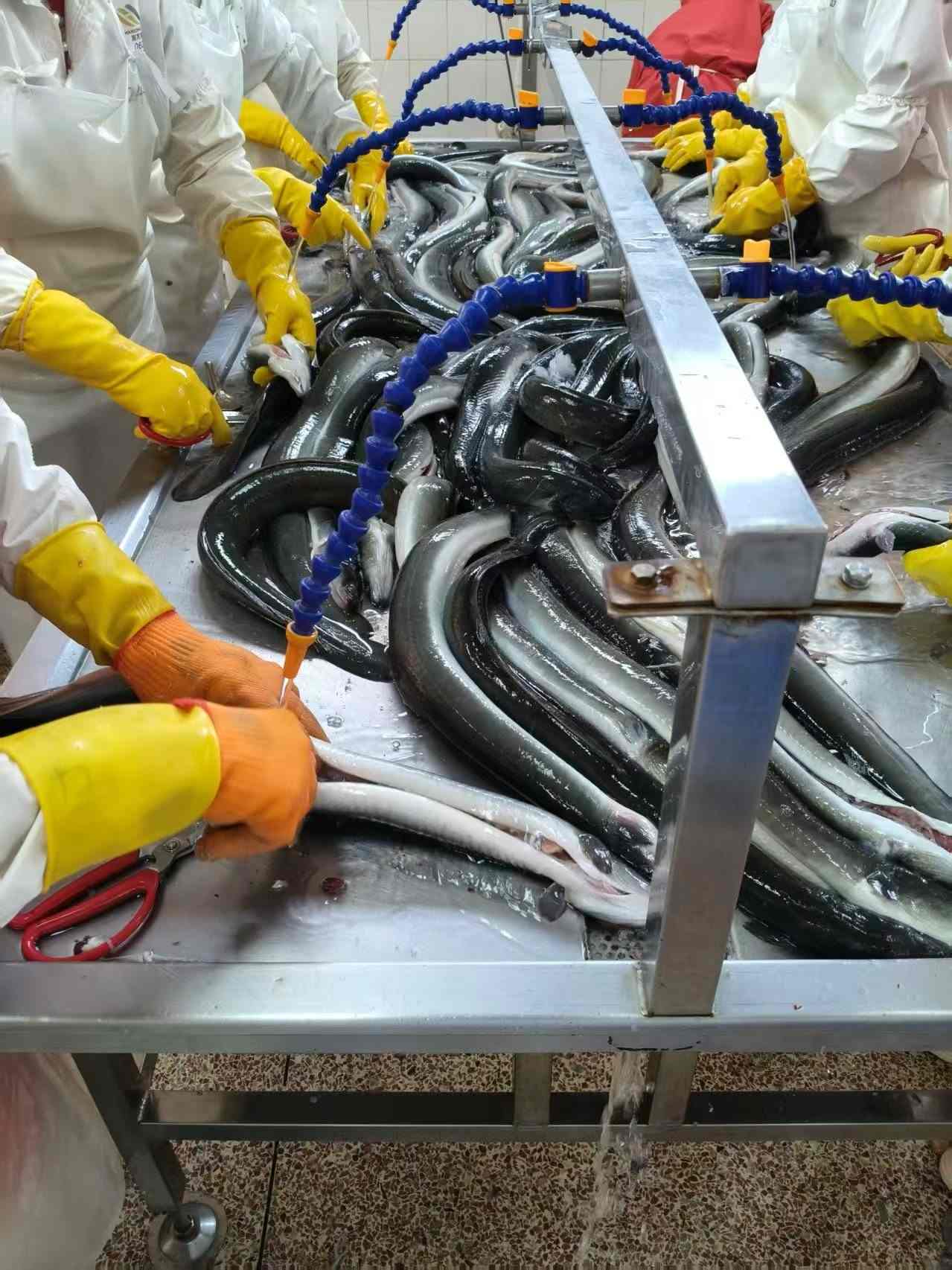
Eelpro operates with around 20 customs-registered eel farming bases covering 2,150 mu and applies full-chain traceability from farming registration through process verification and shipment tracking. Our facility also has an in-house laboratory and metal detectors at critical control points. These controls support sourcing review, but buyers should still define any market-specific documentation they require in the purchase specification.
Common mistakes that make a good eel dish less balanced
A useful answer to is eel healthy to eat must include what can go wrong after the product leaves the factory. Many nutrition concerns are created by serving practice, not by the eel fillet itself.
- Mistake: Adding extra tare without tasting first. The conclusion is to heat and taste the kabayaki before adding more sauce. Pre-glazed eel may already deliver the expected sweet-savory profile. Extra sauce fits only when a customer specifically wants a stronger flavor.
- Mistake: Pairing kabayaki with several salty sides. Choose plain rice, fresh vegetables, or lightly dressed salad when the eel has a soy-based glaze. This keeps the meal more balanced. It does not mean every side must be plain; it means avoid seasoning every component heavily.
- Mistake: Assuming natural fat and added sugar are the same issue. They are not. Natural eel fat is part of the fish; sugar is a formulation question. Buyers should request details about the prepared product rather than rejecting eel based on a general assumption.
- Mistake: Treating mercury as a visual quality check. Mercury cannot be judged by color, smell, or texture. Use supplier traceability and market compliance records instead. A beautiful fillet is not a laboratory report.
- Mistake: Ordering the wrong cut for the recipe. Select strips for noodles, dices for rice bowls, and sushi slices for nigiri or rolls. The correct cut reduces unnecessary trimming and helps standardize portions.
Cold fact: the shiny brown surface of kabayaki is often interpreted as proof of a rich fish, but it mainly reflects roasting and sauce application. It tells you more about finish and flavor direction than it does about the natural fat level inside the eel. That is why is eel healthy to eat should never be answered by looking at glaze color alone.
Match sourcing controls to the market and the menu
For importers, food safety and nutrition are connected but not identical. A supplier may meet food safety and export requirements, while the buyer still needs to decide how much sauce belongs in the final menu. Eelpro holds ISO 22000:2018, HACCP, HALAL certification, export food producer registration, and SC Food Production License No. SC11135062401122 for quick-frozen prepared foods.
Our products are supplied with export requirements in mind for Japan, the United States, and the European Union, including veterinary drug residue and microbiological indicators. Eelpro has supplied kabayaki eel to Japanese restaurant chains, unagi kabayaki and eel sauce to United States importers, and eel products to importers and foodservice channels in Germany, Poland, Australia, Indonesia, and Southeast Asia.
That history gives commercial buyers a practical starting point, not a blanket promise that every specification is identical. When the question is is eel healthy to eat for a particular destination, the buyer should match the product, documentation request, label plan, and menu use to that market’s own requirements.
For example, a Japanese restaurant chain may prefer a traditional pre-glazed kabayaki presentation for familiar flavor and quick service. A meal-kit developer may instead choose cut eel with measured sauce to better manage the full meal formula. Both can be sensible decisions. The first prioritizes traditional presentation; the second prioritizes recipe control. Neither approach suits every customer.
For operators building lighter dishes around eel, recipe design matters. A bowl with vegetables and a measured sauce finish can feel generous without becoming overly sweet. A noodle format can use eel as a rich topping rather than the sole source of flavor. For menu inspiration, see these eel recipes for flavor pairings that can help balance sweet-savory unagi dishes.
Make the final choice based on the whole serving
So, is eel healthy to eat? For many people, eel can be part of a varied diet and a well-planned menu. Its natural fat and protein are reasons to value it, not reasons to avoid it automatically. The limits are equally clear: buyers should not ignore sauce sugar, sodium, portion size, or sourcing verification when those factors matter to their customers.
A well-chosen eel product starts with the desired format. A well-executed eel dish ends with measured sauce, sensible sides, and transparent sourcing records. That is the practical way to weigh eel’s nutrients against fat and mercury concerns without losing the flavor that makes unagi memorable.
Request a product specification sheet or sample guidance from Eelpro to compare white-roasted and glazed eel formats for your menu.