

Price Unagi Hand Rolls for Profitable Menu Margins
Choosing a frozen unagi supplier based on the list price per kilogram is a common mistake that quietly erodes your menu's profitability. A low initial cost can hide problems like poor yield, inconsistent sauce coating, and bone fragments that drive up your actual cost per serving. Before you can set a profitable price for an unagi hand roll, you must first understand the true cost of its most valuable ingredient. An inaccurate calculation here means you are either losing money on every roll sold or overpricing a potential bestseller off your menu.
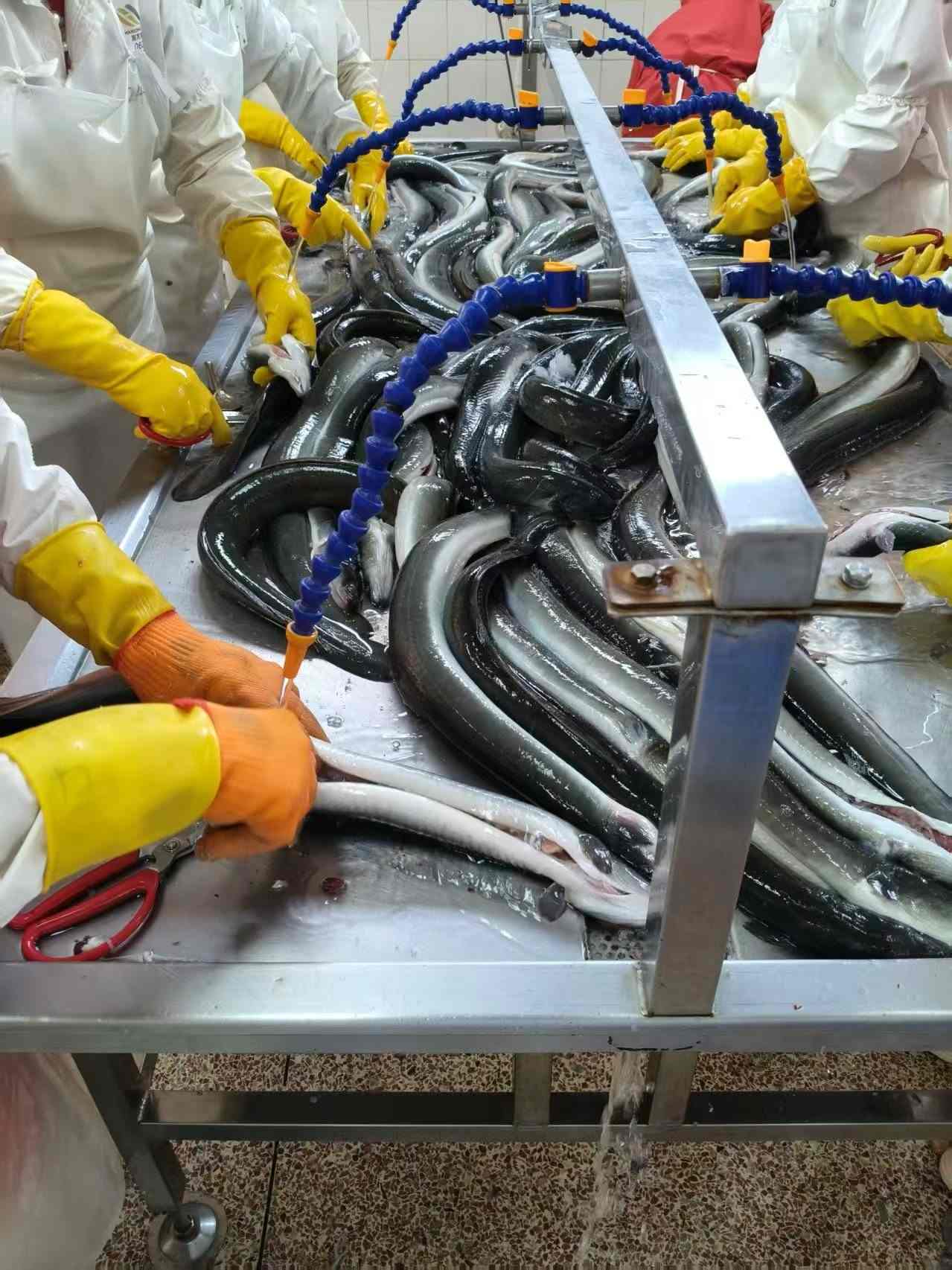
As a specialist with over a decade in kabayaki processing, I've seen how sourcing decisions directly impact the kitchen's bottom line. The key isn't just the unagi wholesale price, but the usable, sellable product you get from each case. This guide breaks down how to calculate your real unagi hand roll food cost and make sourcing decisions that protect your margins.
The Anatomy of Your Unagi Portion Cost
The final cost of putting an unagi hand roll in a customer's hand goes far beyond the eel itself. Restaurant operators often focus heavily on the protein cost while underestimating the contribution of other components and labor. A precise costing model accounts for every gram and every minute.
Here are the primary cost drivers to track:
- Net Usable Eel: This is the most critical variable. Are you buying a product with excess sauce, ice glaze, or skin that adds weight but not value? Our process, which includes a patented low-fat roasting technique and four precise layers of sauce, is designed to maximize the eel-to-sauce ratio, giving you more usable protein per case.
- Sauce & Seasonings: The unagi tare, or eel sauce, is a key flavor component. If your purchased eel requires significant additional saucing in the kitchen, you must factor in the cost of your own eel sauce product or the ingredients and labor to make it.
- Sushi Rice: This includes the raw grain, vinegar, sugar, and salt. While seemingly small on a per-roll basis, these costs add up significantly across hundreds of servings.
- Nori (Seaweed): The quality and size of the nori sheet directly affect the customer experience and the cost. Higher-grade nori stays crisp longer.
- Labor: How much time does your staff spend preparing the eel? Sourcing ready-to-heat, boneless, and pre-cut unagi slices drastically reduces back-of-house prep time compared to processing whole fillets. This is a direct labor cost saving.
A Practical Model for Calculating Your Unagi Hand Roll Food Cost
To set a profitable menu price, you must first build a precise cost-per-unit model. This prevents guesswork and ensures every item contributes positively to your gross margin. A common target food cost percentage for restaurants is 28-35%, but this can vary based on your service model and other operating expenses. The key is to calculate your cost accurately, then apply your target margin.
Here is a step-by-step model to determine your eel roll portion cost. Use this framework and insert your specific supplier and ingredient costs.
Cost Breakdown Per Hand Roll
| Cost Component | Notes & Calculation | Example Cost per Roll |
|---|---|---|
| Frozen Unagi Kabayaki | (Cost per kg / 1000g) * Grams of eel per roll. Use the net, usable weight. | $1.25 |
| Sushi Rice (Cooked) | (Cost per kg of dry rice / Yield) * Grams per roll. Factor in vinegar, sugar, salt. | $0.15 |
| Nori Sheet | Cost per pack / Number of sheets per pack. (Use half-sheet cost if applicable). | $0.12 |
| Additional Sauce/Garnish | Cost of extra eel sauce, sesame seeds, cucumber, etc. per roll. | $0.08 |
| Labor (Estimated) | (Chef's hourly wage / 60 mins) * Minutes to assemble one roll. | $0.40 |
| Packaging (Takeout) | Cost of container, bag, napkins, soy sauce packet. Prorate if not all orders are takeout. | $0.25 |
| Total Cost per Roll | Sum of all components above. | $2.25 |
From Cost to Menu Price
Once you have your total cost per roll, you can determine your selling price based on your target food cost percentage. The formula is:
Menu Price = Total Cost per Roll / Target Food Cost Percentage
Using the example above:
- If your target food cost is 30% (0.30): $2.25 / 0.30 = $7.50 Menu Price
- If your target food cost is 25% (0.25): $2.25 / 0.25 = $9.00 Menu Price
This model provides a logical foundation for your gross margin strategy. It moves sushi menu pricing from a guessing game to a data-driven decision, ensuring profitability while remaining competitive.
How Eel Specifications Impact Your Final Margin
The specifications of the frozen unagi kabayaki you source have a direct and significant impact on the variables in your cost model. As a B2B supplier, we focus on providing product formats that enhance kitchen efficiency and portion control, which are essential for margin protection.
Consider these factors when evaluating a supplier:
1. Custom Cutting and Portion Control
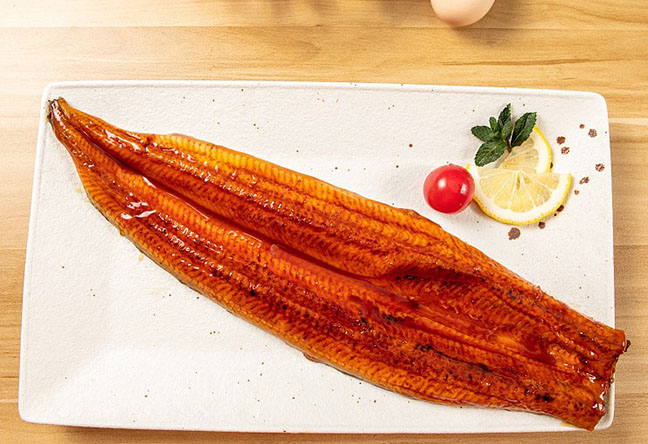
Inconsistent portioning is a primary source of food cost variance. Manually cutting a whole eel fillet for each unagi hand roll can lead to different weights and waste. We offer standardized, custom cutting specifications to solve this problem:
- Sushi Slices: Pre-cut to a uniform weight and thickness, ideal for nigiri and hand rolls. This guarantees consistent portion cost and presentation.
- Shredding/Dicing: Perfect for mixed rolls or as a topping for donburi bowls, ensuring standardized recipe execution.
- Chunk/Strip Cutting: Versatile formats for skewers, appetizers, or creative sushi rolls.
By ordering a pre-cut format, you convert a variable cost (manual portioning) into a fixed, predictable cost, simplifying your calculations and reducing waste.
2. Sauce Adherence and Yield
From my experience overseeing our roasting lines, the application of sauce is a science. Our proprietary 4-layer coating process, with precisely controlled temperatures at each step, ensures the sauce caramelizes and adheres to the eel. This means less sauce is left in the packaging and more of the weight you pay for is sellable product. A lower-quality product may have a thick, watery glaze that melts away, artificially inflating the gross weight and lowering your real-world yield. If you are interested in our process, you may want to read about why our kabayaki sauce is a secret weapon.
Buyer's Checklist for High-Yield Unagi
Before placing your next bulk order, ask your potential supplier these questions to protect your margins:
- What are the product's food safety certifications? (We hold ISO 22000:2018 and HACCP certifications, ensuring process integrity.)
- Can you provide custom cuts to match my menu's needs? (Standardization is key to cost control.)
- What is the typical sauce-to-eel ratio by weight? (This helps you calculate true protein cost.)
- Is the product fully boneless and ready to heat? (This clarifies the amount of in-house labor required.)
- What is your traceability system? (Our full-chain control from our 19 registered farms ensures quality and safety from pond to plate.)
Supplier Reliability De-Risks Your Supply Chain
Consistent pricing and profitability depend on a stable supply. As a provincial-level leading enterprise with two modern production lines and an annual capacity of 4,000 tons, we provide a reliable source for growing restaurant chains and wholesale distributors. Our 1,000-ton cold storage facility ensures we can manage inventory to meet demand, and our typical 30-day order-to-shipment time allows for effective planning.
Furthermore, our products are processed to meet the stringent food inspection standards of Japan, the US, and the EU. This commitment to export-grade quality means our partners avoid the risks of rejected shipments, product recalls, and damage to their brand reputation. Every product from our facility, whether for domestic or international clients, is checked by our professional laboratory and passes through metal detectors at critical control points. This is the assurance that underpins a stable, profitable unagi program.
Calculating your unagi hand roll food cost is the first step. Partnering with a high-quality unagi kabayaki manufacturer that understands kitchen operations is how you protect those margins for the long term.
To discuss your specific product needs, from white-roasted skewers to custom-cut kabayaki slices, contact our team for a detailed quote.