

Unagi Is Eel and Here Is What Every Buyer Should Know Before Placing an Order
Unagi is eel. That's the short answer. But if you're sourcing product for a restaurant chain, a distribution warehouse, or a retail seafood counter, "eel" alone doesn't tell you enough. Which species? Freshwater or saltwater? Farmed or wild? Get this wrong on a menu or a spec sheet, and you risk a labeling complaint or a customer who orders "unagi" expecting something specific and gets something else.
We've packed frozen unagi kabayaki for overseas buyers long enough to know where the confusion usually starts — right at the word itself.
What Does "Unagi" Actually Mean?
Unagi (鰻) is the Japanese word for freshwater eel, specifically referring to eels in the genus Anguilla. This is different from "anago," which refers to saltwater conger eel, and different again from "hamo," the pike conger used in kaiso cuisine. If a menu lists "unagi," it should mean freshwater eel — not any eel-shaped seafood on hand.
The unagi meaning in a culinary context almost always points to one preparation: eel that has been butterflied, skewered, and grilled with a sweet soy-based glaze, known as kabayaki. So when someone asks "what is unagi," the accurate answer covers two layers — the species (freshwater eel) and the cooking style (kabayaki-grilled).
This matters for buyers because vendors sometimes use "unagi" loosely to describe any grilled eel-style product, including items made from unrelated species. A precise spec sheet should state both the species name and the preparation method.
Which Eel Species Are Sold as Unagi?
Not every eel qualifies as true unagi. The category narrows down to a handful of species within the Anguilla genus, commonly referenced by the Anguillidae family classification. Here's how the main commercial species compare:
| Species | Common Name | Primary Source | Typical Use |
|---|---|---|---|
| Anguilla japonica | Japanese Eel | China, Japan, Taiwan (farmed) | Premium kabayaki, sushi |
| Anguilla anguilla | European Eel | Europe (heavily restricted trade) | Traditional European smoked eel |
| Anguilla rostrata | American Eel | North America | Regional kabayaki substitute |
| Anguilla bicolor | Indonesian Shortfin Eel | Southeast Asia (farmed) | Budget kabayaki lines |
Of these, Japanese eel (Anguilla japonica) remains the industry benchmark for texture and flavor in kabayaki production. It's the species most foodservice buyers picture when they hear "unagi," and it's what we farm and process at Eelpro. If you're sourcing from a supplier who substitutes a cheaper species without disclosure, that's a labeling risk you inherit, not them.
Is Unagi the Same as Freshwater Eel? Clearing Up the Labeling Confusion
Yes — unagi is a subset of freshwater eel, not a separate creature. But "freshwater eel" is a broader biological category, while "unagi" implies a specific culinary context: grilled, sauced, and typically Japanese-style prepared. Here's a simple breakdown buyers can use when checking a supplier's documentation:
- Unagi = freshwater eel (genus Anguilla), typically prepared as kabayaki
- Freshwater eel = the biological category; includes unagi and other river/lake eel species not sold as unagi
- Anago = saltwater conger eel, not unagi, despite visual similarity when sliced
- Unadon / Unaju = rice bowl dishes featuring unagi, not species names
A common mistake we see from new importers: assuming any "eel" line item on an invoice is interchangeable. It isn't. If your restaurant menu says "unagi don," and the kitchen is actually plating conger eel, that's a mislabeling problem waiting to surface — especially in markets with strict seafood traceability rules.
Sourcing Angle: Why Species and Supply Chain Transparency Decide Your Margin
Angle: Buyers often compare unagi suppliers purely on price per kilogram. That's the wrong lens. The real differentiator is whether the supplier controls species identity and supply chain from farm to freezer — because that's what protects you from compliance headaches and inconsistent product quality.
Intent: This section defines what "supply chain transparency" should actually mean when you're evaluating a unagi exporter, so you know what to ask for in a supplier questionnaire.
| Sourcing Factor | Low-Transparency Supplier | Eelpro-Style Vertically Integrated Supplier |
|---|---|---|
| Species verification | Verbal claim only, no documentation | Traceable from our own eel farm |
| Sauce consistency | Outsourced tare, batch varies | In-house eel sauce (unagi tare) production |
| Quality testing | No lab reference | Tested through our eel lab before shipment |
| Cold chain control | Third-party logistics only | Controlled freezing at source |
When we talk to distributors evaluating frozen eel suppliers, this is usually the deciding factor — not the unit price, but whether the exporter can prove species and handle recalls or audits with actual paperwork.
A Buyer's Checklist Before You Confirm a Unagi Order
Before signing a purchase order, run through this list:
- Confirm the species name in writing — ask specifically if it's Anguilla japonica
- Request the origin of the eel — farmed pond location, not just "China" or "Asia" broadly
- Ask whether the eel sauce is produced in-house or sourced from a third party
- Check if the supplier has an internal testing process, such as an eel lab for quality checks
- Review packaging labels for accurate common and scientific names
- Ask for cold chain documentation covering the frozen transport window
Skipping any of these steps is the most common mistake we see from first-time importers — and it's usually the sauce and species questions that get overlooked first, not the price negotiation.
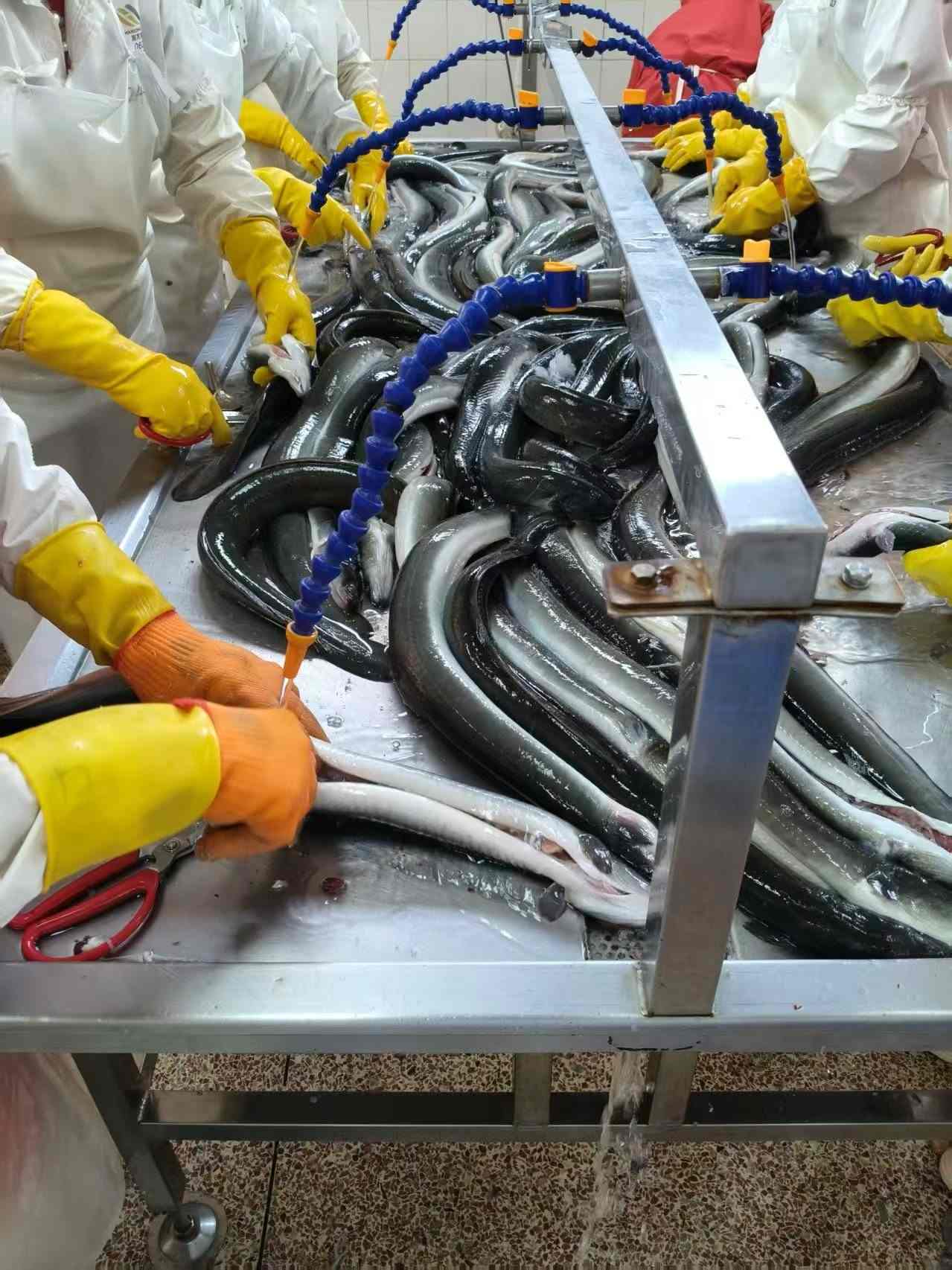
How Unagi Kabayaki Is Made — A Quick Production Walkthrough
Understanding the process helps buyers judge quality claims. Here's the general sequence:
- Step 1: Live eels are harvested from farm ponds at target weight
- Step 2: Eels are cleaned, butterflied, and deboned by hand or machine
- Step 3: Eels are pre-steamed or grilled depending on regional style (Kanto vs Kansai)
- Step 4: Kabayaki sauce (soy, mirin, sugar reduction) is brushed on during grilling
- Step 5: Product is flash-frozen to lock in texture before export
If you want the flavor detail behind that glaze, our piece on why kabayaki sauce matters breaks down what separates a thin, one-note sauce from a layered one. For buyers building menu items around it, the unagi kabayaki product line we ship comes pre-glazed and frozen, ready for reheating without on-site sauce prep.
FAQ: What Buyers Actually Ask About Unagi
What does "unagi is eel" mean exactly?
It means the Japanese word unagi refers specifically to freshwater eel, not eel-shaped seafood in general. It's a species-based term, not a catch-all category.
Is unagi the same as freshwater eel?
Yes, functionally. Unagi is freshwater eel prepared in Japanese style, typically as kabayaki. All unagi is freshwater eel, but not all freshwater eel dishes are called unagi.
Which eel species are sold as unagi?
Mainly Anguilla japonica (Japanese eel), followed by Anguilla bicolor and Anguilla rostrata as more affordable alternatives in some markets. Anguilla anguilla (European eel) faces trade restrictions, so it's rarely used commercially now.
Why do some suppliers substitute cheaper eel species without saying so?
Cost pressure, mainly. Japanese eel takes longer to farm and costs more per kilogram than some shortfin varieties. Buyers who don't request species verification in writing are the ones most exposed to this substitution risk.
Getting the Terminology Right Protects Your Business
Menu accuracy isn't just a marketing detail — in many export markets, it's a legal one. Knowing that unagi is eel, specifically freshwater eel of the Anguilla genus, and understanding which unagi species your supplier actually uses, protects you from mislabeling claims and inconsistent product. If you're building out a broader seafood program, our frozen seafood line and eel sauce options are worth reviewing alongside your kabayaki order — same traceability standard applies across both.
Curious how the sauce recipe changes flavor outcomes? Check our breakdown on fixing kabayaki sauce mistakes — it's a common gap even among experienced kitchen teams. Drop your sourcing questions in the comments; we read every one.