

Imported Unagi Kabayaki Can Wreck Your Menu Margin Before You Even Plate It
Here's the mistake we see most: a buyer compares two quotes for unagi kabayaki, picks the cheaper per-kilo price, and only discovers the real cost after the first pallet thaws. Net yield, sauce weight, and cold-storage loss don't show up on a price list. They show up on your food-cost report three weeks later, when it's too late to renegotiate. This article breaks down exactly how to price kabayaki eel before you sign an RFQ, not after.
What "Unagi Kabayaki" Actually Means on a Spec Sheet
Not every supplier's kabayaki is built the same way. The term covers a roasting method — grilled, then coated in soy-based sauce — but the finish, fat content, and bone status vary widely between factories. A proper unagi kabayaki product spec sheet should tell you:
- Roasting standard — white-roasted color vs. 1st-through-4th soy-sauce coating stage. More coating layers mean more sauce weight, which affects your per-portion food cost differently than a lighter glaze.
- Cut format — whole skewers, cut pieces, shredded, diced, strip-cut, 3-section cut, or sushi slices. Foodservice kitchens usually save labor with pre-cut formats, but pay a small premium per kilo for it.
- Bone status — boneless/deboned eel reduces prep time and plate waste, which matters more for high-volume donburi or ramen programs than for a single tasting-menu dish.
- Packaging — skin-packaging for individual portions vs. gift boxes for retail. Skin-pack loses less moisture in storage; gift boxes cost more per unit but suit retail-facing menus.
If a quote doesn't specify these four points, ask before you calculate anything else. A "cheap" kabayaki with heavy bone content and thin sauce coating can end up costing more per usable portion than a pricier boneless spec.
Cost: Calculate Landed Cost and Menu Margin
This is the section most buyers skip, and it's the one that decides whether your unagi kabayaki program actually makes money. Landed cost isn't the FOB price. It's FOB price, plus freight, plus cold-storage loss, divided by the portions you can actually serve after thawing and sauce loss.
Separate your numbers into three buckets — confirmed, estimated, and unknown. Never treat an estimate as a fact when you're pricing a menu item.
| Cost Element | Status | Notes |
|---|---|---|
| FOB unit price | Confirmed (from quote) | Fixed once contract is signed |
| Freight (sea/air) | Confirmed (from forwarder quote) | Varies by port and container load |
| Import duty / tariff | Confirmed (from customs schedule) | Check your country's HS code rate |
| Net thawed yield % | Estimated (request supplier test data) | Ask for actual yield after thaw, not theoretical |
| Sauce weight per portion | Estimated (from spec sheet) | Heavier coating = higher usable weight but also higher unit cost |
| Cold-storage loss (dehydration, freezer burn) | Estimated (based on storage duration) | Longer holding time increases loss % |
| Portion size served | Confirmed (your own menu spec) | Set by your kitchen, not the supplier |
| Local storage/handling cost | Unknown until logged | Track over first 2-3 shipments |
Worked example: A case of frozen unagi kabayaki costs $9.20/kg FOB. Freight and duty add $1.10/kg, landing at $10.30/kg. If net thawed yield runs 92% (an 8% moisture loss during thaw, common for roasted eel), your usable cost rises to roughly $11.20/kg. At a 120g portion size, that's about $1.34 in raw eel cost per plate, before sauce, garnish, or labor. Add a $0.30 allowance for eel sauce (unagi tare) if it's not already included in the coating weight, and your true food cost per portion lands near $1.64. Menu the dish at $16.00 and your food-cost percentage sits around 10%, well within typical seafood-entrée targets of 28-32% once labor and overhead are added back in for the full dish.
This math changes if your cold storage holds product longer than 60-90 days — dehydration loss compounds, and yield can drop another 2-4%. Always re-check yield figures if lead times stretch beyond your usual 30-day order cycle.
Comparing Pack Formats and MOQ Before You Commit
Pack format and minimum order quantity affect both your storage cost and your negotiating leverage. Here's how the common options stack up for foodservice buyers:
| Format | Best For | Trade-off |
|---|---|---|
| Skin-packaged skewers | Individual portion control, sushi/donburi lines | Higher packaging cost per kg, lower prep labor |
| Bulk cut pieces | High-volume catering, buffet service | Lower unit cost, needs more back-of-house cutting |
| Gift-box format | Retail counters, gifting programs | Higher cost per unit, not suited to kitchen prep |
| Custom sushi slices | Sushi bars, unakyu maki rolls | Premium pricing, minimal labor needed |
MOQ policies differ for catering chains, wholesalers, and export traders — specifics depend on the cut spec and packaging you choose, so ask your supplier to confirm MOQ against your exact format before quoting a landed price.
Common Mistakes Buyers Make When Comparing Kabayaki Quotes
- Comparing FOB price only — ignoring freight, duty, and yield turns a "cheaper" quote into the more expensive option once landed.
- Assuming sauce weight is included — some quotes price the eel and sauce separately; check whether the coating weight counts toward your billed kilo.
- Skipping yield verification — theoretical yield from a spec sheet rarely matches actual thawed weight; ask for real test batch data.
- Overlooking cold-storage duration — a 90-day hold changes your loss percentage more than most buyers expect.
- No traceability request — for markets like the EU and US, missing veterinary drug residue or microbiological test records can delay customs clearance entirely.
Compliance and Traceability: What to Confirm Before You Order
Export compliance isn't paperwork for its own sake — it's what keeps your shipment moving through customs. Products meeting Japan, US, and EU inspection standards for veterinary drug residues and microbiological indicators reduce the odds of a hold at port. Look for suppliers backed by an ISO 22000 food safety management system, HACCP-based process control, and HALAL certification if your channel requires it.
Full-chain traceability matters just as much. A supplier with customs-registered eel farming bases, an in-house laboratory, and metal detectors at critical control points can trace a batch back to its farm origin if a residue question comes up later. That's the difference between a quick answer to a customs query and a shipment sitting in cold storage while paperwork gets sorted out.
Buyer's Decision Checklist Before Submitting an RFQ
- Do you have the spec sheet's cut format, bone status, and coating stage in writing?
- Has the supplier provided actual thawed-yield test data, not just theoretical numbers?
- Have you calculated landed cost including freight, duty, and cold-storage loss?
- Does the packaging format match your kitchen's prep workflow (skin-pack vs. bulk cut)?
- Can the supplier confirm ISO 22000, HACCP, and HALAL certification with documentation?
- Is traceability available — farm registration, batch testing, sampling records?
- Does the quoted lead time match your storage capacity and menu launch date?
If any answer is "no" or "unclear," get it resolved before signing. A missing yield figure or an unclear sauce-weight policy is the most common reason menu margins fall short of projections after the first order arrives.
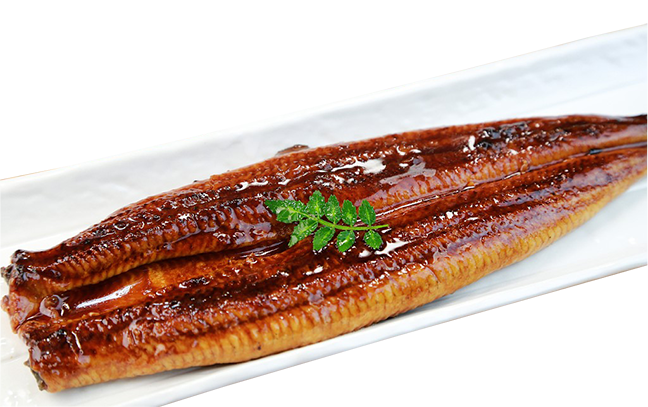
Cutting-edge roasting technique aside — the low-fat roasting and four-layer soy-sauce coating process only pays off on your menu if the math behind net yield and sauce weight is done correctly first. For menu ideas that pair well with imported kabayaki, our flavor pairing guide for menus covers combinations tested across different cut formats. For background on how the sauce itself is built, see our piece on kabayaki sauce composition and how it affects portion cost.
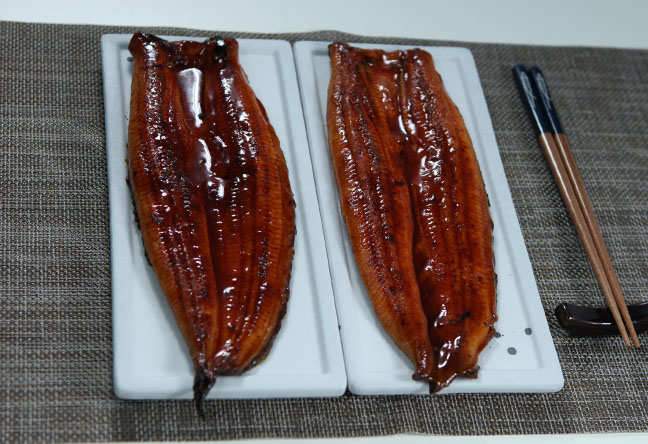
For buyers weighing multiple frozen seafood categories against a single supplier, working with one frozen eel supplier that also handles related aquatic products can simplify freight consolidation and reduce per-shipment cold-storage handling fees.
Get a Spec Sheet and Landed-Cost Estimate
Send us your target portion size, cut format, and destination port. We'll return a spec sheet with yield data and a landed-cost estimate you can plug directly into your menu pricing before you commit to an order.