

Choosing the Right Eel Cuts Keeps Your Eel Soup Tender Every Time
Ever simmered a pot of eel soup only to end up with chewy, rubbery meat instead of silky, melt-in-the-mouth bites? You're not alone. The section of the eel you choose — collar, body, belly, or tail — decides whether your broth turns out restaurant-grade or disappointing. Get the cut wrong, and no amount of simmering time fixes it.
Why Cut Selection Determines Whether Your Eel Soup Turns Rubbery or Silky
Eel meat is not uniform. Fat content, bone density, and muscle fiber direction change dramatically from head to tail. That's why the same cooking method can produce two totally different results depending on which part you started with.
The belly and collar sections carry the highest fat content, sometimes over 20% intramuscular fat in farmed freshwater eel. That fat renders slowly during a long simmer, basting the meat from inside and keeping it moist. The tail section, by contrast, is leaner and denser — great for grilling or kabayaki, but prone to turning tough if boiled too long in soup.
If a buyer sources tail-heavy cuts for a soup product line expecting belly-like tenderness, the whole batch can come out stringy. This is the single most common sourcing mistake we see from foodservice buyers new to eel procurement.
Comparison: How Collar, Body, Belly, and Tail Sections Differ
Each section behaves differently once it hits the pot. Here's a practical breakdown based on bone structure, fat distribution, ideal cooking time, and soup suitability.
| Section | Bone Density | Fat Content | Ideal Simmer Time | Soup Suitability |
|---|---|---|---|---|
| Collar | Low, mostly cartilage | Highest | 25–30 min | Excellent — richest broth, very tender |
| Belly | Very few fine bones | High | 20–25 min | Excellent — soft texture, stays moist |
| Body (mid-section) | Moderate, central spine | Medium | 15–20 min | Good — balanced flavor and texture |
| Tail | Higher, denser bone | Lowest | 10–12 min max | Limited — best chopped fine or pre-braised |
What this means in practice: if your recipe calls for a 25-minute simmer, collar or belly cuts hold up fine. Push a tail cut through the same 25 minutes and the muscle fibers tighten, squeezing out moisture — that's what causes the rubbery bite buyers complain about.
For deboned formats meant for quick-heat foodservice use, cutting technique also matters. Buyers sourcing pre-cut eel for soup programs should specify deboned collar or belly pieces rather than mixed-section trim, especially when kitchen staff won't have time for bone-picking during service.
Step-by-Step: Prepping Frozen Eel Cuts for a Tender Soup Base
Frozen unagi kabayaki and raw frozen eel sections both work for soup, but the thawing and prep sequence changes the outcome. Follow this order:
- Thaw under refrigeration at 0–4°C for 8–12 hours — never at room temperature, which risks bacterial growth and uneven texture.
- Pat dry and check for residual bone — even deboned cuts sometimes retain fine pin bones near the collar.
- Sear the fat side briefly (1–2 minutes) before adding to broth. This locks surface proteins and prevents the meat from breaking apart during simmering.
- Add to broth in the final third of cooking, not at the start — eel needs far less time than root vegetables or noodles.
- Rest 2–3 minutes off heat before serving so the collagen fully sets into a silky texture instead of a tough one.
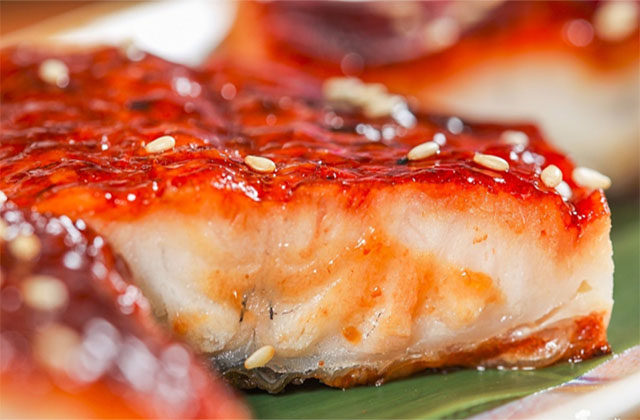
This sequence works whether you're using kabayaki-style pre-roasted eel or raw frozen sections. For kabayaki, the pre-applied soy glaze also adds body to the broth — something worth tasting before you decide how much extra seasoning to add. Our eel noodle soup recipe guide walks through a full bowl build if you want a tested starting point.
Common Mistakes That Ruin Eel Soup Texture
- Boiling instead of simmering. A rolling boil breaks down collagen too fast, leaving meat dry and fibrous.
- Using tail cuts for long-cook soups. Save tail sections for grilling, teriyaki, or fine dicing — not extended simmering.
- Skipping the thaw-and-dry step. Excess surface moisture dilutes broth and prevents proper searing.
- Overcrowding the pot. Too much eel per liter of broth drops the temperature and extends cook time unevenly.
- Ignoring fat content when portioning. High-fat cuts like belly need slightly less broth reduction time, since rendered fat naturally thickens the base.
One quick fact worth remembering: eel meat contains high levels of collagen, which is exactly why gentle, lower-temperature cooking produces that soft, gelatinous mouthfeel prized in Japanese and Cantonese-style eel soups. Push the temperature too high, and that same collagen tightens instead of dissolving.
Whole, Cut, or Frozen Format — What Should Foodservice Buyers Source?
Buyers building a soup or noodle-bowl menu item face three sourcing choices. Here's how they compare:
| Format | Prep Labor | Consistency | Best Use Case |
|---|---|---|---|
| Whole eel (bone-in) | High — requires skilled deboning | Variable by fish | Small kitchens with trained staff |
| Pre-cut deboned sections | Low | High — standardized weight and cut | Chain restaurants, catering, ready-to-heat menus |
| Frozen kabayaki (pre-roasted) | Minimal | High — glaze and texture pre-set | Fast-turnover foodservice, hotel buffets |
For most foodservice operators, pre-cut deboned sections or frozen unagi kabayaki reduce back-of-house labor significantly — there's no deboning station needed, and portion weights stay consistent across every batch. That consistency matters more than people expect when a soup dish is on a fixed-price menu.
A quick buyer's checklist before placing an order:
- Confirm whether the cut is collar, belly, body, or tail — don't accept "mixed trim" for a soup program.
- Ask for the fat percentage range if consistency across batches matters to your recipe.
- Check cold-chain handling — eel quality drops fast if temperature abuse occurs during transit.
- Request lab test results for veterinary drug residues if exporting to Japan, the US, or the EU, where inspection standards are strict.
Sourcing Traceable, Consistent Eel Cuts for Soup Production
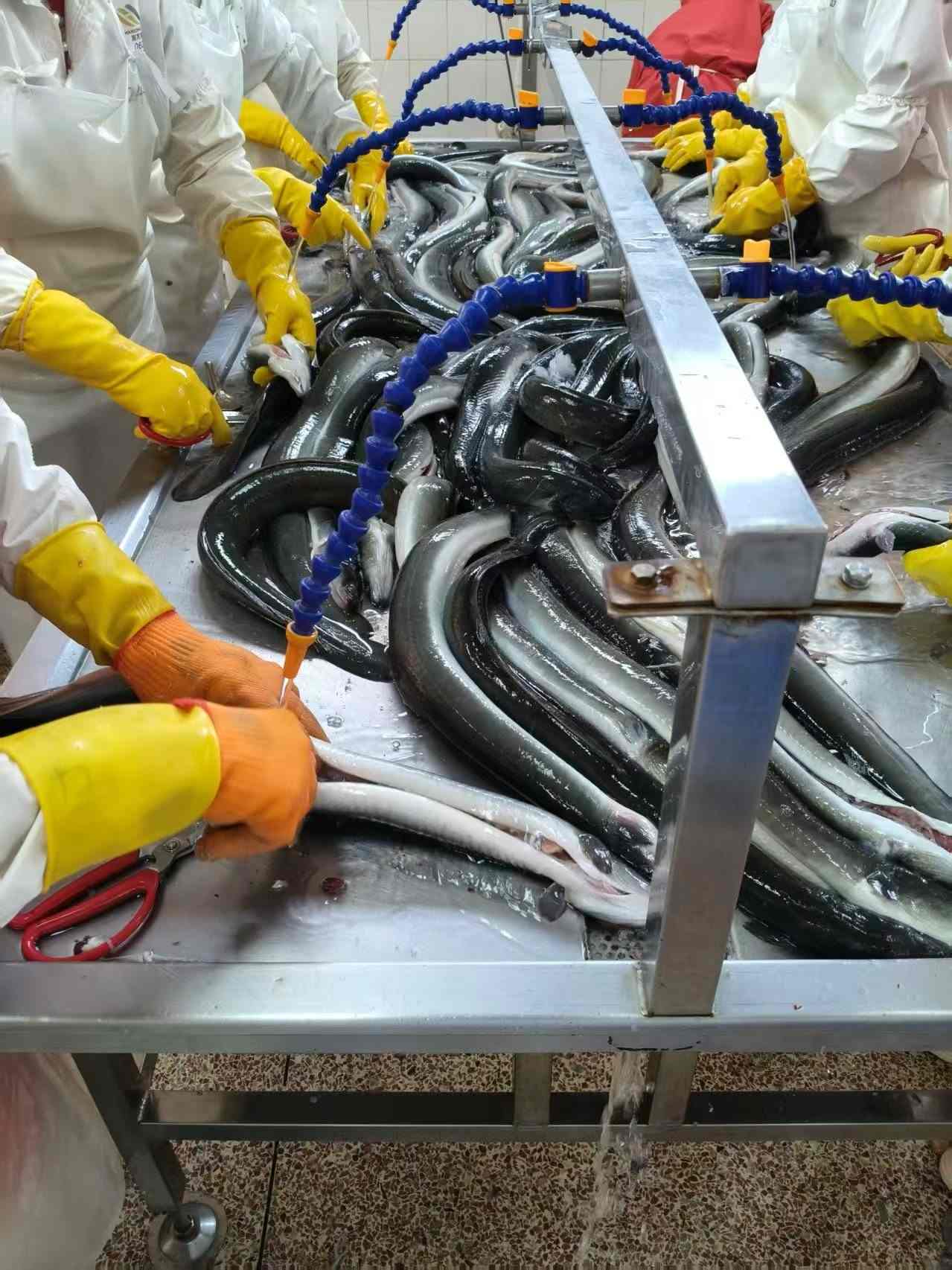
Texture consistency starts long before the pot — it starts at the farm. Eelpro works with roughly 20 customs-registered eel farming bases covering over 2,150 mu, giving full traceability from farm registration through process verification and sampling. That matters for soup manufacturers because fat content and muscle texture vary by farming conditions, and inconsistent raw material leads directly to inconsistent finished soup texture.
Our two production lines handle 4,000 tons of finished product annually, covering both frozen roasted eel and deep-processed cuts — including collar, belly, body, and custom cutting specs like dicing, strip-cutting, and chunk-cutting for soup and noodle-bowl applications. Every batch passes through our in-house laboratory and metal detectors at critical control points, under our ISO 22000:2018 and HACCP-certified system. Products also carry HALAL certification and meet Japan, US, and EU residue and microbiological standards — details that matter if you're exporting a finished soup or broth base product.
A 1,000-ton cold storage facility keeps cut inventory stable between order confirmation and shipment, which typically runs around 30 days depending on spec and volume. If you're comparing frozen eel supplier options, ask specifically about cut consistency and fat percentage documentation — not just price per kilogram.
Flavor Pairing: Where Eel Sauce Fits Into a Soup Base
Some soup recipes build on a light dashi base; others lean into a richer, soy-forward profile closer to kabayaki-style broth. Our eel sauce (unagi tare) works as a flavor backbone for the second style — a spoonful stirred into simmering broth adds depth without needing extra reduction time. If you're troubleshooting a broth that tastes flat, our flavor mistake guide covers common sauce-balancing errors worth checking before you adjust the eel itself.

Curious which cut fits your specific soup or menu format? Send us your target texture and cook time, and we'll recommend a spec — or send over a sample request and test it in your own kitchen first.