





Understanding How Big Gulper Eels Really Get
If you've researched deep-sea life, you've likely encountered conflicting information about how big are gulper eels. Some sources cite a maximum length of around 75-80 cm, while others mention astonishing records of fish over one or even two meters. This discrepancy isn't just a matter of random fish stories; it stems from a common confusion between different, though related, deep-sea species often grouped under the "gulper eel" name. Understanding these distinctions is more than a biological curiosity—it highlights the critical importance of precise species identification in any seafood supply chain.
As a specialist in food safety and quality for exported eel products, I've seen firsthand how ambiguity about a species can create significant risks for importers. While our work at Eelpro focuses on commercially farmed freshwater eels, the principles of verification and traceability apply universally. Let's clarify the science behind gulper eel sizes and connect it to the quality control standards that B2B buyers should demand.
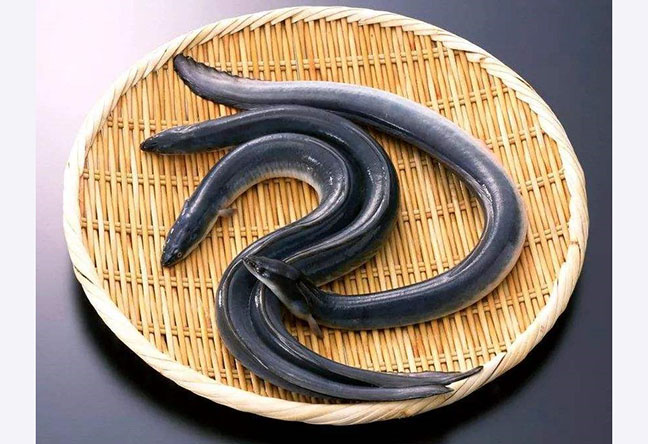
Why Gulper Eel Size Reports Vary: A Species and Measurement Breakdown
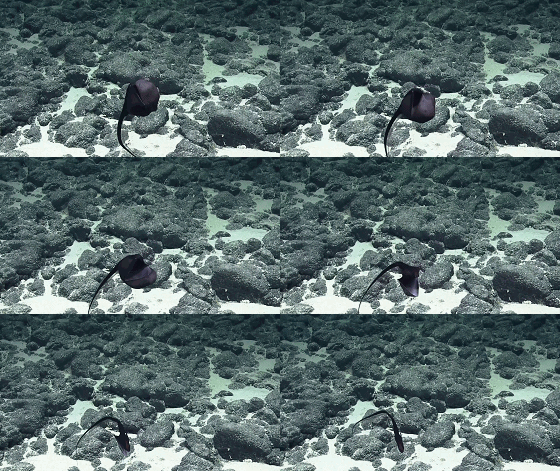
The confusion over gulper eel size originates from the fact that "gulper eel" is a common name applied to several species within the order Saccopharyngiformes. The two main groups involved are the Pelican Eel family (Eurypharyngidae) and the Swalower Eel family (Saccopharyngidae). They look similar but have distinct characteristics, including maximum size.
Here’s a breakdown of the key factors that cause size reports to differ so drastically:
- Species Misidentification: The most common source of confusion is lumping the Pelican Eel (Eurypharynx pelecanoides) with the various Swalower Eels (genus Saccopharynx). They are not the same.
- Measurement Conditions: Deep-sea creatures are fragile. A specimen measured after being hauled up from immense pressure may be damaged or stretched, leading to inaccurate lengths compared to one observed in its natural habitat via a submersible.
- Age and Maturity: Like most animals, their size depends on their age. A report might be based on a juvenile specimen, while another record reflects a fully mature adult.
This table compares the commonly confused species to clarify why you see such a wide range of reported sizes.
| Parameter | Pelican Eel (Eurypharynx pelecanoides) | Swalower Eels (Genus Saccopharynx) |
|---|---|---|
| Common Name | Pelican Eel, Umbrellamouth Gulper | Swallower Eel, Whiptail Gulper |
| Typical Reported Size | Generally 60 to 80 cm (approx. 2 to 2.6 feet) | Highly variable by species; some reach 160 cm (over 5 feet), with some historical reports suggesting up to 200 cm. |
| Defining Feature | Enormous, pouch-like lower jaw that is much larger than the rest of its body. | Large gape but a more serpentine, tapering body ending in a long, whip-like tail. |
| Why It Causes Confusion | This is the most "famous" gulper, but it is actually the smaller of the two main types. Most online photos are of this species. | The larger size records almost always refer to a species from this genus, not the Pelican Eel. They are rarer and less frequently photographed. |
For a B2B buyer, this illustrates a vital lesson: a common name like "eel" is not enough. Precise species identification, whether for deep-sea research or for sourcing unagi kabayaki product for a restaurant chain, is the foundation of quality control and product consistency.
From the Abyss to the Kitchen: Contrasting Gulper Eels with Commercial Freshwater Eels
Gulper eels are fascinating creatures of the bathyal and abyssal zones, living at depths where sunlight never reaches. They are not a commercial food species. Their biology is adapted for a life of scarcity, with features like a giant mouth to maximize the chance of catching infrequent prey.
In stark contrast, the eels used in global cuisine, such as Japanese Unagi, are freshwater species like Anguilla japonica. These are sourced through aquaculture to ensure a consistent, safe, and sustainable supply. The operational differences are immense, and they directly impact what an importer needs to verify.
Consider the differences in the supply chain:
- Environment: Gulper eels are wild, deep-sea animals. Commercial eels are raised in controlled environments at our ~20 customs-registered unagi eeel farm for eelpro co., ltd bases. This control eliminates environmental contaminants and ensures consistent growth.
- Diet & Quality: A gulper eel's diet is opportunistic. Our farmed eels are fed a specific, nutrient-managed diet, which directly influences the texture, fat content, and flavor of the final product. Our patented low-fat roasting technology further refines this quality.
- Traceability: It is nearly impossible to trace the life cycle of a wild deep-sea fish. We maintain full-chain traceability from our farming bases through processing and shipment, verified by our ISO 22000:2018 and HACCP systems.
- Volume & Consistency: The supply of gulper eels is zero. At Eelpro, our two modern production lines provide a 4,000-ton annual production capacity, ensuring our clients in Japan, the US, and the EU receive consistent product on reliable schedules.
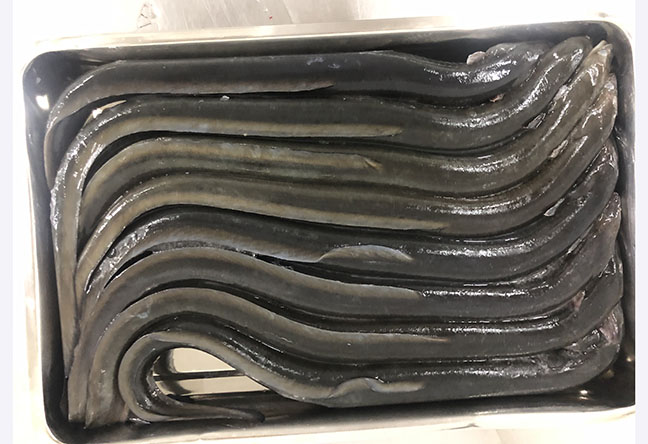
A Buyer's Checklist for Sourcing High-Quality Eel
Whether you are a food importer, a distributor for a restaurant group, or a wholesaler, asking the right questions is essential to avoid trade risks and ensure you receive a product that meets your customers' expectations. Drawing from my 12+ years in seafood export quality assurance, here is a checklist to guide your sourcing process for any eel product.
Decision Checklist for Eel Sourcing:
- What is the exact species?
- Why it matters: As we saw with the gulper eel, common names are unreliable. Demand the scientific name (e.g., Anguilla japonica). This affects flavor, texture, and regulatory compliance.
- Our standard: We provide full species documentation for all our frozen eel supplier products.
- What certifications does the facility hold?
- Why it matters: Certifications are third-party proof of process control. Look for globally recognized standards.
- Our standard: Our facility is ISO 22000:2018, HACCP, and HALAL certified, with an Export Food Producer Registration Certificate.
- Can the supplier provide full traceability?
- Why it matters: You need to know where the raw material came from. Farm-to-shipment traceability is the gold standard for food safety, preventing issues with veterinary drug residues or contaminants.
- Our standard: We manage ~20 customs-registered farms and implement full-chain tracking, verified by our in-house eel lab of eelpro co., ltd.
- What is the production and storage capacity?
- Why it matters: Can the supplier handle your volume without compromising quality or delivery times? Inconsistent supply chains disrupt your business.
- Our standard: We have a 4,000-ton annual production capacity and a 1,000-ton cold storage facility to ensure stable logistics.
- Are the products processed for foodservice efficiency?
- Why it matters: Back-of-house labor is a major cost. Products that are boneless, pre-cut, and ready-to-heat save time and money.
- Our standard: We offer custom cutting (shreds, dice, slices) and ready-to-heat packaging designed for catering and restaurant chains. Our unagi is coated with a rich eel sauce using a precise 4-layer roasting process.
Applying this level of scrutiny ensures you partner with a supplier that values quality as much as you do. It's the difference between a reliable, long-term supply and a risky, one-time purchase.
While the mystery of how big gulper eels get is a fascinating glimpse into the deep ocean, the principles of clarity, verification, and control are what matter in the world of food export. By focusing on these fundamentals, we help our partners in Germany, Poland, Australia, and beyond build their businesses on a foundation of safe, consistent, and high-quality eel products.
For a reliable supply of certified freshwater eel products that meet stringent international standards, contact our team to discuss your specifications and request a quote.

 WhatsApp
 sales@chinaeels.com