

Understanding the Lifecycle of Japanese Eels for Quality Sourcing
For international food buyers, sourcing high-quality unagi begins with a clear understanding of the species itself. The term "unagi" specifically refers to freshwater eels, and the most prized variety is the Japanese eel, or Anguilla japonica. Knowing its complex lifecycle—a remarkable migration from oceanic spawning grounds to freshwater rivers—is not just a biological curiosity. It directly informs the quality, texture, and safety of the final product that reaches your customers. Misinterpreting these life stages can lead to sourcing products with inconsistent fat content, poor texture, or inadequate traceability.
My name is Nancy Chen, and as Eelpro's Senior Food Safety & Quality Specialist, I've spent over a decade ensuring our products meet the stringent import standards of markets like Japan, the US, and the EU. This process starts long before the eel reaches our facility; it starts with a deep respect for and knowledge of the animal's natural journey. Understanding this journey is the first step in differentiating a premium, reliable supplier from a transactional one. Our clients in Japan, Germany, and Australia rely on this expertise to secure a consistent supply of high-grade Japanese eels for their restaurant chains and distribution channels.
The Catadromous Lifecycle: From Ocean Spawning to Freshwater Growth
Japanese eels are catadromous, meaning they are born in saltwater, mature in freshwater, and return to the ocean to reproduce. Each stage presents unique biological characteristics that directly influence the raw material quality for products like unagi kabayaki. A failure to source eels at the optimal stage (the Yellow Eel stage) results in a finished product that lacks the desired fat content and texture that defines premium unagi.
Here is a breakdown of the five key stages and their commercial significance:
| Life Stage | Habitat | Key Characteristics & Biological Changes | Impact on Commercial Sourcing |
|---|---|---|---|
| 1. Leptocephalus (Larva) | Open Ocean (Sargasso Sea) | Transparent, leaf-shaped larvae. They drift on ocean currents for months toward coastal areas. | Not commercially harvested. This is a purely wild, oceanic phase. Quality control begins after this stage. |
| 2. Glass Eel | Coastal Estuaries | Larvae metamorphose into small, transparent eels. They begin migrating upstream into freshwater rivers. | This is the stage where young eels are caught for aquaculture. Their health and origin are critical for farm stocking. |
| 3. Elver | River Mouths / Lower Reaches | Eels develop pigmentation, turning a grayish-brown. They are still small but actively swimming upstream. | Along with glass eels, elvers are the foundation of eel aquaculture. Sourcing from registered and monitored fisheries is essential. |
| 4. Yellow Eel | Freshwater Rivers, Lakes, Ponds | The primary growth stage, lasting 5-20 years. They develop a yellowish belly and are active predators. | This is the target stage for commercial harvesting. Eels develop the rich fat content and firm texture ideal for kabayaki. Our unagi eeel farm for eelpro co., ltd cultivates eels in this phase under controlled conditions. |
| 5. Silver Eel | Freshwater, migrating to Ocean | The eel matures sexually. Its eyes enlarge, skin thickens and turns silvery, and it stops feeding to begin its migration back to the sea to spawn. | Not ideal for high-quality unagi. The body composition changes, fat reserves are depleted for migration, and the texture becomes tougher. Sourcing silver eels results in an inferior end product. |
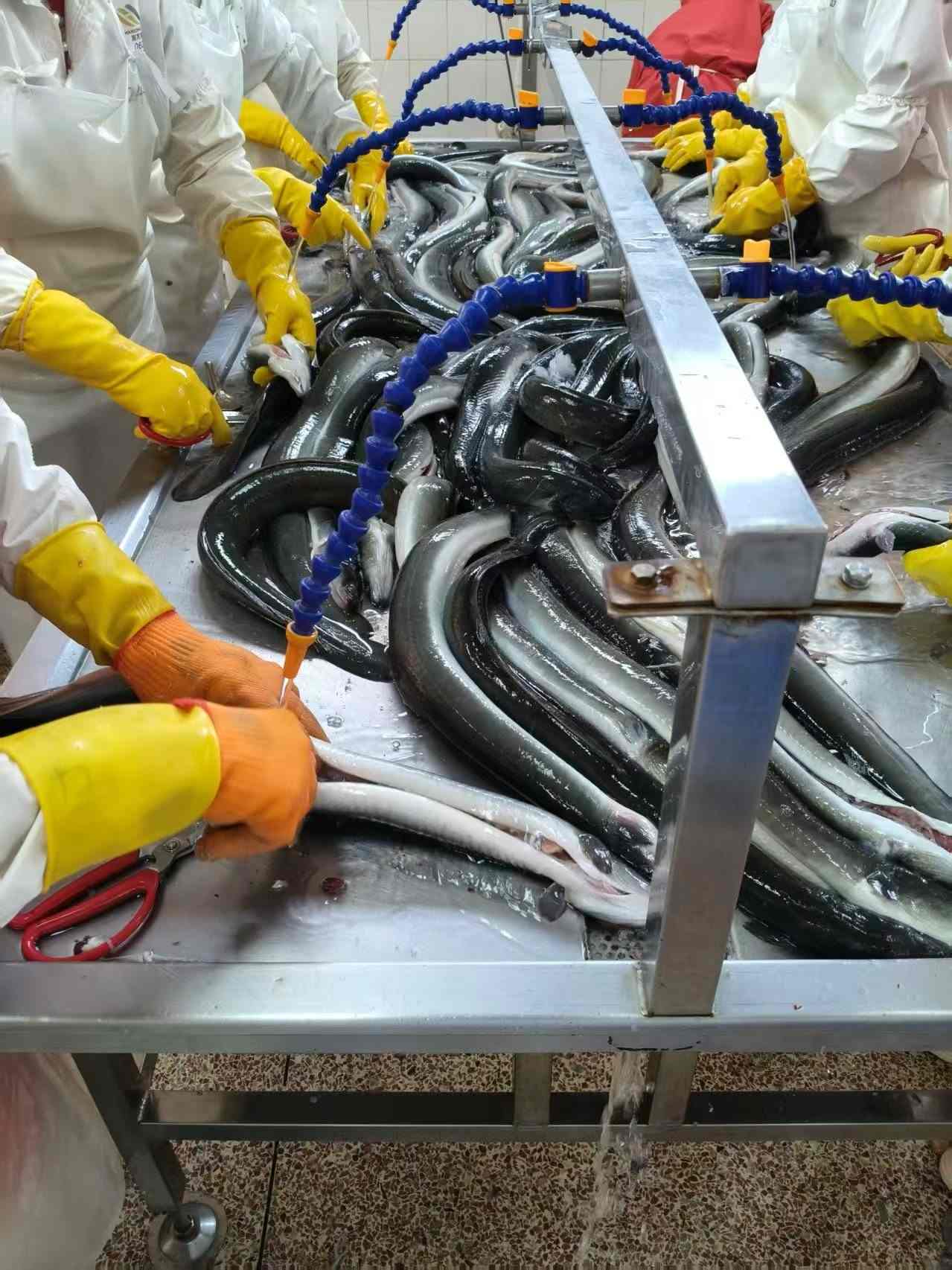
For a B2B buyer, this lifecycle means that the quality of your final product is determined by the supplier's ability to manage the Yellow Eel stage. This is why our ~20 customs-registered eel farming bases, covering over 2,150 mu, are so important. We provide a controlled environment that mimics ideal natural conditions, ensuring the eels develop the perfect fat-to-muscle ratio before processing.

How Full-Chain Traceability Mitigates Sourcing Risks
The journey from a glass eel to a frozen, ready-to-heat product is long. Without rigorous oversight, quality can be compromised at any step. This is where full-chain traceability becomes a non-negotiable requirement for serious importers, especially those supplying to markets with strict food safety laws like the EU and the United States.
At Eelpro, our commitment to safety is built on a foundation of verifiable data. With 25 dedicated technical and quality-control personnel, we manage a system that tracks every batch from its source. This system is certified under ISO 22000:2018 and HACCP, providing a clear and auditable trail.
Our traceability framework includes:
- Farming Base Registration: Each of our 19 self-operated and cooperative farms is registered with customs, ensuring all raw materials come from approved and monitored sources.
- Process Verification & Targeted Sampling: We don't just trust; we verify. Our teams conduct regular on-site inspections and targeted sampling of water, feed, and the eels themselves to test for contaminants.
- In-House Laboratory Analysis: Our professional eel lab of eelpro co., ltd allows for rapid testing of veterinary drug residues and microbiological indicators, ensuring compliance with Japan, US, and EU standards before the product ever leaves our facility.
- Lot-Specific Tracking: From the moment raw materials enter our 8,497 m² workshop to when they are stored in our 1,000-ton cold storage facility, each batch is assigned a unique code. This allows us to trace a specific box of unagi kabayaki back to the exact farm and harvest date.
This level of control is how we confidently supply restaurant chains in Japan and food importers in Germany and Poland. They know that an order from Eelpro is backed by a verifiable quality system, protecting them from costly import rejections and brand damage.
A Buyer's Checklist for Sourcing Premium Unagi Kabayaki
When evaluating potential suppliers, moving beyond price to assess capability is essential. A lower per-unit cost can quickly be erased by a rejected shipment or inconsistent product that damages your reputation. Use this checklist to structure your vetting process.
- Verify Core Certifications: Does the supplier hold internationally recognized food safety certifications?
- Must-Haves: ISO 22000:2018, HACCP.
- Market-Specific: HALAL certification for relevant markets (we hold this).
- National Approval: Look for an Export Food Producer Registration Certificate and a valid production license (ours is SC11135062401122).
- Assess Production and Roasting Technology: How is the eel processed? The method defines the final taste and texture.
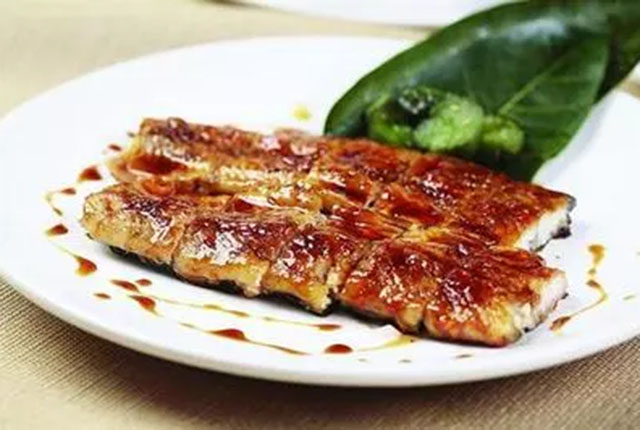
- Roasting Process: Ask about their roasting and saucing method. We use a precise 4-layer soy sauce coating process with controlled temperatures, creating standardized color and flavor profiles. Our patented low-fat roasting and deodorizing technology further refines the product.
- Sauce Quality: The eel sauce (unagi tare) is fundamental. Inquire about its ingredients and consistency.
- Confirm Customization Capabilities: Can the supplier meet your specific product format needs?
- Cutting: We offer shredding, dicing, strip-cutting, chunk-cutting, and specific formats like 3-section cuts and sushi slices.
- Packaging: Options should include bulk foodservice packs, skin-packaging for retail, and gift boxes.
- Inquire About Capacity and Lead Times: Can they handle your volume and timeline?
- Capacity: Our two modern production lines have a 4,000-ton annual finished goods capacity.
- Logistics: We operate a 1,000-ton cold storage facility to ensure product integrity and manage logistics.
- Lead Time: A typical order takes approximately 30 days from confirmation to shipment, but this is always negotiable based on the specific order.
- Discuss MOQ and Commercial Terms: Does their business model fit yours?
- Flexibility: We offer differentiated MOQ policies for domestic chains, wholesalers, and export traders. Specifics are negotiable based on product and packaging.
By using this checklist, you can build a more resilient supply chain for unagi kabayaki eel and other eel products, ensuring you partner with a manufacturer who understands the technical, logistical, and regulatory demands of the global market.
For more detailed information on our production capabilities as an unagi kabayaki manufacturer , frozen eel supplier, feel free to review our product specifications.
For detailed specifications on our products or to discuss your import requirements for Japanese eels, please send us your RFQ.