

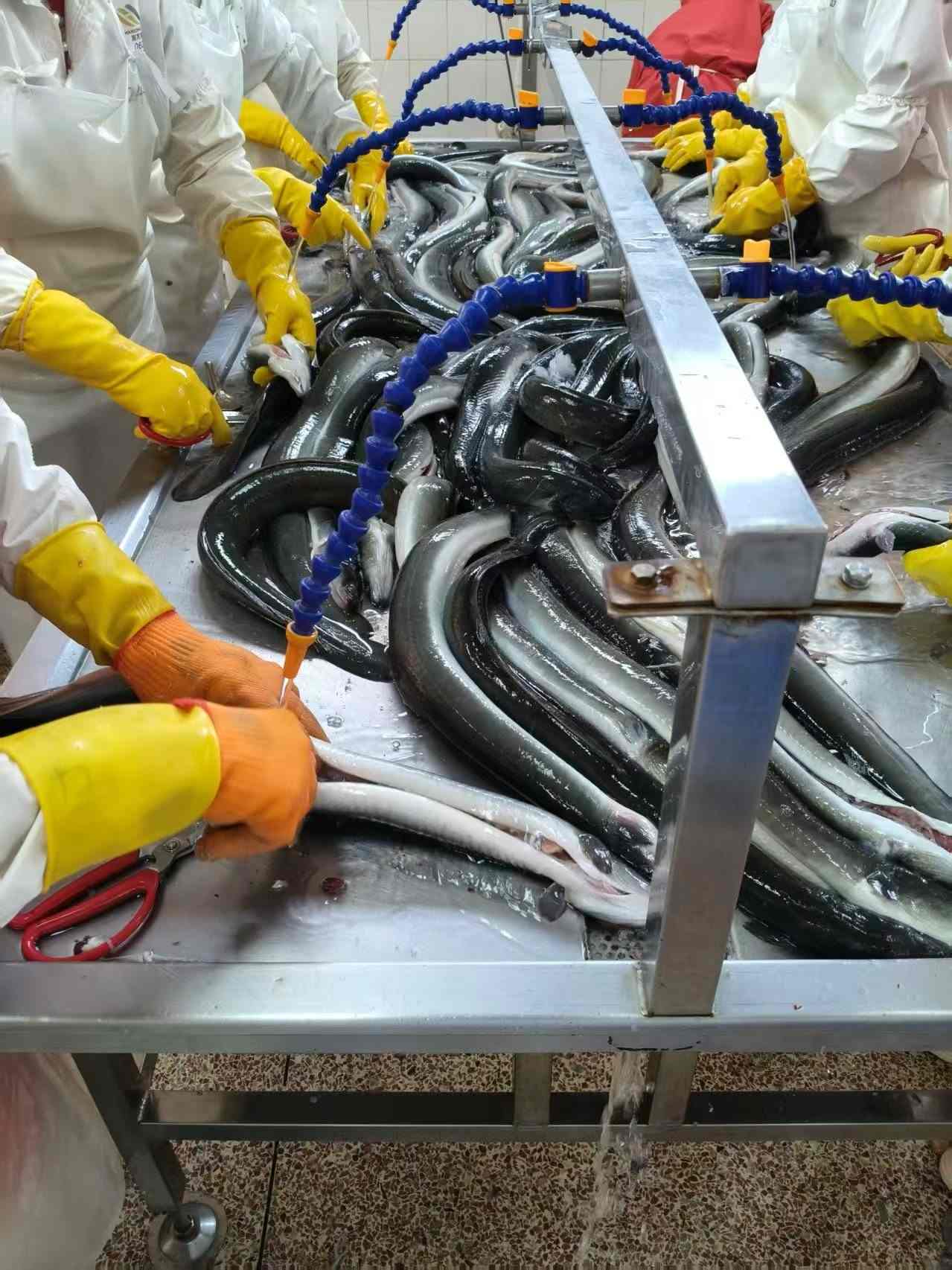
What's Unagi, and Why Buyers Keep Mixing It Up With Anago
A supplier quotes you "eel" at three different price points. One sample tastes rich and fatty. Another is leaner, almost plain. Same species? Not even close. If you're sourcing for a Japanese menu, the first thing to nail down isn't sauce or cut size — it's what's unagi versus what's anago, because mixing the two can wreck your food cost and your menu's credibility.
What's Unagi, Exactly? The Species Question That Trips Up Buyers
Unagi refers to freshwater eel, most commonly Anguilla japonica. It's raised in freshwater ponds, then finished before harvest. Anago is a completely different animal — a saltwater conger eel (Conger myriaster), mostly wild-caught, never farmed the same way unagi is.
Here's what actually happens if a buyer confuses the two: unagi carries a naturally higher fat content, which is exactly what lets it caramelize under repeated basting. That's the whole point of a proper roasting process — 4 precise layers of soy sauce with temperature-controlled steps, building what's called the "white-roasted color" through to the "4th soy-sauce coating color." Anago's leaner flesh doesn't hold up the same way. Roast it like unagi and you get a dry, flat product with none of the glaze depth chefs expect from kabayaki.
This matters for menu planning too. Unagi kabayaki is built around that fat-to-glaze relationship. Anago rarely appears in kabayaki form — it's usually tempura-fried or served in a lighter anago-don, where its cleaner flavor doesn't get lost.
Comparison: Unagi vs Anago — Species, Habitat, Texture, and Menu Format
Restaurant buyers who skip this comparison usually find out the hard way, after the product arrives. Here's the breakdown we give new clients before they place a first order.
| Parameter | Unagi (Anguilla japonica) | Anago (Conger myriaster) |
|---|---|---|
| Habitat | Freshwater, farmed in ponds; catadromous life cycle | Saltwater, mostly wild-caught in coastal waters |
| Fat content | Higher, especially belly area | Lower, leaner flesh throughout |
| Texture after cooking | Soft, rich, holds glaze well | Firmer, cleaner bite, less glaze retention |
| Common cooking method | Kabayaki — grilled with soy-sauce basting | Tempura, or lightly simmered anago-don |
| Typical menu format | Unagi don, unagi nigiri, unagi noodle soup | Anago tempura roll, anago sushi |
| Price tier | Higher, driven by fat and farming input | Generally lower to mid-range |
Cold knowledge: unagi is born in the ocean, migrates into freshwater rivers to grow, then returns to the sea to spawn — the opposite life cycle of salmon. Anago never makes that freshwater trip at all. That single biological fact is why the two can't be substituted in a recipe without changing the outcome.
Why This Mix-Up Costs Restaurants Money
- Mistake 1: Assuming any invoice line that says "eel" means unagi. Ask for the species name printed on the spec sheet, every time.
- Mistake 2: Labeling anago as "unagi kabayaki" on a menu. In the US and EU, species labeling accuracy is a compliance issue, not just a marketing choice.
- Mistake 3: Skipping fat-content specs. Low-fat stock roasted with a standard soy-sauce timing produces an uneven, pale finish instead of the expected coating color.
- Mistake 4: Ignoring frozen-vs-fresh handling. Reheating without matching the original roast profile changes texture more than most kitchens expect.
How to Verify You're Buying Real Unagi Before You Commit to an Order
- Request the species name in writing — Anguilla japonica, not Conger myriaster.
- Ask for the fat percentage on the product spec sheet.
- Request documentation of the roasting process, including the soy-sauce coating stage the batch was finished at.
- Confirm traceability back to a registered farming base and ask for a recent lab test on veterinary drug residues.
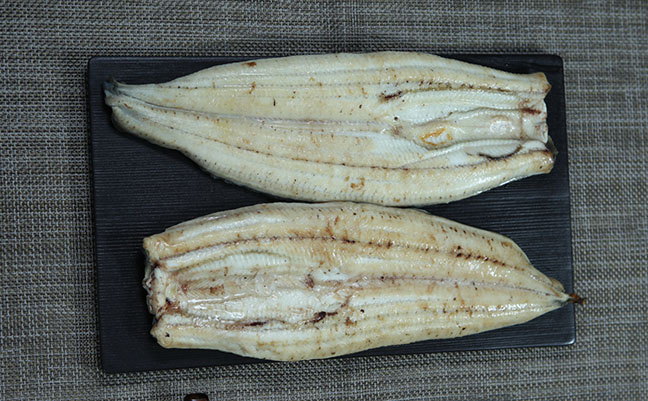
- Run a sample test: real kabayaki-cut unagi shows a butterfly-cut belly shape and a glossy, evenly colored glaze — not a dry surface with patchy sauce.
Traceability isn't a box to check quietly. Products moving through registered eel farming bases and tested in an in-house laboratory give buyers a paper trail they can actually show an auditor or an import inspector.
Sourcing Checklist for Restaurant Buyers and Importers
Before signing a purchase order, confirm the following against your supplier's documentation:
- Species and cut spec — skewers, cut pieces, sushi slices, or custom shredding/dicing.
- Certification — ISO 22000:2018, HACCP, HALAL, and a valid SC food production license covering quick-frozen prepared foods.
- Cold chain capacity — a 1,000-ton cold storage facility supports consistent quality across large or repeat orders.
- MOQ tier — catering chains, wholesalers, and export traders typically negotiate different minimums by spec and packaging format (skin-packaging or gift boxes).
- Lead time — a regular order runs about 30 days from confirmation to shipment, adjustable by spec and quantity.
- Farm traceability — around 20 customs-registered farming bases covering over 2,150 mu, with full-chain tracking from farm registration through process verification.
Production capacity matters more than it seems at first glance. A facility running 4,000 tons annually across 2 production lines — one for roasted eel, one for deep-processed aquatic products — can usually absorb seasonal order spikes without pushing your lead time past the standard window. Smaller processors often can't.
Quality control staffing is another quiet differentiator. Look for suppliers running 160+ employees including 25 dedicated technical and quality-control specialists, backed by metal detectors at critical control points. That combination catches problems before a container leaves the dock, not after it arrives at your warehouse.
Where Unagi Sauce Fits Into the Sourcing Decision
Once species and cut are settled, sauce consistency is the next variable that trips up new buyers. The eel sauce paired with kabayaki needs to match the roasting profile — a mismatched tare can flatten an otherwise good roast. For kitchens building their own glaze program, it's worth reviewing how a kabayaki sauce is formulated before locking in a supplier, since sauce viscosity and sweetness affect plating consistency across batches. Kitchens experimenting with new formats can also check a unagi noodle soup guide for a menu format that uses unagi's fat content differently than a straight don bowl.
When Anago Still Makes Sense on Your Menu
None of this means anago is a lesser product — it just serves a different role. For light tempura rolls or a delicate anago-don where guests want a cleaner, less fatty bite, conger eel is the right call. The mistake isn't choosing anago; it's ordering it while expecting unagi's roast performance, or vice versa. Match the species to the dish first, then work backward to sourcing specs.
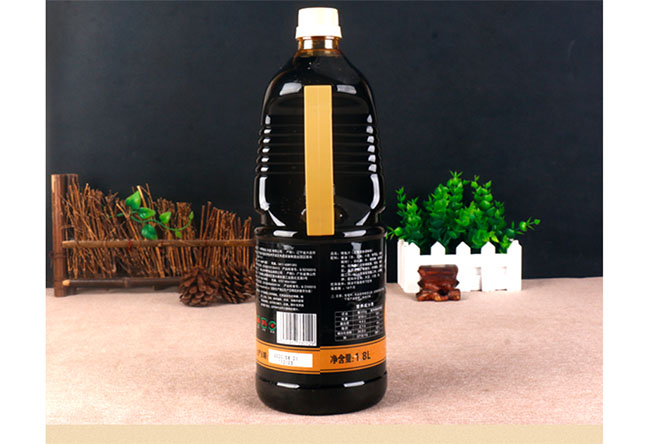
For restaurant buyers building a new eel program, or Japanese-food newcomers trying to plan a menu around the right species, requesting a spec sheet before your first order is the simplest way to avoid a costly mismatch. Reach out for a sample and current spec sheet on frozen unagi kabayaki and eel sauce, and check the cut, fat content, and traceability documents against your menu plan before you commit to volume.