

What Is Unagi Sauce and How Does It Create a Glossy Sushi Finish
A sushi roll can look dry and flat even when the eel is perfectly grilled. The difference is often the final brush of sauce. So, what is unagi sauce, and why does one thin coating make unagi look dark, glossy, and ready for the counter?
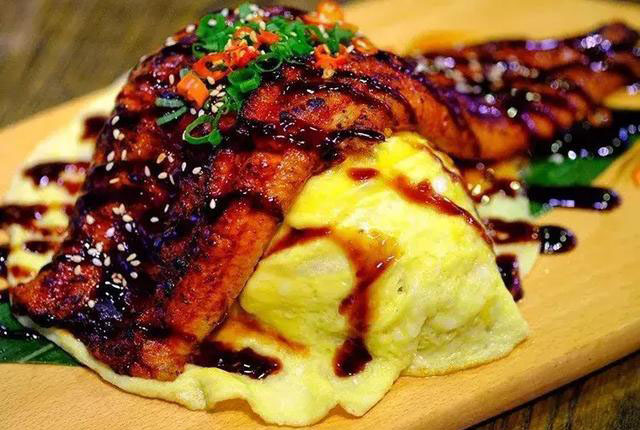
Unagi sauce is commonly called unagi tare, kabayaki sauce, or eel sauce glaze. It is a sweet-savory soy-based sauce used on grilled freshwater eel, sushi, rice bowls, and selected seafood dishes. Its job is not only flavor. A properly reduced glaze forms a smooth surface film that catches light, clings to the eel, and gives sushi its recognizable lacquered appearance.
For sushi chefs and foodservice buyers, the useful question is not simply whether a sauce tastes sweet. The question is whether its sushi sauce texture performs consistently during warming, brushing, holding, and serving. A sauce that is too thin runs into the rice. One that is too thick sits in dark streaks. One that is overheated can turn bitter before it reaches the plate.
What the Sauce Must Do on Grilled Eel and Sushi
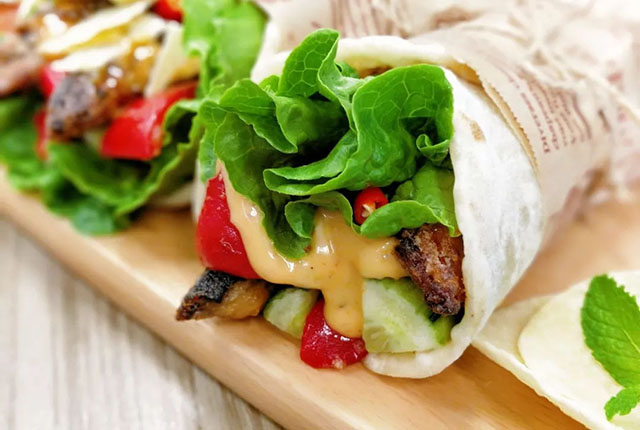
The direct answer to what is unagi sauce is that it is both a seasoning and a finishing glaze. On kabayaki eel, it brings saltiness, sweetness, roasted aroma, and visual depth. On sushi, it must also create a controlled sheen without soaking the rice or masking the eel.
The exact recipe varies among suppliers and restaurants. In practical use, however, a well-performing kabayaki sauce needs to balance four functions:
- Adhesion: The sauce should stay on the eel rather than run onto the plate. This fits nigiri, sushi rolls, and rice bowls. It does not apply when the menu calls for a light dipping sauce rather than a glaze.
- Flow: It should spread under a brush in a thin, even layer. This matters for counter service where every piece must look similar. A deliberately rustic grilled presentation may accept a less uniform coating.
- Color development: The glaze should deepen the roasted surface without hiding the eel grain. This is especially useful for frozen unagi kabayaki that is reheated and finished just before service.
- Flavor concentration: The sauce should remain noticeable after contact with warm eel and rice. A strong flavor is not automatically better; delicate sushi formats may need a lighter application.
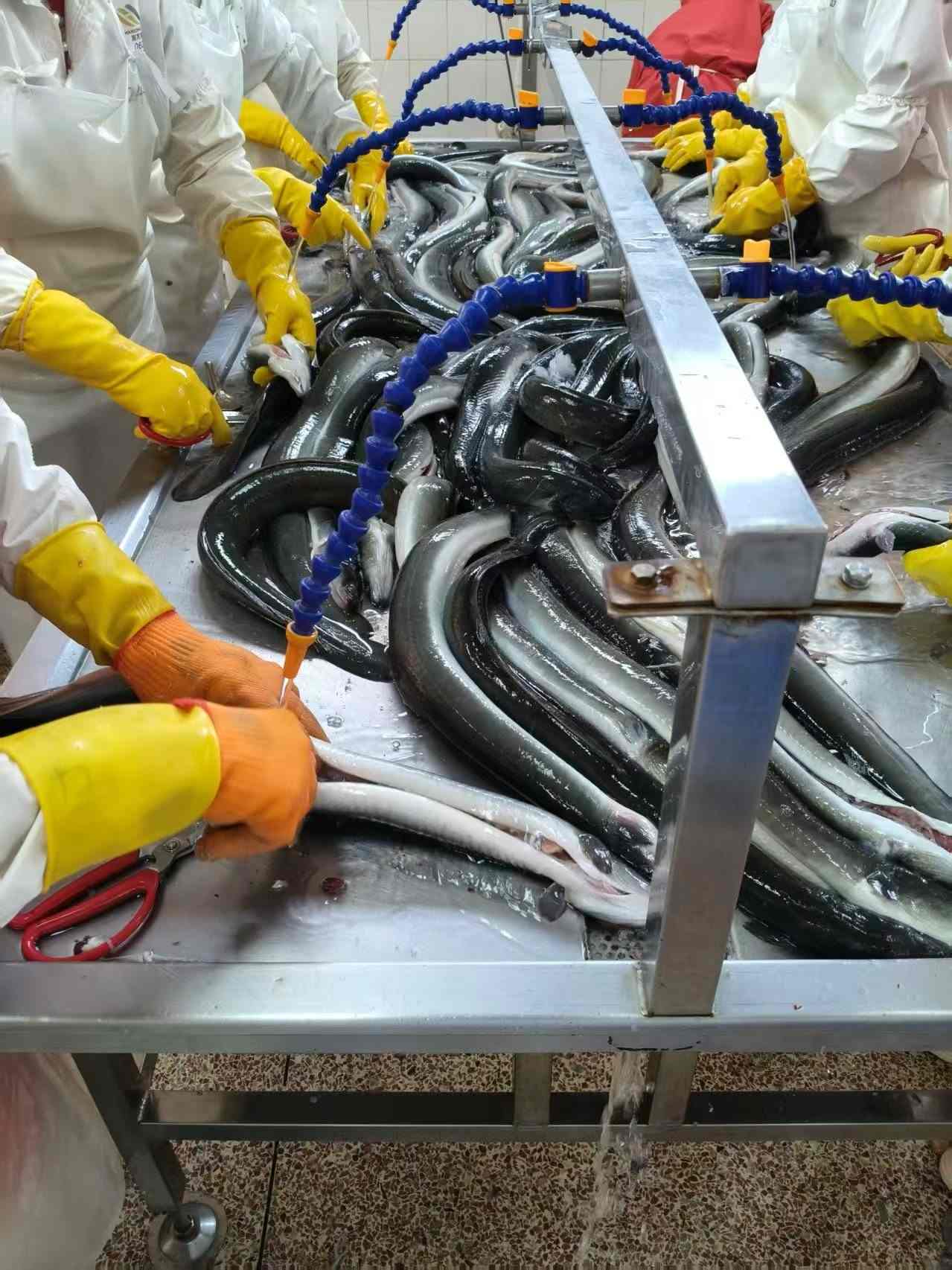
At Eelpro, our frozen roasted eel process uses four controlled soy-sauce coating layers, with established standards for white-roasted color and each coating stage. This matters to buyers because glaze appearance begins before the final kitchen brush. A consistent roasted base gives the chef a more predictable surface for sauce finishing. See our unagi kabayaki product range for product-format information.
When buyers ask what is unagi sauce in a sourcing meeting, they should ask a second question: “Will this glaze match the serving format?” A sauce for factory-coated kabayaki may not behave the same way as a sauce intended for a final sushi brush. Ask for the intended application before comparing samples.
How Sugar Reduction Viscosity and Brushing Temperature Create Gloss Without Burning
The glossy finish comes from a controlled balance, not from adding a heavy coat. Sugar reduction, viscosity, and brushing temperature work together. If one is wrong, the sauce can become dull, sticky, patchy, or scorched.
| Parameter | What It Does in Practice | What Goes Wrong | Best Use Scenario |
|---|---|---|---|
| Sugar reduction | As water is reduced, sweetness and dissolved solids become more concentrated. The sauce can form a more reflective film on eel. | Too little reduction leaves a watery coating that slides off. Too much reduction makes the glaze heavy and raises the chance of rapid darkening. | Use a balanced reduction for a thin finishing layer on sushi or grilled kabayaki. |
| Viscosity | Viscosity controls how fast the sauce moves from brush to eel and how evenly it settles. | A thin sauce floods rice and pools at the edges. An overly thick sauce creates ropes, brush marks, and an uneven dark surface. | Choose a sauce that forms a continuous, thin coat rather than droplets or thick lines. |
| Brushing temperature | A warmed sauce flows more evenly and can settle into a smooth surface layer. | Cold sauce may drag and streak. Excess heat can make sugars darken too fast, especially on a freshly grilled eel surface. | Warm the sauce gently and apply it to eel that has completed its main heating step. |
Why is unagi sauce thick and glossy? The thickness comes from concentration and the balance of dissolved ingredients. The gloss appears when the sauce settles as a smooth, even film. Light reflects more cleanly from that film than from a rough, broken coating. The shine is therefore a surface effect as much as a flavor effect.
How does eel sauce caramelize? During heating, sugars darken and develop deeper cooked notes. In a kitchen setting, the buyer should treat this as a controlled finishing reaction, not a reason to boil the glaze aggressively. When a sauce is exposed to excessive heat, its sweet components can move from appealing dark color to bitter burnt flavor quickly.
What gives unagi sauce its shine is not simply extra sugar. A very sweet sauce can still look dull if it is too thick, poorly mixed, or brushed onto an unsuitable surface. The practical target is a fluid coating that levels out after brushing and remains attached to the eel.
Use a Controlled Brushing Procedure for Sushi Service
The best result usually comes from several light passes rather than one heavy application. This is a practical kitchen procedure for reheated kabayaki, unagi nigiri, and eel sushi rolls.
- Heat the eel first. Finish the main reheating before applying the final eel sauce glaze. Brushing before the eel is properly heated can create a wet surface instead of a set finish.
- Warm the sauce gently. The sauce should flow easily from the brush. If it remains in a thick mound or pulls in strings, it may be too cool or too concentrated for a light sushi finish.
- Brush one thin layer. Move with the grain of the eel. Cover the surface, but do not allow the sauce to drip over the sides.
- Watch the surface response. A suitable glaze settles into a connected sheen. If it pools, reduce the amount applied or reassess the sauce thickness.
- Add a second light layer only if needed. Use this for a darker kabayaki presentation or when the first layer has absorbed into a hot grilled surface.
- Serve without prolonged reheating. Once the desired gloss is reached, avoid returning the coated eel to harsh heat unless the specific cooking process calls for it.
This procedure suits sushi bars, Japanese restaurant chains, and foodservice kitchens that need visual consistency. It does not replace a product-specific heating instruction. Frozen eel formats, cut sizes, and oven or grill equipment can change the result, so buyers should test the sauce together with the intended eel product.
For menu teams developing a grilled presentation, our kabayaki sauce article explains how sauce selection affects the finished flavor profile.
How Foodservice Buyers Should Evaluate Unagi Tare Before Purchase
For procurement teams, what is unagi sauce is also a product-evaluation question. Do not approve a sauce sample solely from a spoon test. A spoon can show taste, but it cannot show whether the sauce will cling to eel, shine under restaurant lighting, or remain clean on rice.
| Evaluation Point | Test Method | Pass Criterion | Limit of the Test |
|---|---|---|---|
| Brush flow | Warm the sauce and apply it to reheated eel with the kitchen brush intended for service. | It spreads in a thin layer without large drips or visible ropes. | Brush type and kitchen temperature can affect the result. |
| Gloss | View the coated eel under the lighting used at the sushi counter or pass. | The surface looks even and reflective without wet pooling. | Different plate colors and lighting conditions change perception. |
| Rice impact | Place coated eel on the actual sushi rice recipe used by the restaurant. | The glaze stays mainly on eel and does not make the rice soggy. | Rice moisture and holding time affect absorption. |
| Flavor balance | Taste with eel, rice, and any planned garnish. | Sweetness and soy notes support the eel instead of covering it. | A sauce approved for rolls may not suit a minimalist nigiri format. |
A useful sourcing conclusion is simple: approve the sauce only after a full application test on the intended menu item. This is most relevant when a buyer is switching suppliers, changing eel portion size, or adding a ready-to-heat kabayaki line. It is less relevant for a buyer using the sauce only as a table condiment.
Eelpro supplies frozen unagi kabayaki and eel sauce for export-oriented customers. Our facility holds ISO 22000:2018, HACCP, HALAL certification, export food producer registration, and an SC Food Production License. Our supply chain includes approximately 20 customs-registered eel farming bases covering more than 2,150 mu, with traceability controls from farming registration through shipment. These controls support product evaluation and export compliance, but buyers should still validate sauce performance in their own menu and equipment conditions.
For buyers assessing ingredient controls and testing capability, visit our in-house eel laboratory information page.
Common Glaze Mistakes That Make Sushi Look Dull or Burnt
- Applying one heavy coat: This creates dark puddles and can overpower the eel. Use light layers instead. A heavy coat may be suitable for a bold rice-bowl style, but it is usually unsuitable for refined nigiri.
- Brushing cold sauce onto warm eel: Cold glaze may sit in streaks rather than leveling out. Warm it gently until it flows well. Do not overheat it in an attempt to make it thinner.
- Using sauce to hide weak eel color: Sauce cannot correct poor reheating or uneven roasting. Start with a properly heated, well-presented eel portion, then glaze for finish and flavor.
- Returning heavily glazed eel to intense heat: This increases the risk of excessive darkening and bitter notes. Use this only when the recipe has been tested for that exact process.
- Testing sauce only by taste: A sauce can taste good from a spoon and still fail on sushi. Always check flow, sheen, rice contact, and holding behavior.
Useful kitchen fact: A darker glaze is not always a glossier glaze. The best visual finish is often a thinner, smoother layer that reflects light evenly. That is why sushi chefs frequently favor controlled brushing over pouring.
Questions Buyers Ask About Eel Sauce Glaze Performance
What is unagi sauce used for besides grilled eel?
What is unagi sauce used for in foodservice? It is commonly used as a finishing sauce for unagi sushi, rice bowls, sushi rolls, and selected grilled seafood dishes. It fits menus that need sweet-savory roasted notes and a visible glaze. It may not fit dishes where a clean, lightly seasoned seafood flavor is the goal.
Why is unagi sauce thick and glossy compared with regular soy sauce?
Regular soy sauce is mainly a seasoning liquid. Unagi tare is designed to coat food, so its concentration and texture are different. Its thicker body helps it cling to eel and form a sheen. If the sauce becomes excessively thick, however, it can leave brush marks and dark ridges instead of a clean finish.
How does eel sauce caramelize without burning?
Use gentle warming and light application. The sauce develops darker cooked character when it meets a warm eel surface, but excessive heat can push the glaze too far. The practical sign of a problem is rapid darkening, harsh aroma, or a sticky surface that no longer spreads evenly.
What is unagi sauce shine affected by during service?
The shine depends on the sauce body, the smoothness of the eel surface, the amount brushed on, and the heat at the moment of application. It also changes under different counter lighting. For that reason, a sauce should be tested under normal service conditions, not only in a development kitchen.
Request an eel sauce product sample to test gloss, brush flow, and flavor with your own sushi or kabayaki menu format.