

What Is Unagi Seafood Seasoning Sauce Really Used For?
Many food importers and chefs believe unagi seafood seasoning sauce has only one purpose: glazing grilled eel. While it excels at that, limiting it to unagi overlooks its true potential in a commercial kitchen. The rich, sweet, and savory profile that perfectly complements grilled eel is precisely what makes it a versatile ingredient for a wide range of other proteins and dishes. Understanding its core components and ideal applications is key to maximizing its value on your menu or product line.
At Eelpro, our experience supplying restaurant chains in Japan and food importers across the US and Germany has shown us how this sauce can solve multiple kitchen challenges. It's not just a topping; it's a foundational flavor base. This guide moves beyond the traditional and explores the practical, B2B applications of a high-quality unagi seafood seasoning sauce, helping you make informed purchasing and menu development decisions.
The Flavor Profile That Drives Versatility
The effectiveness of unagi sauce, or tare, comes from a careful balance of four fundamental ingredients: soy sauce, mirin, sugar, and sake. It’s this specific combination that creates its signature viscosity and umami-rich, sweet-savory flavor. But not all sauces are created equal. For foodservice and B2B applications, consistency and quality are paramount.
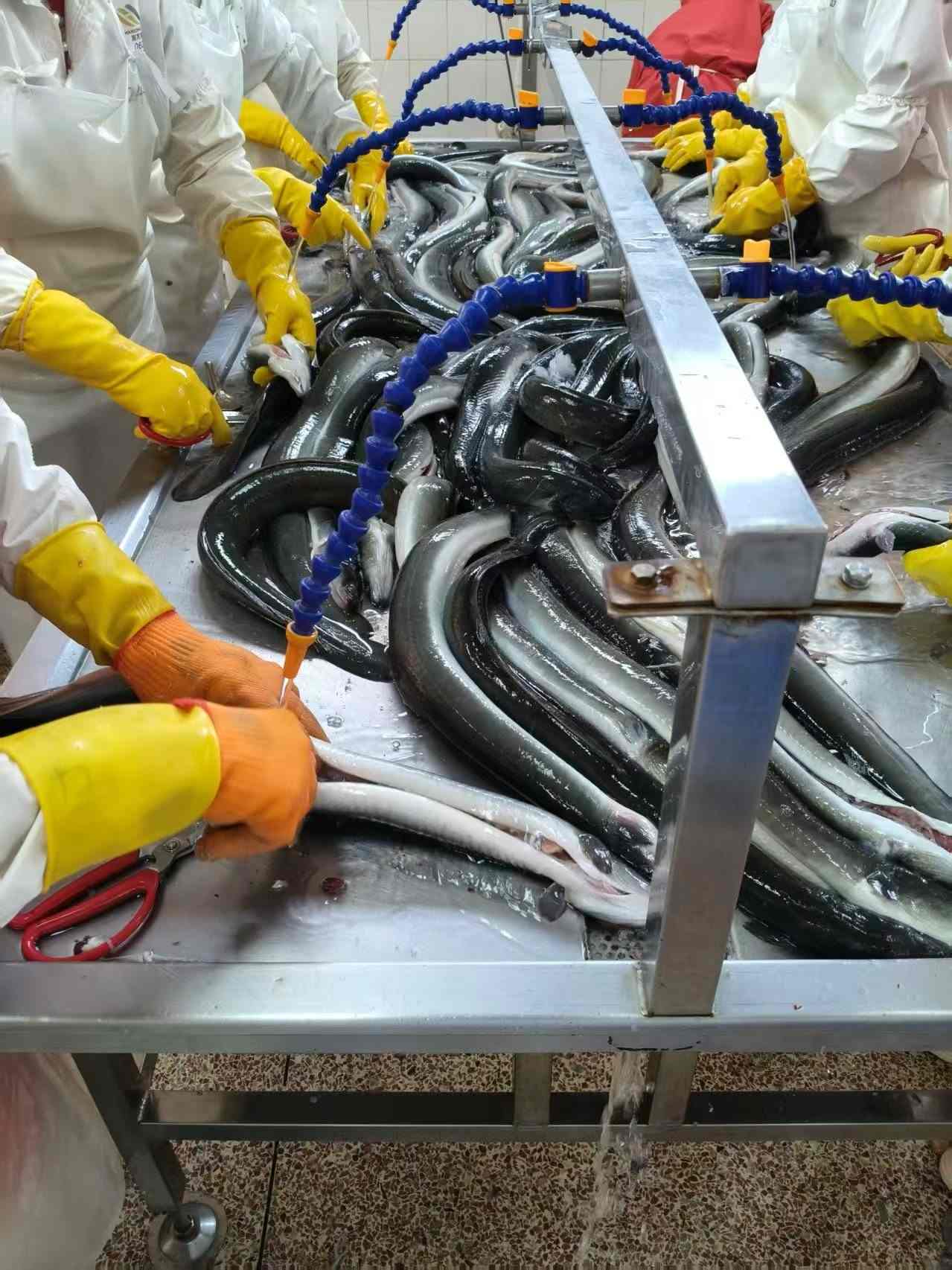
Our process, for example, is built on the same principles used for our premium unagi kabayaki. We apply four precise layers of soy sauce with temperature-controlled steps to develop deep, complex flavors. This isn't just about taste; it's about performance. A well-made sauce will have the right viscosity to cling to proteins during cooking without burning too quickly under high heat.
Here’s a breakdown of what to look for in a commercially viable sauce:
- Viscosity and Adhesion: The sauce must be thick enough to form a glaze but thin enough to be brushed on easily. It should not run off the product during cooking or packaging. This is critical for automated production lines and for creating an appealing, glossy finish for restaurant presentation.
- Balanced Sweetness: While sweet, the flavor should not be cloying. The sweetness should be balanced by the salty, savory depth of the soy sauce. An overly sweet sauce can mask the natural flavor of the seafood it's paired with.
- Shelf Stability: A B2B-grade sauce needs a stable shelf life without requiring refrigeration before opening. This reduces storage costs and simplifies logistics for distributors and large-scale kitchens. Check for clear information on storage conditions and "best by" dates.
- Clean Ingredients: Buyers in the EU and US are increasingly focused on clean labels. A quality sauce should derive its flavor from its core ingredients, not from excessive additives or artificial flavor enhancers. Our HALAL-certified production adheres to these strict standards.
Application Map: Matching the Sauce to the Seafood
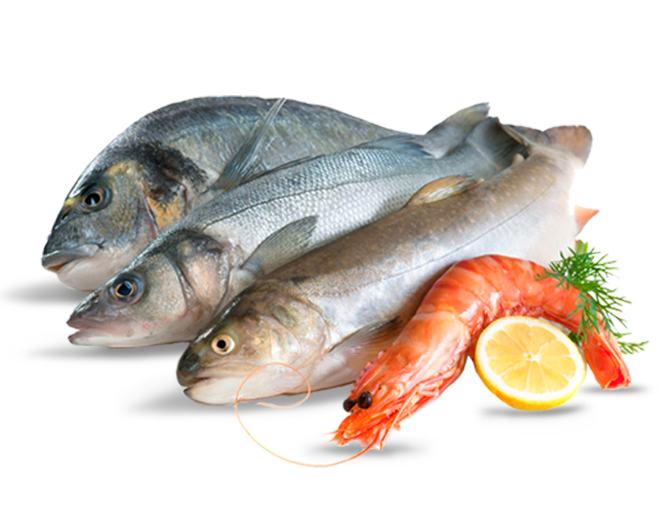
The bold flavor of unagi sauce makes it a powerful tool, but it's not a universal solution. Its potent sweet-savory character is best suited for oily, robust fish that can stand up to it. For delicate, mild-flavored seafood, it can easily be overwhelming. Knowing when to use it—and when to choose something else—is essential for a balanced menu.
As a quality specialist with over 12 years in seafood exports, I've helped clients in Australia and Southeast Asia refine their menus by correctly pairing sauces with local seafood. This table provides a clear guide for chefs and product developers.
| Best Applications (Strongly Recommended) | Reasoning | Use With Caution (Potential to Overpower) | Reasoning |
|---|---|---|---|
| Eel (Unagi/Anago) | The classic pairing. The sauce's sweetness cuts through the eel's richness, while its umami enhances the fish's natural flavor. | Scallops | Scallops have a delicate, sweet flavor that is easily masked by the heavy notes of soy and sugar in the sauce. |
| Salmon (especially fillets or belly) | Salmon's high oil content and robust flavor are a perfect match. The sauce caramelizes beautifully on grilled or broiled salmon. | Cod / Haddock / Flounder | These lean, white fish have a mild flavor. The sauce will dominate, tasting more of sauce than of fish. A lighter soy-citrus ponzu is often a better choice. |
| Mackerel (Saba) | Like eel, mackerel is an oily fish with a strong flavor that benefits from a powerful, sweet glaze to balance its distinctive taste. | Raw Oysters | The thick, sweet sauce clashes with the fresh, briny, and delicate texture of a raw oyster. A simple mignonette or lemon juice is superior. |
| Chicken Thighs (Yakitori) | Its use extends beyond seafood. The sauce is essentially a teriyaki-style glaze, perfect for grilled chicken skewers. The fat in the thigh meat works well with the sweetness. | Shrimp (delicate varieties) | While grilled shrimp can work, delicate sweet shrimp (amaebi) would be completely lost. Use a very light brush of sauce if necessary. |
| Pork Belly | The rich, fatty nature of pork belly is complemented by the sweet and savory glaze, which helps to cut through the richness. | Crab Meat | Lump crab meat has a subtle sweetness that is best served with minimal seasoning, like butter or lemon, not a heavy glaze. |
Sourcing Checklist for B2B Unagi Sauce Buyers
When sourcing an unagi seafood seasoning sauce for import or large-scale foodservice, the criteria extend far beyond taste. You are purchasing a component for a larger supply chain, and reliability, safety, and compliance are non-negotiable. For our clients in Poland and across the European Union, meeting these standards is the first step in any partnership.
Use this checklist to evaluate potential suppliers to avoid trade risks and ensure operational efficiency.
Buyer's Decision Checklist:
-
☐ Food Safety Certifications: Does the supplier hold internationally recognized certifications?
- Look for ISO 22000:2018 for food safety management and a HACCP system. These are foundational for export to most markets. Our facility is certified for both, in addition to holding HALAL certification.
-
☐ Export Compliance and Traceability: Can the supplier provide documentation proving their products meet your country's standards?
- Request reports on veterinary drug residues and microbiological indicators. We ensure our products meet Japan, US, and EU food inspection standards. Full-chain traceability from our ~20 customs-registered eel farms provides an extra layer of security.
-
☐ Production Capacity and Lead Time: Can the supplier meet your volume requirements consistently?
- Ask about annual production capacity. With two modern production lines, we have a capacity of 4,000 tons of finished goods annually. Our standard delivery time is approximately 30 days from order confirmation, but this is negotiable.
-
☐ Cold-Chain Logistics: If sourcing frozen products alongside the sauce, does the supplier have adequate cold storage?
- Inadequate storage can compromise product quality. Our 1,000-ton cold storage facility ensures product integrity from our factory to the port.
-
☐ Packaging and Customization: Can they provide packaging suitable for your needs (e.g., bulk foodservice containers, retail-ready bottles)?
- Discuss MOQ policies. We offer differentiated MOQs for different client types, including wholesale and export traders, with options for various packaging formats.
A reliable supplier doesn't just sell you a product; they provide a solution that integrates into your business. At Eelpro, our 25 technical and quality-control personnel and our in-house professional eel lab are part of that solution, ensuring every batch meets the exact specifications our clients depend on.
By understanding the sauce's true versatility and applying a rigorous sourcing process, you can leverage this classic Japanese seasoning to create value across your entire seafood and protein portfolio.
To receive a full product specification sheet for our unagi seafood seasoning sauce or to request a sample, please contact our export team.