





whats unagi sauce and how do you check fish gluten and alcohol
A glossy brush of unagi sauce can make grilled eel, rice, sushi, or vegetables smell irresistible. But one small spoonful can raise a big question: does it contain fish, wheat, soy, mirin, or alcohol? That is the real issue behind whats unagi sauce for ingredient-conscious diners, chefs, and food buyers.
Unagi sauce is often called eel sauce, kabayaki sauce, or unagi tare. Its familiar sweet-salty profile usually comes from a balance of soy sauce, sugar, and cooking wine ingredients, but there is no single universal formula. A restaurant-made sauce and a bottled sauce can look nearly identical on rice while having very different allergen and alcohol answers.
That is why whats unagi sauce should never be answered with a simple “yes” or “no.” The useful answer starts with the product label, the ingredient declaration, the allergen statement, and—when buying for foodservice—the supplier specification sheet.
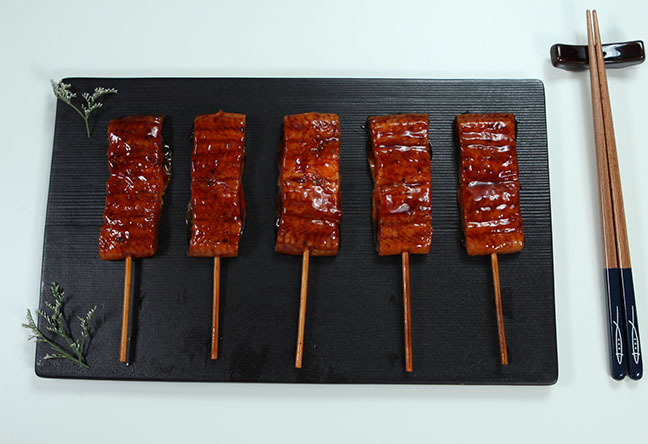
Start with the label instead of the sauce name
The clear conclusion is simple: do not use the name “eel sauce” as proof that a product contains eel or fish. For a diner with a fish allergy, a gluten-sensitive guest, or a buyer setting menu rules, the ingredient panel is the controlling document. The sauce name describes a culinary use. It does not define a fixed recipe.
For buyers asking whats unagi sauce, check the package in this order: ingredient list, allergen declaration, dietary claim, and supplier confirmation. This approach fits retail bottles, foodservice pouches, restaurant sauces, and sauces supplied with frozen kabayaki. It does not replace medical advice for a guest with a severe allergy; in that case, use the manufacturer’s current allergen information and follow the guest’s medical guidance.
In the United States, fish, wheat, and soy are among the major food allergens that require clear attention on packaged food labels. Requirements and label formats can differ by market, so importers should review the label required for their destination country rather than relying on a label designed for another market.
| Question to ask | What to inspect | Best use case | Limit or caution |
|---|---|---|---|
| Does it contain fish? | Fish ingredients, eel extract, fish stock, seafood extract, and allergen statement | Fish-allergy screening and menu disclosures | “Eel sauce” alone does not confirm fish content |
| Does it contain gluten? | Wheat, soy sauce source, malt ingredients, and gluten-free claim | Gluten-conscious menus and retail selection | Do not assume all soy sauce is wheat-free |
| Does it contain soy? | Soy sauce, soybeans, hydrolyzed soy ingredients, and allergen statement | Soy-allergy review | A gluten-free product may still contain soy |
| Does it contain alcohol? | Mirin, sake, cooking wine, alcohol, and product specification | Alcohol-sensitive and faith-based purchasing review | Heating is not proof of alcohol-free status |
For a practical product reference, compare the declared ingredients and pack information on our eel sauce product page with the exact item you plan to purchase. A recipe-style description is useful for flavor expectations, but the current commercial specification should guide allergen and dietary decisions.
Ingredient-boundary FAQ for traditional recipes and bottled products
The biggest source of confusion is that traditional tare recipes, restaurant finishing sauces, and bottled products are not automatically the same. When people ask whats unagi sauce, they may be thinking of sauce simmered beside grilled eel, while the bottle in front of them may use a different formula intended for stable packing and consistent use.
Does unagi sauce contain fish?
Sometimes, but not always. A traditional restaurant sauce may collect drippings from grilled eel over repeated cooking cycles, which can introduce fish components. Other recipes use only soy sauce, sugar, mirin, sake, or similar seasoning ingredients. Bottled sauce may contain no fish ingredient at all, or it may use fish-derived ingredients depending on the formula.
Therefore, whats unagi sauce cannot be answered by assuming that “unagi” means the sauce itself contains eel. This distinction matters most for fish-allergic diners, school or institutional menus, and buyers making allergen declarations. It does not mean a fish-free-looking formula is automatically suitable for every allergy protocol; check cross-contact information with the supplier when required.
Does unagi sauce contain wheat or gluten?
It often can, especially when conventional soy sauce is used. Many soy sauces are made with wheat, so a sauce based on standard soy sauce may contain wheat and gluten. Some sauces may use a wheat-free soy sauce alternative, but that must be confirmed by the label or supplier declaration.
This is the boundary that catches many shoppers. The dark color and sweet flavor do not reveal whether wheat is present. If your menu requires a gluten-free option, select only a product expressly documented for that need. Do not treat a homemade-looking sauce, a Japanese-style sauce, or a soy-free-looking label design as evidence.
Does unagi sauce contain soy?
Usually it may, but the formula decides. Soy sauce is a common foundation for unagi tare, which makes soy a likely ingredient in many recipes. Yet “likely” is not enough for an allergy decision. The buyer should review the ingredient statement for soy sauce, soybeans, soy protein, or related ingredients.
For whats unagi sauce, remember that gluten and soy are separate questions. A sauce could contain soy while being made without wheat. Another sauce could contain wheat through a soy sauce blend. Both checks are necessary.
Does unagi sauce contain mirin?
Traditional recipes often use mirin, but bottled products may not. Mirin adds sweetness, aroma, and a rounded finish. Some recipes use sake or cooking wine instead. Others use sugar and alternative seasonings to achieve a similar flavor profile without using mirin.
This difference is especially relevant for buyers comparing restaurant recipes with factory-packed sauce. A chef may describe a sauce as “mirin-style” because of its taste, while the actual bottle may have a different ingredient system. Request the ingredient list rather than treating flavor language as a formula disclosure.
Does unagi sauce contain alcohol?
It may contain alcohol if mirin, sake, cooking wine, or alcohol is included in the formula. A cooked recipe can lose some alcohol during heating, but the amount remaining depends on the formulation and cooking process. A buyer should not claim a sauce is alcohol-free merely because it has been simmered or brushed on grilled food.
For alcohol-sensitive consumers, religious dietary review, or export documentation, ask for the finished product specification. This is also the right point to remember that a certification does not automatically answer every ingredient question unless the certification scope and product documents specifically address that question.
Use this buyer checklist before serving or sourcing sauce
The best decision is to match the level of checking to the risk. A casual home cook may need a clear package label. A restaurant serving guests with declared allergies needs a documented ingredient review and staff procedure. An importer needs the specification, destination-market label review, and consistency across repeat orders.
- Identify the restriction first. Separate fish allergy, wheat or gluten avoidance, soy allergy, and alcohol avoidance. They are not interchangeable.
- Request the current ingredient declaration. Do not rely on an old online product image or a recipe from another supplier.
- Read the allergen statement beside the full ingredient list. The allergen statement is helpful, but it should not replace reading ingredients.
- Ask about the exact stock keeping unit. A retail bottle, bulk pouch, and sauce supplied with prepared eel may have different specifications.
- Confirm your market requirements. Import labels, menu disclosures, and institutional food rules can differ between the United States, Japan, the European Union, Australia, Indonesia, and other destinations.
- Keep written approval for foodservice use. Save the supplier specification, approved label, and the date checked. Update the file when the formula or packaging changes.
Use this process whenever whats unagi sauce is asked by a guest or procurement team. It fits a sushi counter, a supermarket private-label review, or a restaurant chain selecting a standardized finishing sauce. It does not apply if someone expects one document to cover every future production lot without checking for formula updates.
Avoid these common unagi sauce mistakes
- Mistake: Assuming all eel sauce contains eel. The better approach is to look for actual fish-derived ingredients. This matters for fish allergy decisions.
- Mistake: Treating soy sauce as automatically gluten-free. Check for wheat and verify any gluten-free claim. This matters for gluten-conscious diners and controlled kitchen programs.
- Mistake: Assuming “contains mirin” means the finished sauce has a known alcohol level. Ask for the product specification when alcohol content is the deciding factor.
- Mistake: Copying a restaurant recipe into a packaged-product declaration. Bottled products can use different ingredients for flavor, processing, and shelf stability.
- Mistake: Using a single generic menu note for every sauce supplier. Update ingredient records when suppliers, products, or formulations change.
Here is a useful cold fact: color is a poor guide. A deep brown, shiny sauce may look rich with eel drippings, but its appearance cannot confirm fish, wheat, soy, mirin, or alcohol. For whats unagi sauce, the label beats the color every time.
Chefs who are building menu descriptions can also compare the sauce with the prepared eel itself. Our unagi kabayaki information helps show where the finished eel product and its accompanying flavor profile should be reviewed as separate items. The eel and the sauce may each have their own ingredient and allergen considerations.
Choose a supplier document package that matches your menu risk
For regular purchasing, the most useful outcome of whats unagi sauce is not a generic definition. It is a document package that lets you make a defensible menu or sourcing decision. Ask for the product specification, ingredient declaration, allergen information, packaging details, and the applicable certificate scope where relevant.
Eelpro Co., LTD operates under ISO 22000:2018 and HACCP systems, holds HALAL certification, and has export food producer registration. Our production operation includes an in-house laboratory and metal detectors at critical control points. These controls support product management, but buyers should still request the specification for the exact sauce item and destination market before making fish, gluten, soy, or alcohol claims.
For buyers pairing sauce with prepared eel, our roasting process uses four precise layers of soy sauce with temperature-controlled steps for frozen roasted eel. That process description should not be used as a substitute for a sauce ingredient declaration. If you want recipe ideas after the label check, see our kabayaki sauce article and use the listed product information for final suitability decisions.
Request the current ingredient specification and sample review for the unagi sauce format you plan to source.

 WhatsApp
 sales@chinaeels.com
 +8619937922411