





What's Unagi on a Menu, and Why the Label Matters Before You Order
By Nancy Chen, Senior Food Safety & Quality Specialist, ISO 22000 & HACCP certified auditor
You're staring at a sushi menu. Unagi nigiri. Unagi don. Unagi sauce on the side. Same word, three different things landing on your plate. What's unagi, really? If you can't answer that in five seconds, you're ordering blind — and if you're a buyer sourcing for a restaurant chain, that confusion gets expensive fast.
So, What's Unagi, Exactly? The Fish Behind the Name
Unagi is the Japanese word for freshwater eel, almost always referring to species in the genus Anguilla, most commonly Japanese eel (Anguilla japonica). It is not the same fish as "anago," which is saltwater conger eel and tastes noticeably leaner and firmer. That distinction matters because mislabeling between unagi and anago is one of the oldest menu mix-ups in Japanese foodservice — and it changes both flavor and price point.
In short: what's unagi at its core is a raw ingredient, not a dish. Everything else on the menu — nigiri, don, kabayaki, sauce — is a preparation built on top of that fish.
Unagi Menu Terms Compared: Eel, Nigiri, Don, Kabayaki, and Sauce
Here's where most confusion starts. Five terms, five different meanings, and restaurants rarely explain which one they're serving. Use this table before you order or before you write a purchase spec.
| Menu Term | What It Actually Is | Typical Form |
|---|---|---|
| Unagi (eel) | The raw freshwater eel itself, the base ingredient | Whole, filleted, or frozen raw |
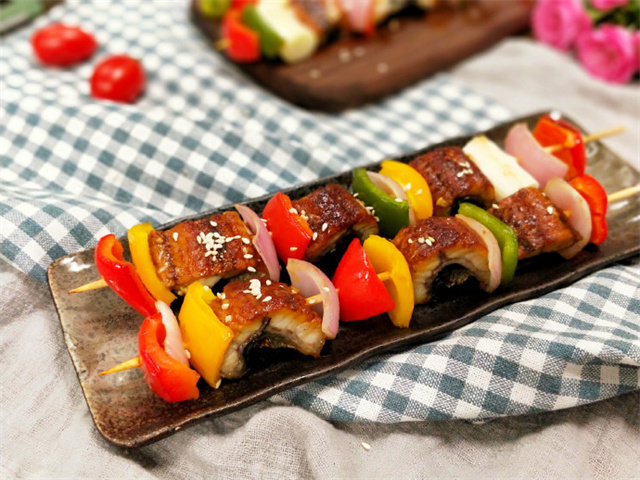
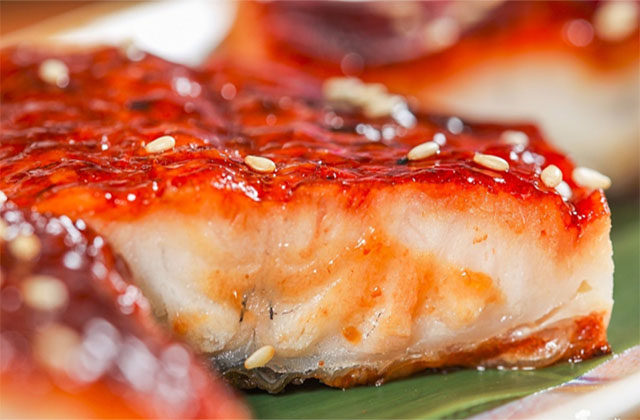
| Kabayaki | Eel fillet butterflied, deboned, grilled, and basted with soy-based glaze in repeated layers | Grilled fillet, usually frozen for export |
| Unagi Nigiri | A slice of kabayaki eel laid over vinegared sushi rice, hand-pressed | Single sushi piece |
| Unagi Don | Kabayaki eel served over a bowl of steamed rice, usually with extra sauce drizzled on top | Rice bowl dish |
| Unagi Sauce (Tare) | A reduced sauce of soy sauce, mirin, sugar, and eel stock — not eel meat itself | Bottled glaze or dipping sauce |
Notice the pattern: kabayaki is the cooking method, nigiri and don are serving formats, and sauce is a separate condiment that simply shares the name. If a menu just says "unagi roll" without specifying kabayaki, ask — some lower-cost versions use imitation eel or a thin glaze instead of true roasted fillet.
What's Unagi Sauce Made Of, and Is It the Same as Kabayaki?
No. This is the single biggest point of confusion we hear from foodservice buyers. Eel sauce (unagi tare) contains zero eel protein in most commercial recipes — it's a reduction of soy sauce, mirin, sugar, and sometimes eel bones for depth. Kabayaki, on the other hand, is the actual roasted eel fillet, basted in that same style of sauce through multiple coating passes.
Our own roasting line applies a four-layer soy-sauce coating process, each layer temperature-controlled to build what we classify internally as "white-roasted color" through "1st-through-4th soy-sauce coating color" — a graded standard that lets buyers specify exactly how dark and how glazed they want the finished fillet. That precision is what separates a consistent export-grade unagi kabayaki from a home-style batch that varies tray to tray.
How Kabayaki Is Actually Made (Step by Step)
- Live or fresh-frozen eel is filleted and deboned, removing the skeleton while keeping the skin intact.
- The fillet is pre-grilled without sauce to render excess fat — this is where low-fat roasting technology reduces oiliness compared to traditional methods.
- The first soy-sauce layer is brushed on at a controlled temperature, then grilled briefly to set the glaze.
- Layers two through four repeat the basting-and-grilling cycle, deepening color and flavor with each pass.
- The finished fillet is blast-frozen and moved into cold storage, typically within our 1,000-ton facility, to lock in texture before shipment.
If a supplier skips past step two, the fillet ends up greasy under the glaze — a common giveaway of lower-grade kabayaki.
Common Mistakes When Ordering or Sourcing Unagi
- Assuming "eel sauce" means real eel inside. It usually doesn't — check the ingredient list, not the name.
- Confusing anago with unagi. Anago (saltwater conger) is leaner and lower-fat; it should never be priced or specified as unagi.
- Ordering frozen kabayaki without checking the soy-sauce coating grade. Darker isn't automatically better — it depends on your menu's flavor profile.
- Skipping traceability documentation. For export into Japan, the US, or the EU, veterinary drug residue testing and microbiological records are not optional paperwork — they're what clears customs.
- Buying on price alone. A 20% cheaper quote with no HACCP or HACCP-equivalent certification often means hidden rework costs later — rejected batches, repackaging, or compliance delays.
Buyer's Checklist: What to Verify Before Ordering Frozen Unagi Kabayaki
If you're a foodservice buyer or import distributor, run through this before signing a purchase order:
- Does the supplier hold ISO 22000:2018 and HACCP certification, plus an export food producer registration?
- Is there HALAL certification available, if your market requires it?
- Can the supplier trace the batch back to a customs-registered farming base? (We work with roughly 20 such bases covering over 2,150 mu, with full-chain tracking from farm registration through sampling.)
- Does the facility run in-house lab testing and metal detection at critical control points? You can review our own setup on the eel lab page.
- What's the cold storage capacity, and does it match your order volume without risking temperature breaks in transit?
- What's the realistic lead time? Our standard cycle runs about 30 days from order confirmation to shipment, negotiable depending on spec and quantity.
Worked Example: A US Importer Sourcing Ready-to-Heat Kabayaki
Picture a US food importer supplying Japanese restaurant chains. They need boneless, pre-cut kabayaki that cuts back-of-house prep time. In practice, that means specifying cut format upfront — strip-cutting for donburi, 3-section cut for nigiri, or sushi slices for rolls — and confirming the batch meets US microbiological and veterinary drug residue standards before it ever leaves the dock. This is the same compliance path we've used supplying US food importers and Japanese restaurant chains directly, and it's also how German, Polish, and Australian foodservice distributors have brought in product without customs delays.
Frequently Asked Questions
Is unagi the same as freshwater eel?
Yes. Unagi specifically refers to freshwater eel, not the saltwater conger eel sold as anago. If a menu or supplier uses the terms interchangeably, that's a red flag worth questioning.
What's unagi don versus unagi nigiri?
Unagi don is eel over a rice bowl, typically with more sauce and a more casual presentation. Unagi nigiri is a single hand-pressed sushi piece — smaller portion, lighter glaze, more precise plating.
What's unagi tare, and can I use it without the fish?
Unagi tare (eel sauce) is a standalone condiment. You can use it on grilled chicken, vegetables, or rice without any eel at all — it's the soy-mirin reduction that carries the flavor, not the fish itself. For recipe ideas, see our guide on why kabayaki sauce works the way it does.
Does frozen kabayaki lose quality compared to fresh?
Not when cold-chain handling is done right. Blast-freezing immediately after roasting, followed by storage at consistent sub-zero temperatures, preserves texture close to fresh-roasted. Where quality actually drops is during temperature fluctuation in transit — which is why cold storage capacity and logistics matter as much as the roasting process itself.
Is unagi kabayaki suitable for retail private-label packaging?
Yes, within limits. Skin-packaging and gift-box formats are both workable, but MOQ and packaging specs vary by cut type and client category — catering chains, wholesalers, and export traders each sit on different minimums. This is negotiable, not fixed, so it's worth asking directly rather than assuming a standard MOQ applies.
Once you know what's unagi actually describes on a given line of the menu — the fish, the method, the format, or the sauce — ordering gets a lot less guesswork and sourcing gets a lot more precise. For buyers building a spec sheet, start with the cut type and sauce grade, then confirm certification and cold-chain documentation before quantity negotiations.
Looking to compare cut specifications or request a sample batch? You can review full product details on our frozen eel supplier page, or explore frozen seafood options alongside kabayaki. For more in the kitchen, our eel noodle soup recipe is worth a look too. If you have a spec in mind, send it over — we're happy to advise on cut, grade, and packaging before you commit to an order.
 WhatsApp
 sales@chinaeels.com
 +8619937922411