

Where Do Gulper Eels Live? A Depth-Zone Map of Their Ocean Habitat
A lot of people picture the gulper eel sitting on the seafloor, waiting in the mud like a catfish. That's not accurate. Where do gulper eels live is a more specific question than "the deep ocean" — these fish occupy a narrow band of open water, not the bottom, and not the surface either. Understanding that band matters if you're researching deep-sea species for content, education, or simply want the facts straight before citing them anywhere.
This article maps the depth zones gulper eels actually occupy, explains why they stay off the seafloor, and clears up a few common mix-ups between deep-sea eel species and the commercial freshwater eels used in food production — a distinction that matters if you're sourcing seafood products rather than studying marine biology.
Depth-Zone Breakdown: Why Gulper Eels Live in Midwater, Not on the Bottom
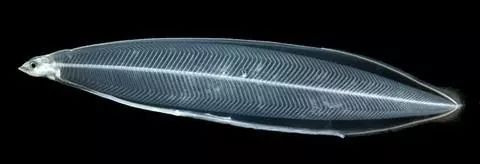
Ocean scientists divide the water column into zones based on light penetration, not just depth number. Gulper eels (family Eurypharyngidae, commonly Eurypharynx pelecanoides) are recorded mainly in two of these zones: the mesopelagic ("twilight") zone and the bathypelagic ("midnight") zone. Here's what each zone actually means for the eel's survival — and what happens if you assume they behave like bottom-dwelling fish.
| Zone | Depth Range | Light Level | Why Gulper Eels Occupy It |
|---|---|---|---|
| Epipelagic (sunlight zone) | 0–200 m | Full sunlight | Not present — too warm, too much predation pressure from surface hunters |
| Mesopelagic (twilight zone) | 200–1,000 m | Dim, fading light | Common range for foraging; prey density (small fish, crustaceans) is higher here |
| Bathypelagic (midnight zone) | 1,000–3,000+ m (records to ~3,000 m) | No sunlight, only bioluminescence | Frequently recorded zone; stable cold temperature suits their slow metabolism |
| Abyssopelagic / seafloor | 3,000 m+ | None | Rarely recorded resting here; not a primary habitat despite popular belief |
The mistake most people make is assuming "deep-sea" automatically means "seafloor-dwelling." Gulper eels are midwater swimmers, drifting between the twilight and midnight zones rather than settling on the bottom. Their oversized, hinge-jawed mouth is built to engulf prey that drifts past in open water — a feeding strategy that only works if the eel stays suspended in the water column, not buried in sediment. If you're describing their habitat for an article or presentation, calling them "bottom feeders" is the single most common factual error to avoid.
Why does this matter beyond trivia? Because depth and light-zone placement directly explain their body design: reduced eyes, a lightweight gelatinous body, and bioluminescent organs near the tail — all traits suited to floating in darkness, not crawling along mud.
Common Mistakes When Describing Gulper Eel Habitat
- Calling it a bottom-dweller — Gulper eels are recorded in midwater column samples, not benthic (seafloor) surveys.
- Confusing ocean zones with depth alone — Depth range overlaps between zones depending on water clarity and location; light penetration is the defining factor, not a fixed meter mark.
- Mixing up gulper eels with commercial food eels — Gulper eels are deep-sea species with no food-industry use. Freshwater eels (genus Anguilla), used in unagi kabayaki production, live in rivers, estuaries, and coastal shallows — a completely different ecological zone.
- Assuming uniform depth worldwide — Recorded depths vary by ocean basin; Atlantic and Pacific specimens have been documented at different depth bands within the same general zone.
Gulper Eel vs. Freshwater Eel: Two Different Worlds, Often Confused
Because "eel" covers a wide range of species, readers researching deep-sea life sometimes land on food and seafood pages by accident — and vice versa. It's worth separating the two clearly, especially if you're a buyer researching eel products rather than marine trivia.
| Feature | Gulper Eel | Freshwater Eel (Anguilla species) |
|---|---|---|
| Habitat | Midwater ocean, 200–3,000 m depth | Rivers, estuaries, coastal shallows |
| Commercial use | None — not a food species | Widely farmed for kabayaki, sushi, and eel sauce production |
| Typical size | Up to ~75 cm, mostly mouth and tail | 40–150 cm depending on species and age |
| Visibility to humans | Rarely observed; mostly via ROV footage or trawl surveys | Farmed and processed under food safety standards |
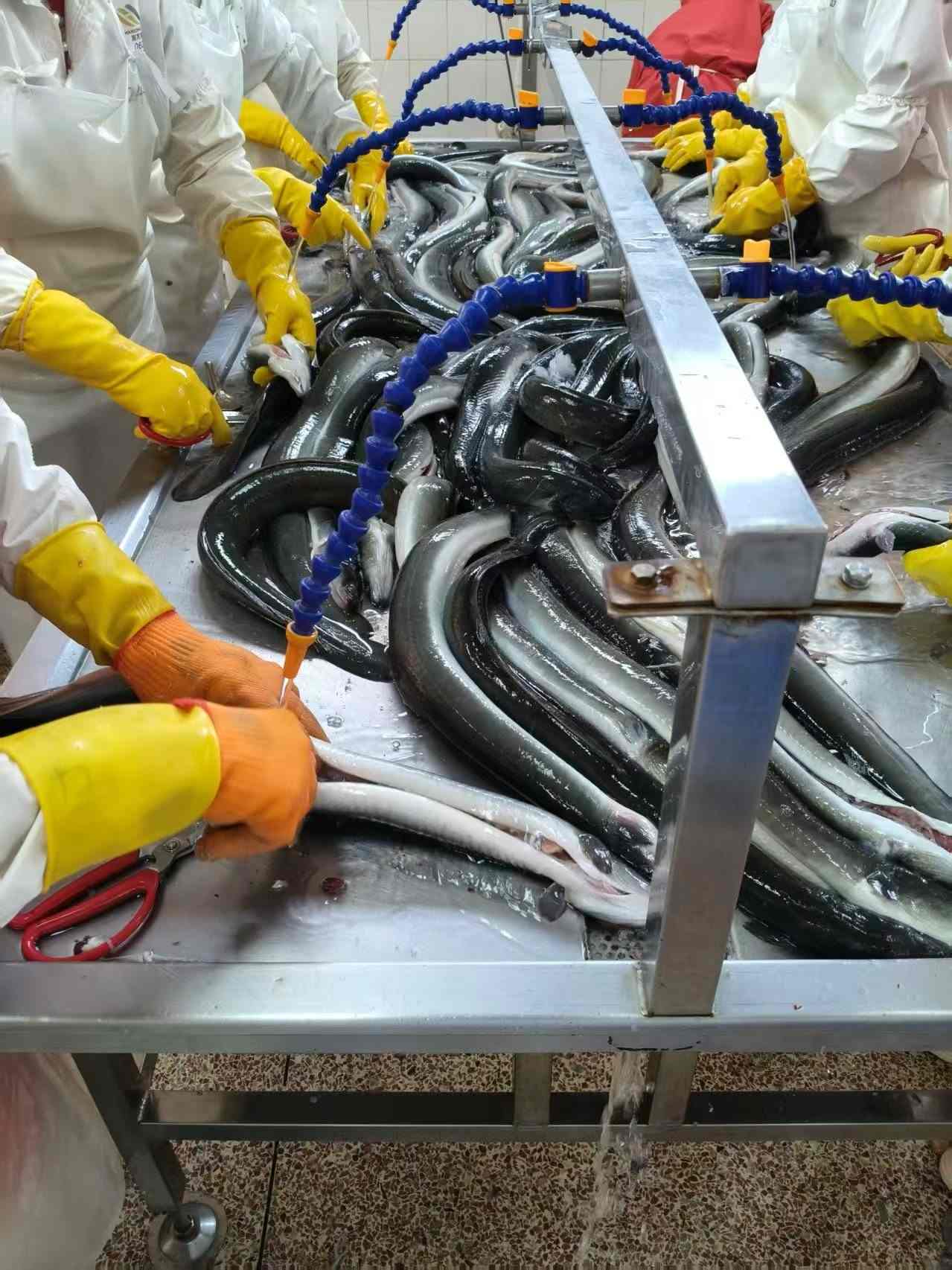
If your interest is in the food-grade eel supply chain rather than deep-sea biology, freshwater eel farming and processing follow a completely different set of standards — traceability, cold-chain handling, and food safety certification, for example. Our own supply chain runs on certified eel farming bases that operate nothing like the open-ocean habitat gulper eels occupy — these are managed freshwater and estuary systems with full traceability from farm registration to shipment.
How Depth Affects What Scientists Actually Know
Because gulper eels live below where sunlight reaches, direct observation is rare. Most habitat data comes from three sources:
- Trawl surveys — deep-sea research vessels netting samples at recorded depth ranges, then logging species and depth together.
- ROV (remotely operated vehicle) footage — live footage from institutions like the National Oceanic and Atmospheric Administration, which has recorded gulper eels in midwater footage rather than seafloor footage.
- Bycatch records — specimens caught incidentally during deep-sea fishing operations, with depth data attached to the gear used.
This is also why exact depth ranges vary slightly between sources — a trawl net dragged between 500–1,000 m will record the eel as "twilight zone," while a deeper net at 2,000 m records it as "midnight zone." Both are correct; the eel simply doesn't stay fixed at one depth.
A Quick Reader Checklist Before You Cite Gulper Eel Depth Data
- Confirm whether the source is citing a specific expedition/depth or a general range — general ranges (200–3,000 m) are more reliable than single-point claims.
- Check whether "habitat" refers to feeding zone (twilight) or resting zone (midnight) — they're not identical.
- Avoid citing seafloor sightings as typical — they're the exception, not the rule.
- Don't confuse deep-sea eel species with farmed freshwater eels used in food products — different biology, different supply chain entirely.
For readers who came here through an interest in eels more broadly — cooking, sourcing, or product research — it's worth noting that the eel used in dishes like kabayaki has nothing to do with deep-sea species. If that's your actual interest, our page on unagi kabayaki eel covers the farmed freshwater species used in food production, along with how it's processed under food safety certification. There's also a breakdown of kabayaki sauce production if the culinary side is what brought you here. If you're specifically comparing eel species for a report, classroom material, or general curiosity, the depth-zone table above is the part worth bookmarking — it's the detail most articles get wrong.
Sourcing Food-Grade Eel? That's a Different Question Entirely
If your research started with "where do gulper eels live" but you're actually here because you're evaluating eel as a food product — for foodservice, retail, or export — the relevant details are farming traceability, cold-chain handling, and processing standards, not ocean depth. Buyers sourcing frozen unagi kabayaki or eel sauce for import should look at certification (ISO 22000, HACCP, HALAL), cold storage capacity, and cutting specifications rather than marine biology.
Curious about the food side instead? Check our eel sauce product page or browse frozen seafood options — a good next step if deep-sea trivia led you here but food sourcing is the actual goal.
Have questions about eel product specifications, packaging formats, or export documentation? Reach out for a quote or spec sheet — we're happy to walk through options based on your target market and order volume.