





Diners often ask why, in a cuisine celebrated for its fresh, raw fish, the eel in Japanese sushi is always served cooked. The answer is a critical combination of food safety and culinary tradition. Unlike tuna or salmon, freshwater eel (unagi) contains compounds in its blood that can be harmful if ingested raw, and it can host parasites. Cooking neutralizes these risks completely, making the eel safe and delicious.
For foodservice businesses, from restaurant chains in Japan to importers in the United States, this non-negotiable cooking step has shaped the entire supply chain. Sourcing professionally prepared, pre-cooked, and frozen unagi isn't just a matter of convenience; it's a fundamental requirement for safety, consistency, and operational efficiency. At Eelpro, our entire process, from our 19 certified farming bases to our ISO 22000:2018 certified facility, is built to deliver kitchen-ready eel that meets the strictest international standards.
The primary reason you will never find raw eel on a sushi menu is safety. Freshwater eel blood contains a protein-based neurotoxin. While the concentration varies, consuming it can cause illness. This is not a risk any reputable chef or supplier is willing to take.
Furthermore, like many freshwater fish, eels can be potential carriers of parasites. The only effective way to eliminate both the blood toxins and any potential pathogens is through proper cooking. The heat from grilling and steaming denatures the toxic proteins and kills any microorganisms, rendering the eel perfectly safe for consumption.
This is where a certified supplier becomes essential. Our HACCP-based system identifies critical control points throughout the production process. We implement precise temperature and time controls during our patented roasting process, which is monitored by our 25-person quality control team. This guarantees that every piece of eel is not only cooked to perfection for flavor but also for absolute food safety, meeting stringent Japan, US, and EU food inspection standards for microbiological indicators.
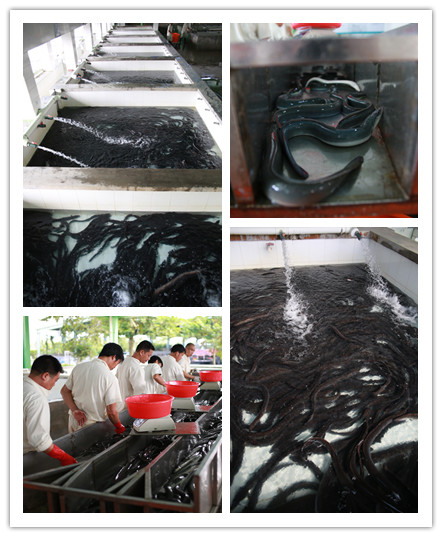
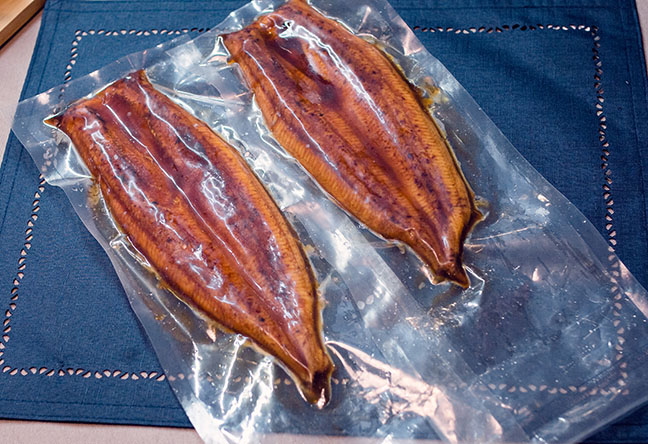
Preparing eel from its live state is a labor-intensive, multi-step process requiring specialized skill and equipment. For this reason, nearly all high-volume sushi and Japanese restaurants rely on a cooked-frozen supply chain. This model offloads the complex and high-risk preparation steps to a specialized producer, allowing chefs to focus on final presentation and service.
Here is a breakdown of how the professional cooked-frozen supply chain compares to the impractical alternative of in-kitchen preparation from raw eel.
| Process Stage | In-House Preparation (from Raw) | Eelpro's Cooked-Frozen Supply Chain |
|---|---|---|
| Sourcing & Safety | Requires sourcing live eels, managing mortality, and assuming full liability for parasite/toxin risks. High potential for inconsistency. | Raw material supplied from ~20 customs-registered eel farming bases with full-chain traceability. All safety risks are neutralized at the source. |
| Labor & Skill | Needs highly skilled staff to debone, gut, and skewer eels—a difficult and time-consuming craft (kimo-saki, hiraki). High labor cost and training burden. | Specialized teams handle all preparation. Our 160+ employees ensure standardized, high-volume output, reducing your back-of-house labor costs. |
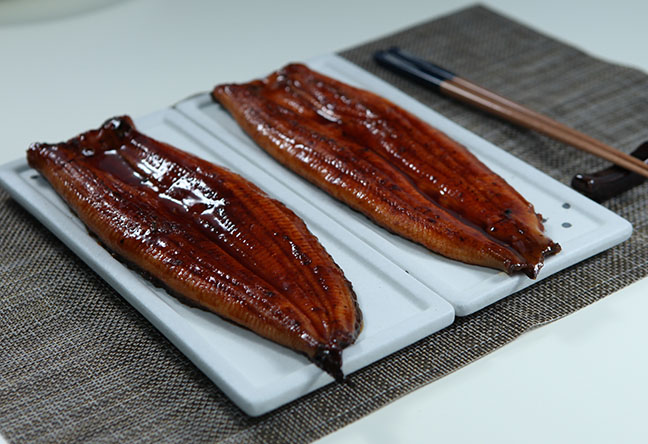
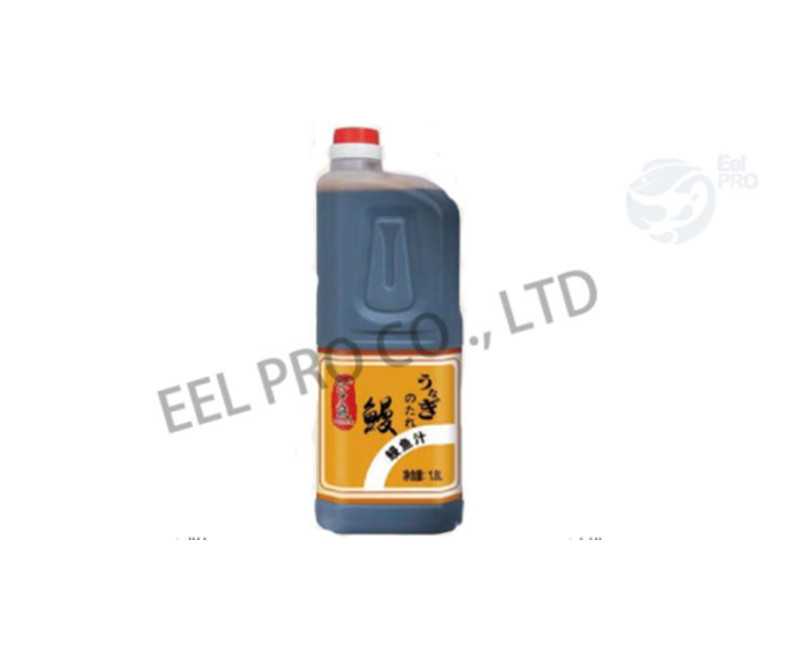
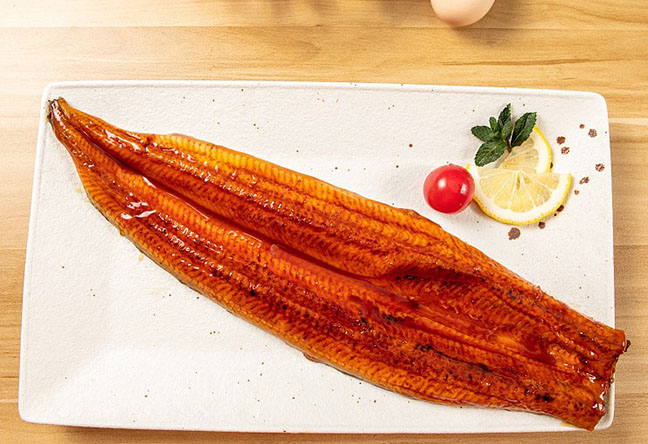
| Cooking Process | Requires dedicated grilling equipment, precise temperature control for steaming, and expertise in applying sauce. Difficult to achieve consistency across batches. | A standardized, patented process: first grilling (shirayaki), steaming, then 4 precise layers of soy sauce with temperature-controlled steps. Consistent flavor, texture, and color every time. |
| Waste & Yield | Significant waste from bones, heads, and organs. Yield can vary based on the skill of the preparer. Unpredictable food cost. | Maximized yield through industrial processing. You receive a 100% usable product with zero preparation waste, leading to predictable portioning and costs. |
| Storage & Logistics | Requires live-holding tanks or extremely short-term fresh storage. High risk of spoilage. | Products are quick-frozen to lock in freshness and stored in our 1,000-ton cold storage facility, ensuring stable quality and a long shelf life. |
This streamlined supply of unagi kabayaki allows foodservice clients in Germany, Poland, and Australia to serve authentic-tasting eel without the immense operational burden and risk of preparing it from scratch.
When selecting a supplier for frozen roasted eel, importers and foodservice buyers must verify several key operational capabilities. Getting this decision wrong can lead to inconsistent product, compliance issues, and supply chain disruptions. Use this checklist to evaluate potential partners.

For large-scale foodservice operations, efficiency and consistency are just as important as flavor. Sourcing pre-processed, kitchen-ready eel directly addresses major operational pain points, translating into significant cost savings and improved service quality.
The most immediate benefit is the reduction in skilled labor. The difficult tasks of deboning and filleting are eliminated. This means kitchen staff with general training can handle the final preparation—typically a simple reheating process—freeing up your most experienced chefs for more complex tasks. This is a major advantage for catering chains across Southeast Asia and foodservice channels in the EU.
Waste is another critical cost factor. When buying whole, live eels, a significant percentage of the weight (head, bones, viscera) is discarded, but you pay for all of it. With our finished products, you receive 100% usable eel. This leads to perfectly predictable food costs and portion control, which is essential for maintaining menu profitability.
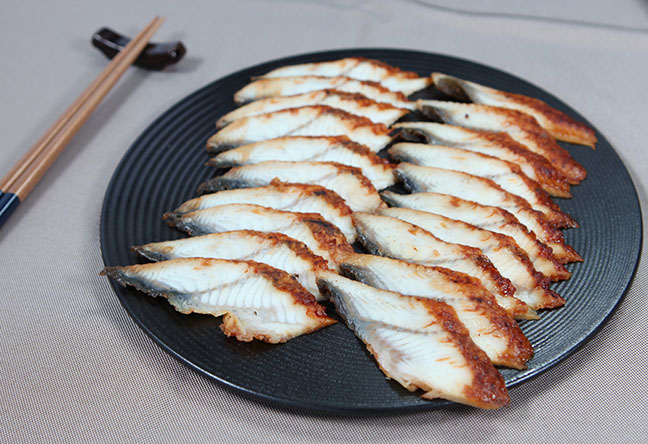
Finally, we offer custom cutting specifications to match your exact menu needs. Whether you require shredding for toppings, dicing for mixed rice bowls, precise sushi slices, or a standard 3-section cut, we can process the eel to your requirements. This standardization ensures that a customer ordering an unagi dish in one branch of a restaurant chain has the exact same experience as a customer in another branch hundreds of miles away.
By integrating a reliable supply of high-quality frozen eel, your kitchen becomes more efficient, your costs become more predictable, and your final product becomes more consistent.
Our commitment to a fully controlled, certified, and transparent supply chain ensures that the eel you serve is safe, delicious, and operationally efficient. To learn more about our product specifications or to discuss your sourcing needs, please contact our team for a consultation.

 WhatsApp
 sales@chinaeels.com
 +8619937922411