

A Troubleshooting Guide for Your Recipe Unagi Sauce
You’ve carefully simmered the soy sauce, mirin, sake, and sugar, expecting a glossy, sweet, and savory glaze. Instead, your unagi sauce has a harsh, bitter aftertaste that ruins the delicate flavor profile. It’s a common and frustrating problem in both professional kitchens and large-scale food production. Before you discard the entire batch, it's important to understand what went wrong. The bitterness is almost always a result of heat mismanagement during the cooking process.
This guide, drawing from my 12 years in seafood export quality assurance, will help you diagnose the exact cause of bitterness in your recipe unagi sauce. We'll break down the chemical reactions at play and provide clear, actionable steps to determine if your batch is salvageable or if it's time to start over. Understanding these principles is key to achieving consistent, high-quality results every time.
Diagnosing the Source of Bitterness in Unagi Sauce
Bitterness in unagi sauce isn't a single issue; it stems from several potential missteps during reduction. Each cause has a distinct chemical origin and tell-tale signs. Identifying the specific problem is the first step toward correction and prevention. The primary culprits are uncontrolled sugar heating, overheated soy sauce, and excessive reduction.
As a quality specialist overseeing HACCP systems, I teach our teams to identify issues by looking at the process, not just the final product. Let’s apply that same logic here. The following table breaks down the common causes of bitterness, their symptoms, and whether a fix is possible.
| Symptom & Flavor Profile | Probable Cause | Visual & Aromatic Cues | Is It Fixable? |
|---|---|---|---|
| Sharp, Acrid Bitterness: A burnt, almost chemical taste that overpowers everything else. | Scorched Sugar / Mirin | The sauce is darker than expected, almost black. You'll notice a distinct burnt sugar smell, similar to a failed candy-making attempt. | No. Once sugar burns, the bitter compounds are formed and cannot be removed or masked. The batch must be discarded. |
| Dull, Muddy Bitterness: A flat, slightly bitter taste that lacks the bright notes of good soy sauce. | Overheated Soy Sauce | The sauce may look fine, but it lacks a pleasant, savory aroma. The smell might be slightly 'off' or stale. | Partially. You can try to rebalance the flavor by diluting the batch with a 50/50 mix of water and fresh soy sauce, then adding more mirin and sake. Simmer briefly, but do not reduce it heavily again. |
| Concentrated, Salty Bitterness: The sauce is overwhelmingly salty, with a bitter note emerging from the intense concentration. | Excessive Reduction | The sauce is extremely thick and syrupy, much thicker than honey. It may have started to crystallize at the edges of the pot. | Yes. This is the most correctable issue. The flavors are just too concentrated. Dilute the sauce with dashi stock or water until the desired consistency and flavor balance are restored. Warm gently to incorporate. |
The science behind this is straightforward. When you heat sugar, it undergoes caramelization, creating complex, desirable flavors. But if the temperature gets too high (typically above 177°C or 350°F), the sugar molecules begin to burn, creating bitter-tasting carbon compounds. Likewise, soy sauce contains amino acids that can break down and create off-flavors if held at a high simmer for too long.
The Role of Ingredient Quality in Sauce Stability
While technique is critical, the quality of your base ingredients creates the foundation for a stable, flavorful sauce. In a commercial setting, ingredient consistency is directly tied to batch-to-batch reliability and cost efficiency. Sourcing from a certified unagi kabayaki manufacturer that also produces high-quality sauce can eliminate many of these variables.
Here’s a checklist for sourcing ingredients to prevent bitterness and flavor defects:
- Soy Sauce (Shoyu): Opt for a naturally brewed, high-quality Japanese soy sauce. Cheaper, chemically hydrolyzed soy sauces often contain additives and can have harsher, more volatile flavor profiles that are less stable when heated for long periods. They are more prone to developing that 'muddy' bitterness.
- Mirin: True mirin (hon-mirin) contains alcohol and is naturally sweet from fermented rice. Lower-cost alternatives, often labeled "aji-mirin" or "mirin-style seasoning," are primarily corn syrup with flavorings. These can scorch more easily due to their high concentration of simple sugars.
- Sake: Use a decent-quality cooking sake. It adds depth and umami. Avoid using low-quality or oxidized sake, as any off-flavors will become concentrated during reduction.
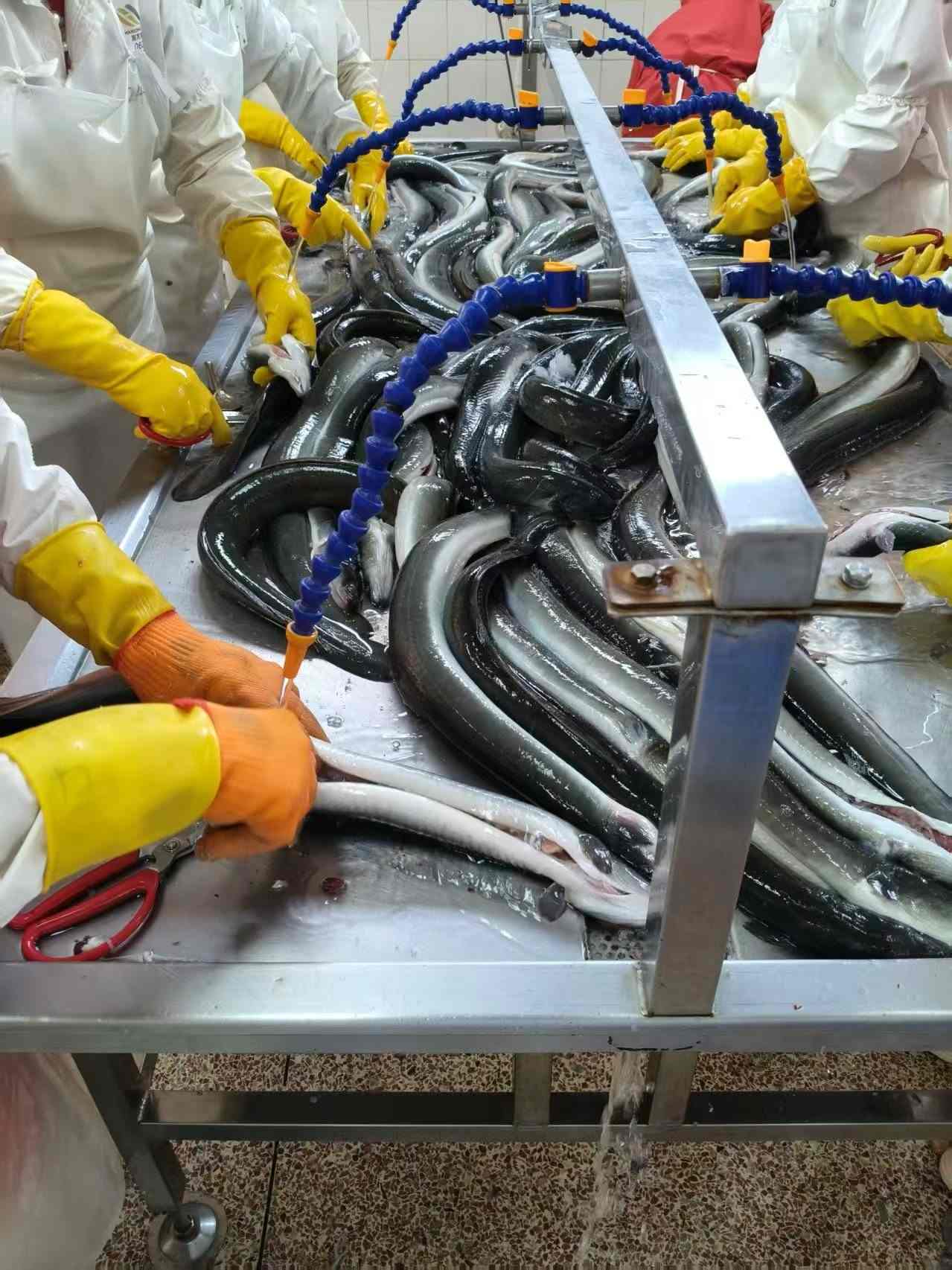
- The Foundation of Umami (Eel Bones): The most authentic and deeply flavorful unagi sauce is made by simmering toasted eel bones in the base liquid. This adds collagen for body and a rich umami that cannot be replicated. Using bones from a reliable unagi kabayaki eel supplier ensures they are from healthy, well-managed stock, free from contaminants.
At Eelpro, our entire process is built on full-chain traceability, from our 20+ customs-registered eel farms to our final products. The bones used in our traditional sauce base come from the same high-quality eels we supply to Japanese restaurant chains and US food importers. This vertical integration guarantees a clean, consistent flavor profile that serves as a stable foundation for our eel sauce.
A Proactive Checklist for Consistent, Non-Bitter Unagi Sauce
Prevention is always more efficient than correction. Adopting a standardized process with clear control points is essential, whether you're making a 1-liter batch or a 100-liter batch. Our internal quality control for sauce production follows these same principles, ensuring every bottle meets export standards for Japan, the US, and the EU.
Use this checklist for your next batch to minimize the risk of bitterness.
- Combine Ingredients Cold: Always combine your soy sauce, mirin, sake, and sugar in the pot before applying heat. Stir until the sugar is mostly dissolved. This prevents sugar granules from sitting on the hot bottom of the pot and scorching immediately.
- Use Low, Indirect Heat: Bring the mixture to a simmer over medium-low heat. Never use high heat to rush the process. Once it reaches a gentle simmer, reduce the heat to the lowest possible setting that maintains a few lazy bubbles. A rolling boil is a recipe for disaster.
- Do Not Scrape the Bottom Aggressively: While gentle stirring is fine, avoid scraping the bottom of the pot hard. If any sugar has started to scorch, scraping will release those bitter compounds into the rest of the sauce.
- Monitor Reduction by Volume, Not Just Time: Cooking times are a guideline, not a rule. The goal is to reduce the sauce by about one-third to one-half its original volume. Use a heatproof utensil to mark the starting level on the inside of the pot so you have a clear visual target.
- Check Viscosity Off-Heat: The sauce will thicken significantly as it cools. To check the final consistency, put a small spoonful on a cold plate and let it sit for a minute. This will give you a much more accurate idea of its final texture than looking at it in a hot pot.
- Strain for a Clean Finish: If you used eel bones or other aromatics, strain the sauce through a fine-mesh sieve to ensure a perfectly smooth, professional-grade finish. At Eelpro, our sauce undergoes filtration at a critical control point, a step verified in our HACCP plan.
Scaling Up Production: From Kitchen Recipe to Commercial Supply
Translating a small-batch recipe unagi sauce to commercial volumes introduces new challenges. Heat distribution in large kettles is uneven, reduction rates change, and maintaining consistency across thousands of units requires industrial-grade process controls. This is where partnering with a specialized supplier becomes a strategic advantage for foodservice chains, distributors, and food importers.
Our facility is equipped with two modern production lines with an annual capacity of 4,000 tons. We utilize patented deodorizing technology and a precise, temperature-controlled 4-layer soy-sauce coating process for our unagi kabayaki. This same level of precision is applied to our sauce production.
By sourcing a ready-made, commercially sterile unagi sauce, you gain:
- Absolute Consistency: Every batch has the same viscosity, color, and flavor profile, guaranteed by our ISO 22000:2018 certified system and in-house laboratory testing.
- Reduced Labor Costs: Eliminates hours of simmering and monitoring in your kitchen, freeing up staff for value-added tasks.
- Improved Food Safety: Our products are manufactured in a facility with a SC Food Production License, HACCP certification, and HALAL certification, meeting stringent export standards and reducing your compliance risk.
- Supply Chain Stability: With a 1,000-ton cold storage facility and established logistics, we ensure a stable supply for clients in Germany, Poland, Australia, and across Southeast Asia.
Fixing a bitter sauce is a valuable skill, but preventing the issue through controlled, repeatable processes is the key to commercial success. Whether you refine your own recipe or choose a reliable supplier, consistency is what builds customer trust.
If your business demands a consistent, high-quality unagi sauce that meets international food safety standards, contact our team to request a product specification sheet or a sample.