

Why Your Japanese Eel Sauce Recipe Results in a Grainy Texture
You’ve meticulously followed a japanese eel sauce recipe, simmering soy sauce, mirin, sake, and sugar, expecting a glossy, viscous glaze. Instead, as the sauce cools, you discover a gritty, sandy texture. The rich, smooth mouthfeel is gone, replaced by an unpleasant graininess that ruins the finish on a perfectly grilled piece of unagi kabayaki. This frustrating outcome is a common challenge in both commercial kitchens and food production facilities, and it stems from a fundamental food science principle: sugar crystallization.
As a quality specialist with over a decade in seafood export, I’ve helped numerous clients—from restaurant chains in Japan to food importers in the United States—troubleshoot sauce inconsistencies. At Eelpro, where we produce 4,000 tons of finished goods annually, controlling the texture of our unagi tare is not just an art; it's a science governed by our ISO 22000:2018 and HACCP certified processes. Understanding why sugar crystals form is the first step to preventing them and ensuring a consistently perfect glaze every time.
Troubleshooting Grainy Eel Sauce: A Diagnostic Guide
When a high-sugar solution like unagi tare cools, the water can no longer hold all the dissolved sugar. The sugar molecules want to return to their natural, solid state by linking together into crystals. A single "seed" crystal—an undissolved sugar granule, a speck of dust, or a dried sugar splash from the side of the pan—can trigger a chain reaction, causing the entire batch to turn grainy. The key is to diagnose the problem based on when and how the graininess appears.
Use this table to identify the likely cause of crystallization in your sauce and the appropriate corrective action. This systematic approach helps you pinpoint process flaws instead of guessing.
| Symptom / Observation | Most Likely Cause | Corrective Action & Prevention |
|---|---|---|
| Sauce becomes grainy almost immediately as it cools. | Supersaturation & Temperature Shock. The sugar-to-liquid ratio was too high, or the sauce was cooled too quickly. The water couldn't hold the sugar in solution as the temperature plummeted. | Fix: Gently reheat the sauce in a clean pan with a small amount of liquid (1-2 tablespoons of water or mirin per liter) until the crystals dissolve. Do NOT boil. Prevention: Ensure accurate measurements and cool the sauce gradually at room temperature before refrigerating. |
| A hard sugar crust forms on the pan's inner walls during cooking. | Splatter & Evaporation. As the sauce simmers, splashes on the side of the pan dry out, forming pure sugar crystals. These can fall back into the sauce and act as seeds. | Fix: This is difficult to fix post-cooking. Straining might help, but prevention is better. Prevention: During the simmering phase, use a clean pastry brush dipped in water to gently wash down the sides of the pan, dissolving any rogue crystals before they can grow. |
| Sauce is initially smooth but turns grainy after hours or days in storage. | Seed Crystal Contamination. A microscopic, undissolved sugar granule or other impurity was present in the finished sauce, slowly triggering crystallization over time. | Fix: Reheat the sauce gently to dissolve the crystals. For best results, pour the warm, smooth sauce through a fine-mesh sieve into a new, scrupulously clean storage container to remove any potential seeds. |
| The texture is uneven, with some gritty spots but other areas remaining smooth. | Incomplete Dissolution or Agitation. Either the sugar wasn't fully dissolved before boiling, or excessive stirring during simmering introduced air and encouraged crystal formation around those nuclei. | Fix: Gentle reheating and light stirring may resolve it. If not, strain as described above. Prevention: Ensure all sugar is completely dissolved on low heat before increasing to a simmer. Once simmering, avoid vigorous stirring. |
Preventing Crystallization: Process Controls for a Flawless Unagi Tare
For foodservice operators and food manufacturers, prevention is always more efficient than correction. A stable, reliable japanese eel sauce recipe depends on controlling variables at every stage of production. At Eelpro, our 25-person quality control team enforces these principles across our two modern production lines to guarantee the consistency demanded by our export clients in the EU, Australia, and Southeast Asia.
Here are the mission-critical steps and common mistakes to avoid when producing unagi tare at scale.
Key Production Steps for a Smooth Sauce
- Ingredient Selection and Order of Operations: The type of sugar matters. While granulated sucrose is standard, incorporating a small percentage of an invert sugar like glucose syrup or even honey can interfere with sucrose's ability to form crystals. Crucially, combine all liquids (soy sauce, mirin, sake) in the pot first. Heat them gently before adding the sugar.
- Complete Initial Dissolution: Add sugar to the warm liquid and stir constantly over low heat. Do not allow the mixture to boil until every single sugar crystal has dissolved. A gritty start guarantees a gritty finish. Running a spoon along the bottom of the pot should feel perfectly smooth.
- Controlled Simmer and Reduction: Once the sugar is fully dissolved, bring the sauce to a gentle simmer. From this point on, stop stirring. Agitation encourages crystal formation. If you see crystals forming on the pan walls, use the wet pastry brush technique mentioned earlier. Reduce the sauce slowly until it reaches the desired viscosity—it should coat the back of a spoon.
- Gradual Cooling and Clean Storage: Never transfer hot sauce directly to a cold storage container or a walk-in cooler. This shock can force the sugar out of solution. Let the sauce cool in the pan or transfer it to a room-temperature container first. Ensure all storage containers are impeccably clean and dry to avoid introducing seed crystals.
Common Production Mistakes That Cause Graininess
Avoiding these simple errors can dramatically improve the consistency and shelf-life of your eel sauce.
- Error: Dumping sugar into cold liquid. This makes it much harder for the sugar to dissolve evenly and increases the risk of undissolved granules remaining.
- Error: Boiling the sauce before the sugar is fully dissolved. The high heat will rapidly reduce the water content, making it impossible for the remaining sugar crystals to dissolve. They will instead act as seeds for widespread crystallization.
- Error: Using dirty equipment. A pot with residue from a previous batch or a spoon with dried-on sugar can introduce the exact seed crystals you're trying to avoid.
- Error: Scraping the sides of the pan with a spoon during simmering. This action can dislodge dried sugar crystals from the pan walls, reintroducing them into the main batch and seeding crystallization. Use a wet brush instead.
- Error: Over-reducing the sauce. The more concentrated the sugar becomes, the more unstable the solution is. An overly thick sauce is far more prone to crystallizing upon cooling. It's better to aim for a slightly thinner consistency, as it will thicken naturally as it cools.
Achieving Commercial Consistency: The Eelpro Advantage
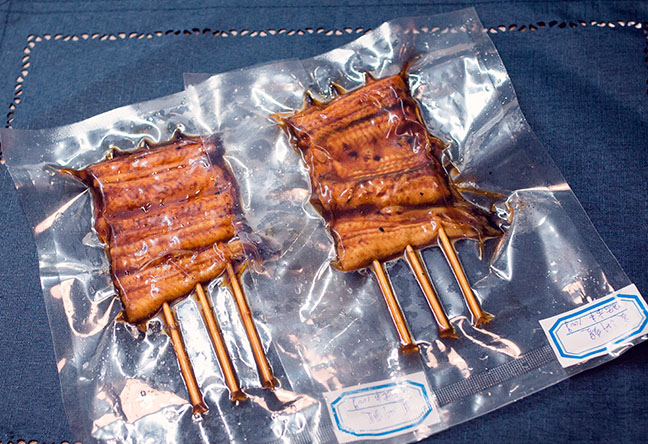
Troubleshooting a grainy sauce in a single kitchen is one thing; ensuring that thousands of liters of product maintain a perfect, glossy texture batch after batch is another. This is where industrial process control becomes essential. Our commercial-grade eel sauce is a key component used to glaze our products for leading restaurant chains in Japan and foodservice channels in Germany and Poland. Its consistency is non-negotiable.
Our production process is built on a foundation of traceability and precision. It starts at our ~20 customs-registered eel farming bases, ensuring high-quality raw materials. In our 8,497 m² facility, every step of the sauce-making process is monitored. We use precisely calibrated equipment to manage heating curves, reduction rates, and cooling gradients, eliminating the temperature shocks and inconsistencies that lead to crystallization. The final product's Brix (sugar content) and viscosity are verified in our professional eel lab to ensure it meets the exact specifications required by our clients.
This level of control, backed by our HACCP and ISO 22000:2018 certifications, means our partners receive an unagi tare that performs perfectly every time. It eliminates the labor costs, ingredient waste, and quality risks associated with in-house production, allowing chefs and food businesses to focus on creating their final dishes. As a trusted unagi kabayaki manufacturer and frozen eel supplier, we understand that the quality of the sauce is just as important as the quality of the eel itself.
For food importers and distributors seeking a reliable supply of consistently smooth, high-quality unagi tare, contact our export team to request a product specification sheet or a sample.