

Serve Grilled Eel Japanese Style Without Drowning the Glaze in Sauce
Why does a restaurant unagi don stay glossy and crisp at the edges through the whole meal, while a home version turns soggy by the third bite? The eel usually isn't the problem. It's the order you build the bowl in. Grilled eel japanese preparation is timing-dependent — rice heat, eel reheating, sauce application, and the final dusting of sansho all interact with each other. Get the sequence wrong and the skin loses its texture within minutes. Get it right and every bite still tastes like the fish, not just soy syrup poured over rice.
Why the Serving Order Changes the Taste of Grilled Eel Japanese Style
Rice at 65–70°C keeps releasing steam for a few minutes after plating. That steam is useful — it warms the eel from below — but it also softens whatever sits directly against it. If you lay a warmed, sauce-glazed eel fillet straight onto hot rice and let it sit, the skin absorbs moisture and turns limp within two or three minutes. That's the gap between the version grilled eel japanese chefs serve at a counter and the flat, syrupy bowl most home cooks end up with.
The fix isn't a better eel. It's controlling contact time and layer order so the skin stays exposed to air longer than it stays exposed to steam and sauce.
The Correct Serving Sequence: Rice, Warmed Eel, Tare, and Sansho
This is the part that actually changes the outcome. Follow it in this order, not by feel:
| Step | Action | Checkpoint | Common Failure |
|---|---|---|---|
| 1 | Plate hot rice, let it rest 20–30 seconds uncovered | Steam visibly thins before adding eel | Skipping the rest — traps too much moisture under the fillet |
| 2 | Place warmed eel skin-side up on the rice | Skin should feel slightly firm, not slick | Placing sauce-side down — glaze melts into rice instantly |
| 3 | Brush a thin layer of tare across the surface only | Rice underneath stays visible at the edges | Pouring sauce over the whole bowl — soaks the rice and the skin both |
| 4 | Dust sansho last, right before the bowl reaches the table | Sansho stays dry and fragrant, not clumped in sauce | Adding sansho early — its aroma fades and it turns bitter in liquid |
The reasoning behind step 3 matters more than it looks. Tare is built with sugar and soy reduced together — once it sits on hot rice for a few minutes, sugar starts pulling moisture from the grains underneath. A thin brushed layer avoids that; a full pour doesn't. If you want the mechanics of that sauce reduction, our kabayaki sauce breakdown covers how the four-layer coating is built during roasting, which is why the glaze already carries most of the flavor before it ever touches rice.
How to Reheat Frozen Unagi Kabayaki Without Losing Skin Texture
Most home cooks work from frozen unagi kabayaki, not fresh-grilled eel, so reheating technique decides half the final texture. A few practical steps:
- Thaw in the refrigerator overnight, not on the counter — uneven thawing breaks down the skin's collagen unevenly and it turns mushy in spots.
- Reheat covered in foil in a preheated oven rather than a microwave. Microwaving drives moisture out fast and toughens the flesh while leaving the skin rubbery.
- Add a light brush of tare halfway through reheating, not before — this re-glazes the surface without oversaturating it.
- Finish uncovered for the last minute if you want the skin edges slightly crisp; this step is optional and depends on your oven's top heat.
Skip step 3 if you're working with a pre-glazed product that already carries enough sauce from processing — over-applying tare twice is one of the most common reasons a reheated fillet tastes muddy instead of layered.
Choosing the Right Eel Sauce and Sansho Ratio
Not every bowl needs the same amount of tare or sansho. The right ratio depends on how the eel itself was processed:
| Eel Style | Recommended Tare Amount | Sansho Use |
|---|---|---|
| White-roasted eel (no sauce layer) | Full brush coat, applied at the table | Light dusting, optional |
| Kabayaki with 1–2 soy layers | Thin top-up brush only | Standard dusting before serving |
| Kabayaki with 3–4 soy layers | Skip additional tare or use a few drops | Sansho recommended to cut sweetness |
If your fillet already went through a deep four-layer soy coating during roasting, adding a full pour of eel sauce on top just doubles the sweetness and buries the fish. This is the ratio mistake we see most often when people try to replicate a restaurant bowl at home — more sauce isn't more flavor, it's less contrast. Sansho, a citrus-forward Japanese pepper related to the umami profile that makes eel work so well over rice, is there to cut through the sugar, not add sweetness of its own.
Common Mistakes That Turn a Restaurant-Style Eel Bowl Into a Soggy One
- Reheating eel and rice at the same time in one dish — the rice steam softens the skin before the eel is even warmed through.
- Pouring tare from the bottle instead of brushing it — this is the single biggest cause of a waterlogged bowl.
- Adding sansho too early — its aroma compounds are volatile and fade fast once exposed to steam or sauce.
- Cutting the eel before reheating — exposed flesh loses moisture unevenly and the pieces dry out at the cut edges.
- Skipping the rice rest step — plating eel on rice straight off the cooker traps excess steam under the fillet.
For a step-by-step breakdown of building the full bowl with toppings, our donburi topping guide walks through pairing options that don't compete with the tare.
Sourcing Consistent Frozen Unagi Kabayaki for Home or Foodservice Use
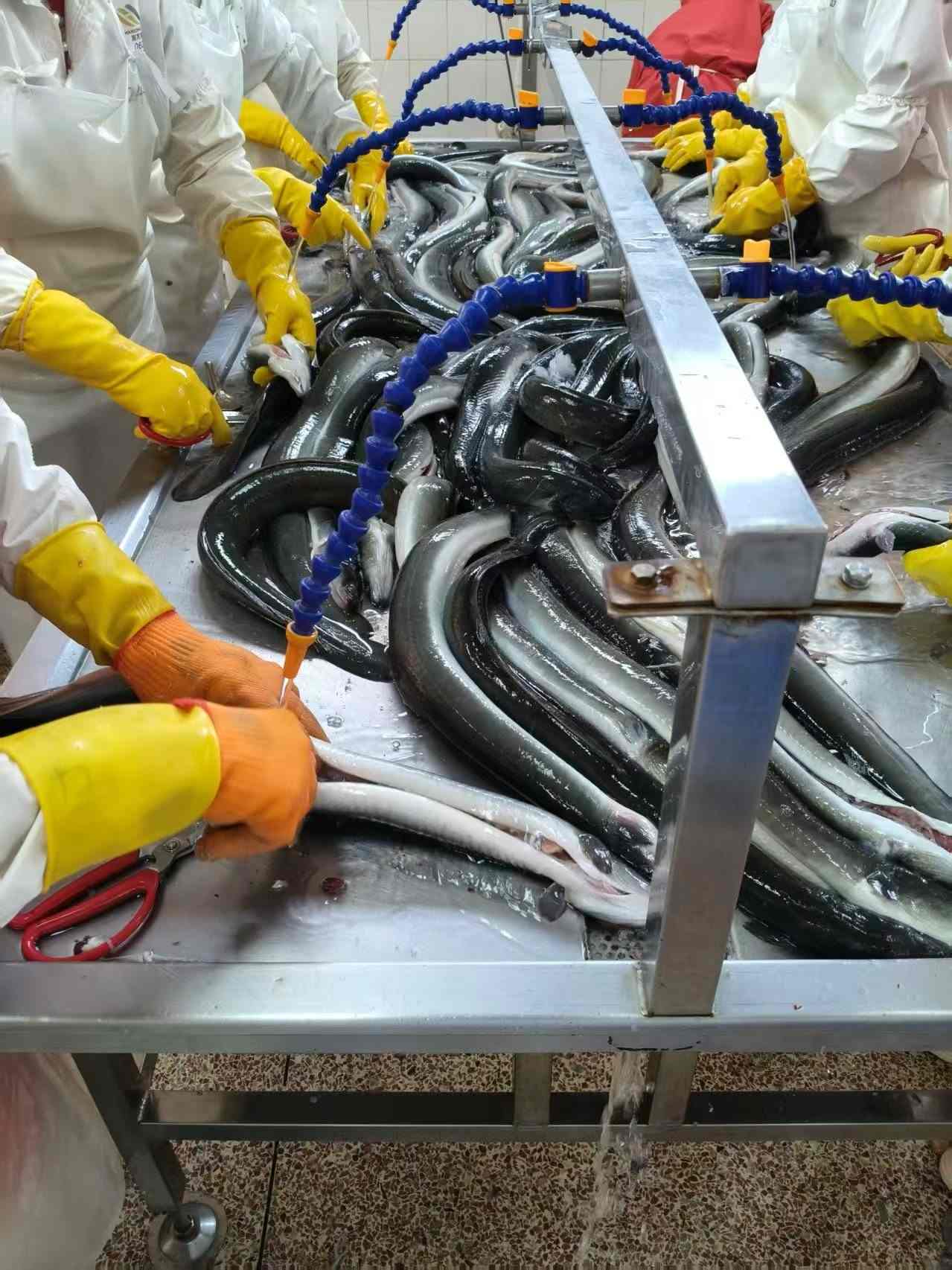
The serving sequence above only works if the eel itself holds up to reheating without falling apart. That depends on how it was processed before freezing. Eelpro operates under ISO 22000:2018 and HACCP certification, with HALAL certification and an SC food production license covering quick-frozen prepared aquatic products. Our roasting line applies a patented low-fat roasting and deodorizing process across four soy-sauce coating layers, which is part of why the skin holds texture through a second reheat instead of turning soft.
Nancy Chen, our Senior Food Safety & Quality Specialist with over 12 years in seafood export QA, notes that traceability is what most overseas buyers ask about first: "Every batch we ship can be traced back to one of our roughly 20 customs-registered farming bases, covering over 2,150 mu of aquaculture, through to the finished carton. That chain is what lets restaurant groups in Japan and food importers in the US and Germany keep their menus consistent across seasons." Our 1,000-ton cold storage facility and in-house laboratory support that consistency at scale, backed by 25 quality-control staff among more than 160 employees.
For buyers evaluating suppliers, a few checkpoints are worth confirming before placing an order:
- Does the roasting process specify soy-coating layers, or is it a single glaze pass?
- Is there a documented traceability path from farm registration to shipment?
- Does the cutting specification match your kitchen's format — skewers, cut pieces, or sushi slices?
- What's the standard order lead time, and is it negotiable for smaller trial orders?
Eelpro's regular delivery window runs about 30 days from order confirmation to shipment, adjustable depending on spec and volume. Details on farming and processing controls are outlined on our eel farming bases page and our in-house laboratory page, for buyers who want the full quality chain before committing to a purchase order.
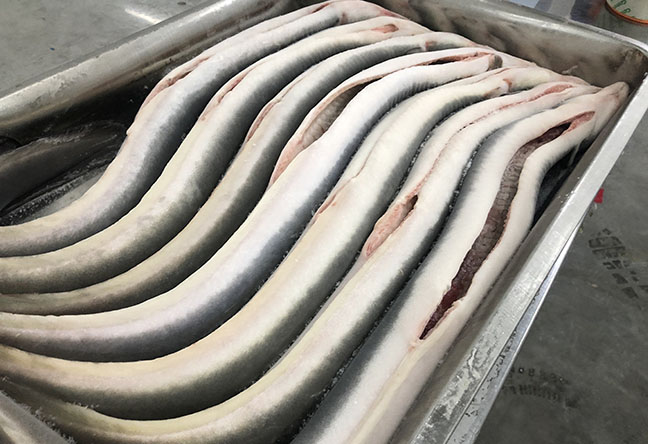
If you're building a menu around grilled eel japanese-style bowls, or sourcing frozen unagi kabayaki at volume, our team can send product specs and a sample for evaluation — just reach out with your cutting and packaging requirements.