





Applying Eel Unagi Sauce at the Right Time for a Perfect Glaze
You have a perfectly cooked fillet of eel, glistening and ready for its final touch. You brush on the rich, dark eel unagi sauce, but instead of a smooth, lacquer-like finish, you get a sticky, burnt mess. The sugars in the sauce scorch under the heat, or the glaze pools unevenly, ruining the texture and presentation. This common kitchen failure isn't about the quality of the eel or the sauce itself; it’s about timing.
Applying unagi tare at the right moment is the critical step that separates an amateur finish from a professional one. The composition of the sauce—a careful balance of soy sauce, mirin, sugar, and sake—is designed to caramelize. But that process, known as caramelization, happens in a narrow temperature window. Apply it too early, and it burns. Too late, and it fails to adhere. As a quality specialist who has overseen the production of thousands of tons of unagi kabayaki for export to Japan and the EU, I’ve seen how precise timing is essential for a consistent, high-quality product.
Why Glaze Timing is the Difference Between 'Finished' and 'Failed'
An eel unagi sauce is not just a topping; it's an active ingredient in the final stage of cooking. Its behavior is dictated by heat. Understanding what happens to the sauce at different temperatures is key to mastering its application.
When the sauce hits a hot surface, two things happen simultaneously:
- Water Evaporation: The sauce thickens as its water content boils off. This allows it to cling to the eel. If the heat is too low, the sauce remains too thin and drips off.
- Sugar Transformation: The sugars begin to break down and reform, creating the deep, savory-sweet flavors and rich brown color of a perfect glaze. However, if left on the heat for too long or at too high a temperature, these sugars will go past caramelization and into carbonization—they burn, creating bitter, acrid flavors.
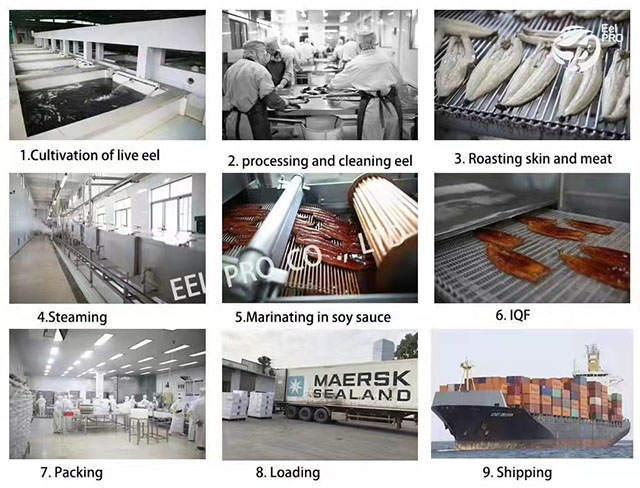
Our patented low-fat roasting process at Eelpro involves a precise, four-layer soy-sauce coating process. Each layer is applied at a specific temperature-controlled step, allowing it to set and build upon the last without scorching. This method ensures a deep, even color and flavor that you simply can't achieve by slathering on a thick coat at the end. It’s a technique that works for our 4,000-ton annual production capacity and can be adapted for any professional kitchen.
The Professional's Guide to Glazing: Grilling, Broiling, and Sushi Finishing
The ideal moment to apply your eel unagi sauce depends entirely on your cooking method. High, direct heat from a grill requires a different approach than the radiant heat of a broiler or the gentle touch needed for sushi. Applying the wrong technique to the method will lead to failure.
Here’s a breakdown of the correct timing and technique for the three most common applications.
| Method | When to Apply Sauce | Key Checkpoints | Common Mistakes & How to Avoid Them |
|---|---|---|---|
| Grilling (Kabayaki Style) | Apply in multiple thin layers during the final 3-4 minutes of cooking. The eel should be about 80% cooked before the first layer goes on. |
|
Mistake: Applying sauce at the beginning. The sugars will burn long before the eel is cooked. Fix: Cook the eel plain first, developing grill marks. Use the sauce only to finish. |
| Broiling (Oven/Salamander) | Apply a single, slightly thicker layer during the last 1-2 minutes under the broiler. The intense, direct heat works very quickly. |
|
Mistake: Placing the eel too close to the heating element. Fix: Position the rack 6-8 inches away from the heat source to give you more control over the caramelization process. |
| Sushi Finishing (Unagi Nigiri/Rolls) | Apply after the eel is fully cooked and slightly cooled. The sauce should be at room temperature or gently warmed. |
|
Mistake: Applying cold sauce to hot eel (or vice-versa). This can cause the sauce to become gummy or slide off. Fix: Ensure both components are at a similar, manageable temperature before brushing. For great eel sushi roll recipe ideas, consistency is key. |
Sauce Consistency and Temperature: The Unspoken Variables
Timing isn't the only factor. The physical properties of your eel unagi sauce play a huge role in the final result. A sauce that is too thick will clump and burn, while one that is too thin will run off, leaving the eel bare. For foodservice clients in Germany and Poland, consistency is a major purchasing factor; they need a product that behaves the same way every time.
Before you even think about brushing, check your sauce. Here is a pre-application checklist to ensure your glaze is ready for the heat.
Pre-Glazing Sauce Preparation Checklist:
- Viscosity Check: The sauce should have the consistency of warm honey. If it's too thick (especially when cold), gently warm it in a saucepan or microwave. Do not boil it, as this can scorch the sugars. If too thin, it can be reduced over low heat to thicken.
- Temperature Control: For grilling and broiling, using a room-temperature or slightly warm sauce is ideal. It spreads more easily and won't drastically cool the surface of the fish. For cold applications like sushi, ensure the sauce is at room temperature.
- Remove Lumps: If your sauce has been stored and developed sugar crystals, gently heat and whisk until smooth. Straining is also an option for a perfectly uniform texture.
- Use the Right Tool: A soft-bristled brush (silicone or natural) is best. It allows for a thin, even application without damaging the delicate surface of the cooked eel. Avoid pouring the sauce, which leads to pooling and uneven cooking.
At Eelpro, our eel sauce is produced under HACCP and ISO 22000:2018 certified systems to guarantee a standardized viscosity and sugar content. This removes the guesswork for our clients, from Japanese restaurant chains to US food importers, ensuring they get a perfect, repeatable glaze every time.
Sourcing Sauce for Consistent Commercial Results
For a busy kitchen, making unagi tare from scratch can introduce unacceptable variables. Batch-to-batch inconsistencies in cooking time, ingredient ratios, and reduction levels lead directly to the glazing problems we've discussed. A slightly higher sugar content can cause a batch to burn faster. A thinner consistency can ruin the presentation on hundreds of dishes.
This is why many high-volume foodservice operations and importers in Australia and Southeast Asia partner with a specialized unagi kabayaki manufacturer. A commercially produced eel unagi sauce offers reliability that is difficult to achieve in-house. Our process is monitored by 25 dedicated quality-control specialists and verified in our professional eel lab.
Here’s how a standardized sauce solves common operational headaches:
- Predictable Performance: With controlled sugar levels (Brix) and viscosity, the sauce caramelizes at a predictable rate. This allows chefs to standardize cooking times and temperatures across all shifts, reducing product loss from burning.
- Food Safety and Compliance: Our products are HALAL certified and meet stringent Japan, US, and EU food inspection standards for residues and microbiological indicators. This protects buyers from trade risks and ensures the product is safe for consumers.
- Operational Efficiency: Using a ready-made, high-quality sauce eliminates the labor and time spent on preparation and reduction. It allows kitchen staff to focus on the final assembly and presentation of dishes like the popular eel rice bowl toppings.
- Traceability: Sourcing from a certified supplier with full-chain traceability, like our system covering 20 customs-registered eel farming bases, provides an extra layer of quality assurance. You know exactly where your ingredients come from.
The secret to a perfect eel glaze isn't a complex recipe; it's control and consistency. By understanding the role of heat and timing, and by using a sauce engineered for performance, you can reliably produce beautifully glazed eel dishes that meet the highest standards.
For foodservice businesses seeking a reliable supply of high-quality frozen unagi kabayaki or a perfectly balanced eel unagi sauce, contact our team to request a product specification sheet or a sample.
 WhatsApp
 sales@chinaeels.com
 +8619937922411