

Eel Tempura: Crispy Japanese Recipe Guide
Eel tempura pairs tender freshwater eel with a thin, crisp coating. It can be served as a restaurant appetizer, used as a donburi topping, or added to a broader Japanese-style seafood menu. With a suitable eel product and careful frying, the crust stays light while the eel’s rich flavor still comes through.
This guide covers eel selection, batter preparation, oil-temperature control, and ways to keep finished tempura eel crisp through service. It also outlines two practical options: pre-cooked unagi kabayaki for fast preparation, or raw freshwater eel for a more made-to-order menu.

What Is Eel Tempura?
Eel tempura is eel coated in a light flour-based batter and fried until crisp on the outside. The center should stay moist, tender, and flavorful. Unlike unagi kabayaki, which is grilled or broiled with a sweet soy-based glaze, tempura eel is generally served with a separate dipping sauce.
There are two common ways to prepare it:
- Pre-cooked kabayaki: Thawed unagi fillets are cut into portions, dried lightly, coated, and fried briefly. This option works well for restaurants that need consistent portions and quick ticket times.
- Raw freshwater eel: Cleaned eel is cut into smaller pieces and cooked through during frying or after a short pre-cooking step. This method requires more kitchen labor and close food-safety control.
Freshwater eel is not typically eaten raw. Foodservice operators should follow local regulations and verify that the center of the product reaches a safe cooking temperature. As a practical reference, the U.S. Food and Drug Administration lists 145°F (63°C) as the minimum internal temperature for fish.
Choosing Eel for a Crispy Eel Recipe
Pre-cooked unagi kabayaki for fast service
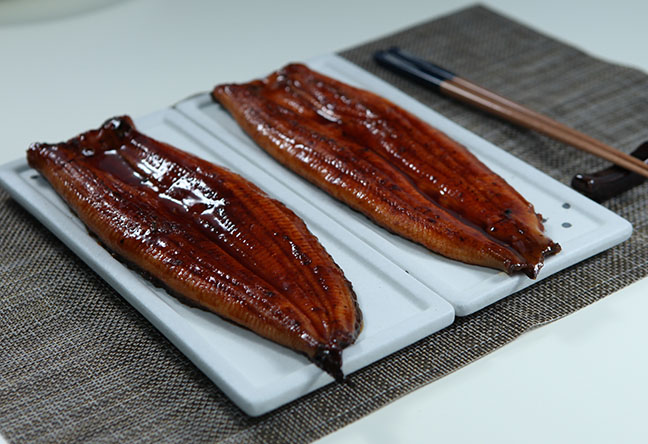
For most restaurants, pre-cooked frozen unagi kabayaki is the more straightforward choice. The eel has already been cleaned, portioned, cooked, and usually glazed. Once thawed under controlled conditions, the fillet can be trimmed, lightly wiped, and cut into frying portions.
Look for fillets with even thickness and a firm surface. Moisture is the biggest obstacle to a crisp coating. Set thawed eel on a rack or paper towel, then pat it dry before battering. If the fillet carries a heavy glaze, wipe off the excess rather than rinsing it away. A little kabayaki flavor complements tempura well, but too much sauce can darken the batter and cause splattering.
For larger menus, review Eelpro’s unagi kabayaki product specifications for portion planning, packing, and export purchasing.
Raw eel for a made-to-order menu
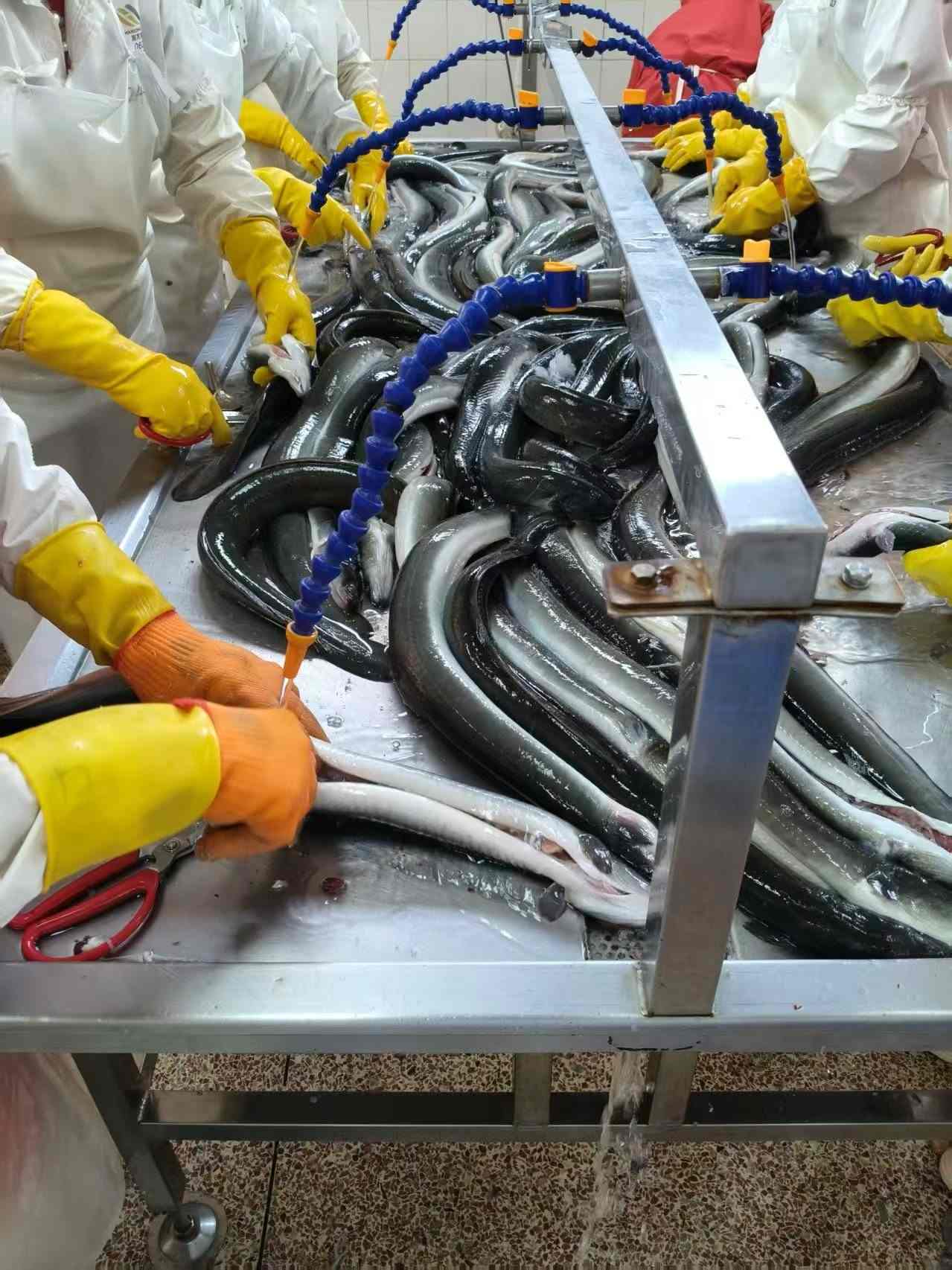
Raw freshwater eel is an option for kitchens with the equipment and trained staff needed to clean and portion it properly. Remove the skin and bones according to your standard operating procedure, then cut the flesh into strips about 2 to 3 cm wide. Smaller pieces cook more evenly and are easier to plate.
Keep raw eel chilled until it is ready to cook. Prepared fish should not sit at room temperature while the kitchen waits for orders. For international foodservice buyers, frozen freshwater eel can be a practical format when the menu calls for a raw product instead of a ready-cooked fillet.
How to Make Eel Tempura
Ingredients for four servings
- 400 g cooked unagi kabayaki, or prepared raw eel
- 100 g plain flour
- 25 g cornstarch or potato starch
- 1 cold egg
- 180 to 200 ml ice-cold water
- Neutral frying oil, such as canola, rice bran, or peanut oil
- Plain flour for a light dusting
- Tempura dipping sauce, grated daikon, and sliced scallion for serving
Keep the ingredients cold until it is time to mix. When cold batter hits hot oil, it forms a lighter crust than a warm, fully blended batter. The exact amount of water may vary because flour absorbs moisture differently. The goal is a loose batter with a few small lumps, not a smooth pancake-style mixture.
Batter preparation
- Whisk the egg with the ice-cold water in a chilled bowl.
- Add the plain flour and starch.
- Stir with chopsticks or a fork for only 8 to 10 strokes. Stop while small lumps remain.
- Make the batter just before frying. If it sits too long, the coating may become heavy.
The starch creates a drier, more delicate crust. Do not overmix the batter, as gluten development can make the coating chewy. If it thickens after a brief rest, add cold water one tablespoon at a time.
Frying temperature and method
- Heat the oil to 175°C. Use a thermometer instead of relying on appearance alone.
- Cut cooked eel into pieces about 5 to 7 cm long. For raw eel, use thinner pieces so the center cooks before the coating becomes too dark.
- Dust each portion lightly with flour, then shake off any excess.
- Dip the eel in batter and allow excess batter to drip back into the bowl.
- Lower each piece gently into the oil. Do not overcrowd the fryer or pot.
- Fry pre-cooked eel for about 1 to 2 minutes, turning once. Raw eel may need longer, depending on thickness and fryer load.
- Remove the pieces when the coating is pale golden and crisp. Drain on a wire rack rather than directly on a flat layer of paper towels.
The oil temperature drops as food enters the fryer. If it falls below about 165°C, the batter can absorb excess oil and lose its delicate texture. Above 185°C, the outside may brown before the eel is heated through. Fry in small batches, and let the oil return to about 175°C before adding the next batch.
How to Keep Eel Tempura Crispy
The best unagi tempura is served right away, though busy restaurants may need to hold it briefly. These steps help preserve the crust:
- Dry the eel first: Surface moisture creates steam and weakens the batter.
- Use a wire rack: Air circulates beneath the fried pieces, while a solid tray traps steam.
- Do not cover hot tempura: Lids and foil create condensation on the crust.
- Keep sauce separate: Dipping sauce softens the eel quickly when poured over it. Serve it in a small dish.
- Hold briefly: If necessary, use a warm, dry oven around 90 to 100°C for a short period. Extended holding will gradually dry out both the eel and coating.
- Re-crisp carefully: An air fryer or convection oven can bring back some texture. Avoid microwaving, which softens the coating.
These details are especially important for delivery menus. Pack the sauce separately, use a vented food box, and avoid stacking too many pieces together. With tempura, packaging matters almost as much as frying.
Serving Ideas for Japanese Eel Dishes
Serve eel tempura with tentsuyu-style dipping sauce, grated daikon, and grated ginger. The clean, savory sauce balances the eel’s richness without adding another heavy glaze. A shiso leaf, lemon wedge, or sliced scallion adds a fresh finish.
For a restaurant menu, consider these formats:
- Tempura moriawase: Pair eel with shrimp, sweet potato, eggplant, or shiso.
- Eel tempura don: Place fried eel over steamed rice and add sauce at the table.
- Roll or hand roll: Use a narrow strip of crisp eel with cucumber and nori.
- Appetizer plate: Serve two or three pieces with daikon and a small dipping bowl.
- Noodle topping: Add one piece to udon or soba just before serving. For another eel menu concept, see these eel recipes.
Some operators also offer a small amount of sweet soy sauce alongside the dipping sauce. If you need a ready-to-use option, review our eel sauce product. For menu development, our guide to kabayaki sauce explains how the glaze is used with grilled eel and related dishes.
Foodservice and Export Considerations
For international buyers, the product format affects both kitchen labor and menu consistency. Frozen cooked kabayaki can shorten preparation time, while raw freshwater eel gives chefs greater control over the final cooking method. Ask suppliers about fillet size, glazing level, freezing method, case pack, storage temperature, and documentation required for the destination market.
Portion control matters, too. A restaurant may prefer 80 to 100 g fillets for rice bowls, while an appetizer menu may call for 30 to 50 g strips. Standardized cuts help control food cost and reduce waste. When testing a new supplier, fry samples from more than one carton and compare thawing loss, batter adhesion, and finished texture.
Eelpro Co., LTD supplies frozen unagi kabayaki, eel sauce, frozen seafood, and freshwater eels for overseas foodservice and distribution customers. Contact us with your target market, pack size, and expected order volume so we can discuss a suitable product format.
FAQ About Eel Tempura
How to make eel tempura without a heavy coating?
Pat the eel dry, dust it lightly with flour, and use a cold batter mixed only until small lumps remain. Keep the oil near 175°C and fry in small batches. Batter that is smooth, warm, or overmixed usually creates a thicker crust.
What is eel tempura?
Eel tempura is freshwater eel coated in a light flour-and-egg batter and fried in hot oil. It differs from unagi kabayaki, which is usually grilled and brushed with a sweet soy-based sauce. Eel tempura is commonly served with dipping sauce, daikon, and other Japanese-style garnishes.
How to keep eel tempura crispy after frying?
Drain the pieces on a wire rack, keep sauce separate, and avoid covering the hot tempura. For short holding, use a warm, dry oven rather than a sealed container. Vented packaging is the better choice for takeaway and delivery orders.
Can pre-cooked kabayaki be used for unagi tempura?
Yes. Thaw the kabayaki safely, remove excess glaze, pat the fillet dry, and cut it into portions. Since the eel is already cooked, a short fry is enough to set and crisp the batter. Check the product label and follow your local food-safety procedures before service.
Final Thoughts
A good eel tempura recipe starts with dry eel, a lightly mixed cold batter, and stable oil temperature. Pre-cooked kabayaki provides speed and portion consistency, while raw freshwater eel suits kitchens seeking a more customized preparation. If you are sourcing eel for a restaurant, distributor, or foodservice program, contact Eelpro Co., LTD for frozen unagi kabayaki, eel sauce, freshwater eels, and other frozen seafood products.
[xss_clean] { "@context": "https://schema.org", "@type": "FAQPage", "mainEntity": [ { "@type": "Question", "name": "How to make eel tempura without a heavy coating?", "acceptedAnswer": { "@type": "Answer", "text": "Pat the eel dry, dust it lightly with flour, and use a cold batter mixed only until small lumps remain. Keep the oil near 175°C and fry in small batches." } }, { "@type": "Question", "name": "What is eel tempura?", "acceptedAnswer": { "@type": "Answer", "text": "Eel tempura is freshwater eel coated in a light flour-and-egg batter and fried in hot oil. It is commonly served with dipping sauce, grated daikon, and Japanese-style garnishes." } }, { "@type": "Question", "name": "How to keep eel tempura crispy after frying?", "acceptedAnswer": { "@type": "Answer", "text": "Drain the fried eel on a wire rack, keep sauce separate, and avoid covering it while hot. For short holding, use a warm, dry oven and vented packaging." } }, { "@type": "Question", "name": "Can pre-cooked kabayaki be used for unagi tempura?", "acceptedAnswer": { "@type": "Answer", "text": "Yes. Thaw the kabayaki safely, remove excess glaze, pat the fillet dry, cut it into portions, and fry briefly to set and crisp the batter." } } ] } [xss_clean]