

Eel Tempura vs Shrimp Tempura: Taste and Texture
Eel tempura is a richer, softer alternative to the familiar shrimp version. Both have a place on Japanese-style menus, yet they perform differently in the fryer and eat very differently on the plate. Shrimp is clean-tasting, firm, and lightly sweet. Eel has a deeper savory character, a tender bite, and enough natural richness to pair well with bolder dipping sauces.
For restaurants, caterers, and seafood buyers, the decision goes beyond personal taste. Portion formats, prep time, sauce pairings, frozen storage, and menu positioning all play a part. This guide compares eel tempura and shrimp tempura to help foodservice operators decide where each product fits.

Flavor: Rich Eel or Clean Shrimp?
What does eel tempura taste like?
What does eel tempura taste like? It has a mild yet distinctive fish flavor with a rich, slightly sweet finish. The flavor is fuller than shrimp, particularly in eel with a moderate amount of natural fat. Tempura batter contributes a light fried note, while the center remains savory and tender.
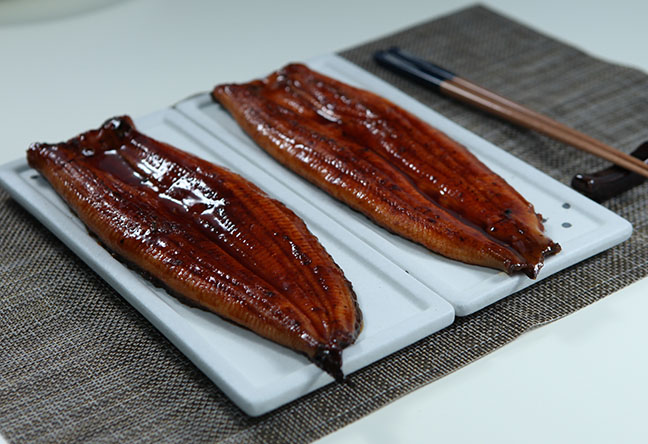
The finished flavor also depends on the eel format. Plain freshwater eel has a clean, delicate taste when prepared properly. Eel that has been grilled with kabayaki seasoning brings a more pronounced soy-based sweetness. This makes it a natural fit for menus featuring eel sauce or other Japanese tare sauces.
Shrimp tempura is more familiar to a wide range of customers. Its flavor is lightly sweet, subtly briny, and clean. The crisp coating and firm shrimp create an easy-to-recognize contrast, which is one reason shrimp tempura is common in tendon, tempura udon, sushi combinations, and assorted tempura platters.
Eel tends to work best when the dish lets its flavor come through. A simple plate with grated daikon, tentsuyu, or a light brush of eel sauce can highlight the difference. Heavy seasoning can easily overpower the eel.
Texture: Tender Eel Compared with Firm Shrimp
Texture is the most obvious difference between these two ingredients. Shrimp has a springy, firm bite. When fresh, or correctly frozen and thawed, the flesh stays compact after frying. The batter cracks first, followed by the brief resistance of the shrimp.
Eel is softer. Properly cooked eel has fine muscle fibers and a tender, almost melting texture. Its skin can turn pleasantly crisp in hot oil while the interior stays moist. This contrast is behind what some menus call crispy eel: a delicate fried shell around rich, soft flesh.
That softness is especially appealing in rice bowls and small plates, but it calls for gentler handling. Cut eel into portions that can be lifted without falling apart. If a pre-cooked eel portion is too wet, the batter can slide off or turn heavy. Patting the surface dry before coating helps it adhere evenly.
Frozen shrimp and eel also react differently during thawing. Shrimp should be thawed under controlled refrigeration and drained thoroughly. Eel, especially pre-cooked portions, needs the same care but should not be pressed aggressively, as pressure can damage the delicate flesh.
Preparation Differences in a Professional Kitchen
Preparing eel for tempura
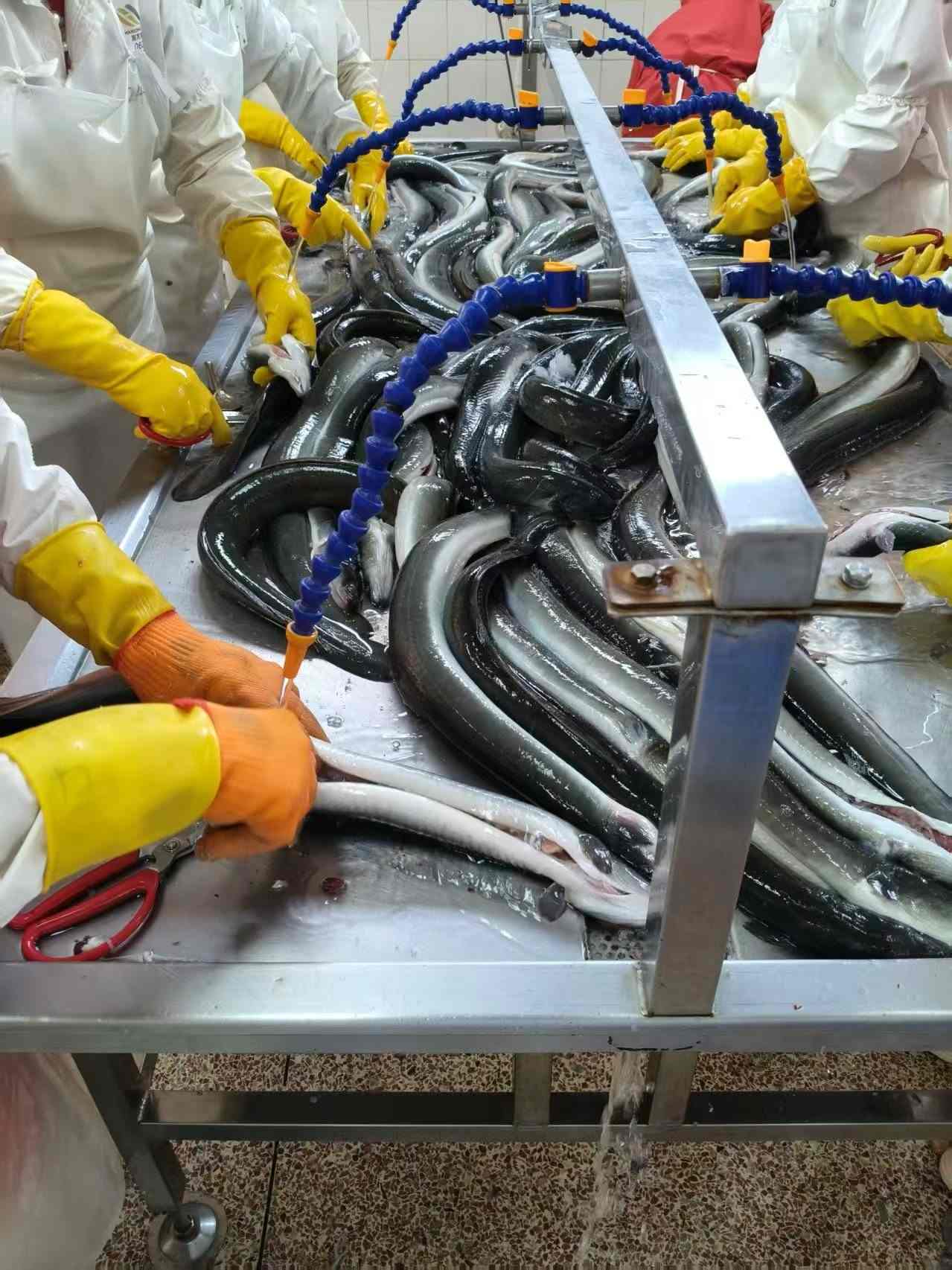
There are two common approaches to Japanese eel tempura. A kitchen can use raw, cleaned eel or pre-cooked eel such as unagi kabayaki. Raw eel requires proper trimming and thorough cooking. Freshwater eel should never be served undercooked.
Pre-cooked eel can make portion control easier. A foodservice team can thaw the product, remove excess surface moisture, cut it into strips or pieces, coat it, and fry until the batter is crisp and the center is hot. With frozen unagi kabayaki, the existing grilled flavor gives the finished dish a sweet-savory profile.
Since cooked eel is already tender, it often needs less frying time than raw seafood. The aim is to crisp and lightly brown the coating without drying the center. Oil at around 170–180°C is commonly used for tempura, although the ideal setting depends on batter thickness, piece size, and fryer recovery.
Preparing shrimp for tempura
Shrimp preparation typically includes peeling, deveining, rinsing, and drying. Some kitchens make small cuts along the underside or lightly score the shrimp to limit curling. A straight shrimp creates a more uniform presentation for tendon, bento, and assorted tempura plates.
Shrimp needs sufficient frying time for the center to turn opaque and firm. When oil is too cool, the batter absorbs excess oil. When it is too hot, the coating can darken before the shrimp is fully cooked. Using shrimp of a consistent size helps maintain reliable results from one batch to the next.
For either ingredient, thin batter is generally better than a thick dough. Cold water and minimal mixing help produce the light, irregular texture associated with good tempura. Make batter in manageable batches rather than allowing it to sit for extended periods.
How Eel Tempura Compares with Shrimp Tempura on a Menu
Menu identity and customer expectations
How does eel tempura compare with shrimp tempura? Shrimp is the familiar, lower-risk choice for a general tempura menu. Eel is more distinctive and can give a restaurant a specialty item tied to unagi dining without simply repeating a grilled eel bowl.
A restaurant can present eel as a premium small plate, a rice topping, or part of a mixed tempura seafood platter. It also suits sushi restaurants looking to serve eel in a format beyond nigiri or traditional kabayaki. A concise description helps set expectations, such as: “fried freshwater eel with light tempura batter and tentsuyu.”
Shrimp works well in high-volume dishes because customers know what to expect and it pairs with a broad range of ingredients. Eel is a strong option when an operator wants a richer item with a more distinct Japanese identity. Both can appear on the same menu. A plate with shrimp, eel, vegetables, and white fish allows guests to compare several textures in one order.
Sauce and garnish pairings
Classic tentsuyu, grated daikon, ginger, and green onion complement both eel and shrimp. Eel can also take a light brush of kabayaki sauce after frying. Use it sparingly: too much sauce softens the crust and can make the dish overly sweet.
For a closer look at the role of tare in eel dishes, see our article on kabayaki sauce. A lighter dipping sauce may be the better choice when the eel has already been seasoned before frying.
Over rice, fried eel pairs well with shredded nori, scallions, pickled ginger, or a soft-boiled egg. In noodle dishes, smaller pieces add richness without requiring a full fillet portion. Our eel recipes offer another way to consider eel for soup and noodle service.
Which Product Format Fits Your Operation?
For buyers, the right format depends on labor, equipment, and menu volume. Raw freshwater eel gives a kitchen more control over seasoning and cooking, but it requires additional preparation and skilled handling. Pre-cooked frozen eel reduces those steps and supports more predictable portioning.
When assessing frozen eel for frying, check the cut size, glaze, seasoning level, packaging, and thawing instructions. A thick sauce coating may need to be removed or reduced before battering. A lightly seasoned product gives the kitchen more flexibility to use tentsuyu, eel sauce, or a house-made dip.
Frozen shrimp has its own advantages, including familiar sizing grades and broad menu versatility. Buyers should compare cleaned yield, count per pound or kilogram, shell-on versus peeled formats, and ice-glaze levels. These details often affect food cost more than the purchase price alone.
Eel and shrimp should share a fryer only when allergen controls, oil management, and kitchen procedures permit it. Shrimp is a crustacean allergen in many regulatory systems. Operators should label dishes clearly and prevent cross-contact in line with local food-safety requirements.
Is Eel Tempura Popular in Japanese Cuisine?
Is eel tempura popular in Japanese cuisine? Shrimp and vegetable tempura are more widely recognized as standard Japanese tempura choices. Eel tempura is less universal, though it appears as a regional, seasonal, or restaurant-specific preparation. Eel is more closely associated with dishes such as unagi kabayaki, unadon, sushi, and eel rolls.
That difference can work in a foodservice menu's favor. A shrimp tempura item satisfies a familiar expectation. An unagi tempura item gives returning customers something less routine. It can be particularly effective for Japanese restaurants, fusion menus, izakaya-style small plates, and seafood counters looking for a differentiated offering.
When introducing unagi tempura, start with a clear portion and a simple serving format. A two- or three-piece appetizer, rice bowl topping, or mixed seafood plate is easier for customers to try than a large standalone portion. Track sales, sauce preferences, and repeat orders before expanding the range.
Frequently Asked Questions
What does eel tempura taste like?
Eel tempura tastes savory, mildly sweet, and richer than shrimp tempura. The outside is light and crisp, while the eel inside is soft and tender. Pre-cooked kabayaki eel adds a soy-based sweetness that pairs well with tentsuyu or a small amount of eel sauce.
How does eel tempura compare with shrimp tempura?
Eel tempura has a softer texture and deeper flavor. Shrimp tempura has a firmer, springier bite and a cleaner seafood taste. Shrimp is usually more familiar to customers, while eel creates a more distinctive menu item. Both can be served with tentsuyu, grated daikon, and green onion.
Is eel tempura popular in Japanese cuisine?
Eel tempura is known in Japanese-style cooking but is less common nationwide than shrimp or vegetable tempura. Eel is more often served as kabayaki, unadon, sushi, or in rolls. Restaurants may use eel tempura as a specialty dish or a modern variation on familiar unagi service.
Can pre-cooked unagi be used for tempura?
Yes. Pre-cooked unagi can be thawed safely under refrigeration, dried on the surface, portioned, battered, and fried until the coating is crisp and the center is hot. Because the eel is already cooked, avoid extended frying that could dry the flesh or darken the batter.
Conclusion
Eel tempura and shrimp tempura fill different roles on a menu. Shrimp offers a clean flavor and firm bite that customers already know. Eel delivers a tender texture, richer taste, and a distinctive Japanese-style menu story. For dependable portioning and shorter prep, pre-cooked frozen unagi can be a practical place to start.
Eelpro Co., LTD supplies frozen unagi kabayaki, eel sauce, freshwater eels, and frozen seafood for overseas foodservice buyers. Contact us to discuss product specifications, portion formats, and the right eel option for your menu.
[xss_clean] { "@context": "https://schema.org", "@type": "FAQPage", "mainEntity": [ { "@type": "Question", "name": "What does eel tempura taste like?", "acceptedAnswer": { "@type": "Answer", "text": "Eel tempura tastes savory, mildly sweet, and richer than shrimp tempura. The outside is light and crisp, while the eel inside is soft and tender. Pre-cooked kabayaki eel adds a soy-based sweetness that pairs well with tentsuyu or a small amount of eel sauce." } }, { "@type": "Question", "name": "How does eel tempura compare with shrimp tempura?", "acceptedAnswer": { "@type": "Answer", "text": "Eel tempura has a softer texture and deeper flavor. Shrimp tempura has a firmer, springier bite and a cleaner seafood taste. Shrimp is usually more familiar to customers, while eel creates a more distinctive menu item." } }, { "@type": "Question", "name": "Is eel tempura popular in Japanese cuisine?", "acceptedAnswer": { "@type": "Answer", "text": "Eel tempura is known in Japanese-style cooking but is less common nationwide than shrimp or vegetable tempura. Eel is more often served as kabayaki, unadon, sushi, or in rolls. Restaurants may use eel tempura as a specialty dish." } }, { "@type": "Question", "name": "Can pre-cooked unagi be used for tempura?", "acceptedAnswer": { "@type": "Answer", "text": "Yes. Pre-cooked unagi can be thawed safely under refrigeration, dried on the surface, portioned, battered, and fried until the coating is crisp and the center is hot. Avoid extended frying that could dry the flesh or darken the batter." } } ] } [xss_clean]