


How is eel sauce made to get its signature gloss and texture?
Many people assume the rich, glossy texture of eel sauce comes from a special thickener or additive. The truth is simpler and more scientific. That perfect, spoon-coating consistency is achieved through a precise process of thermal reduction. So, how is eel sauce made at a commercial scale? It involves carefully concentrating sugars, soy sauce solids, and flavor compounds by simmering away water content until a specific viscosity and density are reached. It’s a balance of chemistry and culinary art.
As a quality specialist with over a decade in seafood export, I've seen firsthand how a poorly controlled process results in a sauce that is either too thin to coat the eel or so thick it burns during grilling. At Eelpro, we've refined this process to guarantee consistency for our global clients, from restaurant chains in Japan to food importers in the United States. Understanding the science behind this reduction is key for any buyer evaluating a supplier.

The Science of Reduction: Creating Gloss and Viscosity
The transformation from a thin liquid mixture to a thick, glossy glaze is governed by three key physical changes during the simmering process. Each step must be precisely controlled, as a deviation in one area compromises the final product. Getting this right is fundamental to producing a high-quality eel sauce that performs consistently in a professional kitchen.
Here is a breakdown of what happens during reduction and the risks associated with improper control:
| Parameter | Technical Process & Purpose | Impact on Final Texture & Flavor | Risk of Poor Control |
|---|---|---|---|
| Water Evaporation | The primary goal of simmering is to evaporate water. This concentrates all other components—sugar, salt, and soy solids—without adding external thickeners. The volume of the liquid decreases, naturally increasing its density. | Directly increases viscosity (thickness). A higher concentration of solids means a thicker sauce that clings to food instead of running off. Flavor becomes more intense and less diluted. | Too little evaporation: Results in a watery, thin sauce that fails to coat eel properly, leading to a bland and visually unappealing final product. Too much evaporation: Creates an overly thick, tar-like consistency that is difficult to work with and may burn easily. |
| Sugar Concentration & Caramelization | As water evaporates, the concentration of sugars (from mirin, sake, and added sugar) rises significantly. At high temperatures, these sugars begin to caramelize, a non-enzymatic browning reaction that creates complex flavors and a darker color. | Caramelization adds notes of nuttiness and depth, balancing the saltiness of the soy sauce. The concentrated sugar molecules create a syrup-like structure, which is responsible for the sauce's signature gloss and sticky, mouth-coating feel. | Under-heating: Sugars do not caramelize, leaving a one-dimensionally sweet and salty taste. The sauce will lack a deep, rich color and glossy sheen. Overheating: Sugars burn, introducing a bitter, acrid taste that ruins the entire batch. The sauce becomes too dark and loses its appealing amber-brown hue. |
| Soy Solids & Protein Interaction | Soy sauce contains not just salt and water but also proteins and other dissolved solids from the fermentation process. As the sauce reduces, these proteins and solids become more concentrated. | These compounds contribute to the sauce's body and "umami" flavor. They help create a stable emulsion, preventing the sauce from feeling gritty and ensuring a smooth, velvety texture that coats the palate. | Using low-quality soy sauce: Insufficient protein and solids content will result in a sauce that lacks body, even after proper reduction. The flavor profile will be flat and overly salty, missing the foundational umami depth. |
From Kitchen Recipe to Commercial Production: A Buyer's Checklist
While a home cook might make a small batch of eel sauce on a stovetop, scaling production to 4,000 tons annually requires an entirely different level of process control. For B2B buyers, understanding a supplier's production methodology is critical for ensuring product consistency, safety, and compliance. A commercial kitchen relies on sauce that tastes and performs the same way every single time.
At Eelpro, our production lines are designed for this exact purpose, bridging the gap between artisanal flavor and industrial-scale reliability. Here is a checklist for buyers to evaluate potential suppliers of unagi tare.
Decision Checklist for Sourcing Commercial Eel Sauce:
- Does the supplier have certified food safety systems? Look for certifications like ISO 22000:2018 and HACCP. These are not just paperwork; they represent a systematic approach to preventing hazards. Our facility operates under these systems, ensuring every batch meets international safety standards.
- What are their quality control parameters? Ask about specific checkpoints. We monitor Brix (sugar content), viscosity, color, and microbial counts in our professional in-house laboratory. This data-driven approach replaces subjective guesswork with verifiable quality.
- Can they handle your volume and logistics needs? A supplier's capacity determines their ability to fulfill large orders without sacrificing quality. With a 4,000-ton annual capacity and a 1,000-ton cold storage facility, we manage stable supply chains for clients in Europe, Asia, and North America.
- What is the source of their core ingredients? The quality of the soy sauce, mirin, and sake directly impacts the final product. We use select ingredients that meet our strict specifications for flavor, color, and solids content.
- Do they offer traceability? In case of any issues, can the supplier trace a batch back to its specific production date and ingredient lots? Our full-chain traceability system provides this security for all our products, including our frozen seafood.
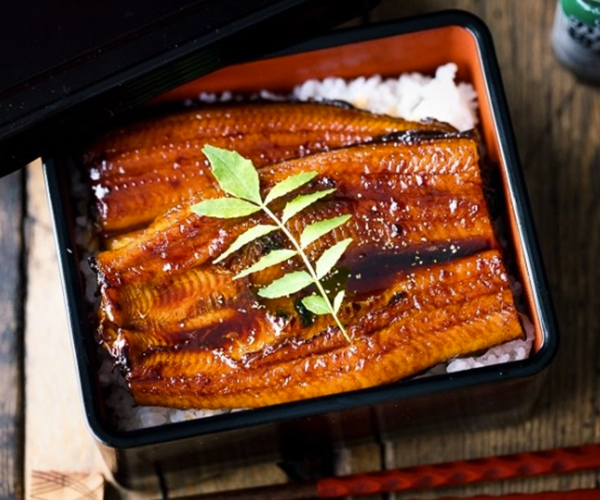
The Four-Layer Glaze: How Sauce Quality Impacts Unagi Kabayaki
The eel sauce is not just a condiment; it's an integral part of the final unagi kabayaki product. The entire roasting process is designed around how the eel and the sauce interact under intense heat. A sauce with the wrong viscosity or sugar content will fail at this critical stage, impacting everything from appearance to shelf life.
Our export-grade roasting process involves four distinct layers of sauce application, each with a specific purpose:
- The First Coating (Base Layer): After the initial "white-roasting" step, the first layer of sauce is applied. It seeps into the hot eel meat, providing the foundational savory and sweet flavor. A sauce that is too thick will not penetrate properly.
- The Second & Third Coatings (Building Layers): These layers are applied during subsequent grilling stages. The heat caramelizes the sugars in the sauce, building up a beautiful color and complex flavor. Our patented low-fat roasting and deodorizing technology ensures the eel cooks evenly without becoming greasy, allowing the sauce to adhere perfectly.
- The Fourth Coating (Finishing Glaze): The final layer is applied to give the product its signature glossy finish. This requires a sauce with the perfect viscosity to create a smooth, even coating that shines under retail or restaurant lighting. It’s this visual appeal that often makes the first impression on the consumer.
This meticulous process is why we established internal standards for "1st-through-4th soy-sauce coating color." By controlling the quality of our sauce, we control the quality and consistency of our finished frozen roasted eel, helping our clients in markets like Germany and Australia serve a reliable and premium product.
Common Sourcing Mistakes and How to Avoid Them
As a quality assurance manager, I often consult with new buyers who have faced issues with previous suppliers. Many problems can be traced back to overlooking key details about the sauce manufacturing process. Avoiding these common mistakes can save you from inconsistent product quality and potential trade risks.
Top 3 Mistakes When Sourcing Eel Sauce and Unagi:
- Mistake #1: Focusing Only on Price. A cheaper sauce often uses lower-grade soy sauce, artificial thickeners, or has an imbalanced sugar-to-salt ratio. This can lead to a product that burns easily, has an unpleasant chemical aftertaste, or lacks the authentic umami depth. Solution: Always request a sample for sensory evaluation and ask for an ingredient specification sheet.
- Mistake #2: Ignoring Production Certifications. Sourcing from a non-certified facility exposes you to risks of contamination and non-compliance with import regulations, especially for strict markets like the EU and Japan. Veterinary drug residues or microbiological indicators can lead to costly shipment rejections. Solution: Verify that the supplier holds current ISO 22000, HACCP, and relevant export registrations. We provide our certification documents to all potential partners for full transparency.
- Mistake #3: Overlooking Packaging and Logistics. The best sauce is useless if it arrives damaged or thawed. Poor packaging or an unreliable cold chain can compromise product safety and quality. Solution: Inquire about the supplier's packaging formats (e.g., bulk pails, retail bottles) and their cold-chain logistics capabilities. Our 1,000-ton cold storage and established shipping relationships ensure product integrity from our door to yours.
Understanding how eel sauce is made is the first step to sourcing a superior product. It's a process where science, technology, and culinary tradition meet. By focusing on the details of reduction and the rigors of quality control, you can ensure the product you import will perform beautifully, whether in a high-end restaurant or on a retail shelf.
For detailed specifications on our frozen unagi kabayaki and commercial-grade eel sauce, please contact our team to request a product sheet.