

How to Construct the Perfect Unagi-Don That Stays Firm and Flavorful
There is nothing more disappointing than a perfectly grilled eel fillet ruined by the foundation it sits on. You source high-quality unagi, but when it meets the rice, the entire dish collapses into a soggy, overly sweet bowl. The rice loses its individual grains, the sauce pools at the bottom, and the texture becomes uniformly mushy. This is a common failure point in kitchens that can compromise an otherwise premium dish. The secret to a perfect unagi-don isn't just in the eel; it's in the construction.
As a quality specialist who has helped foodservice clients in Japan, the US, and across the EU meet exacting standards, I’ve seen how small details in assembly make a significant difference. The interaction between hot rice, savory-sweet eel sauce, and the rich, fatty unagi is a delicate balance. Get it wrong, and you lose texture and definition. Get it right, and you create a dish that justifies its price point. This guide outlines the precise, actionable steps to ensure every unagi rice bowl you serve has distinct, fluffy rice that complements, rather than succumbs to, the eel and sauce.
The Foundation: Selecting and Preparing Rice for Unagi-Don
The base of any great eel bowl is the rice. Using the wrong type or preparing it incorrectly is the first step toward a failed dish. The goal is to produce steamed rice that is sticky enough to clump together slightly but firm enough that each grain remains distinct even after being sauced.
For commercial applications, Japanese short-grain rice like koshihikari or akita komachi is the standard. These varieties have a high moisture content and the right balance of starches (amylose and amylopectin) to achieve the desired "mochi-mochi" (chewy and bouncy) texture. If sourcing these specific varieties is difficult, look for any high-quality short or medium-grain rice labeled for sushi. Avoid long-grain rice like jasmine or basmati; their low starch content and dry, separate texture are unsuitable for this dish.
Here is a checklist for ensuring your rice preparation is optimized for a professional unagi-don presentation.
Buyer's & Chef's Checklist for Unagi-Don Rice
- Rice Selection: Is it a Japanese short-grain or a high-quality sushi-grade medium-grain rice? Check for polished, intact grains with minimal breakage. Broken grains release excess starch and become mushy.
- Washing Protocol: Is the rice washed properly? Rinse in cold water, gently agitating with your hands, until the water runs mostly clear. This removes excess surface starch that causes gumminess. Do not over-wash, as this can strip flavor.
- Soaking Time: Has the rice been soaked? Soaking for 20-30 minutes before cooking allows the grains to hydrate evenly, resulting in a fluffier texture and preventing hard centers.
- Water-to-Rice Ratio: Are you using the correct ratio? A 1:1.1 or 1:1.2 ratio of rice to water by volume is standard for most commercial rice cookers. Test and calibrate this based on your specific equipment and rice variety.
- Resting Period (Murashi): After cooking, is the rice allowed to rest, covered and undisturbed, for 10-15 minutes? This step is essential. It allows the moisture to redistribute evenly throughout the grains, finishing the cooking process with residual steam.
- Fluffing Technique: Is the rice fluffed correctly? Use a paddle (shamoji) to gently "cut" and fold the rice from the bottom to the top. This separates the grains without mashing them, releasing excess steam and improving the final texture.
Adhering to these steps creates a consistent, high-quality rice base that can withstand the addition of sauce and a hot eel fillet. It’s a non-negotiable part of the process for our restaurant-chain clients in Japan, who demand textural perfection in every bowl.
The Critical Step: Preventing a Soggy Bowl with Temperature and Technique
This is where most kitchens fail. Even with perfect rice and excellent eel, improper assembly will ruin the final product. The key is managing the interaction between heat, moisture (sauce), and pressure. A soggy unadon is almost always a result of applying sauce incorrectly to rice that is too hot.
Hot, steaming rice acts like a sponge. Its starch is gelatinized and highly absorbent. Pouring a liquid sauce directly onto it causes the grains to soak up moisture too quickly, swell, and break down. The solution is to control the temperature and the application method. Here’s a breakdown of the correct technique.
| Step & Rationale | Correct Method | Common Mistake & Result |
|---|---|---|
| 1. Rice Temperature Control Rationale: Slightly cooled rice is less absorbent and its surface starch has firmed up, preserving grain integrity. |
After fluffing, let the rice cool slightly for a few minutes until it is hot but no longer steaming aggressively. The ideal temperature is around 70-75°C (160-167°F). | Using rice straight from the cooker (>90°C / 194°F). Sauce is instantly absorbed, creating a mushy, waterlogged texture at the bottom of the bowl. |
| 2. Sauce Placement Rationale: Separating the primary sauce application from the rice protects its texture. The eel acts as a barrier. |
Lightly drizzle a small amount of eel sauce (unagi tare) over the rice first. Then, place the heated unagi fillet on top. The main saucing should be on the eel itself. | Pouring a large amount of sauce directly over the rice before adding the eel. This saturates the rice, making it heavy and overly sweet. |
| 3. Eel-to-Rice Ratio Rationale: A balanced ratio ensures each bite has the right mix of textures and flavors without overwhelming the rice. |
For a standard bowl (donburi), use approximately 180-220g of cooked rice to 80-120g of unagi kabayaki. This provides enough rice to balance the richness of the eel. | Too little rice. The high concentration of rich eel and sauce completely overpowers the small amount of rice, leading to a cloying, one-note experience. |
| 4. Final Glaze Application Rationale: A final, light glaze adds shine and flavor without compromising the dish. |
After placing the eel on the rice, add a final, light drizzle of warmed sauce over the top of the eel only. This lets it drip down naturally without flooding the rice. | Drenching the entire bowl—eel and rice—in a final layer of sauce. This undoes all previous steps and guarantees a soggy result. |
Sourcing Unagi Kabayaki for Consistent, High-Quality Results
The quality of your raw materials directly impacts the final dish. For professional kitchens, consistency, safety, and performance are paramount. At Eelpro, we’ve engineered our frozen unagi kabayaki to address the challenges foodservice operators face, from texture retention to back-of-house efficiency.
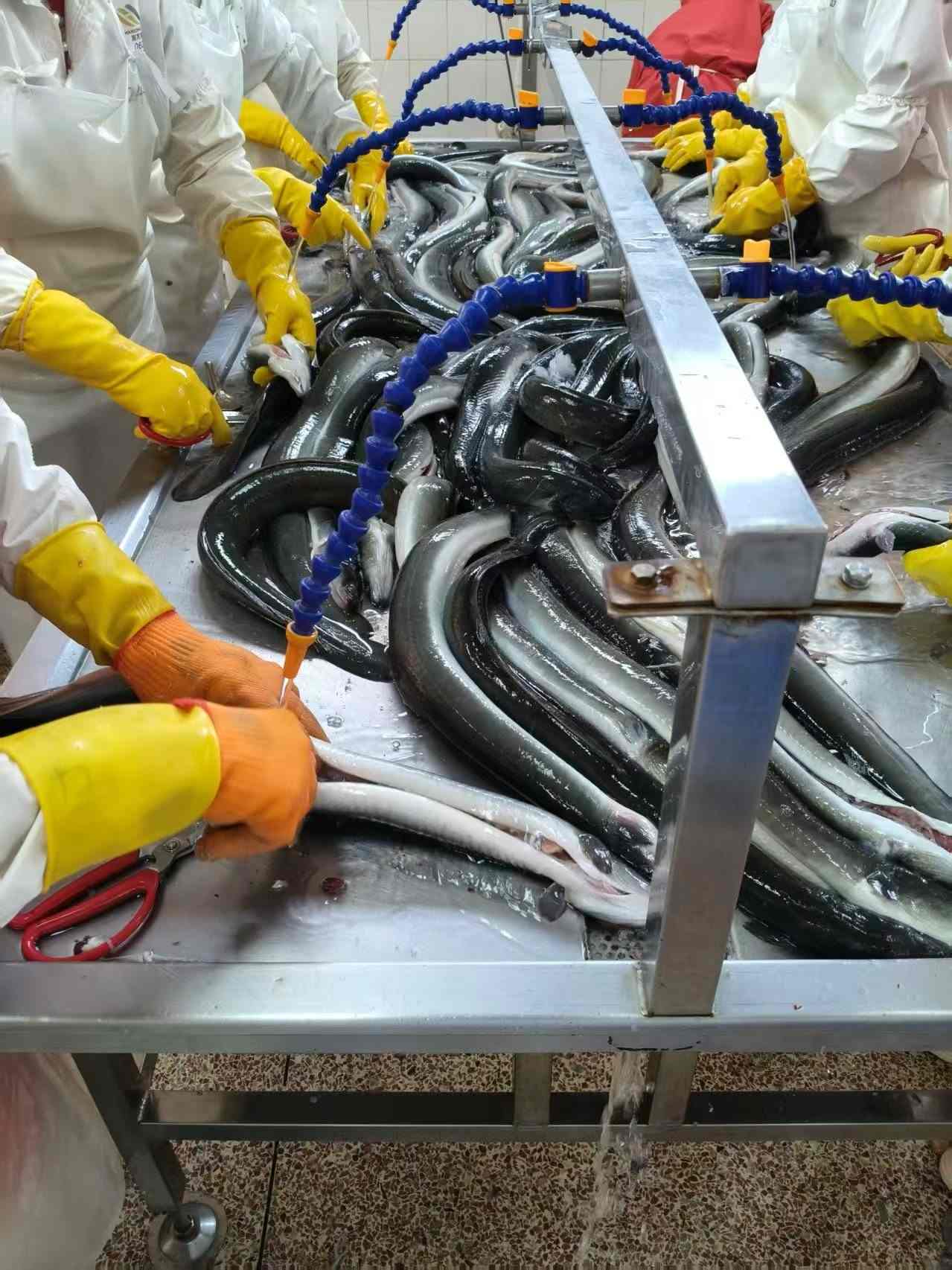
Our production process begins at our ~20 customs-registered eel farms, covering over 2,150 mu. This gives us full-chain traceability from farming to final shipment, a critical factor for our export clients in the EU and US who must meet strict food inspection standards. Our in-house professional laboratory and metal detectors at critical control points ensure that every batch complies with international veterinary drug residue and microbiological indicators.
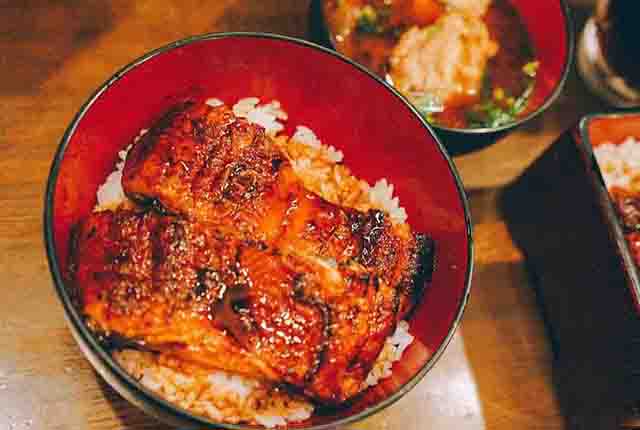
The roasting itself is where our product gains a key advantage. Our patented low-fat roasting and deodorizing technology produces a fillet that is less oily and has a firmer texture. This means it holds its shape better and is less likely to break apart on the rice. The eel is coated with four precise layers of soy sauce in a temperature-controlled process. This builds a deep, savory flavor into the fillet, so less finishing sauce is needed in the final unagi-don, further reducing the risk of sogginess.
Common Sourcing Mistakes for Foodservice Unagi
- Ignoring Certifications: Sourcing from suppliers without verifiable ISO 22000:2018, HACCP, or HALAL certifications introduces significant food safety and supply chain risks. These systems are not just paperwork; they are frameworks for consistent, safe production.
- Focusing Only on Price: Low-cost unagi often has a higher fat and water content, which can render out during heating, leading to a greasy, shrunken fillet and a soggy bowl. It may also have an inferior sauce that requires an operator to add more, increasing cost-per-serving.
- Overlooking Traceability: A lack of farm-level traceability can be a major liability, especially for export markets. In case of a quality issue, untraceable products can lead to costly recalls and damage a brand's reputation.
- Not Considering Processing Technology: A standard roasted eel may not hold up as well as one processed with technology designed to improve texture and reduce fat. Our patented methods are specifically designed for superior performance in a foodservice setting.
Standardization and Efficiency in Commercial Kitchens
For restaurant chains and large-scale catering operations, standardization is key to profitability and brand consistency. Supplying our products to foodservice channels in Germany, Poland, and Australia has taught us the importance of providing solutions, not just ingredients.
Our frozen unagi kabayaki is fully cooked, boneless, and deboned, dramatically reducing back-of-house prep time and labor costs. We offer custom cutting specifications to meet diverse menu needs:
- Sushi Slices: Perfectly portioned for nigiri or sushi rolls.
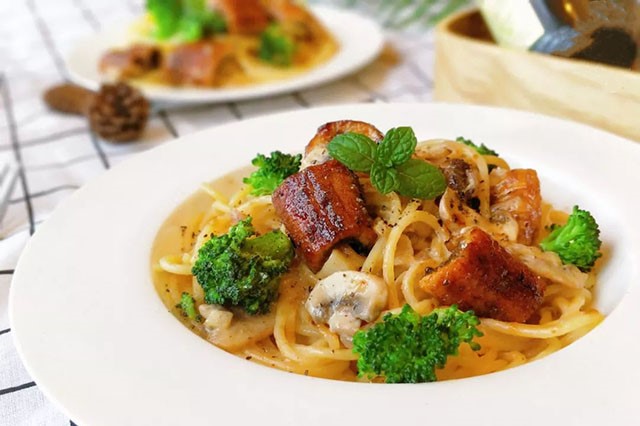
- Shreds, Dice, and Strips: Ideal for mixed rice bowls, salads, or noodle dishes like the eel noodle soup.
- 3-Section Cuts: Standardized portions for unagi-don, ensuring consistent plate coverage and cost control.
With an annual production capacity of 4,000 tons and a 1,000-ton cold storage facility, we can manage large, consistent orders for wholesale clients and export traders. The combination of high-quality, traceable eel and value-added processing helps our partners serve a perfect unagi-don every time while optimizing kitchen workflow.
By controlling the entire process from our certified farms to our advanced processing lines, we provide a reliable, safe, and high-performance product that serves as the perfect centerpiece for a well-constructed eel rice bowl.
To ensure your menu features a consistently excellent unagi-don, request a copy of our product specifications or a sample for evaluation.