

Why Does Kabayaki Sauce Need Mirin and Sugar to Get That Glossy, Sticky Finish?
Picture this: you grill eel at home, brush on a bottled sauce, and it comes out flat, salty, and pale — nothing like the deep amber glaze on a restaurant plate. That gap almost always traces back to one thing: the ratio of mirin and sugar in the kabayaki sauce itself. Get that wrong, and no amount of grilling skill fixes it.
This article breaks down what each ingredient actually does — not the textbook definition, but what happens on the grill when you get the balance wrong.
The Mistake Most Home Cooks (and Some Buyers) Make
Most people treat kabayaki sauce like teriyaki sauce with a different name. It isn't. Teriyaki leans heavier on sugar for a candy-like shine. Kabayaki sauce needs a tighter three-way balance between soy sauce, mirin, and sugar because eel skin fat reacts differently to heat than chicken or beef.
Here's the real-world scenario: a foodservice buyer sources a generic soy-based glaze, brushes it on frozen unagi kabayaki, and the sauce burns before the fish center reaches temperature. Why? Because the sauce had too much raw sugar and not enough mirin to slow the browning curve. The fix isn't more heat control — it's rebalancing the sauce formula before it ever reaches the grill.
Ingredient-Function Breakdown: What Mirin, Soy Sauce, and Sugar Actually Control
Each ingredient in kabayaki sauce has one job. Overlap them wrong, and the whole glaze fails — either too salty, too pale, or burnt on the edges. Here's what each one actually does in practice:
| Ingredient | Primary Function | What Happens If Too Much | What Happens If Too Little |
|---|---|---|---|
| Mirin | Aroma and gentle sweetness; slows sugar crystallization for smoother gloss | Sauce turns thin and alcohol-forward; glaze won't thicken properly on the grill | Sauce tastes flat and one-dimensional; harsh sugar burn instead of rounded caramel notes |
| Soy Sauce | Salt balance and umami depth; sets the base color | Overpowering saltiness masks the eel's natural flavor; sauce darkens too fast | Sauce tastes sweet without depth; pale, weak color on the finished eel |
| Sugar | Caramelization and the sticky-glossy texture buyers expect | Sauce burns before eel is cooked through; bitter edges appear | Glaze stays dull and doesn't set; no shine on the finished product |
The relationship between mirin and sugar is the part most recipes skip. Sugar alone caramelizes fast and unevenly — it scorches at the edges long before the center of the eel fillet is done. Mirin contains its own natural sugars, but at a lower concentration, and its alcohol content evaporates during the initial heating stage, which slows down the browning reaction just enough. That's what produces the even amber tone rather than blotchy dark spots. This is essentially a controlled Maillard reaction, and mirin is the throttle on that reaction.
Soy sauce, meanwhile, isn't just for salt. It contributes the base pigment that sugar caramelization builds on top of. Without soy sauce, even a perfectly caramelized glaze looks orange-ish instead of the deep mahogany color buyers associate with real kabayaki.
How Eelpro Builds Kabayaki Sauce Across 4 Coating Layers
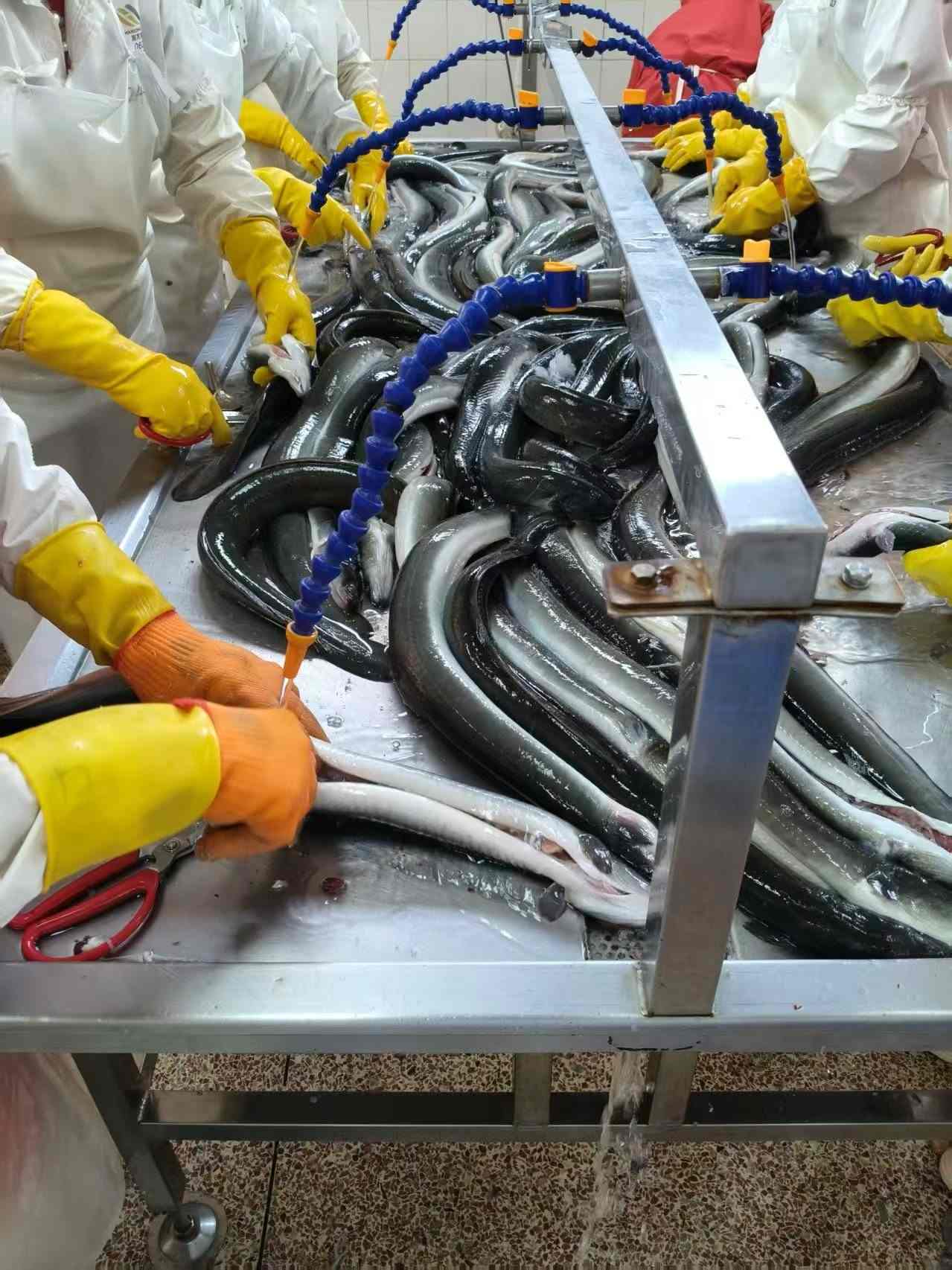
At our facility, we don't apply kabayaki sauce in one pass. Export-grade roasting uses a 4-layer soy-sauce coating process, each layer temperature-controlled separately:
- Layer 1 (white-roasted stage): eel is grilled bare, no sauce, to set the surface texture and render initial fat.
- Layer 2: first sauce coat applied at a lower temperature to let mirin's aroma penetrate without early caramelization.
- Layer 3: second coat, slightly higher heat, begins building the base color — this is the "1st soy-sauce coating color" benchmark our QC team checks against.
- Layer 4: final two coats raise temperature further, allowing sugar to caramelize into the glossy finish while soy sauce deepens the color to the "4th soy-sauce coating color" standard.
This is why our kabayaki sauce article gets referenced by buyers comparing sauce systems — the layering, not just the recipe, is what controls consistency across a 4,000-ton annual production run.
Common Mistakes When Balancing Kabayaki Sauce
- Using teriyaki ratios instead of kabayaki ratios — teriyaki sauce is sweeter and thinner; it won't hold on eel skin the same way.
- Skipping the mirin reduction step — raw mirin added straight into hot sugar syrup creates uneven bubbling and a cloudy glaze.
- Applying sauce at one temperature only — a single-pass glaze either undercooks the sugar (dull finish) or burns it (bitter edges).
- Ignoring fat content of the eel itself — fattier cuts need slightly less sugar since the fat already carries its own richness; over-sweetening makes the dish feel heavy.
- Storing finished sauce at room temperature — mirin's sugars ferment slowly once opened; refrigeration after the first use preserves the balance for repeat batches.
A quick cold fact worth remembering: traditional mirin is roughly 14% alcohol before cooking reduces it, which is part of why a rushed high-heat glaze tastes sharp instead of rounded — the alcohol hasn't had time to cook off.
Buyer's Checklist: Choosing Ready-Made Kabayaki Sauce for Foodservice
If you're sourcing sauce or pre-glazed frozen unagi kabayaki rather than mixing your own, run through this before placing an order:
- Does the supplier disclose their soy sauce, mirin, and sugar ratio, or at least the coating-layer process?
- Is the color standardized (e.g., matched against a documented "coating color" reference) so batches don't vary plate to plate?
- Can the sauce hold gloss through a reheat cycle, or does it dull after freezing and thawing?
- Does the supplier test for veterinary drug residues and microbiological indicators against Japan, US, or EU standards?
- Is there traceability back to the farming base, in case a batch needs review?
Eelpro's supply chain answers all five: our sauce and roasting process pair with product sourced from customs-registered farming bases covering over 2,150 mu, with full traceability from farm registration through shipment. Our in-house lab and metal detectors at critical control points back that up, and the eel lab handles the residue and microbiological testing before product ships.
When Homemade Sauce Makes Sense — and When It Doesn't
Making kabayaki sauce from scratch works fine for a home kitchen or a small menu test. You control the mirin-to-sugar ratio directly, and mistakes cost you one pan, not one production run. But once volume climbs — a restaurant chain plating hundreds of portions a week — batch consistency becomes the real problem. Hand-mixed sauce varies cook to cook, even with the same recipe, because reduction times and pan heat differ.
That's the scenario where a standardized eel sauce (unagi tare) supply makes more sense than in-house mixing. It removes the guesswork around gloss and color consistency, which matters more to a buyer's repeat customers than most people expect. For anyone building out a broader menu, our eel recipes: 10 flavor pairings for menus guide covers how sauce profile shifts across different eel preparations.
For home cooks wanting to practice the balance themselves before committing to a supplier, our eel sauce recipe: make-ahead guide walks through storage windows so the mirin doesn't lose its aroma before your next batch.
What This Means for Your Next Order or Recipe Test
Whether you're glazing eel at home or sourcing frozen unagi kabayaki for a menu, the mirin-sugar-soy balance isn't a minor detail — it's the difference between a dull, salty fillet and the amber, glossy finish diners expect. Test small batches first if you're formulating your own sauce. If consistency across hundreds of portions matters more than experimentation, a supplier with a documented coating process removes the variability.
Curious how our 4-layer kabayaki sauce process performs on your own menu? Request a sample of our eel sauce or ask our team for a spec sheet before your next order.