

How to Choose Kabayaki Fish Beyond Eel: A Buyer's Guide
You've got a menu slot for a glazed, grilled fish dish. Eel prices just spiked again. Someone on your team suggests catfish, or maybe mackerel. Will it hold up under a broiler with four coats of soy glaze, or will it fall apart on the plate in front of a paying customer?
That's the real question behind every kabayaki fish substitution decision. The answer isn't "any oily fish will do." It comes down to four physical traits — thickness, fat content, bone structure, and skin strength — and most kitchens never check them before committing to a supplier order.
What Kabayaki Cooking Actually Demands From a Fish
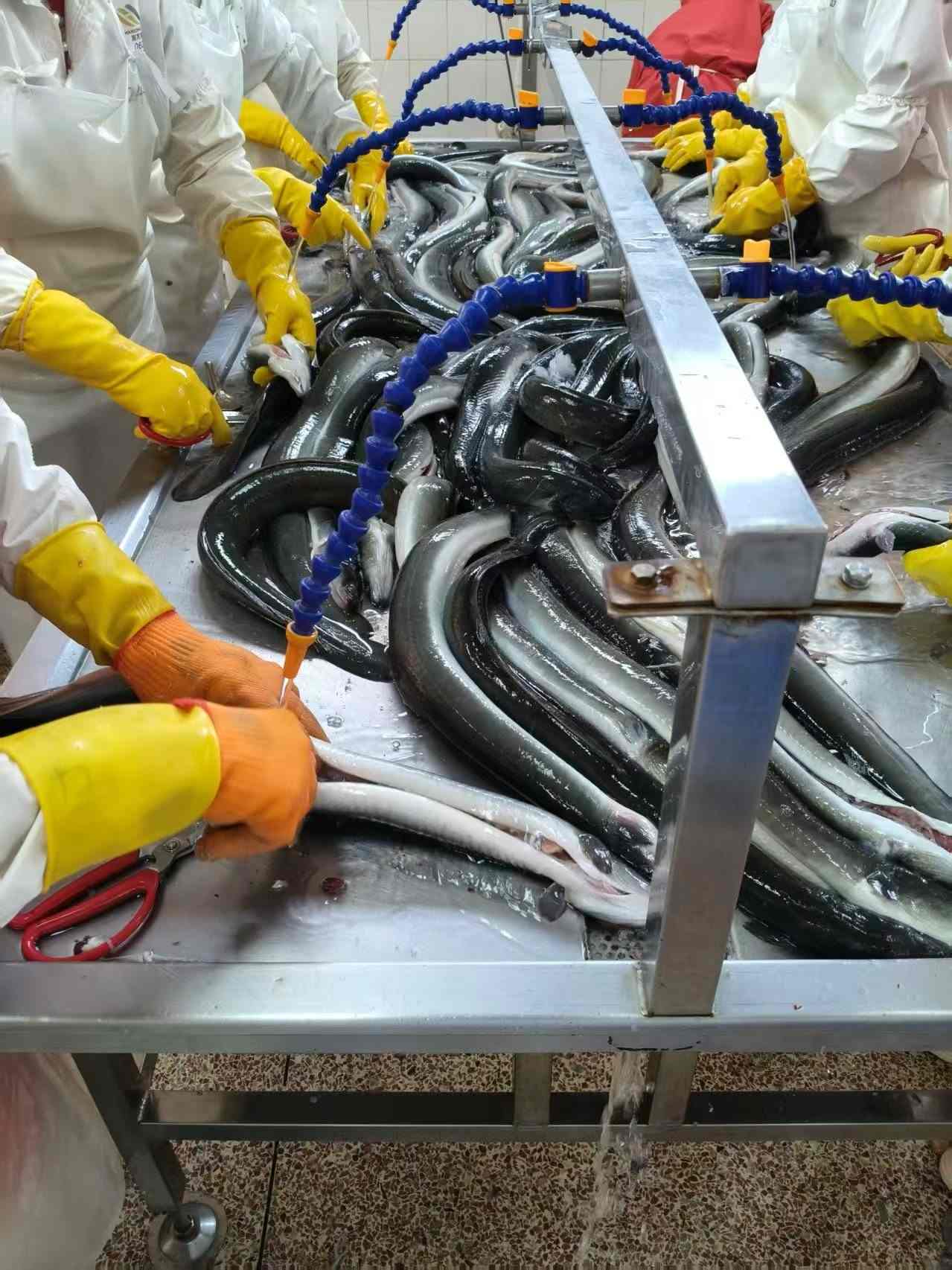
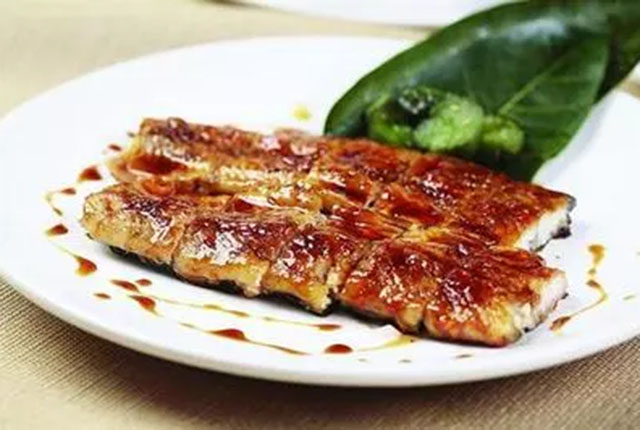
Kabayaki isn't just "grilled fish with sauce." It's a layered cooking method: the fish is split, deboned, skewered, steamed or pre-cooked, then basted and grilled repeatedly in a sweet soy glaze. Traditional processors use what's called the 4-layer soy-sauce coating process — each pass builds color and lacquer without burning the sugar in the sauce. That process only works if the fish underneath can survive repeated heat exposure without drying out, curling, or shredding.
This means a candidate fish needs to pass on four fronts at once, not just one. A fish that's fatty enough but too thin will scorch before the glaze sets. A thick fillet with weak skin will fall apart on the grill grate. Skip this evaluation, and you'll find out the hard way — mid-service, with a ticket rail full of orders.
Fish Thickness, Fat Content, Bone Structure, and Skin Strength Compared
Here's how the common candidates stack up against the traits that actually matter for kabayaki-style cooking.
| Fish | Fillet Thickness | Fat Content | Bone Structure | Skin Strength | Kabayaki Suitability |
|---|---|---|---|---|---|
| Freshwater eel (unagi) | Even, 1.5–2.5 cm | High (15–20%), self-basting | Fine pin bones, easy to remove whole | Thick, collagen-rich, holds glaze layers | Benchmark — built for this method |
| Catfish | Uneven, thick at head end | Moderate, varies by farming diet | Larger central bone, needs careful filleting | No skin retained after processing typically | Workable with adjusted glaze timing |
| Mackerel | Thin, 0.8–1.2 cm | Very high, oily throughout | Fine bones, but curved frame | Thin, tears under repeated basting | Limited — best for single-pass glaze only |
| Sardines | Very thin | High but small fillet size | Numerous small bones | Delicate, breaks apart on turning | Poor — suited to whole-fish grilling, not kabayaki cuts |
| Tilapia | Thin to moderate | Low fat | Easy to fillet, few bones | Thin, lacks structure for multiple glaze passes | Poor — dries out, glaze doesn't build |
The pattern is clear: fat content above 12–15% and skin thick enough to survive 3–4 basting passes are the two non-negotiables. Bone structure affects labor cost and yield, not whether the dish works, but it still matters for a foodservice operation counting minutes per prep station.
Why Skin Strength Gets Overlooked
Kitchens test fat content easily enough — visual marbling, or a supplier spec sheet. Skin strength almost never gets tested until the fish is already on the grill. Eel skin has a collagen structure that firms up under heat instead of tearing. Thinner-skinned fish (mackerel, sardines) will start separating from the flesh by the second glaze pass. If your recipe calls for the traditional four-coat method, thin-skinned fish simply won't make it to the finish.
A Step-by-Step Process for Testing an Alternative Fish
If you're considering a substitute for a menu trial, don't guess. Run this before you commit to a purchase order.
- Step 1 — Check raw fat content. Aim for 12% or higher. Below that, the fish will need oil added during basting, which changes the flavor profile and can make the glaze slide off instead of adhering.
- Step 2 — Cut a test fillet at 1.5–2 cm. Thinner cuts cook too fast for a multi-layer glaze; thicker cuts risk a raw center by the time the surface caramelizes.
- Step 3 — Debone by hand first. Count the minutes. If deboning takes more than double the time of your current eel prep, factor that labor cost into your final pricing before scaling up.
- Step 4 — Steam or pre-cook the fillet before grilling, the same way kabayaki eel is handled. This softens texture and lets the sauce penetrate instead of just coating the surface.
- Step 5 — Apply the glaze in at least two passes, checking whether the skin holds together after the second turn on the grill. If it splits, that fish isn't ready for the full 4-layer treatment — dial back to a single-glaze finish instead.
- Step 6 — Taste-test cold and reheated. Foodservice buyers care about this step most. If the product is going into ready-to-heat packaging, it needs to hold texture after a reheat cycle, not just fresh off the grill.
Common Mistakes Kitchens Make With Substitute Fish
- Using the same glaze timing as eel — mackerel and sardines need less time under heat or they turn bitter as the sugars over-caramelize.
- Skipping the pre-steam step — this is where much of the moisture retention happens; skip it, and thinner fish dry out fast.
- Ignoring bone count in the final cost model — a fish that's cheap per kilo can cost more once you factor in deboning labor and yield loss.
- Assuming any oily fish works — fat percentage alone doesn't guarantee good kabayaki results if skin strength or thickness is wrong.
When Eel Still Wins — and When It Doesn't
Eel remains the reference point for kabayaki because it was bred and processed for exactly this cooking method for centuries. Its skin-to-flesh ratio, natural fat marbling, and bone structure line up with the 4-layer glazing process without extra adjustment. Export-grade eel processing — including a patented low-fat roasting and deodorizing method — was developed specifically to control the fat rendering and remove the muddy aftertaste some farmed eel carries.
That said, eel isn't always the right call. If a menu needs a lower price point, a lighter dish, or a fish with a milder flavor for a Western palate unfamiliar with unagi, catfish can be a workable middle ground — provided the kitchen adjusts glaze timing and factors in the deboning labor. Mackerel works for quick, single-glaze preparations but shouldn't be forced into a full traditional kabayaki build. Sardines are better reserved for other grilling styles entirely.
Buyer's Decision Checklist
- Does the fillet hold at least 12% fat without added oil?
- Can the skin survive two or more basting passes without tearing?
- Is the fillet thickness between 1.5–2.5 cm for even cooking?
- Does deboning labor fit your kitchen's prep time and cost target?
- Has the product been tested both fresh-grilled and reheated, if going into frozen seafood packaging?
- Does the supplier provide traceability and residue testing documentation, especially for export markets with strict veterinary drug residue standards under frameworks like FDA import guidelines?
For teams sourcing at volume, working with a supplier that already runs full traceability — from certified farming bases through lab testing — removes a lot of this guesswork on the raw material side. That's part of why many buyers stick with unagi kabayaki eel for their core menu item, even while testing alternatives for price-sensitive lines.
Sauce Compatibility Matters Just as Much as the Fish
A glaze built for eel's fat content and skin texture won't always behave the same way on a leaner substitute. If you're testing catfish or mackerel, you may need to thin the glaze slightly or reduce sugar content to avoid over-caramelizing on a less fatty surface. Our article on kabayaki sauce formulation covers how viscosity and sugar ratio affect adhesion on different fish types, which is worth checking before you finalize a recipe swap. For teams troubleshooting a glaze that keeps sliding off or burning too fast, the kabayaki sauce recipe fix flavor mistakes guide walks through the most common causes.
Cold-Chain Considerations for Alternative Fish
Whatever fish you land on, cold-chain handling affects final texture as much as the cooking method. Fish held at inconsistent temperatures during transport tend to lose moisture and firm up unevenly once glazed — a problem eel processors manage with dedicated cold storage before the roasting stage. If you're sourcing a substitute fish from a new supplier, ask for their storage capacity and turnaround time between processing and shipment. A supplier without stable cold storage will struggle to deliver consistent kabayaki-ready product batch after batch.
Putting It Together for a Menu Trial
If you're planning a kabayaki-style dish beyond eel, start small. Order a test batch, run the six-step evaluation above, and cost out labor alongside raw material price — not just the per-kilo number on the invoice. A fish that looks cheaper on paper can end up costing more once deboning time and glaze failures are factored in.
For recipe ideas that use kabayaki-style fish in different formats, the eel recipes for meal prep guide shows how ready-to-heat cuts perform in batch cooking, a useful reference whether you're using eel or testing an alternative.
Curious how your kitchen's kabayaki fish trial turns out? Drop a comment with what fish you tested and how the glaze held up — we're always interested to hear what other kitchens are trying beyond eel.
Need a sample of export-grade unagi kabayaki or eel sauce to run your own side-by-side comparison? Reach out for a spec sheet or sample request, and we'll walk you through the options that fit your menu.