

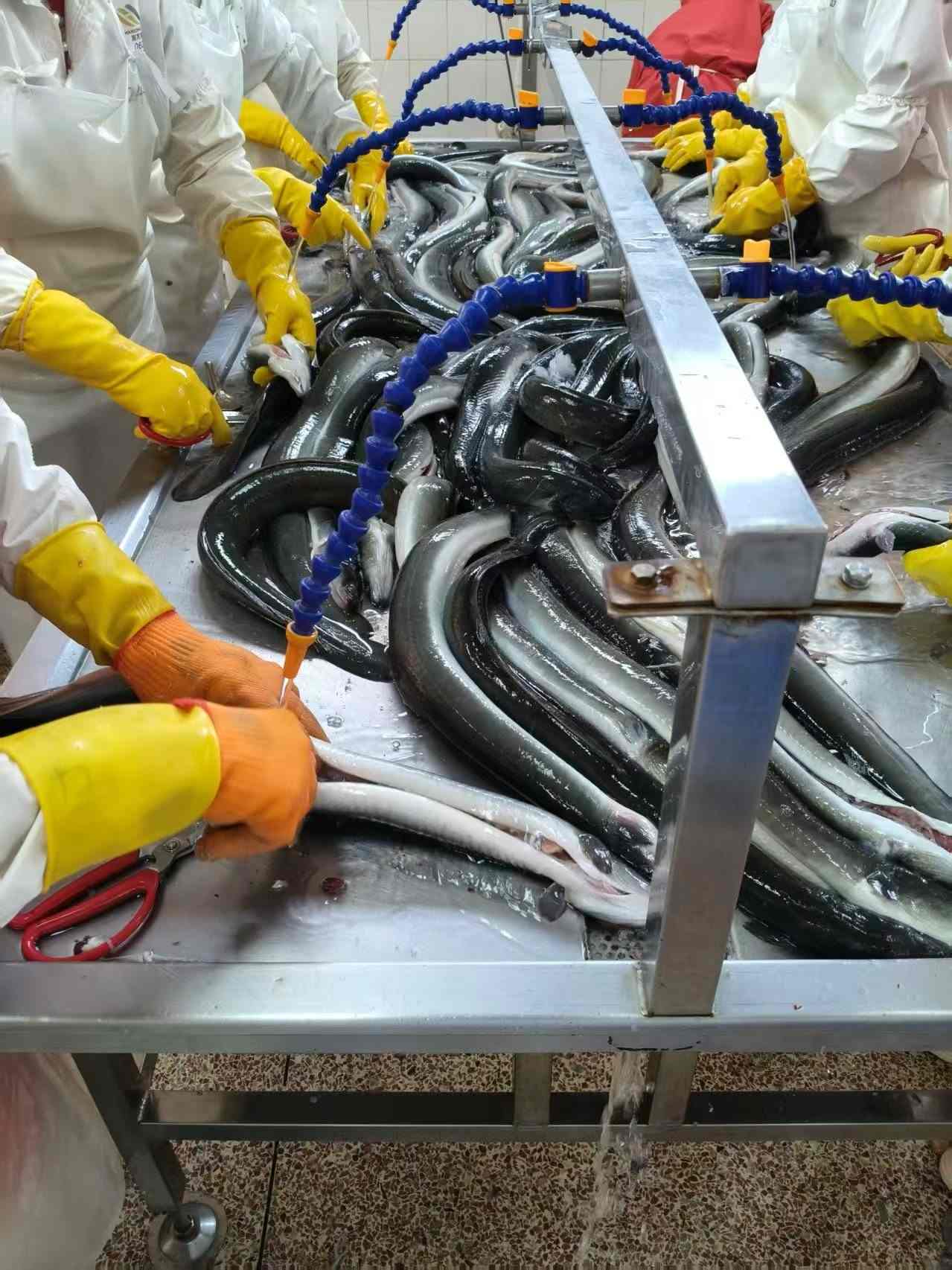
How to Clean a Eel Without It Slipping Out of Your Hands
You've got a fresh eel on the counter. It's wet, muscular, and moving with every touch. Your knife is ready, but the eel isn't cooperating. This is the exact moment most home cooks and even some line cooks lose control — and either drop the fish or cut themselves reaching for it again. Learning how to clean a eel safely comes down to controlling three things: grip, surface, and slime. Get those right and the rest of the job goes fast.
This guide walks through why eels slip in the first place, what each slip pattern tells you about what's going wrong, and a practical setup — salt, paper towels, and a stable cutting surface — that professional processors rely on before any blade touches the fish.
Why Eels Are Harder to Handle Than Other Fish
Eels produce a thick mucus layer on their skin. It's a natural defense mechanism, but it turns your cutting board into a hockey rink. Unlike scaled fish, eels have no scales to grip onto — just smooth, slick skin over a muscular body that keeps contracting even after the eel is no longer conscious. That muscle memory is real: eels can react to touch and pressure changes for longer than most freshwater fish, which is part of what makes first-time cleaning attempts stressful.
Three factors combine to create the slipping problem:
- Surface slime — reduces friction between your hand and the skin
- Muscle contraction — sudden movement when nerves fire post-cut
- Unstable board — a board that shifts on the counter amplifies every wobble
Troubleshooting Slips — Diagnose Before You Grab a Towel
Not all slipping is the same. Diagnosing the exact cause first saves you from repeating a fix that won't work for your situation.
Step 1: Check where the slip happens
If the eel slips out of your hand before the knife even touches it, the problem is grip and slime — not your cutting technique. If it slips on the board once you're mid-cut, the board itself is the issue.
Step 2: Check what the eel is doing
- Whole-body twisting — normal muscle reflex; needs a firmer pin-down point, usually behind the head.
- Sliding sideways during the cut — points to a wet or slick board surface, not the eel's movement.
- Slipping specifically when you grip the tail — indicates too much surface slime; salt hasn't been applied or has worn off.
Step 3: Match the symptom to the fix
| Symptom | Likely Cause | Fix |
|---|---|---|
| Eel slides out of hand at first grip | Slime coating untouched | Salt-rub the body before handling |
| Hand slips while pinning head | Wet fingers, no friction | Dry hands with paper towel between steps |
| Eel shifts on the board mid-cut | Unstable or slick cutting surface | Use a non-slip mat or damp towel under the board |
| Knife skates off the skin | Surface still slimy at the cut line | Wipe cut area with a dry paper towel just before cutting |
How Salt, Paper Towels, and a Stable Cutting Surface Reduce Slipping Without Damaging the Flesh
This is the setup that matters most, and it's simple enough to do in under two minutes before you start cutting.
| Tool | What It Does | How to Use It | Limit |
|---|---|---|---|
| Coarse salt | Breaks down surface slime and adds grip texture without harming the flesh underneath | Rub a handful over the whole body, let sit 30-60 seconds, rinse briefly | Don't over-salt thin sections — it can dry out delicate flesh if left more than a couple minutes |
| Paper towels | Absorbs residual moisture and slime after salting, giving your hand a dry contact point | Wrap around the section you're gripping — usually the head or tail — before cutting | Replace towels once soaked through; a wet towel adds friction loss right back |
| Stable cutting surface | Prevents the board itself from moving, which is often mistaken for "the eel slipping" | Place a damp cloth or rubber mat under the board; use a board with grip feet if available | Doesn't help if the eel itself is still slimy — this only solves board movement, not skin slime |
The reasoning here is mechanical, not cosmetic. Salt changes the texture of the mucus layer through osmosis, pulling moisture out of the slime without penetrating deep into the muscle — so it grips better without toughening or damaging the meat. Paper towels finish the job by removing what salt loosens. The board fix is a separate problem entirely: even a perfectly de-slimed eel will feel "slippery" if the cutting surface itself is sliding around on a wet counter.
This combination works well for home kitchens and small-batch prep. It does not replace proper knife technique or a sharp blade — a dull knife will skate across skin regardless of how dry your grip is.
Step-by-Step Cleaning Procedure Once Grip Is Under Control
- Salt-rub the whole eel body, focus on the head-to-mid-body area you'll be gripping.
- Rinse briefly under cold water — don't soak, just remove loosened slime.
- Dry the grip zone with a paper towel, re-drying every 20-30 seconds as needed.
- Pin the head firmly against the stabilized board using a towel-wrapped hand or a nail/skewer through the head for extra control.
- Cut behind the gills in one motion, then proceed down the spine.
- Wipe the blade between cuts — slime buildup on the knife itself reduces cutting precision.
For a full walkthrough on skinning and deboning after this stage, see this cleaning, skinning and deboning guide.
Common Mistakes That Make Slipping Worse
- Skipping the salt step entirely — cold water alone doesn't remove enough slime.
- Using a wet cutting board without anything underneath to anchor it.
- Gripping too lightly out of fear of hurting the fish — a firm, confident pin-down actually causes less thrashing than a hesitant one.
- Reusing a soaked paper towel instead of switching to a dry one mid-process.
- Cutting with a dull knife, which forces more pressure and increases the chance of the blade slipping sideways.
A Faster Alternative — Skipping the Slip Problem Entirely
Home processing is workable for occasional cooking, but for foodservice operations or bulk kitchen prep, live eel handling adds labor time and inconsistency between batches. This is why many restaurants and importers source pre-cleaned, pre-roasted product instead. Eelpro's frozen unagi kabayaki arrives boneless and ready-to-heat, cut to standard specifications — no slime, no live handling, no board setup required. For kitchens pairing the eel with a glaze, our eel sauce is made using the same 4-layer soy-sauce coating process applied to our roasted eel line.
If you're scaling from home cooking to menu volume, it's worth comparing labor cost per portion between raw processing and pre-cut frozen product — for most back-of-house teams, the frozen route saves more time than the salt-and-towel method saves money.
Quick Reference — Before You Start Cutting
- Is the cutting board anchored with a damp cloth or mat underneath?
- Have you salted and rinsed the eel within the last 2 minutes?
- Is your grip hand dry, with a fresh paper towel on standby?
- Is your knife sharp enough to cut without pressing hard?
- Do you have a clear pin-down point behind the head?
If you answered no to any of these, stop and fix that step first — it's the fastest way to prevent a mid-cut slip.
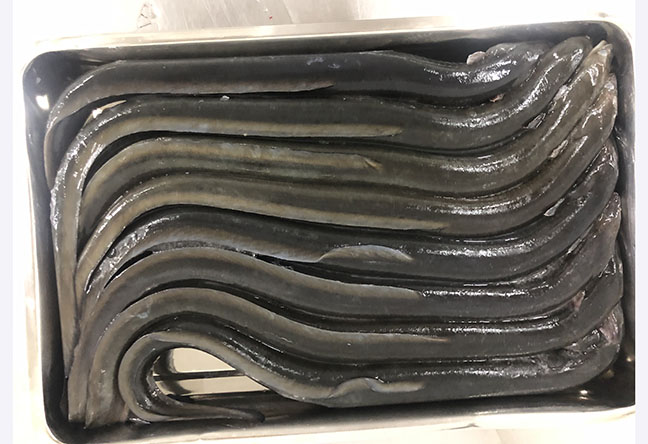
Want to skip the slippery part altogether? Request a spec sheet for our frozen unagi kabayaki and see the cut options available for your menu.