

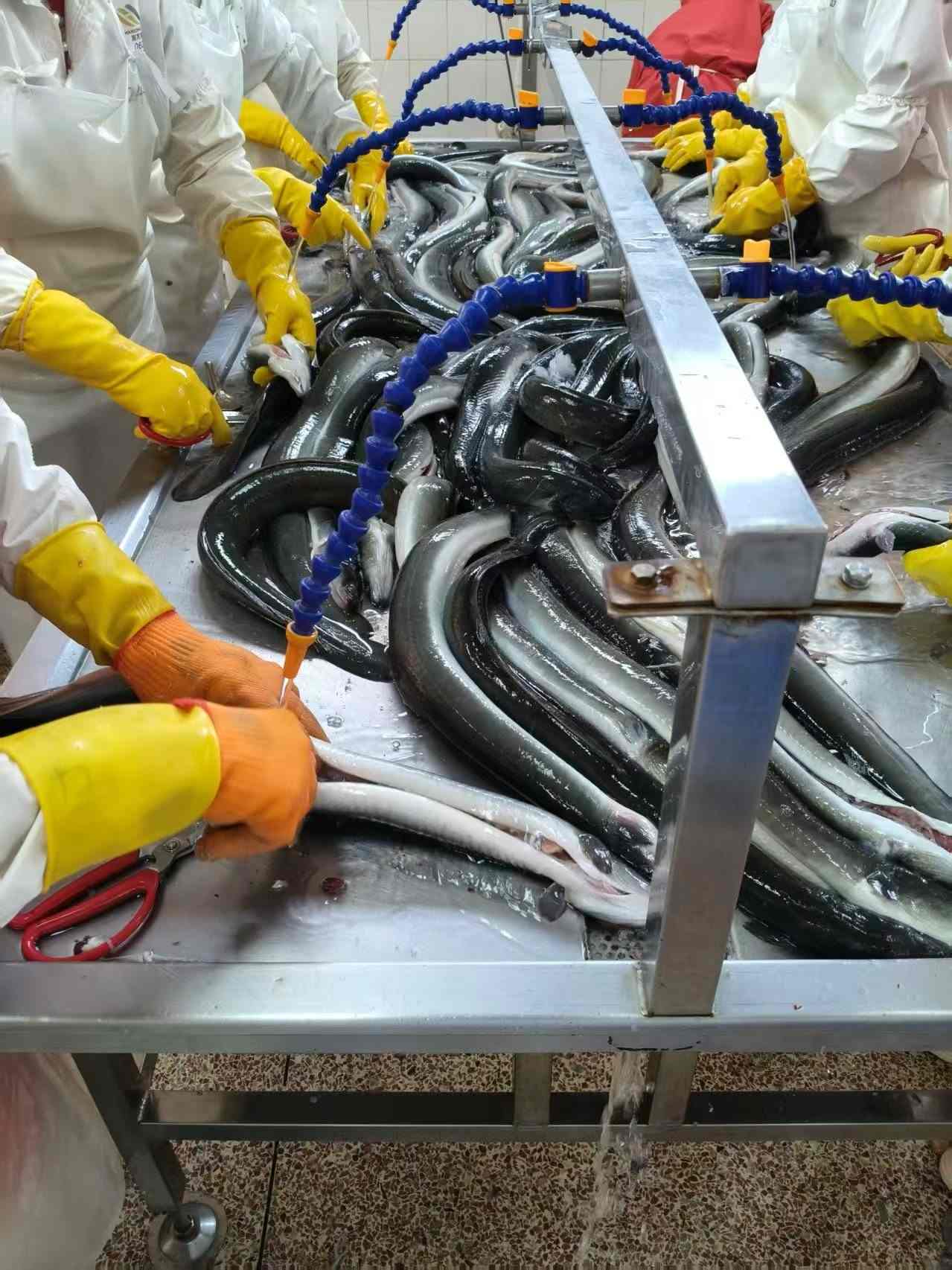
How to Create a Perfectly Balanced Unagi Sushi Roll for Consistent Menu Quality
An overstuffed or uneven unagi sushi roll is more than a visual flaw—it's a cost and consistency problem for any foodservice operation. When one roll has too much eel and the next has too little, you face unpredictable food costs and a varied customer experience. Achieving a perfect balance of ingredients in every single roll is not about artistry; it's about process control. This guide provides a repeatable, action-focused method for preparation, ensuring every serving meets your quality standards.
As a quality specialist who has helped dozens of overseas clients meet import standards for demanding markets like Japan and the EU, I've seen firsthand how back-of-house consistency starts with a reliable supply chain. A quality unagi kabayaki product with standardized cuts and glaze thickness is the foundation for a predictable and profitable menu item. The techniques here will help your kitchen team maximize that product's potential.
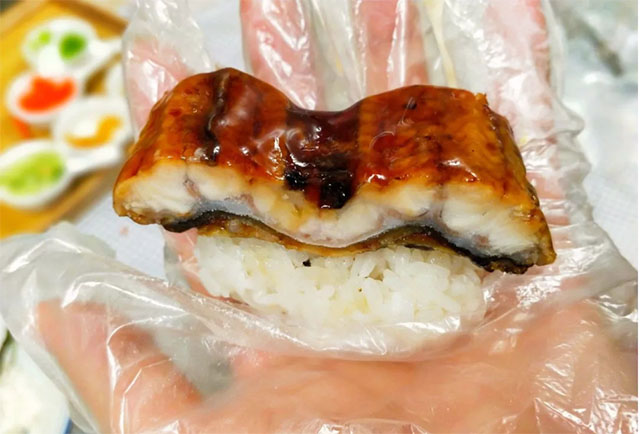
Choosing the Right Unagi Kabayaki for Commercial Roll Production
The quality of your finished unagi sushi roll is determined long before your chefs lay out the nori. The specific cut, sauce viscosity, and fat content of the frozen eel you source directly impact preparation speed, portion control, and final taste. For high-volume kitchens, selecting a supplier who understands these operational needs is critical.
Look for products that are specifically processed for foodservice applications. This means boneless, deboned eel with standardized cutting and ready-to-heat packaging that minimizes back-of-house labor. At Eelpro, our patented low-fat roasting and deodorizing technology, combined with a precise 4-layer soy sauce coating process, creates a product that is rich in flavor but not overly saturated, preventing the rice from becoming soggy. The result is a firm, flavorful fillet that holds its shape during rolling and slicing.
Use this checklist when evaluating a potential frozen eel supplier for your sushi operations.
Buyer's Decision Checklist for Frozen Unagi Kabayaki
- Standardization of Cuts: Does the supplier offer consistent cuts (e.g., sushi slices, strips, chunks) to ensure uniform portioning and predictable food costs per roll?
- Sauce (Tare) Quality: Is the unagi tare glaze thick enough to cling to the eel without running? A high-viscosity sauce prevents messy preparation and ensures flavor is concentrated on the protein.
- Full-Chain Traceability: Can the supplier provide documentation from farm to shipment? Our system links product batches back to one of our ~20 customs-registered eel farming bases, a non-negotiable for meeting US, EU, and Japanese import requirements.
- Certifications: Does the facility hold internationally recognized food safety certifications? We operate under ISO 22000:2018 and HACCP systems, with additional HALAL certification to serve diverse markets.
- Cold Chain Management: Does the supplier have adequate cold storage? Our 1,000-ton cold storage facility ensures product integrity from our production line to the container, maintaining quality during the approximately 30-day order-to-shipment lead time.
The Method for Even Filling Distribution in Unagi Rolls
Achieving a perfectly centered and evenly distributed unagi sushi roll every time is a matter of technique, not chance. An unbalanced roll leads to poor presentation and inconsistent bites for the customer. The following method breaks down the process into clear, repeatable steps to eliminate common errors like cone-shaped rolls, fillings bursting from the ends, or an off-center appearance.
This procedure is designed for an "uramaki" or inside-out roll, where the rice is on the outside, but the principles apply to traditional "maki" rolls as well.
Step-by-Step Assembly for a Consistent Uramaki Unagi Roll
- Prepare the Rice Layer: Spread a uniform, thin layer of sushi rice over the nori sheet, leaving a 1-inch (2.5 cm) gap at the top edge. The key is even pressure. Use wet fingertips to gently press the rice, ensuring no mounds or valleys. A common mistake is using too much rice, which makes the roll difficult to close and overpowers the flavor of the eel.
- Flip and Position: Carefully flip the nori so the rice side is facing down on your bamboo mat (makisu). The exposed nori strip should be at the edge furthest from you. This strip will be used to seal the roll.
- Create the "Ingredient Guideline": Lightly score a shallow line with your finger across the nori, about 1.5 inches (4 cm) from the edge closest to you. This is your "fill line." All ingredients must be placed along this line, not scattered across the sheet.
- Place the Primary Filling (Unagi): Lay your pre-cut unagi kabayaki strip directly on the guideline. If using smaller pieces, arrange them end-to-end to form a continuous line. Do not overlap the eel pieces. Overlapping creates a thick spot that will push the roll out of shape. Our custom cutting services (shredding, dicing, strip-cutting) provide standardized portions to simplify this step.
- Add Secondary Fillings: Place other ingredients, like cucumber or avocado, directly next to the unagi strip, either on the "near" side or the "far" side of the eel. The critical rule is to keep all fillings in a compact, horizontal line parallel to the edge of the mat. Do not stack them vertically.
- The Initial Tuck and Roll: Using the bamboo mat, lift the near edge of the nori and rice up and over the fillings. Tuck the edge tightly against the fillings, using your fingers to press along the length of the roll to create a firm core. This initial tuck is the most important step for a tight, centered roll.
- Complete the Roll: Continue rolling the mat forward, applying steady, even pressure with your hands to shape the roll into a firm cylinder. Use the exposed nori strip at the end to seal the roll, dabbing it with a bit of water if needed.
By following this structured approach, your kitchen staff can move from inconsistent, hand-crafted results to a standardized production method that yields visually appealing and uniformly portioned unagi sushi rolls every time.
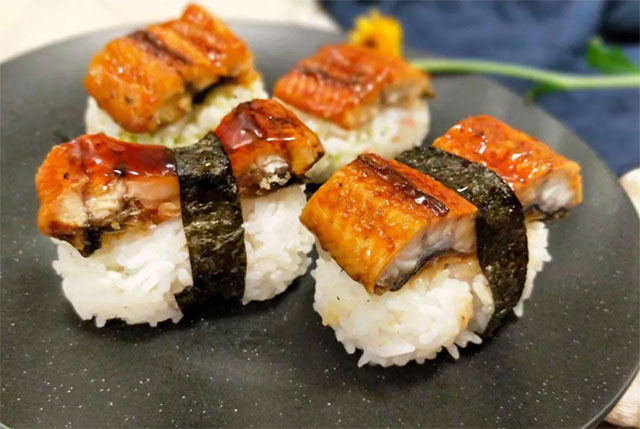
Validating Safety and Compliance in Your Eel Supply Chain
For food importers and large restaurant chains in regions like the United States, Germany, and Poland, the quality of a dish extends far beyond the kitchen. It involves verifiable food safety and a transparent supply chain. A recall or an import rejection due to non-compliant veterinary drug residues or microbiological indicators can cause significant financial and reputational damage.
This is why our entire process is built around export compliance. Our products are manufactured to meet the stringent food inspection standards of Japan, the US, and the European Union. This commitment is not just a certificate on the wall; it's an active system managed by our 25-person technical and quality-control team.
We maintain our own professional in-house laboratory to conduct targeted sampling and verification. Metal detectors are placed at critical control points on both of our modern production lines. This internal system of checks and balances provides an extra layer of security, helping our buyers avoid trade risks and ensuring the eel they serve is safe and fully compliant.
Traceable vs. Non-Traceable Eel Supply: A Comparison
The table below highlights the operational differences and risks associated with sourcing from a fully traceable supplier versus one with an opaque supply chain.
| Attribute | Eelpro's Traceable Supply Chain | Non-Traceable Supply Chain |
|---|---|---|
| Raw Material Origin | Sourced from 19 self-operated and cooperative certified farming bases. | Unknown or mixed origins from various uncertified farms. |
| Compliance Verification | Full-chain control from farming registration to targeted sampling and process verification. | Relies solely on final product testing, which may miss systemic issues. |
| Risk of Import Rejection | Low. Products meet Japan, US, and EU standards for residues and microbiology. | High. Uncontrolled farming practices can lead to banned substance residues. |
| Response to Issues | Traceability allows for rapid identification and isolation of a specific batch or farm. | Difficult to pinpoint the source of a problem, requiring broad and costly recalls. |
Our long-term supply relationships with Japanese restaurant chains, US food importers, and distributors across the EU are built on this foundation of trust and verifiable quality. With an annual production capacity of 4,000 tons, we have the scale to support large-volume clients without compromising on these strict quality controls.
For detailed specifications on our custom-cut frozen unagi kabayaki and to discuss how our products can fit into your menu, please contact our export team to request a quote or a sample.