





How to Match Eel Sauce Japanese Profiles to Grilled Foods
Many food importers and restaurant chains see eel sauce as a simple commodity, but its formulation is what makes or breaks a dish. Choosing the wrong profile—too sweet, too thin, or too salty—can overpower delicate flavors or fail to properly glaze grilled items. The key is understanding that a premium eel sauce japanese kitchens rely on, also known as unagi tare, is balanced for specific applications. For a buyer, selecting a sauce that performs consistently across your menu or product line is critical for customer satisfaction and operational efficiency.
At Eelpro, our experience supplying foodservice channels in Japan, the United States, and the EU has shown that the technical specifications of a sauce are just as important as its taste. As a Senior Food Safety & Quality Specialist, I've seen firsthand how a well-made sauce, backed by certified production, can reduce kitchen prep time and ensure a predictable, high-quality final product. This guide breaks down how to select the right sauce profile for various foods and what to look for in a reliable supplier.
How Sauce Profile Determines Food Pairings
Not all unagi tare is created equal. The balance of soy sauce, mirin, sake, and sugar creates distinct profiles in terms of sweetness, salinity, and viscosity. These characteristics directly influence which foods the sauce complements best. Using the wrong sauce can result in a dish that is cloyingly sweet or has a glaze that burns too quickly. Here’s how to match the profile to the application.
| Sauce Profile | Best For | Why It Works | Common Mismatches |
|---|---|---|---|
| High Sweetness, High Viscosity | Fatty fish like unagi kabayaki, pork belly, rich cuts of chicken thigh. | The thick glaze adheres well to fatty surfaces, and the sweetness balances the richness of the meat. It caramelizes beautifully under high heat, creating a classic char. | Delicate white fish, lean chicken breast, or fresh vegetables. The thick, sweet sauce can easily overpower their subtle flavors. |
| Balanced Sweetness, Medium Viscosity | Chicken skewers (yakitori), salmon, meatballs, glazed carrots, or tofu. | This is a versatile, all-purpose profile. It's thick enough to coat but won't dominate the core ingredient. It provides a balanced sweet-and-savory flavor suitable for a wide range of proteins and vegetables. | It may be too thin for very fatty cuts that require a heavy glaze, potentially rendering off during cooking. |
| Lower Sweetness, Lower Viscosity (More Savory) | Rice bowls (donburi), stir-fries, marinades, or as a finishing drizzle for sushi rolls. | A thinner consistency allows it to penetrate ingredients in a marinade or lightly coat rice without making it soggy. The savory, soy-forward flavor enhances other ingredients rather than masking them. | Grilling applications where a thick, sticky glaze is desired. The low viscosity and sugar content prevent it from forming a substantial coating. |
For B2B buyers, offering a sauce with a balanced, medium-viscosity profile often provides the greatest flexibility for your foodservice clients. However, for those specializing in classic Kabayaki-style eel, a thicker, sweeter formulation is non-negotiable.

Technical Specifications for Commercial Eel Sauce
Beyond taste, a commercial-grade eel sauce must meet specific technical standards to ensure consistency, safety, and performance in a professional kitchen. When sourcing, importers should inquire about these metrics, as they indicate a manufacturer's commitment to quality control.
As the head of quality at Eelpro, my team uses precise instruments to guarantee every batch meets our export standards. Our in-house eel lab of Eelpro Co., Ltd is equipped to monitor these critical control points.
- Brix Level (Sugar Content): This measures the percentage of sugar solids in the sauce and directly correlates to its sweetness and caramelization potential. A higher Brix level means a sweeter sauce that will brown more quickly. Inconsistent Brix levels from batch to batch can lead to unpredictable cooking times and burnt products in a client's kitchen.
- Salinity (Salt Content): Measured as a percentage, salinity must be tightly controlled. Too much variation can drastically alter the final flavor profile of a dish. We adhere to strict formulation standards to ensure the soy sauce base provides a consistent savory foundation without being overly salty.
- Viscosity: This is the measure of a fluid's thickness or resistance to flow. For a grilling sauce, viscosity is key. It determines how well the sauce clings to food. We use viscometers to ensure our sauce meets the exact specifications required by our clients, whether it's for automated glazing lines or manual application in restaurants.
- Microbiological Stability: A properly formulated and pasteurized sauce ensures a stable shelf life and food safety. Our production process, certified under ISO 22000:2018 and HACCP, includes critical control points to eliminate pathogens, ensuring the product is safe for export to markets with strict standards like the EU and US.
A Buyer's Checklist for Sourcing High-Quality Eel Sauce
Sourcing an ingredient like eel sauce involves more than just price negotiation. To avoid supply chain disruptions, quality issues, and import risks, buyers should vet potential suppliers thoroughly. Here is a checklist based on my experience guiding international clients through compliance and quality assurance.
Common Sourcing Mistakes and How to Avoid Them:
- Mistake 1: Ignoring Raw Material Traceability. Many suppliers source ingredients from multiple, unverified third parties. This creates risks in quality consistency and food safety.
- Solution: Ask for proof of raw material control. We leverage our network of ~20 customs-registered unagi eel farm for Eelpro Co., Ltd to ensure full-chain traceability, from the farm to the final bottled sauce. This vertical integration is a key differentiator.
- Mistake 2: Overlooking Certifications. A supplier's website might list certifications, but are they current and relevant to your market?
- Solution: Request copies of their certifications. Our facility holds ISO 22000:2018, HACCP, and HALAL certifications, along with an Export Food Producer Registration Certificate. These are not just logos on a box; they represent a verifiable commitment to international food safety standards.
- Mistake 3: Not Verifying Production Capacity and Logistics. A supplier may accept a large order but lack the capacity to fulfill it on time or the infrastructure to store it properly.
- Solution: Inquire about annual capacity and storage facilities. With two modern production lines producing 4,000 tons annually and a 1,000-ton cold storage facility, we can manage large-volume orders and ensure product integrity through stable cold-chain logistics.
- Mistake 4: Accepting Products That Don't Meet Your Market's Standards. A product compliant in one country may be rejected in another due to different limits on veterinary drug residues or microbiological indicators.
- Solution: Confirm the supplier's experience with your specific market. We have a proven track record of exporting to demanding markets, including Japan, the US, Germany, and Poland, ensuring our products meet their stringent food inspection standards.
Our Expertise in Eel and Sauce Production
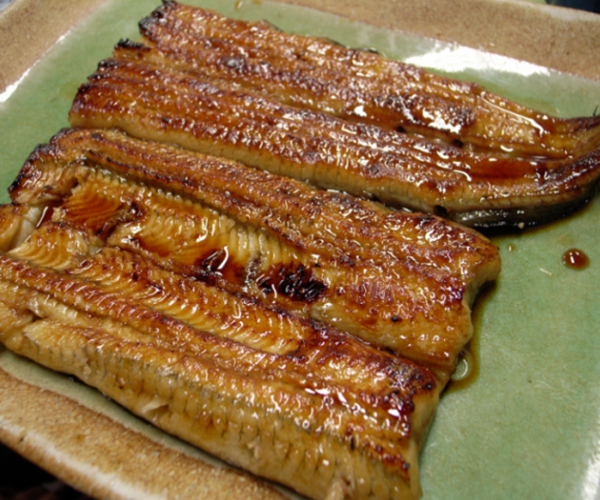
Our deep understanding of eel sauce comes from our core business: producing high-quality frozen eel. We developed our sauce recipes to perfectly complement our own unagi. Our patented low-fat roasting and deodorizing technology for eel requires a sauce that adheres perfectly and enhances the clean flavor of the fish.
This expertise is built on a precise, four-layer soy-sauce coating process, where each layer is applied at a specific temperature to build a deep, complex flavor and a perfect glaze. This same attention to detail goes into our bottled eel sauce. With a team of over 160 employees, including 25 dedicated technical and quality-control specialists, we manage every step of the process. This ensures that the foodservice distributors and importers we partner with in Australia, Indonesia, and across Southeast Asia receive a product they can trust.
Whether you are sourcing for restaurant chains, wholesale distribution, or retail packaging, understanding the nuances of eel sauce Japanese style is the first step. The next is finding a partner who can deliver that quality consistently.
If you require detailed product specifications or wish to discuss a custom formulation for your market, please send us your requirements. Our team is ready to provide a quote and samples for your evaluation.
 WhatsApp
 sales@chinaeels.com
 +8619937922411