


Make Sweet Unagi Sauce With a Glossy Finish
You simmered it, you tasted it, and it was fine. Then you brushed it on the eel and it slid straight off the plate. Runny sauce is the most common failure with sweet unagi sauce, and the cause is almost never the recipe. It is when you pull the pan off the heat.
This guide gives you a three-ingredient ratio, a spoon test you can repeat, and a way to check the result in any kitchen, from a home stove to a sushi-bar prep station.
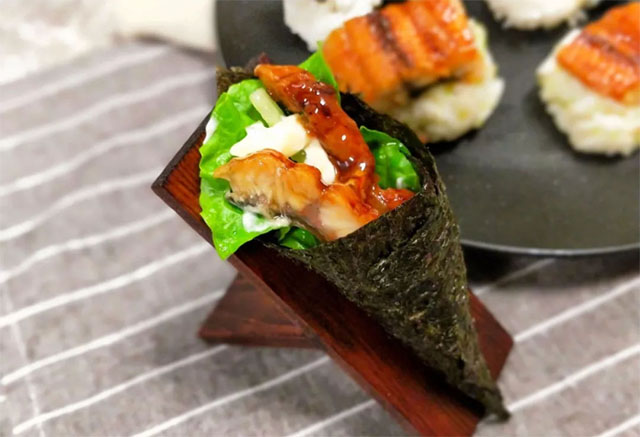
What You Need Before You Light the Stove
Nothing exotic. Three pantry items and one pan.
- Soy sauce: a regular Japanese-style dark soy sauce. Avoid "light" or reduced-sodium versions. They reduce into a thin, pale sauce.
- Mirin: look for mirin that lists rice, koji and alcohol, not corn syrup and flavoring. True mirin brings gloss and gentle sweetness without a cough-syrup edge.
- Sugar: plain white or light brown. Brown sugar gives a deeper, slightly molasses note.
- A small, wide saucepan: wide beats tall because more surface means faster, more even evaporation.
- A heat-safe spoon and a chopstick: the chopstick is your measuring stick later.
Optional: 50 ml sake for a rounder aroma. It is not needed for gloss. If you are making a batch to standardize a menu, add a kitchen scale. Weight is more repeatable than volume.
The Soy Sauce, Mirin and Sugar Ratio That Gives a Coating Glaze
Start with the 1 : 1 : 0.3 formula by volume. That is 100 ml soy sauce, 100 ml mirin and about 30 g sugar (roughly 2 tablespoons). It is a reliable starting point for a glaze that coats rather than runs. It is not a law. Soy sauces differ in salt and body, so judge the result by the cues below, not by the numbers alone.
| Version | Soy : Mirin : Sugar | Result | Best for | Limit |
|---|---|---|---|---|
| Lighter | 1 : 1 : 0.15 | Savory, thinner, less shine | Dipping, rice seasoning | Will not hold a thick coat |
| Standard glaze | 1 : 1 : 0.3 | Balanced, glossy, clings to the spoon | Brushing on grilled eel, donburi | Needs a full reduction to work |
| Heavy | 1 : 1 : 0.5 | Very sweet, thick, sticky | Sushi rolls, tempura drizzle | Crystallizes and scorches easily |
Reduction cues to follow
- Combine and dissolve. Put all ingredients in the cold pan. Warm on medium-low and stir until the sugar disappears.
- Bring to a gentle simmer. You want small, lazy bubbles, not a rolling boil. A hard boil scorches the sugar and turns the sauce bitter.
- Reduce for about 10 to 15 minutes. The bubbles will shift from thin and fast to larger, slower and glossier.
- Do the spoon test. Dip a spoon and lift it. The sauce should coat the back in a thin, even film. Draw a finger through it. The line should hold for 2 to 3 seconds before closing.
- Check the volume. Dip your chopstick before heating and mark the starting level. Stop when the sauce has dropped to about two-thirds of that mark. For batches, weigh it: the finished sauce should be about 65% of the starting weight.
- Cool before judging. Pull the pan off the heat and let a spoonful sit for a minute.
Here is the trap. Hot sauce always looks thinner than it will be. It thickens noticeably as it cools. If it already coats the spoon heavily while bubbling, you have gone too far.
Fixing Sauce That Runs, Burns or Turns Dull
Most problems trace back to heat or timing. Use this table to find the step to revisit.
| What you see | Likely cause | Fix |
|---|---|---|
| Runs off the eel like water | Under-reduced, or too little sugar | Return to a gentle simmer for 3 to 5 minutes and re-test on a cooled spoon |
| Thick, tarry, hard to brush | Over-reduced | Stir in 1 to 2 tablespoons of water off the heat, then warm briefly |
| Bitter edge | Boiled too hard, sugar scorched | Not recoverable. Start a fresh batch at lower heat |
| Dull, cloudy surface | Cheap mirin or rapid boiling | Switch to true mirin and keep the simmer calm |
| Gritty crystals when cooled | Too much sugar or undissolved sugar | Warm gently with a splash of water until clear |
For a deeper look at flavor errors beyond texture, see our kabayaki sauce recipe: fix flavor mistakes.
Glazing the Eel: Thin Layers Beat One Thick Pour
Sauce on its own is half the job. How you apply it decides the finish.
Brush on a thin coat, grill or broil for 30 to 60 seconds, then brush again. Repeat 3 to 4 times. Each pass sets a shiny layer and builds color gradually. One heavy pour pools, steams the surface and washes out the shine.
This is the same logic behind industrial roasting. Our own kabayaki line applies 4 precise layers of soy sauce with temperature-controlled steps, and we grade the result against defined "white-roasted color" and 1st-through-4th coating color standards. You do not need a factory. You only need to copy the idea: thin coats, repeated. If you want to see how the finished product looks, browse our unagi kabayaki product range.
Storage, Batching and Menu Consistency
Cool the sauce completely, then pour it into a clean, lidded jar. Refrigerate it. It thickens in the cold, so loosen it with a spoonful of warm water or a gentle reheat before use. For longer make-ahead notes, see this eel sauce recipe guide.
Cold fact: sauce brushed on raw or half-cooked eel should be boiled again before it touches anything served. Never reuse the brush-dipped pot on cooked food.
Standardizing for a sushi menu
- Record the starting weight, finished weight and simmer time for each batch.
- Use the same pan size. A wider pan reduces faster and will shift your timing.
- Always test on a cooled spoon, never in the hot pan.
- Keep the same soy sauce brand. Switching brands changes salt level and the ratio you need.
When a Ready-Made Sauce or Prepared Eel Makes More Sense
Homemade sauce suits small batches and flavor tweaking. It has limits. Large foodservice volumes need identical results every shift, and a hand-reduced pot drifts with each cook.
That is where a finished product helps. We supply eel sauce and frozen kabayaki eel to importers and foodservice buyers, including long-term kabayaki supply to Japanese restaurant chains and eel sauce shipments to US food importers. Our production is covered by ISO 22000:2018, HACCP and HALAL certification. For more on the sauce side of our work, read our kabayaki sauce article.
If you are still testing, make your sweet unagi sauce first. If your menu volume outgrows the pan, compare it against ready-made options.
Completion Check
- The sauce coats a spoon with an even film, and a finger line holds 2 to 3 seconds.
- It has reduced to about two-thirds of its starting volume.
- It tastes sweet-savory with no bitter edge.
- After cooling, it pours slowly, not like water and not like tar.
If any point fails, go back to the fix table and repeat only that step.
Tried the ratio? Tell us in the comments how your glaze turned out, or ask about our eel sauce product page to request a sample for side-by-side tasting.