





Recipe for Unagi Sauce Pan Size Choices for Smooth Even Reduction
Your sauce looked perfect, then suddenly turned thick, dark, and sticky around the edges. The problem may not be your ingredients. It may be the pan. A reliable recipe for unagi sauce depends heavily on how quickly water leaves the pan and how evenly the sauce receives heat.
Unagi sauce should move slowly across the back of a spoon, shine under the kitchen light, and cling to grilled eel without becoming burnt syrup. That balance starts before the burner is turned on. Pan width, base thickness, side height, and batch size all affect the result.
For home cooks, restaurant teams, and menu developers, choosing the saucepan is a practical part of sauce control. This guide answers the equipment questions directly, including when a narrow pan helps, when a wide pan causes trouble, and how to spot a reduction that has gone too far.
Why saucepan size changes a recipe for unagi sauce
A saucepan is not just a container. It determines the exposed surface of the liquid. More exposed surface usually means faster evaporation, while a smaller exposed surface slows moisture loss. That is why the same sauce mixture can stay thin in one pan and become overly thick in another.
The best conclusion is simple: choose a pan that gives the sauce room to simmer gently without spreading into a very shallow layer. This suits cooks who want a glossy glaze with a controlled texture. It does not mean the largest pan is always better. A pan that is too wide can reduce the sauce faster than expected and leave sugary residue on hot edges.
For a recipe for unagi sauce, the saucepan should match the quantity being prepared. A small quantity in a large, wide pan has too much exposed surface. A large quantity in a very narrow pan may heat unevenly, bubble high up the sides, and require more stirring.
- Choose moderate width when you want predictable reduction and easy stirring.
- Choose a heavier base when the sauce contains sugar or other ingredients that can catch on the bottom.
- Choose higher sides when the sauce tends to foam or rise during simmering.
- Avoid an oversized pan for a small batch because the sauce can become thick before the flavor has blended properly.
The limit is that pan choice cannot correct a sauce that begins with an unsuitable ingredient balance. A saucepan manages heat and moisture loss; it cannot remove excessive saltiness or restore a burnt flavor after scorching.
Comparison of narrow and wide saucepans for evaporation thickness and scorching risk
This comparison matters because saucepan width changes the behavior of a recipe for unagi sauce more than many cooks expect. The correct choice depends on whether you need a slow controlled reduction or a faster finish for a larger service batch.
| Pan style | Evaporation rate | Effect on sauce thickness | Scorching risk | Best fit | Limit |
|---|---|---|---|---|---|
| Narrow saucepan with taller sides | Slower because less sauce surface is exposed | Builds thickness gradually and gives more time to taste | Moderate if heat is too strong or the base is thin | Small batches, first-time cooks, and sauces needing careful adjustment | Can bubble up and may heat less evenly if the pan base is lightweight |
| Moderate-width saucepan | Controlled and balanced | Allows a steady move from thin liquid to coating consistency | Lower when paired with gentle heat and regular stirring | Most home batches and repeatable kitchen prep | Still needs attention near the end because sugar concentrates quickly |
| Wide shallow saucepan | Fast because more liquid is exposed to air | Thickens quickly, sometimes before flavors settle together | Higher at the outer edges, especially with a thin base | Larger batches watched continuously by an experienced cook | Not a good choice for a small amount of sauce or an unattended simmer |
Direct answer: A moderately wide, heavy-bottomed saucepan is usually the safest choice for even reduction. It offers enough surface for moisture to leave at a manageable pace while keeping the sauce deep enough to stir and observe. This applies when you want a dependable glaze for grilled eel, rice bowls, sushi, or noodles.
A wide saucepan is useful only when you deliberately need quicker evaporation and can stay at the stove. It does not apply to cooks who are still learning the visual signs of a finished sauce. In that case, slower is safer.
Cold kitchen fact about sauce reduction
Many cooks watch only the center of the pan. The first scorching often begins around the outer ring, where a thin film of sauce sticks, dries, and darkens before the center looks finished. That is why scraping the sides down with a heat-safe spatula matters. The darker ring can add bitterness to an otherwise good recipe for unagi sauce.
How to select the pan before you start heating the sauce
Use this equipment check before making a recipe for unagi sauce. The goal is not to buy expensive cookware. The goal is to avoid a pan that fights the sauce.
- Look at the base first. Select a saucepan with a stable, thick base rather than a lightweight pan that develops isolated hot spots. This is especially useful for sweet glazes. It does not eliminate the need to stir.
- Match the pan to the batch. The sauce should not spread into a paper-thin layer across the bottom. Choose a pan that keeps a visible depth of liquid while leaving safe headroom for bubbling.
- Check the side shape. Straight or gently sloped sides make it easier to scrape sauce back into the center. Very flared sides create a larger evaporation zone and can leave more sticky residue.
- Use a pan with a comfortable handle. You may need to lift and swirl the sauce gently. A secure handle reduces the temptation to stir aggressively, which can splash hot sauce onto the sides.
- Keep a clean spoon nearby. Taste only after the sauce has been stirred evenly. Sauce clinging near the upper wall may be more concentrated than the liquid in the middle.
This procedure fits both a home cook making dinner and a foodservice kitchen testing a glaze for a new dish. For very large production volumes, a saucepan is no longer the right tool; controlled commercial equipment and validated process controls are more suitable.
If you are deciding whether to make sauce from scratch or compare it with a prepared option, see our eel sauce product page. Prepared sauce can support consistent plating where staff time and repeatability matter as much as flavor.
How to control heat after the sauce begins to reduce
The pan can only do part of the work. A good recipe for unagi sauce also needs controlled heat. Start with a gentle simmer rather than a hard boil. The sauce should show steady movement, not violent splashing. Strong bubbling throws sauce onto the sidewalls, where it can darken and later fall back into the pan.
Use visual cues instead of rushing. The sauce is moving in the right direction when bubbles become slower and shinier, the spoon leaves a brief trail across the surface, and the liquid coats rather than runs off immediately. Remove the pan from heat before it appears as thick as the final glaze you want. Residual heat continues to reduce and thicken it.
| What you see | What it usually means | Action to take | When this advice does not apply |
|---|---|---|---|
| Fast, noisy bubbles across the whole surface | Heat is likely too high for controlled reduction | Lower the heat and stir from the center to the edge | A brief stronger boil may be used at the beginning of some formulas, but not near the finishing stage |
| Dark sticky ring around the pan wall | Sauce has splashed and concentrated on the side | Scrape it down promptly and reduce heat | Do not scrape down material that is clearly burnt and bitter |
| Sauce looks thin while hot | It may still thicken as it cools | Pause before reducing further and test coating on a spoon | If it runs off like water after a short rest, more reduction is needed |
| Sauce coats heavily and forms strings | It may be close to over-reduced | Remove from heat and assess before continuing | Some dishes call for a very thick finishing glaze, but it must still spread evenly |
For a recipe for unagi sauce used on grilled eel, a slightly lighter consistency is often easier to brush over warm fish. The glaze can set after it meets the eel surface. A very thick sauce may sit on top instead of coating evenly.
What mistakes cause uneven unagi sauce reduction
Uneven reduction is usually caused by a combination of pan mismatch and hurried heat control. These are the mistakes worth avoiding before you blame the recipe.
- Using a wide frying pan for a small sauce batch. Conclusion: this often reduces sauce too fast. Reason: the exposed surface is excessive. It fits only when fast evaporation is intentional and continuously monitored.
- Turning up heat when the sauce seems slow. Conclusion: higher heat creates a scorching risk before it creates better flavor. Reason: the bottom can overheat while the sauce is still relatively thin. Use more patient simmering instead.
- Ignoring the pan edges. Conclusion: edge residue can turn bitter. Reason: splashed sauce loses moisture faster than sauce in the center. Scrape clean edges during cooking, but discard residue that has already burnt.
- Judging thickness while the sauce is bubbling hard. Conclusion: active bubbles hide the true texture. Reason: hot sauce flows more freely. Let a small amount settle briefly on a spoon before deciding.
- Making the sauce too thick for the dish. Conclusion: the ideal finish depends on use. A brushing sauce for kabayaki differs from a drizzle for rice or noodle dishes. Select the texture based on service, not appearance alone.
A recipe for unagi sauce is especially forgiving when you stop reduction early and reassess. Adding more heat is easy. Recovering from a burnt or overly sticky sauce is much harder.
Which unagi dish needs a thicker or lighter sauce
Not every dish needs the same reduction. The best pan and endpoint depend on how the sauce will be used after cooking.
| Dish application | Recommended sauce behavior | Best pan choice | Reason |
|---|---|---|---|
| Grilled kabayaki eel | Glossy and brushable, with enough body to cling | Moderate-width saucepan | Supports steady reduction without making the glaze heavy too quickly |
| Rice bowl finishing sauce | Pourable enough to reach rice beneath the eel | Narrow or moderate-width saucepan | Slower reduction helps preserve a lighter consistency |
| Sushi roll glaze | Thicker and controlled, so it stays on the topping | Moderate-width heavy-bottomed saucepan | Offers better control as the sauce approaches a coating texture |
| Noodle or seafood finishing sauce | Lighter, easy to mix through a bowl | Narrow saucepan | Reduces slowly and helps prevent an overly dense glaze |
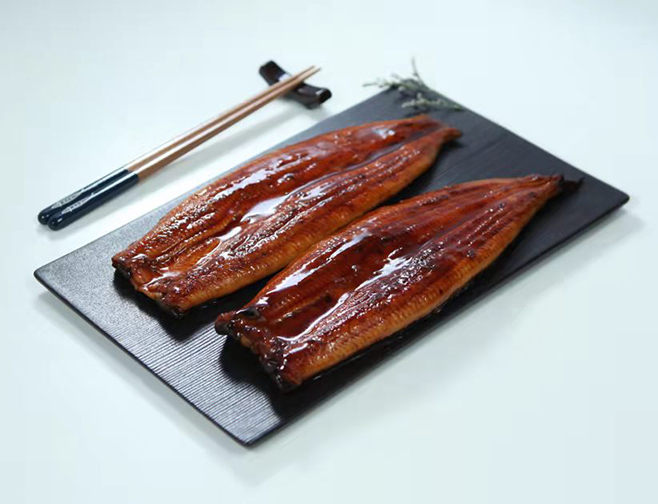
For grilled eel, sauce should support the fish rather than bury its roasted aroma. Our unagi kabayaki is intended for convenient heating and menu applications where brushing or finishing sauce can be adjusted to the dish.
If your sauce turns too salty, too sweet, too thick, or too smoky, review these practical fixes in our kabayaki sauce recipe guide. Equipment affects reduction, but ingredient correction requires a separate decision.
Can a prepared sauce replace a homemade recipe for unagi sauce
Yes, when consistency, speed, and portion control matter more than making every batch from the beginning. A prepared sauce can be a sensible choice for busy home meals, catering operations, or restaurants training new staff. It reduces the risk of uneven evaporation because the sauce arrives at a ready-to-use texture.
The limit is that a prepared sauce still needs thoughtful use. Heating it in an oversized pan can make it too thick, and applying too much can overpower the eel. Warm only what you need, use gentle heat, and brush in light layers rather than pouring a heavy pool over the fish.
At Eelpro Co., LTD, our export food production systems include ISO 22000:2018, HACCP, HALAL certification, export food producer registration, and an SC food production license. Our two production lines have an annual finished-product capacity of 4,000 tons, supported by cold storage and traceability from customs-registered eel farming bases. These controls support buyers sourcing frozen unagi kabayaki, eel sauce, and related seafood products for international markets.
A well-chosen saucepan gives every recipe for unagi sauce a better chance: gentler evaporation, more even thickness, and fewer bitter edges. Share your favorite pan style in the comments, or request product and sauce selection advice from Eelpro.
 WhatsApp
 sales@chinaeels.com
 +8619937922411